Sisilia Frederika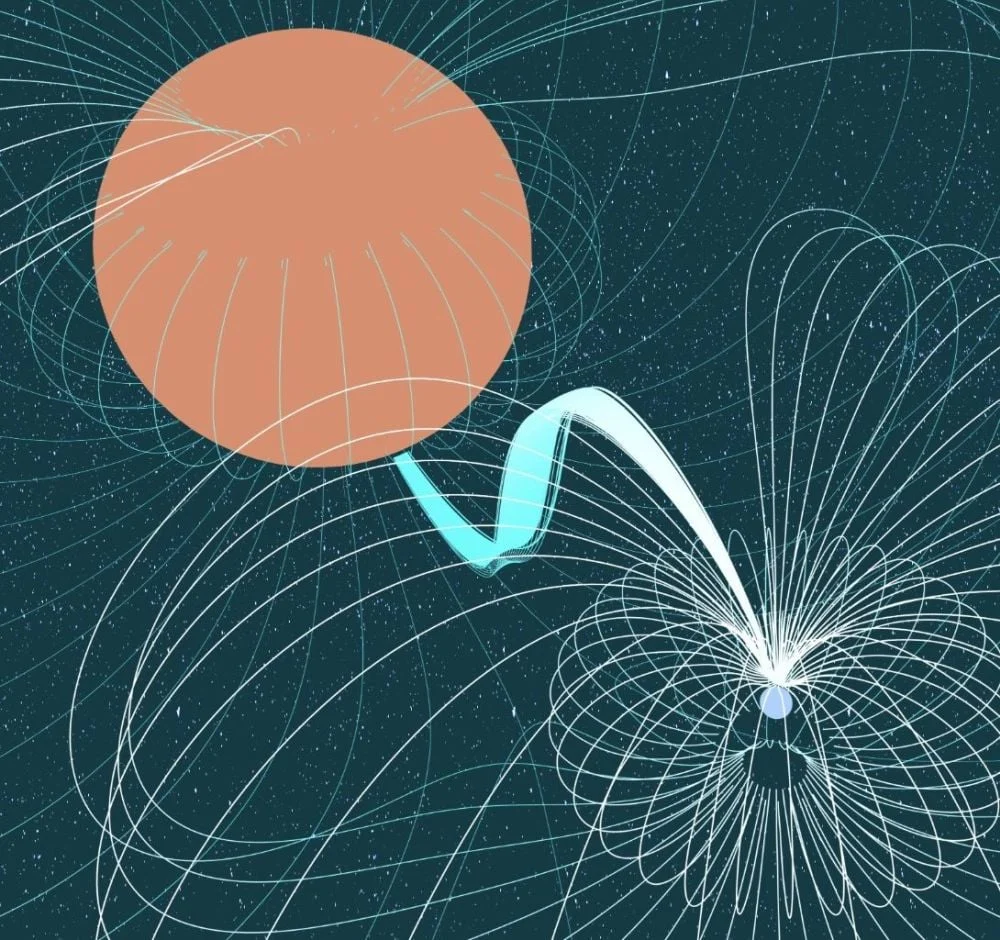
The research, led by Kovi Rose, a PhD candidate at the University of Sydney’s School of Physics and CSIRO, and published in the journal Nature Astronomy, offers the first clear evidence of the physical mechanisms driving these long-period signals. By observing J17 across multiple wavelengths, the international team of astronomers has successfully linked the system’s orbital dynamics to its complex radio and X-ray output, effectively bridging a gap between observation and theory that has existed since the first hints of such transients were detected in 2005.
The Mystery of Long-Period Radio Transients
Long-period radio transients represent a relatively new and poorly understood category of cosmic phenomena. Unlike traditional pulsars, which rotate rapidly—often completing a rotation in milliseconds or seconds—LPTs emit highly polarized, coherent radio bursts that repeat on much longer timescales, ranging from several minutes to several hours. For years, these signals existed on the periphery of astronomical understanding, appearing as anomalies in wide-field radio surveys.
The first indication of such a system appeared in 2005, but for nearly twenty years, detections were sparse and explanations remained speculative. The primary challenge for astronomers has been the sheer duration of the periods. In the standard model of neutron stars and pulsars, a "death line" exists; once a pulsar slows down beyond a certain point, it is thought to lose the ability to generate the high-energy particles required for coherent radio emission. LPTs, with their hour-long cycles, seemed to defy these established physics, leading researchers to propose two main hypotheses: either they were "ultra-long period magnetars"—neutron stars with extremely high magnetic fields that had somehow slowed their rotation—or they were binary systems involving white dwarfs.
The discovery of J17 provides the most compelling evidence to date that the latter explanation is not only viable but responsible for at least a portion of the LPT population.
Chronology of the Discovery and Methodology
The identification of J17 was made possible through the use of the Australian Square Kilometre Array Pathfinder (ASKAP), a next-generation radio telescope operated by CSIRO. ASKAP’s ability to survey vast swaths of the sky with high sensitivity allowed the team to pinpoint the 1.3-hour periodicity of the signal.
Following the initial detection, the researchers employed a multi-wavelength approach to verify the nature of the source. This included follow-up observations using the Australia Telescope Compact Array (ATCA) and the MeerKAT radio telescope in South Africa. Crucially, the team also utilized X-ray data, which revealed a synchronized emission pattern that matched the radio periodicity. This multi-messenger data set allowed the researchers to move beyond mere detection and begin modeling the physical architecture of the system.
Lead author Kovi Rose noted that while about a dozen LPTs have been identified to date, J17 is unique in its clarity. "For the first time we have pinpointed the origin of these signals, confirming the source to be a ‘cataclysmic variable,’ or an accreting white dwarf star," Rose stated. "Now, we’ve been able to show that the source for one of these transients comes from a white dwarf actively pulling material from a companion star."
Anatomical Breakdown of ASKAP J1745-5051
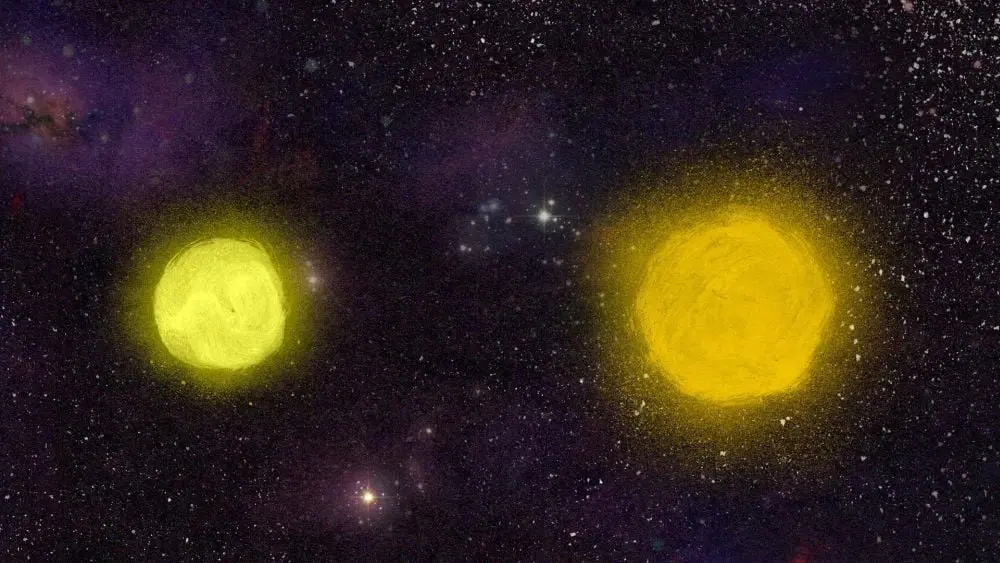
The system identified as J17 is a magnetic cataclysmic variable (CV), a specific type of binary system. Through their analysis, the researchers determined the physical characteristics of the two stars involved:
- The White Dwarf: The primary star is a white dwarf—the dense, collapsed core of a formerly Sun-like star. While it is roughly the size of Earth, it contains a mass approximately equal to that of our Sun. This specific white dwarf is highly magnetized, a feature that plays a central role in generating the observed radio bursts.
- The Donor Star: The companion is a red dwarf, a small, cool star with about 1/10th the mass of the Sun.
- The Orbit: The two stars are locked in an incredibly tight orbit, completing a full revolution every 80 minutes (1.3 hours). Because they are so close, the gravitational pull of the white dwarf is strong enough to strip hydrogen-rich material from the outer layers of the red dwarf.
This process of "accretion" is the engine of the system. As the material from the donor star falls toward the white dwarf, it is funneled by the white dwarf’s intense magnetic fields. This creates a "hot spot" on the surface of the white dwarf where the material impacts, reaching temperatures high enough to emit X-rays.
Decoding the Signal: Radio vs. X-ray
The research highlights a fascinating discrepancy in the timing of the signals. While both the X-ray and radio emissions are modulated by the 1.3-hour orbital period, they do not peak simultaneously.
"These emissions are all tied to the orbital motion of the system," Rose explained. "But interestingly, the radio and X-ray signals don’t peak at the same time, which tells us they’re being produced in different regions of the system."
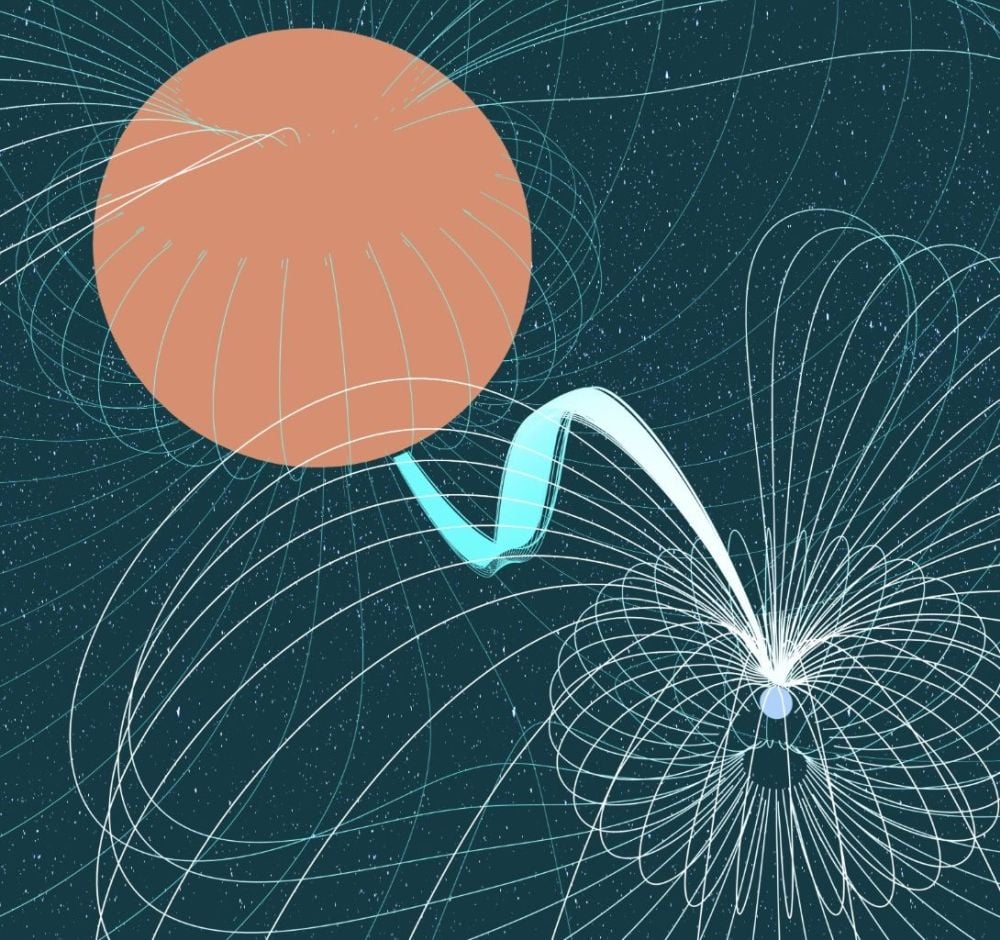
The X-rays are produced at the point of accretion on the stellar surface. However, the radio bursts are believed to be the result of "magnetic interaction" between the two stars. As the stars orbit, their magnetic fields intertwine and snap, or interact with the local plasma, creating coherent radio emission through a process similar to the aurorae seen on Earth or Jupiter, but on a much more energetic scale.
J17 also exhibited "frequency drift," where the radio pulses shifted in frequency over a longer "beat period." Furthermore, the signal was observed to "turn off" for several hours at a time. The researchers suggest that these fluctuations are caused by changes in the local plasma density and the specific geometry of the magnetic field interactions as the stars move through their orbital phases.
Distinguishing LPTs from Pulsars and Supernovae
One of the key takeaways from the study is the distinction between these cataclysmic variables and other high-energy phenomena. While binary systems containing white dwarfs are the progenitors of Type 1a supernovae, the CV in J17 is not currently at risk of such a violent end. In a Type 1a supernova, the white dwarf accumulates enough mass to reach the Chandrasekhar limit (roughly 1.4 solar masses), triggering a runaway thermonuclear explosion. In J17, the accretion process is more stable, resulting in the periodic emissions observed rather than a singular cataclysm.
Similarly, while the pulsing nature of LPTs resembles that of a pulsar, the underlying physics is different. "The pulsing that we see is not coming from a spin. We think it’s coming from an orbit," said co-author David Kaplan, a Professor of Physics and Astrophysics at the University of Wisconsin Milwaukee. This orbital origin explains why the periods are so much longer than those of traditional pulsars.
The "Rosetta Stone" for Future Astrophysics
The implications of the J17 discovery extend far beyond the identification of a single binary system. By providing a confirmed model for an LPT, J17 serves as a reference point for all future detections.
Professor Tara Murphy, a co-author from the University of Sydney’s School of Physics, emphasized the rarity of seeing such a system in action. "Some similar objects had been linked to binary systems before, but this is the first one where we can clearly see both stars and the accretion process in action," she said.
The researchers believe J17 will help determine if other LPTs—some of which have periods as long as 21 minutes or even hours—are also white dwarf binaries or if they belong to a different class of objects, such as the elusive slow-rotating magnetars. This "Rosetta Stone" effect allows astronomers to categorize future signals based on the specific pulse morphologies and multi-wavelength signatures established in this study.
Furthermore, these systems serve as "natural laboratories" for extreme physics. The intense gravitational forces and magnetic fields present in a cataclysmic variable provide conditions that cannot be replicated on Earth. Studying how matter behaves under these stresses allows physicists to test the limits of our understanding of plasma dynamics and electromagnetism.
Future Research and Unresolved Questions
Despite the breakthrough, the study concludes that more work is needed to determine if the cataclysmic variable model can explain the entire class of LPTs. Some LPTs discovered in recent years exhibit different polarization patterns or lack the X-ray components seen in J17, suggesting that the population of long-period transients may be heterogeneous.
"Determining if these processes can explain the properties of the entire emerging class of LPTs will require detailed simulations and modelling, as well as the discovery and investigation of new LPTs," the authors wrote.
The hunt for more LPTs continues, with radio surveys like ASKAP and the upcoming Square Kilometre Array (SKA) expected to find dozens, if not hundreds, more of these systems. As the census of long-period transients grows, astronomers will be able to determine the true diversity of these "slow-motion" cosmic beacons and further refine our understanding of the life cycles of binary stars in the Milky Way. For now, ASKAP J1745-5051 stands as a landmark discovery, transforming a celestial mystery into a tangible laboratory for stellar evolution.