admin
admin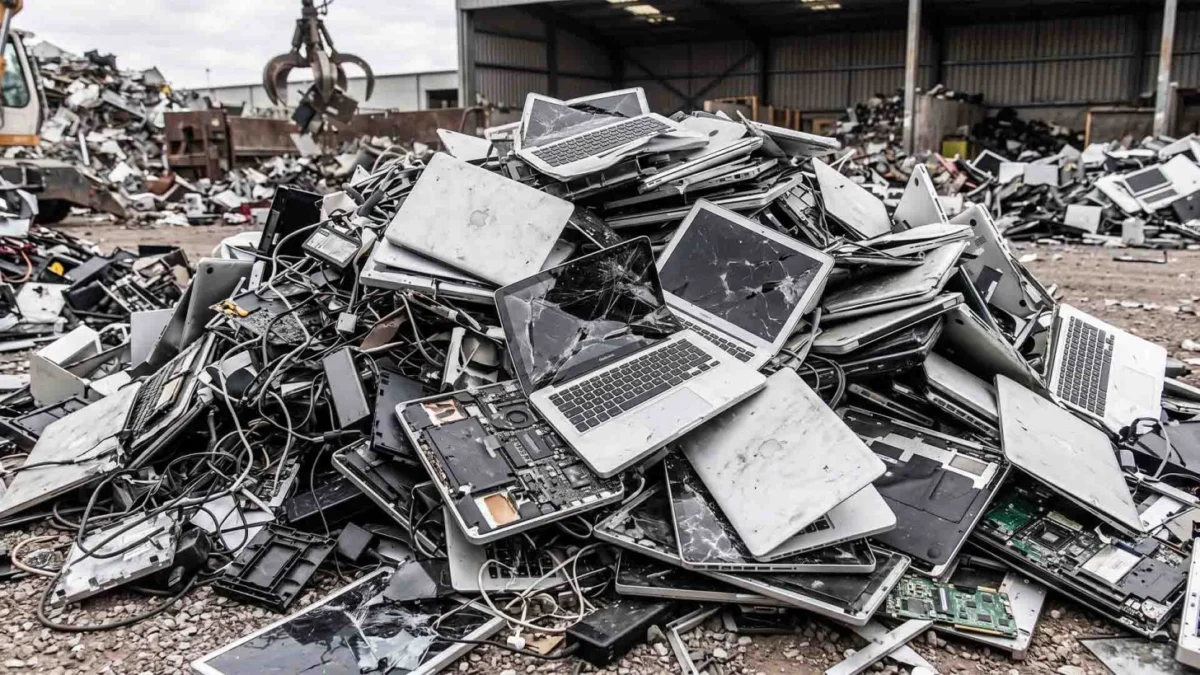
The intersection of corporate policy, data security, and environmental sustainability has come under intense scrutiny following reports that a major technology firm is opting to physically destroy over 100 high-specification M4 MacBook Pro units rather than repurposing or donating them. The incident, brought to light by a former employee identified by the Reddit handle ExtensionPut2939, highlights a controversial practice within the corporate sector where functional, cutting-edge hardware is sacrificed to meet internal compliance or financial accounting standards. According to the whistleblower, the company in question is shuttering an international office following a final round of layoffs, and rather than allowing departing staff to keep their workstations or donating the machines to educational institutions, the firm has mandated the total destruction of the fleet.
The hardware at the center of this controversy represents the current pinnacle of Apple’s consumer and professional laptop lineup. These are not legacy machines destined for a recycling center due to age or obsolescence; they are M4-series MacBook Pro models, which were only recently introduced to the market. Even more significant is the internal configuration of these units, each reportedly boasting 48GB of unified memory. In a global market currently grappling with a volatile DRAM (Dynamic Random-Access Memory) supply chain—driven largely by the insatiable demand for high-bandwidth memory in artificial intelligence data centers—the decision to pulverize nearly five terabytes of high-performance RAM has been met with significant backlash from tech enthusiasts and environmental advocates alike.
The Economic Reality of High-End Hardware Destruction
To understand the scale of the waste involved in this reported incident, one must look at the current market valuation of the hardware. Apple’s M4 Pro and M4 Max chips utilize a Unified Memory Architecture (UMA) that integrates RAM directly into the processor package. This design provides unparalleled speed and efficiency but also makes the hardware significantly more expensive to manufacture and purchase. A base MacBook Pro with an M4 chip and 16GB of RAM is a premium product, but the jump to 48GB of unified memory requires a transition to the M4 Pro or M4 Max chipsets.
Current retail pricing indicates that a MacBook Pro configured with an M4 Pro chip and 48GB of unified memory costs approximately $2,599 to $3,000 depending on storage configurations. By destroying more than 100 of these units, the company is effectively liquidating between $260,000 and $300,000 worth of functional technology. This occurs at a time when Apple has recently adjusted its global pricing models, in some regions increasing the cost of entry for its professional-grade hardware. For students, creative professionals, and non-profit organizations, such hardware represents a multi-year investment that is often out of financial reach.
The whistleblower noted that the company’s justification for the destruction likely stems from a combination of data security protocols and financial accounting. From a security standpoint, many corporations fear that even "wiped" solid-state drives (SSDs) could contain residual proprietary data. However, modern macOS devices utilize FileVault encryption and the Apple T2 Security Chip (or the Secure Enclave in M-series chips), which allows for an "Erase All Content and Settings" function that renders data irrecoverable by destroying the encryption keys. Despite these technological safeguards, some corporate legal departments prefer physical destruction to eliminate any sliver of liability.
The Global DRAM Crisis and the AI Factor
The destruction of these MacBook Pro models is particularly poignant given the current state of the semiconductor industry. The world is currently navigating what analysts describe as a "DRAM crisis." The surge in generative AI development has forced major memory manufacturers like SK Hynix, Samsung, and Micron to pivot their production lines toward High Bandwidth Memory (HBM3 and HBM3E) to supply NVIDIA and other AI chipmakers. This pivot has tightened the supply of standard DDR5 and LPDDR5X memory, which is the foundation of the unified memory used in Apple’s silicon.
As AI customers "race away" with DRAM orders to fuel massive server farms, consumer and enterprise hardware prices have remained high, and supply has remained sensitive. In this environment, the "circular economy"—the practice of refurbishing, reselling, or donating hardware—is more critical than ever. Every high-end laptop destroyed is a set of components that must be replaced by new mining and manufacturing processes, further straining a global supply chain that is already under immense pressure. The 48GB configuration mentioned in the report is specifically sought after by developers and AI researchers for local model training and data processing, making the loss of these machines even more impactful for the broader tech community.
Tax Write-offs vs. Corporate Social Responsibility
One of the most cynical aspects of this report is the suggestion that the destruction of these machines serves as a financial maneuver. Under various international tax codes, a company can often claim a "loss" on destroyed inventory or assets that are being decommissioned. If the company were to sell the laptops to employees at a discount or donate them, the accounting process becomes more complex. In some jurisdictions, donating used equipment does not provide the same direct "write-off" value as a total loss of assets during a business closure.

Industry experts point out that the cost of "IT Asset Disposition" (ITAD) can sometimes be lower than the cost of refurbishing and certifying machines for donation. To donate a laptop, a company must ensure it is sanitized of all data, remove asset tags, and potentially provide a limited warranty or support. For a firm in the middle of a layoff-induced office closure, the path of least resistance is often to hire a third-party contractor to shred the devices and provide a certificate of destruction. This fulfills the company’s internal "security" requirements while allowing them to clear the assets from their balance sheet in a single stroke.
The Environmental Toll of E-Waste
The environmental implications of destroying 100 brand-new MacBook Pros are staggering. Electronic waste, or e-waste, is the fastest-growing waste stream in the world. According to the United Nations’ Global E-waste Monitor, the world generated 62 million metric tonnes of e-waste in 2022, a figure that is expected to rise by 33% by 2030. Only a small fraction of this waste is documented as being properly collected and recycled.
When a MacBook Pro is shredded, it is not simply "recycled." While some aluminum and copper can be recovered, the energy-intensive process of refining rare earth elements, manufacturing the silicon wafers, and assembling the intricate motherboards is completely lost. The carbon footprint of a single MacBook Pro is heavily weighted toward its production phase—approximately 70% to 80% of its total lifetime carbon emissions occur before the box is even opened. Destroying a machine that has only been in service for a few months (or less, given the M4’s recent release) is a catastrophic failure of environmental stewardship.
Reactions and Potential Alternatives
The reaction from the online community and tech analysts has been one of universal condemnation. Many have pointed out that even if the company was concerned about internal SSDs, the M-series MacBooks could have their storage erased through Apple Configurator or other enterprise-grade tools. If the company were truly concerned about sustainability, they could have utilized Apple’s own "Trade In" program, which ensures that devices are either refurbished for new users or recycled for materials in a closed-loop system.
Furthermore, the "Right to Repair" movement has long argued for the "Right to Reuse." Advocacy groups suggest that corporate policies should be updated to mandate the donation of functional hardware. In some European countries, legislation is being discussed that would penalize companies for destroying functional electronics, similar to laws that prevent supermarkets from throwing away edible food.
Implications for the Future of Corporate IT
This incident serves as a wake-up call for the technology industry and the corporate world at large. As hardware becomes more powerful and expensive, and as the environmental costs of production become more apparent, the "slash and burn" approach to IT asset management is becoming increasingly untenable.
The move by this unspecified technology firm reflects an outdated 20th-century mindset where hardware was viewed as a disposable commodity. In the 21st century, where silicon and memory are strategic resources and climate change is a primary global concern, the destruction of 100 M4 MacBook Pros is not just a loss for the laid-off employees who could have used them—it is a loss for a global ecosystem that can no longer afford such waste.
As this story continues to circulate, it may prompt a broader discussion on the legal and financial incentives that currently favor the destruction of hardware over its preservation. Until tax codes and corporate liability laws are aligned with the goals of a circular economy, the "e-waste pile" will continue to grow, even as the chips inside those piles remain more capable than ever. The technology community now looks to both Apple and corporate leaders to establish more rigorous standards for IT asset disposition that prioritize the planet and the public good over convenient accounting.