Galang Taruna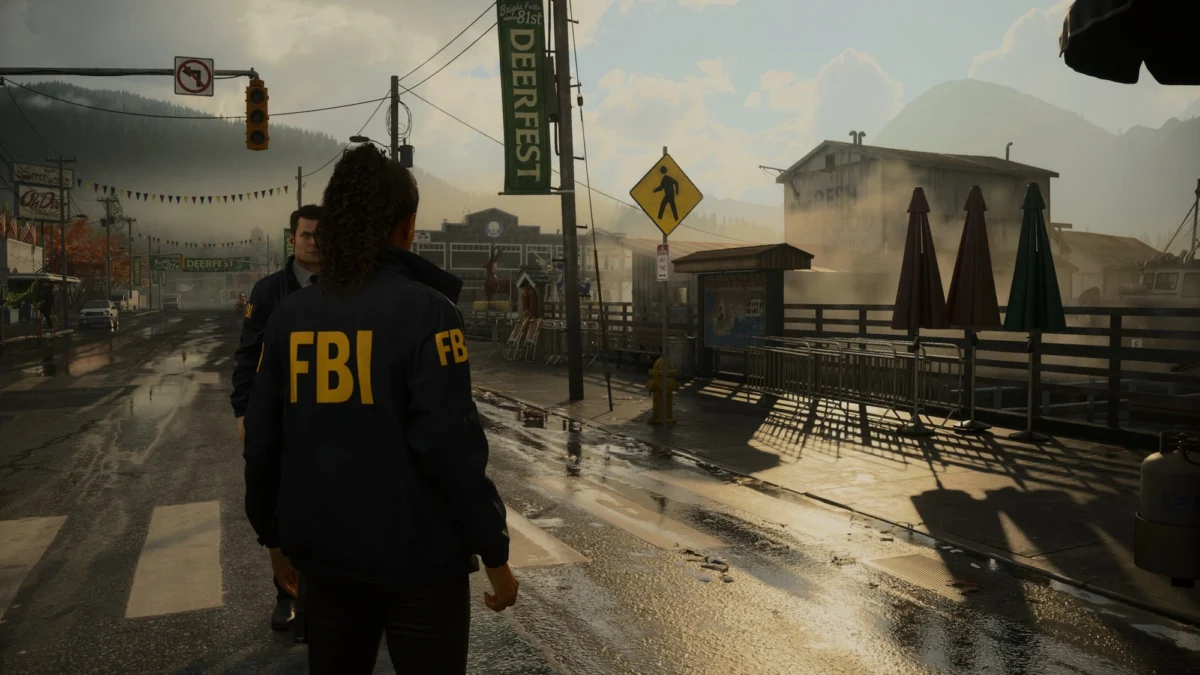
For several years, ray tracing has stood as a monumental leap in PC and next-generation console graphics, fundamentally altering how light is rendered in virtual environments. Yet, an even more ambitious and demanding technology has been making waves in the industry: path tracing. Often hailed as the holy grail of real-time rendering, this advanced technique promises unprecedented photorealism, albeit at a significant computational cost. Understanding path tracing requires a look back at the evolution of computer graphics, from traditional rasterization to hybrid ray tracing, to fully appreciate its transformative potential and the complex engineering challenges it presents.
The Foundational Shift: From Rasterization to Ray Tracing
For decades, the vast majority of video games relied on rasterization rendering. This method projects 3D objects onto a 2D screen by breaking them down into triangles, then coloring and shading these triangles based on various algorithms. Shadows, reflections, and global illumination were simulated using numerous clever tricks and approximations, such as shadow maps, screen-space reflections, and pre-baked lighting. While highly performant and capable of producing visually impressive results, rasterization inherently struggles with physically accurate light propagation, often leading to visual inconsistencies or a "gamey" aesthetic where light doesn’t behave quite as it would in the real world.
The introduction of ray tracing marked a significant departure from this traditional approach. Instead of simply projecting triangles, ray tracing simulates light by casting rays from the camera into the scene. These rays interact with objects, allowing for the calculation of highly realistic reflections, refractions, and more credible indirect lighting. NVIDIA’s launch of its RTX series GPUs in 2018, featuring dedicated RT Cores, brought real-time ray tracing to the mainstream, enabling developers to incorporate these advanced lighting effects into games. However, in current gaming implementations, ray tracing remains largely a hybrid solution. Only specific effects—like reflections, shadows, or ambient occlusion—are calculated using ray tracing, while the underlying image generation still relies heavily on rasterization. This hybrid approach balances visual fidelity with performance, but it still represents a compromise.
Path Tracing: The Ultimate Lighting Simulation
Path tracing is a radical evolution of ray tracing, pushing the simulation of light to its most physically accurate form. Unlike hybrid ray tracing, path tracing calculates all light within a scene using rays. Each ray, originating from the camera, travels into the virtual environment, potentially bouncing multiple times off surfaces. With each bounce, the ray carries information about color, intensity, and material properties (e.g., roughness, specularity, transparency). This comprehensive simulation accounts for phenomena like diffuse inter-reflection (light bouncing off a red wall and casting a subtle red tint on a nearby white wall), caustic effects, and accurate soft shadows, which are exceedingly difficult to achieve with rasterization or even hybrid ray tracing.
This technique effectively models the global illumination of a scene, where light from every source (direct and indirect) is realistically propagated throughout the environment. It is not merely a graphical effect but a complete rendering model that aims to replicate the physics of light transport as closely as possible. Path tracing has long been the gold standard in professional 3D rendering for film, animation, and architectural visualization, where a single frame can take minutes or even hours to render on powerful render farms. The monumental challenge for video games is to achieve this level of fidelity in real-time, at dozens or even hundreds of frames per second.
The Immense Computational Burden
The primary reason path tracing is so computationally demanding lies in the inherent complexity of simulating light accurately. For every pixel displayed on the screen, path tracing can necessitate casting dozens, hundreds, or even thousands of individual light rays, each potentially undergoing multiple bounces. This exponential increase in ray calculations, combined with advanced material and surface property computations at each interaction point, places an extraordinary burden on graphics hardware. Even the most cutting-edge GPUs struggle to maintain a playable framerate without significant compromises.
This performance bottleneck necessitates the heavy reliance on several key technologies:
- Upscaling Technologies: Techniques like NVIDIA’s DLSS (Deep Learning Super Sampling), AMD’s FSR (FidelityFX Super Resolution), and Intel’s XeSS (Xe Super Sampling) are indispensable. These technologies render the game at a lower internal resolution and then use AI or sophisticated algorithms to intelligently upscale the image to a higher target resolution, recovering much of the detail. This significantly reduces the raw pixel count that the path tracer needs to calculate.
- Denoising: Because path tracing relies on sampling (casting a finite number of rays), the initial raw output can appear noisy or grainy, especially in areas with complex lighting or fewer samples. Denoising algorithms, often AI-powered, analyze multiple frames and spatial data to remove this noise while preserving detail, producing a clean, stable image.
- Dedicated Hardware Accelerators: Modern GPUs, particularly NVIDIA’s RTX series, incorporate specialized hardware units (RT Cores for ray/path intersection calculations and Tensor Cores for AI-driven upscaling and denoising) that are crucial for making path tracing feasible in real-time.
Without these optimizations and specialized hardware, performance would plummet, rendering path tracing impractical for interactive entertainment.
A Brief History and Key Milestones
The theoretical foundations of ray tracing and path tracing date back to the 1980s, with pioneering research by Turner Whitted (ray tracing, 1980) and James Kajiya (rendering equation and path tracing, 1986). For decades, these techniques remained largely confined to offline rendering due to their prohibitive computational cost.

The turning point for real-time applications came with NVIDIA’s introduction of the GeForce RTX 20 series in 2018. These GPUs featured the first dedicated RT Cores, marking the advent of real-time ray tracing in gaming. Early adopters showcased the technology’s potential with enhanced reflections and shadows.
Subsequent generations, particularly the RTX 30 series and the current RTX 40 series (Ada Lovelace architecture), significantly boosted ray tracing performance. This architectural evolution, coupled with advancements in DLSS, paved the way for the first commercial implementations of real-time path tracing in games.
Notable milestones include:
- Early Tech Demos: NVIDIA’s various tech demos showcasing ray tracing capabilities.
- Minecraft RTX (2020): A surprising yet powerful demonstration of path tracing’s transformative effect, turning the blocky world of Minecraft into a showcase for realistic global illumination, shadows, and reflections. This proved that even simple graphics could be elevated dramatically by accurate light simulation.
- Cyberpunk 2077 (Overdrive Mode, 2023): CD Projekt Red’s ambitious title received an "Overdrive" mode that implemented full path tracing for its vast, neon-drenched Night City. This was a landmark moment, showcasing path tracing in a complex, open-world AAA game. The visual uplift was immense, but so were the hardware demands.
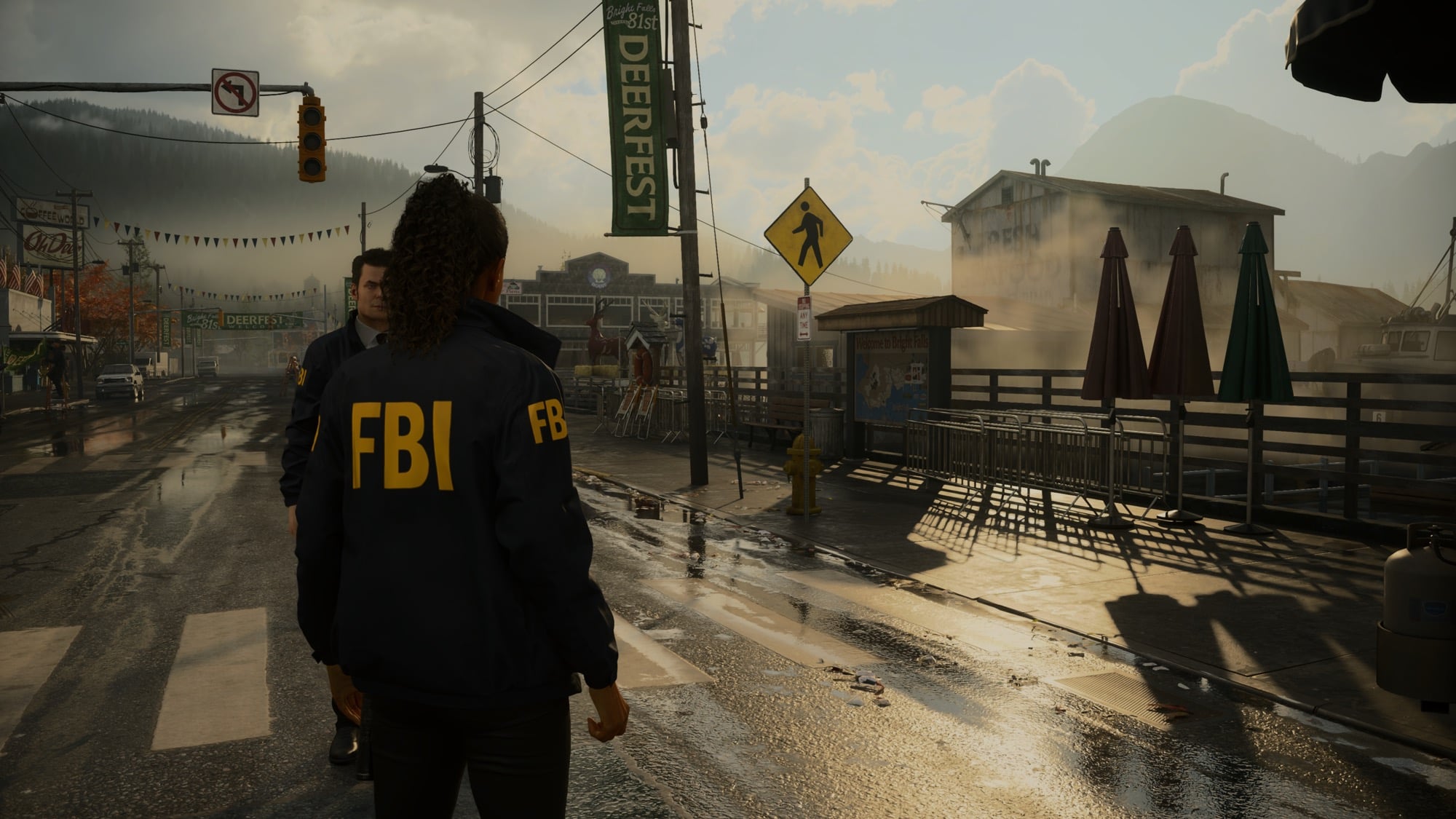
- Alan Wake 2 (2023): Remedy Entertainment’s survival horror masterpiece made extensive use of advanced global illumination, employing a heavily path-traced lighting model that significantly contributed to its dense, atmospheric, and visually stunning environments. The game’s reliance on realistic lighting for gameplay elements (e.g., using light to ward off enemies) further highlighted path tracing’s potential beyond mere aesthetics.
These titles, among others, demonstrate the growing adoption and maturation of path tracing in the gaming industry.
The Tangible Impact on Gaming Experiences
The concrete changes that path tracing brings to video games are profound and immediately noticeable:

-
Unprecedented Lighting Realism: The most striking effect is a vastly more realistic and natural lighting model. Dark interiors are illuminated naturally by light spilling from windows, light accurately bounces off colored walls, tinting nearby surfaces, and transitions between interior and exterior environments become seamless and credible. The pervasive inconsistencies and approximations of traditional lighting models largely vanish. This results in a cohesive, immersive lighting environment that feels genuinely "real."
-
Enhanced Reflections and Materials: Reflections gain unparalleled fidelity. Reflective surfaces, whether highly polished or subtly rough, accurately display their entire environment, even elements outside the player’s direct field of view. Rough materials react more naturally to light, with reflections and highlights varying realistically based on viewing angle and distance. This adds a layer of depth and physical believability to every surface.
-
Cinematic Immersion: Path tracing elevates the overall atmosphere to a truly cinematic level. It significantly improves the perception of volume, contrast, and visual depth. Games utilizing path tracing often feel less like interactive simulations and more like highly detailed, responsive interactive films, blurring the lines between pre-rendered cinematics and real-time gameplay. The subtle interplay of light and shadow creates a richer, more engaging visual narrative.
-
Environmental Storytelling: Beyond mere aesthetics, accurate global illumination can enhance environmental storytelling. The way light filters through a ruined building, reflects off a pool of water, or casts long, dramatic shadows can convey mood, danger, or tranquility in ways that were previously difficult to achieve without extensive manual artistic intervention.
Hardware Requirements: The Elite Tier of Gaming
To experience path tracing in its full glory, specific hardware is essential, with the graphics card being the most critical component.

-
Graphics Processing Unit (GPU): Path tracing necessitates a GPU with robust ray tracing acceleration hardware. Currently, NVIDIA’s RTX series graphics cards, particularly those based on the Ada Lovelace architecture (RTX 40 series), offer the most mature and performant ecosystem for real-time path tracing. Models like the RTX 4070 represent the entry point for a playable path tracing experience, often requiring upscaling and some resolution compromises. For a truly comfortable and high-fidelity experience, especially at higher resolutions like 1440p or 4K, GPUs such as the RTX 4080 or RTX 4090 are highly recommended. These cards boast significantly more RT Cores and Tensor Cores, allowing for faster ray calculations and more efficient denoising/upscaling.
- While competing solutions from AMD (Radeon RX series) and Intel (Arc series) do support hardware-accelerated ray tracing, their performance in full path tracing scenarios currently lags behind NVIDIA’s offerings. This is partly due to differences in ray tracing core architecture and the absence of equally mature and performant AI-driven upscaling technologies like DLSS.
-
Video Memory (VRAM): Path tracing is exceptionally demanding on video memory. Complex scenes require storing vast amounts of data, including detailed geometry, high-resolution textures, ray buffers, and intermediate data for denoising and upscaling processes. A minimum of 12 GB of VRAM is generally considered the bare minimum for activating path tracing in good conditions. For resolutions like 1440p or 4K, 16 GB or even 24 GB of VRAM (found on high-end cards like the RTX 4090) provides a significant performance buffer and ensures smoother operation, reducing the likelihood of stuttering or performance drops due to memory bottlenecks.
-
Processor (CPU): While the GPU handles the bulk of path tracing calculations, a sufficiently capable CPU is still important to prevent bottlenecks. The CPU manages game logic, physics, AI, and data preparation for the GPU. In CPU-intensive games, particularly open-world titles or those with complex scripting, a weak CPU can limit the GPU’s potential, even if the GPU itself is powerful. A modern 6-core or 8-core processor, such as a recent AMD Ryzen 5/7 or Intel Core i5/i7, is generally sufficient. More powerful CPUs primarily offer better frame rate stability in highly complex scenes and higher minimum frame rates, rather than directly boosting path tracing performance.
Broader Implications and The Future
The rise of path tracing carries significant implications for the gaming industry and beyond:
- Pushing Hardware Evolution: The intense demands of path tracing will continue to drive innovation in GPU architecture, memory technologies, and AI accelerators. The rumored NVIDIA RTX 50 series and future generations from AMD and Intel will undoubtedly prioritize further enhancements to ray tracing and AI processing capabilities.
- Changing Game Development Workflows: Path tracing simplifies certain aspects of game development by automating much of the lighting process. Instead of artists manually placing numerous light sources and tweaking approximations, they can focus on defining materials and scene geometry, allowing the path tracer to naturally illuminate the environment. This could potentially streamline development for lighting artists, though it might increase the demands on asset creation (e.g., higher fidelity textures, physically accurate material properties).
- The Metaverse and Virtual Reality: The pursuit of photorealism in real-time is crucial for emerging technologies like the metaverse and advanced virtual reality. Path tracing could provide the immersive, believable environments necessary for these platforms to truly flourish, making virtual worlds indistinguishable from reality in terms of lighting.
- Energy Consumption Concerns: The computational intensity of path tracing also raises questions about energy consumption. Running high-end GPUs at full tilt for path tracing consumes substantial power, contributing to the broader discussion around the environmental impact of advanced computing.
- Accessibility and Adoption: While path tracing offers unparalleled visual fidelity, its high hardware requirements mean it will remain a niche feature for high-end PCs for some time. Wider adoption will depend on further hardware advancements, more efficient algorithms, and the eventual integration into future console generations.
In conclusion, path tracing represents a profound leap towards achieving physically accurate, photorealistic graphics in real-time. By fully simulating the complex behavior of light, it transforms virtual worlds into environments of breathtaking fidelity and immersion. While currently demanding the most powerful hardware and leveraging sophisticated upscaling and denoising technologies, path tracing is undeniably charting the course for the future of interactive entertainment, promising experiences that are not just visually stunning, but genuinely true to life.