Galang Taruna
The concept of recharging an electric vehicle (EV) using solar energy possesses an inherent logic, almost a natural imperative in the current climate: simultaneously decarbonizing both the vehicle and its energy source. However, the practicalities diverge significantly depending on whether one considers solar panels integrated directly into the car’s body or a larger installation on a home’s rooftop. These two approaches, seemingly aimed at the same goal, operate under vastly different technical realities and cost-benefit ratios, warranting a comprehensive examination of their respective merits and challenges.
The advent of electric vehicles over the past decade has fundamentally reshaped the automotive landscape, bringing with it a torrent of questions, particularly concerning charging. Indeed, charging has rapidly emerged as a critical focal point for EV adoption, arguably surpassing the importance of range itself for many consumers. The anxiety surrounding charging availability, speed, and cost often dictates purchasing decisions more than the sheer distance a vehicle can travel on a single charge.
This intense scrutiny on charging capabilities has led to a technological arms race among manufacturers. Charging speeds are meticulously analyzed, compared, and often become a key differentiator in a crowded market. Chinese manufacturer BYD, for instance, has demonstrated formidable capabilities with its Flash Charging technology, boasting peak charging powers that can reportedly reach up to 1,500 kW. Such advancements allow for a remarkable 10% to 70% state of charge in as little as five minutes, setting an aggressive benchmark for the industry. While European manufacturers initially lagged, significant progress has been observed in recent months. Brands like BMW and Mercedes-Benz are now offering vehicles with peak charging powers nearing or exceeding 400 kW. This enables an almost complete replenishment of an EV’s battery, such as a BMW i3 or a Mercedes GLC electric, in approximately 15 to 20 minutes, vastly improving the user experience for long-distance travel.
Traditionally, the primary source of electricity in many nations, including France with its robust nuclear power network, has been centralized grids. However, an increasingly viable and environmentally conscious alternative—one that can be generated at home—is gaining traction. Moreover, some forward-thinking manufacturers are exploring the integration of this energy source directly onto the vehicle itself. This article delves into the two distinct ways solar panels are being associated with electric vehicles: as integrated components on the car body, and as residential installations powering home charging.
On-Board Solar Panels: A Vision Challenged by Physical Realities
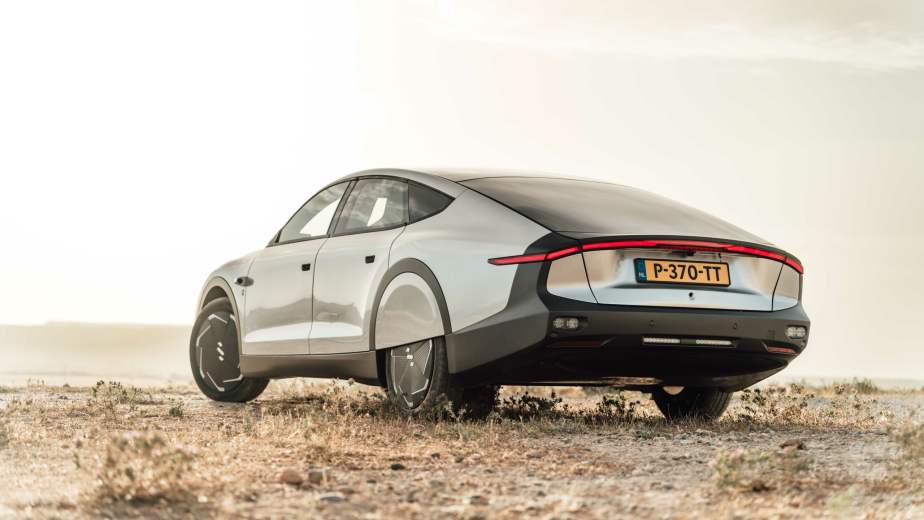
On paper, the idea of adorning a car’s hood, roof, and trunk with photovoltaic cells, allowing the sun to shoulder a portion of the energy burden, is undeniably appealing. This concept has attracted several manufacturers and startups, eager to tap into the promise of self-sufficient mobility. A notable example is the Dutch company Lightyear, which launched the Lightyear 0 sedan featuring integrated solar panels. This vehicle, which Frandroid had the opportunity to test drive, aimed to showcase the potential of solar-powered driving.
However, the inherent limitations of this approach have remained largely unchanged. The primary obstacle is purely geometric. The usable surface area on a typical passenger car – encompassing the hood, roof, and rear deck – maxes out at approximately 4 to 5 square meters. To generate a truly significant amount of energy, at least double that surface area would be required, a spatial constraint that is difficult, if not impossible, to overcome within conventional vehicle designs.
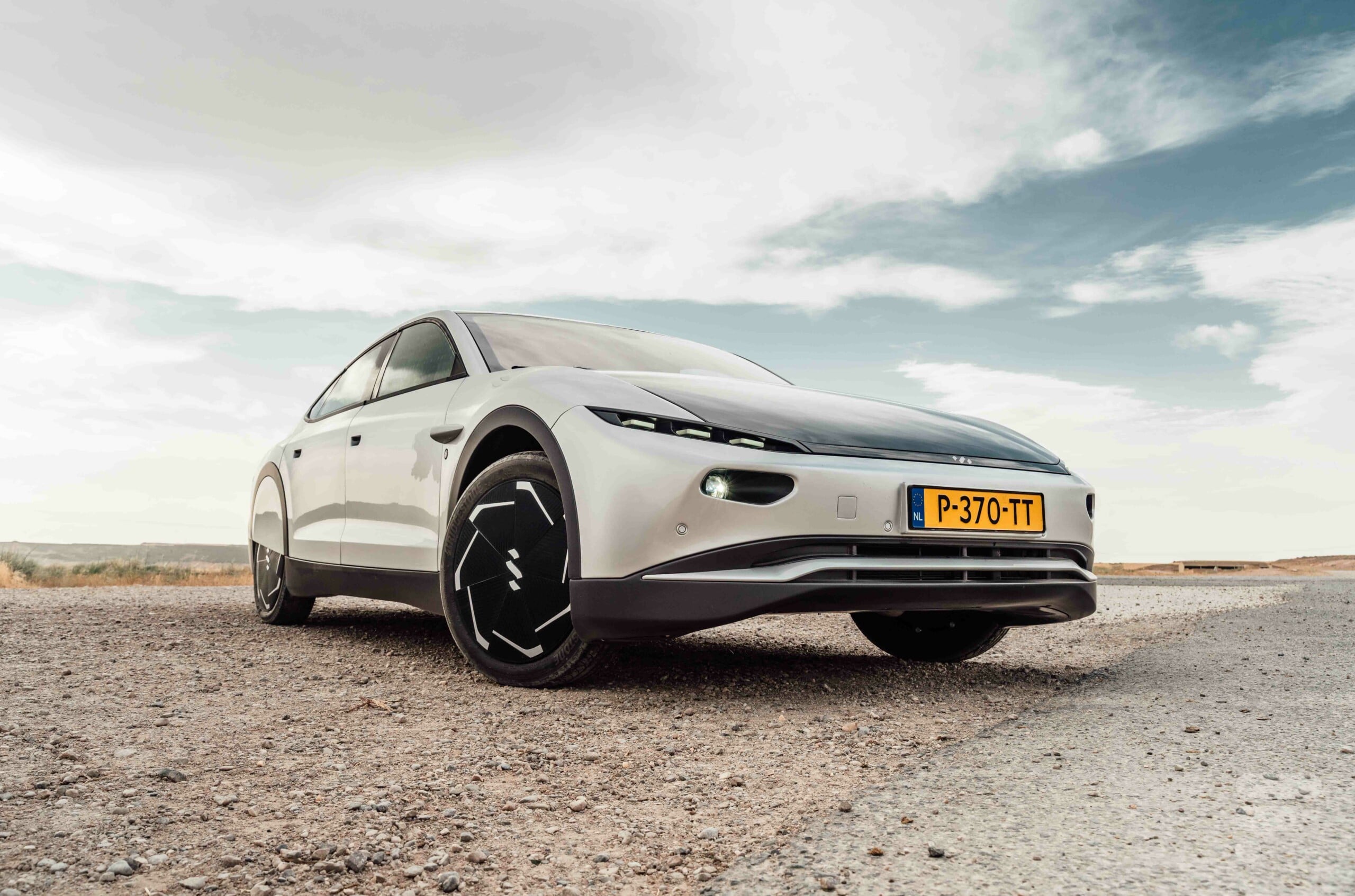
The second major challenge lies in the efficiency of photovoltaic cells. Standard commercial solar cells typically operate at an efficiency rate of around 20%, with the most advanced market offerings only slightly surpassing this threshold. While more performant technologies exist, capable of doubling this figure, their prohibitive production costs render them incompatible with the goal of manufacturing an accessible vehicle. The staggering 250,000 euros (excluding taxes) demanded for one of the 946 limited-edition Lightyear 0 units underscores just how far removed such solutions are from mass-market affordability.
Under optimal conditions—perfect sunlight, ideal exposure, and the vehicle remaining stationary without energy consumption—a car entirely covered in solar panels might realistically gain between 20 and 30 kilometers of range per day. This translates to roughly 2 to 3 kilometers per hour of parking in direct sunlight. As soon as conditions degrade due to cloud cover, shade, or suboptimal angles, this meager figure plummets dramatically. This limited energy harvest means that on-board solar panels are, at best, a supplementary source, providing a trickle charge rather than a substantial contribution to a vehicle’s primary propulsion.
Despite these significant hurdles, some players continue to champion the integrated solar vehicle concept. The Aptera, a distinctive American electric three-wheeler with an extreme aerodynamic profile, has built its entire proposition around solar power. Its design prioritizes minimal mass and ultra-efficiency, promising up to 60 kilometers of solar range daily. Similarly, the Lightyear 0 initially advertised up to 70 kilometers per day. However, after a very limited production run, Lightyear faced severe financial difficulties. Another aspiring contender, Sono Motors, definitively abandoned its Sion model—an electric and solar car priced at €29,900—after years of development and crowdfunding efforts. These turbulent trajectories collectively illustrate the economic fragility inherent in the model: colossal investments are required for a nascent and narrow market, leaving virtually no margin for error.
Even established automakers have cautiously explored integrated solar. Toyota, with certain versions of its Prius, and Hyundai, with the Ioniq 5, have adopted a more modest approach. They integrate small arrays of panels primarily to power secondary electrical systems or provide a very slight, incremental charge to the main battery. This acknowledges the current limitations of the technology for primary propulsion while still leveraging its benefits for auxiliary functions. Industry analysts generally agree that while on-board solar can offer marginal benefits for auxiliary systems or extremely low-power vehicles, it remains economically unviable for primary propulsion in mainstream passenger cars.
Residential Solar Panels: A Pragmatic and Tangible Solution
The narrative shifts dramatically when the focus moves from vehicle-integrated panels to residential solar installations. While not entirely without complexities, the scale, economic feasibility, and practical benefits become incomparably more compelling.
A standard residential solar installation in France, typically ranging from 3 to 6 kilowatt-peak (kWp), represents an investment of approximately 6,000 to 13,000 euros. This cost usually covers the hardware, installation, and grid connection. In France, a 1 kWp solar panel system generates an average of 1,000 kWh annually, with production potentially reaching 1,200 kWh in sunnier southern regions and dropping to around 900 kWh in the north. Consequently, a 6 kWp installation can produce between 6,000 and 7,200 kWh per year, depending on geographical location. The return on investment for a solar installation in France typically occurs within 8 to 12 years, while the panels themselves boast a lifespan exceeding 30 years, offering decades of free, clean electricity after the initial outlay. This favorable amortization period, coupled with declining panel costs and various governmental incentives (such as feed-in tariffs or tax credits), makes residential solar an increasingly attractive proposition globally.
To put this into perspective for EV charging: a Tesla Model 3 Long Range, for example, consumes an average of 13.8 kWh per 100 kilometers. For an annual driving distance of 15,000 kilometers, the total electricity requirement amounts to approximately 2,070 kWh. This demonstrates that a well-dimensioned residential solar installation can comfortably cover the entirety of an electric vehicle’s annual charging needs, often generating a substantial surplus. This excess energy can then be reinjected into the national grid (potentially earning the homeowner revenue) or utilized to power other household appliances, further enhancing energy independence and reducing overall electricity bills.
However, a crucial aspect often underplayed by solar solution providers is the issue of synchronization. Electric vehicles are predominantly charged in the evening or overnight when panels are not producing electricity. To directly consume one’s own solar production, homeowners must either adapt their charging habits—scheduling charges during daylight hours when the vehicle is parked at home—or invest in a domestic battery storage system. While battery storage, such as a Tesla Powerwall or Enphase system, significantly increases the initial cost, it provides the flexibility to store daytime solar surplus for nighttime EV charging or general household use, thereby maximizing self-consumption.
Even without these adjustments, residential solar panels offer substantial financial benefits, typically reducing the annual cost of EV charging by 30% to 60%. This saving comes from the overall compensation on the electricity bill, as grid consumption is offset by solar production during daylight hours. Such savings are particularly noteworthy in an era of escalating electricity prices. With home solar self-consumption, the cost of charging can plummet to around 0.08 euros per kWh (approximately 1.5 euros per 100 km). This contrasts sharply with standard grid tariffs, which range from 0.15 to 0.24 euros per kWh (3 to 4.5 euros per 100 km), and is a dramatic improvement over the 10 to 12 euros per 100 km for gasoline or diesel vehicles. Representatives from the solar energy sector consistently highlight the proven track record and scalability of residential PV systems as the most practical and economically sound path to integrating solar with EV charging.
The True Demands of the Solar-Electric Vehicle Equation
Comparing these two approaches reveals that they fundamentally address different challenges. Solar panels integrated into the car’s body aspire to render the vehicle partially autonomous during travel. This ambition, however, is severely constrained by current physical limitations, confining its practical application to highly specific use cases. At present, it largely functions as a marketing differentiator, one that has not yet garnered significant market success, judging by the limited uptake and financial struggles of vehicles embedding such solutions.
Conversely, residential solar installations tackle the more immediate and tangible problems of charging costs and the overall environmental footprint of EV ownership. The results yielded by this approach are demonstrably more impactful and economically viable. For a homeowner with suitable roof space, the ability to install solar panels, charge their EV at home, and maintain a reasonable annual mileage, the equation begins to make compelling economic sense. This is, of course, contingent upon accepting a significant initial investment and a return on investment that unfolds over several years.
The synergy between residential solar and electric vehicles represents a powerful convergence for a decarbonized energy future. EVs can even function as mobile battery storage units (Vehicle-to-Grid or V2G technology), potentially feeding surplus energy back to the home or grid during peak demand, further enhancing grid stability and offering additional economic returns for homeowners. Government policies and supportive infrastructure will continue to play a crucial role in accelerating both EV adoption and renewable energy integration. While technological advancements in solar cell efficiency and battery density will undoubtedly continue, residential solar offers an immediate, practical, and economically sound solution for greening EV charging, making it a cornerstone of sustainable personal transportation for the foreseeable future. The dream of a fully solar-powered car might remain on the horizon, but the reality of a solar-powered EV journey is already here, anchored firmly to our homes.