
 Chandra Wibowo
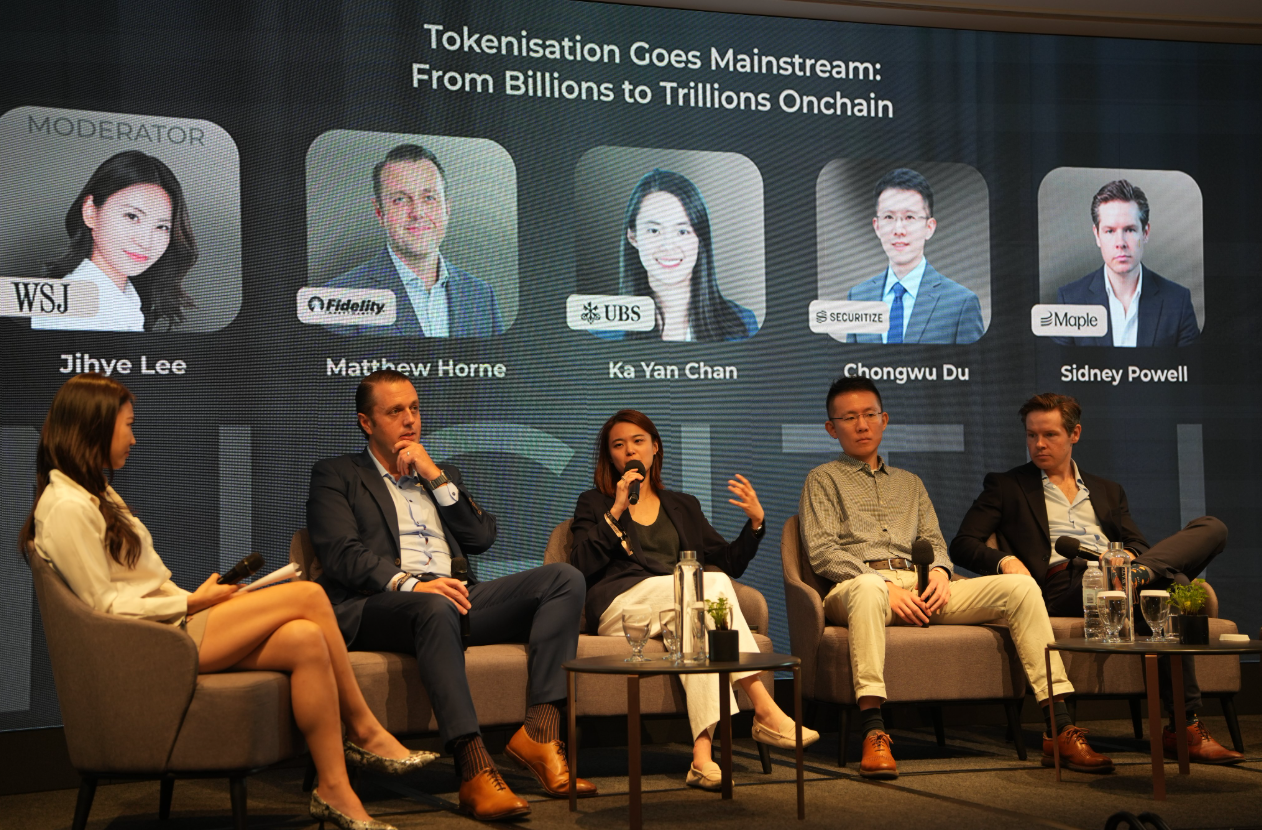
The financial landscape is undergoing a seismic shift as major institutions increasingly embrace an "onchain future" driven by tokenization initiatives. This transition, according to leading strategists from Fidelity Investments and UBS, unlocks access to novel markets and offers significant structural advantages over traditional investment products. Matthew Horne, Head of Digital Asset Strategists at Fidelity Investments, declared during a recent panel discussion at Longitude Singapore on Thursday that the institutional push towards onchain operations is now irreversible, marking a significant inflection point in the evolution of finance.
"In the last 18 months, if you look at the push by true institutions to move toward an onchain future, it’s really no going back," Horne stated emphatically, underscoring the momentum behind this technological integration. He further elaborated on the specific incentives for U.S. asset managers, highlighting how tokenization empowers them to provide enhanced investor access and effectively "reach new markets" that were previously inaccessible or prohibitively complex to engage with.
The growing demand for tokenized assets is not merely theoretical; it is demonstrably reflected in market data. According to RWA.xyz, a prominent analytics platform, the demand for tokenized assets has surged by an impressive 41% in the past 30 days alone. This surge has propelled the number of holders to over 493,000 addresses, a figure that specifically tracks those holding tokenized real-world assets, excluding stablecoins. This metric serves as a key indicator of broader adoption and investor interest in the burgeoning tokenized asset ecosystem.
The Genesis of the Onchain Movement: A Strategic Imperative
The convergence of technological advancement and evolving market demands has catalyzed the current institutional embrace of onchain finance. For decades, financial markets have operated on intricate, often siloed, legacy systems. These systems, while robust, can be characterized by lengthy settlement times, opaque processes, and significant operational overhead. The advent of blockchain technology and the subsequent development of tokenization have presented a compelling alternative, promising greater efficiency, transparency, and accessibility.
Tokenization, in essence, is the process of representing a real-world asset – such as a stock, bond, real estate, or even a piece of art – as a digital token on a blockchain. This digital representation inherits the inherent characteristics of the underlying asset but gains the benefits of blockchain technology, including immutability, programmability, and the potential for fractional ownership and near-instantaneous settlement.
The panel discussion at Longitude Singapore, a significant gathering for professionals in the digital asset and blockchain space, served as a platform for industry leaders to articulate their vision and the tangible progress being made. The presence of representatives from various prominent financial institutions, including Fidelity Investments, UBS, Securitize, and Maple, underscored the broad-based commitment to this transformative wave. The discussion, moderated by Jihye Lee of The Wall Street Journal, provided a comprehensive overview of the current state and future trajectory of onchain finance.
UBS Foresees Billions Flowing Onchain Through Tokenized Treasuries and Equities

The potential for tokenization to revolutionize major asset classes is immense, with experts predicting that even foundational instruments like U.S. Treasuries and equities could soon migrate to the blockchain, potentially bringing trillions of dollars in value onchain. Ka Yan Chan, Head of Digital Assets Business Development at UBS, articulated this vision, emphasizing that these core portfolio components are prime candidates for tokenization.
"What would really drive the billions to the trillions is when market infrastructure players like the Fed or DTCC make the first move in transforming the custody layer to a tokenized platform," Chan stated during the panel. This sentiment highlights a critical dependency: the widespread adoption and scalability of tokenization are intrinsically linked to the willingness of foundational infrastructure providers to embrace blockchain technology. The Federal Reserve and the Depository Trust and Clearing Corporation (DTCC) are pivotal entities in the U.S. financial system, and their adoption of tokenized platforms would serve as a powerful endorsement and catalyst for broader market transformation.
Chan further explained that industry players can effectively "piggyback" on these top-tier initiatives by focusing on developing the distribution layer for tokenized assets. This implies that while major infrastructure changes are underway, other financial technology firms and service providers can build upon these foundations, creating innovative solutions for accessing, trading, and managing tokenized securities. This collaborative approach is crucial for building a robust and interconnected onchain financial ecosystem.
Regulatory Milestones Paving the Way for Tokenization
The progression of tokenization is not happening in a regulatory vacuum. Recent actions by the U.S. Securities and Exchange Commission (SEC) have been instrumental in creating a more conducive environment for onchain asset development. In December 2023, the SEC issued a "no-action" letter to a subsidiary of the DTCC, a landmark decision that effectively greenlit the corporation’s ability to offer a new securities market tokenization service. This approval signifies a crucial step towards integrating blockchain technology into the core clearing and settlement infrastructure of the U.S. securities market.
Further bolstering this momentum, the SEC approved a temporary exemption in September that permits the limited trading of tokenized U.S. stocks on specific onchain venues. This exemption acknowledges the nascent stage of tokenized stock trading while allowing for experimentation and development within defined parameters. In a tangible demonstration of this progress, Securitize, a prominent digital asset securities firm, announced on Thursday the launch of trading for tokenized shares of a dozen of the most widely held U.S. traded stocks. These offerings will encompass security entitlements, indicating a sophisticated approach to digital representation of ownership.
These regulatory developments are not isolated events but part of a broader trend of increasing acceptance and integration of digital assets within the traditional financial framework. The "no-action" letter for DTCC and the SEC’s temporary exemption for tokenized stock trading represent significant endorsements from regulatory bodies, signaling a growing confidence in the potential of blockchain-based financial instruments.
Quantifying the Onchain Shift: Data Reflects Rapid Growth
The impact of these developments is already visible in the data. OnchainBenchmark, another key analytics provider, reports that over $1.2 billion in capital has flowed onto blockchains in the past 30 days alone. This influx has contributed to a total market capitalization exceeding $323 billion when considering both stablecoins and tokenized assets. This figure represents the aggregate value of digital representations of assets that are actively managed and transacted on various blockchain networks. The continuous inflow of capital underscores the growing trust and utility that investors are finding in the onchain space.
The figures from RWA.xyz and OnchainBenchmark collectively paint a picture of a rapidly expanding market. The 41% increase in demand for tokenized assets and the significant capital inflow indicate that institutional and retail investors are actively participating in this new paradigm. The exclusion of stablecoins from the RWA.xyz metric is particularly noteworthy, as it highlights that the growth is not solely driven by the demand for digital dollars but by genuine interest in tokenized forms of traditional and alternative assets.
The Future Trajectory: From Billions to Trillions
The projections for the future of tokenized real-world assets (RWAs) are ambitious and optimistic. Geoff Kendrick, Global Head of Digital Asset Research at Standard Chartered, predicted in August that the RWA market could reach a staggering $4 trillion by the end of 2028. This forecast suggests a compound annual growth rate (CAGR) that far outpaces many traditional asset classes, signaling a substantial reallocation of capital towards tokenized solutions.
This exponential growth is expected to be fueled by several factors:
- Increased Liquidity: Tokenization can break down traditional liquidity silos, allowing for more efficient trading and settlement of assets that were previously illiquid.
- Fractional Ownership: The ability to divide high-value assets into smaller, tokenized units democratizes investment, making previously inaccessible assets available to a wider range of investors.
- Enhanced Transparency and Auditability: Blockchain’s immutable ledger provides a transparent and auditable record of all transactions, reducing counterparty risk and fostering greater trust.
- Programmability: Smart contracts enable the automation of complex financial processes, such as dividend distribution, coupon payments, and compliance checks, leading to significant operational efficiencies.
- Global Accessibility: Tokenized assets can be accessed and traded by a global investor base 24/7, transcending geographical boundaries and traditional market hours.
Broader Implications and the Road Ahead
The move towards an onchain future has profound implications for the financial industry and beyond. It promises to streamline processes, reduce costs, and foster innovation across a wide spectrum of financial services. For investors, it means greater access to diverse asset classes, potentially higher returns, and more efficient portfolio management. For financial institutions, it presents an opportunity to enhance their service offerings, attract new clients, and optimize their operations.
However, the transition is not without its challenges. Regulatory clarity remains a key factor, and while progress is being made, a comprehensive and harmonized regulatory framework is still evolving. Cybersecurity remains paramount, as the security of digital assets and blockchain infrastructure is critical for maintaining trust. Interoperability between different blockchain networks and legacy systems will also be crucial for seamless integration.
Despite these challenges, the consensus among industry leaders is clear: the onchain future is not a distant possibility but an ongoing reality. The strategic initiatives being undertaken by financial giants like Fidelity and UBS, coupled with supportive regulatory developments and robust market data, indicate a decisive and irreversible shift. As more financial institutions embrace tokenization, the financial ecosystem is poised to become more efficient, accessible, and innovative, ushering in a new era of digital finance. The journey from billions to trillions in tokenized assets is well underway, reshaping the very fabric of global finance.









