Galang Taruna
From the silhouette of the brand-new Range Rover, one immediately notices the absence of exhaust pipes – they have simply vanished. Yet, beyond this subtle, telling detail, the king of British luxury SUVs retains its timeless design, seemingly unchanged. However, beneath this familiar exterior lies a profound revolution. We have meticulously examined the Range Rover Electric, which boasts a monumental battery and two powerful, utterly silent electric motors. And yes, we have driven it too!
The Unveiling: A Stealthy Electric Revolution
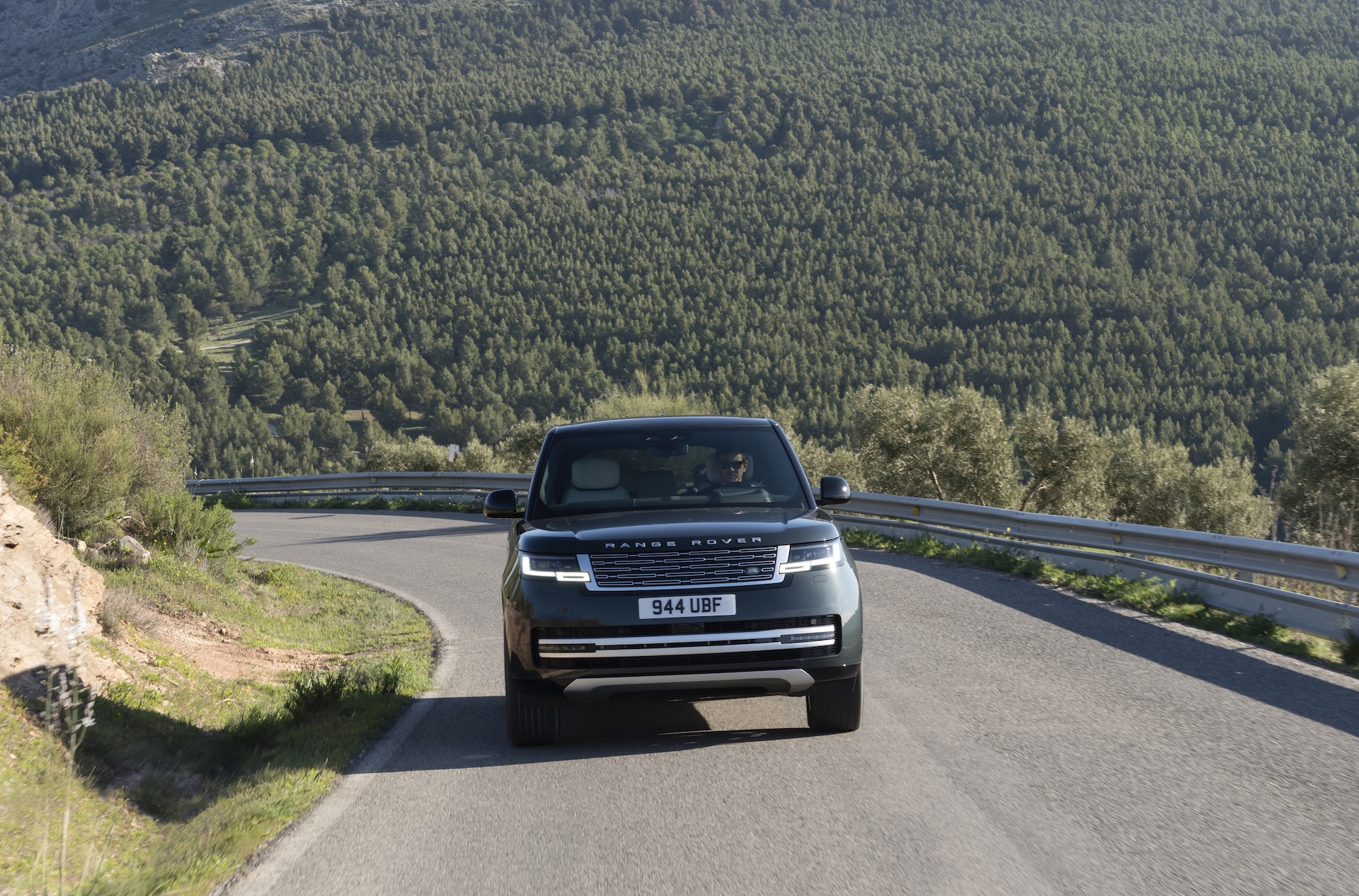
For its inaugural all-electric Range Rover, the British marque, part of the Jaguar Land Rover (JLR) group, deliberately shunned overt flamboyance. This strategic choice comes after four years of intensive development and a slight delay in its market introduction. Now, finally here, this aristocratic SUV is set to redefine luxury electric mobility. The battery-powered version officially launched in the French market on la rentrée (back-to-school season) of 2026, marking a transformation that is less transcendent and more surgically precise.
Jaguar Land Rover’s decision to maintain the Range Rover’s regal aesthetic for its electric iteration is a calculated move. The brand has explicitly stated its philosophy: it is "first a Range Rover before being an electric vehicle." This statement underscores a commitment to preserving the cherished identity and heritage of the Range Rover, rather than yielding to the futuristic design trends often associated with electric vehicles. The aim was to inject cutting-edge zero-emission technology directly beneath the vehicle’s familiar skin, ensuring the iconic status remains intact.
Design Philosophy: Evolving an Icon, Not Reinventing It

To the casual observer, differentiating the Range Rover Electric from its internal combustion engine (ICE) counterpart is nearly impossible without close inspection. This visual continuity is a cornerstone of JLR’s strategy. There are no dramatic styling cues, no radical body panels; only a few discreet "EV" badges subtly hint at the vehicle’s electrified heart. The body retains its stately elegance, an assumed choice by the designers at Gaydon, the brand’s headquarters.
The new model maintains its characteristic lines, imposing stature, and inherent presence. It is built on the same modular MLA-Flex platform that underpins its thermal and hybrid siblings, a decision that allows for significant manufacturing flexibility. The five-door SUV measures 5.05 meters in standard wheelbase (SWB) configuration, extending to 5.25 meters for the long-wheelbase (LWB) variant, which also accommodates an optional seven-seat layout. It boasts a width of 2.05 meters and a height of 1.87 meters. A notable detail for an electric vehicle of this caliber is the absence of a "frunk" (front trunk), a feature often found in EVs that capitalizes on the freed-up space where an engine would typically reside. This omission suggests a priority given to structural integrity or other design elements over additional front storage.
The Art of Aerodynamic Camouflage

While the overall aesthetic remains faithful to its heritage, a significant amount of engineering effort has been dedicated to optimizing the vehicle’s aerodynamic efficiency. This meticulous work is largely invisible, demonstrating an "art of aerodynamic camouflage." The grille, for instance, has been subtly re-engineered and partially closed off across three levels to minimize drag and enhance efficiency. The distinctive 22-inch wheels feature an unprecedented aerodynamic design, contributing further to reduced air resistance. Crucially, a full underbody fairing seals off the vehicle’s underside, creating a smooth surface to manage airflow and "shave off every last kilometer of autonomy without betraying the legendary lines of the machine." The flush-fitting door handles and windows, already a hallmark of the Range Rover design, inherently maximize aerodynamic performance. This comprehensive approach to aero management underlines that the design was conceived from the outset to seamlessly accommodate an electric powertrain.
Luxurious Sanctuary: The Interior Experience
The Range Rover’s interior, renowned for its opulence and comfort, naturally sees little reason to change. The cabin remains largely identical to the ICE versions, save for minor evolutions in the gear selector and the graphics displayed on the infotainment screen. A few physical buttons have also been discreetly removed, hinting at a further integration of digital controls.

The SUV incorporates an even more robust audio system, supplied by the esteemed British specialist Meridian. The setup features over twenty speakers strategically placed throughout the cabin, including within the headrests, which effectively double their volume and immersive quality. The resulting sound experience is remarkably rich and clear. This premium audio option comes at an approximate cost of 10,000 euros if not selected with the higher trim levels, where it is standard on Autobiography and SV variants.
Comfort remains paramount, with high-quality materials adorning every surface and generous legroom. The seats are identical to those found in the thermal version, offering supreme comfort. Indeed, the true spectacle of innovation unfolds beneath the aluminum bodywork, rather than within the familiar confines of the lavish interior.
Under the Hood (and Floor): Power and Performance

Beneath the guise of a lord, lies the power of lightning. The Range Rover Electric is built upon JLR’s flexible MLA-Flex platform, which is designed to accommodate MHEV, PHEV, and BEV powertrains. It’s important to note that all electric propulsion components are engineered and manufactured in-house at JLR’s Electric Propulsion Manufacturing Centre in the United Kingdom, ensuring bespoke integration and quality control.
The traditional V8 thermal engine is replaced by a sophisticated dual-motor electric powertrain. Two permanent magnet electric motors, one on each axle, provide powerful all-wheel drive. Each motor delivers 260 kW, culminating in a formidable 550 horsepower and an instantaneous torque of 850 Nm. This formidable power is managed by a state-of-the-art silicon carbide inverter. The monumental SUV, weighing in at a precise 2,810 kilograms (nearly 3 tons), can dispatch the 0 to 100 km/h sprint in a blistering 4.3 seconds and accelerate from 80 to 120 km/h in a mere 2.7 seconds, showcasing its impressive on-road performance despite its heft.
The giant battery pack, ingeniously integrated beneath the floor, is the heart of this electric beast. To power this substantial mass with ease, Range Rover has equipped it with an imposing 118.5 kWh usable capacity NMC (Nickel Manganese Cobalt) lithium-ion battery. The manufacturer claims a WLTP range of up to 535 kilometers. Thanks to its advanced 800V architecture, the very British SUV accepts ultra-high-power DC charging. Recharging from 10% to 80% state-of-charge requires only 22 minutes on a 350 kW DC fast charger. Even more impressive, just 10 minutes of charging can add 220 kilometers of WLTP range, making long motorway journeys a credible and stress-free prospect.

However, a significant consideration, especially given the vehicle’s premium price point, is its autonomy. The 535 km WLTP range places the Range Rover Electric somewhat behind several premium rivals. Competitors such as the BMW iX, Volvo EX90, and Mercedes EQS often target significantly higher ranges, frequently exceeding 600 km and, in some cases, pushing towards 900 km. JLR engineers candidly acknowledge this disparity, attributing it partly to the Range Rover’s inherent design as an off-roader, which necessitates a more imposing physical presence and consequently a less streamlined aerodynamic profile compared to more road-focused electric luxury SUVs. This trade-off between iconic design, off-road capability, and ultimate range is a deliberate engineering compromise.
Off-Road Prowess Electrified: A Hands-On Impression
In a delightful surprise, we were afforded the opportunity to briefly drive a pre-series prototype of the new Range Rover Electric. Although it was a limited hands-on experience across several test workshops, these short trials unequivocally confirmed the SUV’s formidable off-road capabilities. We navigated paths with exceptionally steep and abrupt inclines, as illustrated by the accompanying imagery. It remains an awe-inspiring experience to conquer such obstacles in a vehicle weighing nearly three tons.

Adventurers can rest assured: the transition to electricity has in no way diminished the Range Rover’s legendary prowess as a trailblazer. Thanks to the innovative Integrated Traction Management (ITM) system, engine torque control is executed within a mere 50 milliseconds on any surface. This represents a reactivity 100 times superior to that of a traditional thermal block, offering unparalleled grip and control. Combined with the intuitive one-pedal driving mode, the vehicle is capable of ascending challenging 45-degree slopes or initiating movement without wheelspin on a 33-degree incline. During our test, any slight slippage was quickly corrected as the vehicle’s intelligent systems rapidly assessed the environment and adjusted traction for the driver, remarkably, even when fitted with road tires. We also ventured through water, confirming the electric SUV’s ability to remain completely dry in depths of up to 900 mm.
Despite its impressive performance, the Range Rover Electric delivers a remarkably smooth driving experience. While these off-road activities were certainly designed to impress, the true test of its comfort, agility, and silence will undoubtedly come on regular roads and motorways. Concerns might arise regarding its maneuverability and perceived bulkiness during urban driving or through successive tight turns, given its substantial weight.
Market Positioning and Pricing

Manufactured in England at the historic Solihull plant, the Range Rover Electric is available for order immediately, with initial deliveries anticipated in early 2027. It is offered in both standard wheelbase (SWB) and long wheelbase (LWB) configurations and across various trim levels: SE, HSE, Autobiography, and SV. The starting price in France for the base Range Rover EV450 SE SWB is a substantial 161,500 euros.
This price point represents a significant premium over the thermal equivalent. JLR justifies this by positioning the electric model "at the very top of the range." For context, the Range Rover petrol (MHEV) currently starts at around 150,000 euros. Given that the launch has already experienced delays, the Range Rover Electric, a highly anticipated model, faces scrutiny regarding this starting price, which some analysts might consider somewhat disconnected from prevailing market dynamics for luxury EVs.
Broader Implications and Future Outlook

The British brand’s bold decision to leave the exterior of its electric Range Rover virtually untouched is a calculated gamble. By preserving the Range’s iconic, stately silhouette, JLR might potentially alienate a segment of buyers who seek to visibly declare their embrace of electric mobility through more futuristic designs. However, for the brand’s traditional clientele, this approach is likely a masterstroke, reaffirming that electrification need not compromise the established identity of ultra-luxury vehicles. It demonstrates that the very high-end segment can embrace electrification without sacrificing its distinctive character.
Beneath the aluminum bodywork and floor, the MLA-Flex modular platform cleverly conceals the battery, preserving the interior spaciousness and habitability. Crucially, this architecture provides significant industrial flexibility and financial security for the Solihull plant. The facility can optimize production costs by seamlessly adjusting between thermal, hybrid, and electric versions based on market demand, indicating that this transformative shift was envisioned from the very beginning of the platform’s development. This raises the pertinent question: why then is it priced so much higher?
On the road, the electric powertrain creates an almost unparalleled sense of serenity and quiet, a true cocoon for its occupants. The 800V charging capability, allowing a 10-80% recharge in just 22 minutes on a 350 kW DC charger, renders long journeys entirely feasible and far from a chore. Its sophisticated traction management system, capable of precise wheel-by-wheel slip control, ensures that its legendary off-road capabilities are not only retained but enhanced. Its only remaining challenges will likely revolve around its significant weight, particularly concerning dynamic handling in fast cornering sequences, and its sheer size, which could make urban driving feel somewhat cumbersome.

In the burgeoning market of exceptional all-electric SUVs, this Range Rover does not arrive in undisputed territory. It faces fierce competition from highly capable rivals such as the new BMW iX5, and more overtly sporty and luxurious, yet often significantly less expensive, alternatives like the Mercedes-Maybach EQS, Lotus Eletre, or Porsche Cayenne. Can the Range Rover Electric truly establish itself as the definitive benchmark in this fiercely contested segment?
And be prepared, as the Range Rover Electric is not arriving alone. On September 30th, JLR is set to fully reveal its sportier sibling, the Range Rover Sport Electric, which is expected to follow its larger counterpart into French dealerships shortly thereafter, further solidifying the brand’s commitment to its electrified future.