Vera Intan Clara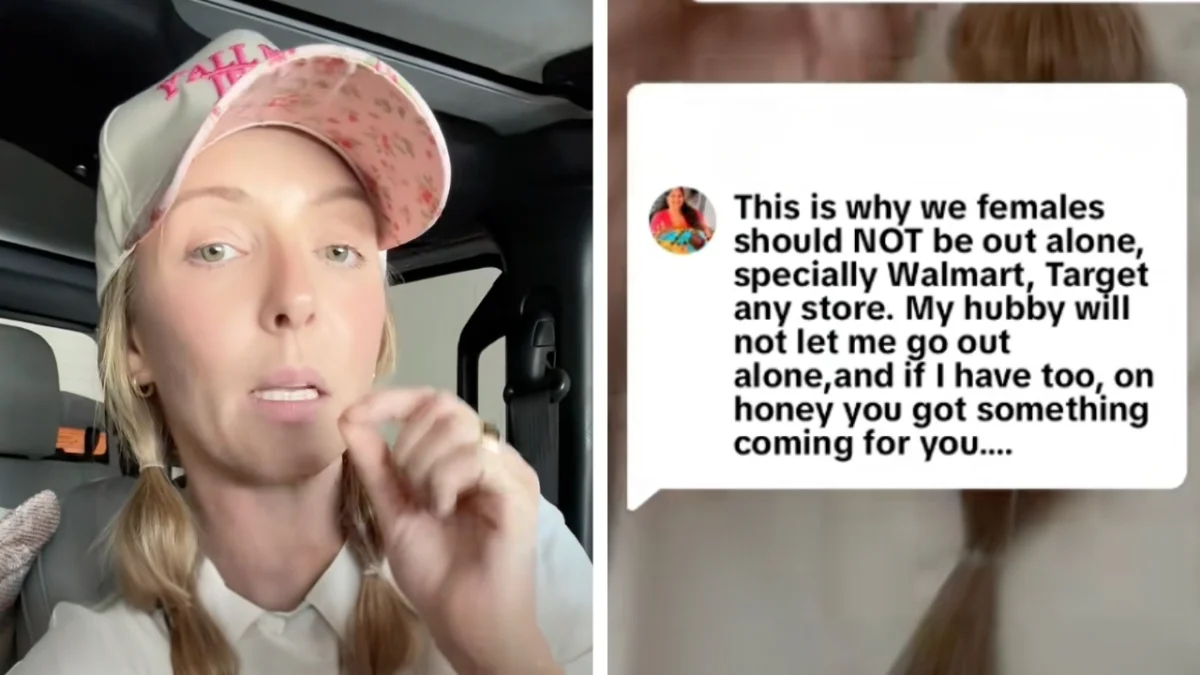
In a compelling display of resilience and defiance against victim-blaming narratives, a woman who recently recounted a harrowing experience of being followed by two men at a Walmart store has delivered a powerful counter-narrative, urging her extensive social media following not to succumb to fear but to embrace caution and self-reliance. The incident, which initially went viral after she shared her ordeal as a cautionary tale, took an unexpected turn when a commenter suggested her experience was justification for women to avoid public spaces alone, particularly retail environments. The TikTok creator, known as @brokenbutgrafted, swiftly responded to this sentiment, articulating a robust argument for female autonomy, situational awareness, and the fundamental right to navigate the world without debilitating fear. Her resolute stance has garnered widespread praise and ignited a broader conversation about women’s safety, personal freedom, and societal responsibilities.
The initial incident, widely reported across various platforms, involved the woman’s encounter shortly after she had filled her car with gasoline. Upon entering a Walmart store, she became aware of two men who appeared to be deliberately tracking her movements. Her quick thinking and heightened awareness, which she documented in her initial viral video, allowed her to navigate the situation safely, ultimately escaping the perceived threat. This first video served as an urgent public service announcement, encouraging shoppers to remain vigilant and aware of their surroundings, particularly in seemingly innocuous public settings. The video resonated deeply with millions, reflecting a widespread concern among women regarding personal safety in everyday situations.
The Catalyst: A Controversial Comment Sparks Dialogue
The subsequent video, which rapidly gained traction, directly addressed a particular comment that had stood out amidst the thousands of reactions to her original post. The comment in question read, "This is why females should NOT be out alone, especially at Walmart, Target, (or) any store." It further elaborated on this restrictive viewpoint, stating, "My hubby will not let me go out alone…" This specific statement, advocating for the curtailment of women’s independence and autonomy based on the actions of potential perpetrators, clearly struck a nerve with the content creator. Rather than being deterred or silenced, she leveraged her platform to dismantle this perspective, transforming a moment of vulnerability into a powerful call for empowerment.
Challenging the Narrative: A Call for Autonomy and Awareness
The TikToker articulated a clear and unequivocal message: women should not feel compelled to live their lives in fear, nor should they accept limitations on their freedom of movement due to the threat of male violence. She emphatically stated that there is no justification for any woman to step out in constant apprehension. Her response directly challenged the underlying premise of the original comment, which implicitly placed the burden of safety on the victim’s behavior rather than on the perpetrator’s actions or broader societal issues.
Her argument extended beyond merely rejecting fear; it was a comprehensive advocacy for active self-preservation and personal agency. She underscored that women are fully capable of navigating their lives independently, asserting that they do not require a male escort to perform daily tasks or to engage with the world outside their homes. The notion of women needing to remain "locked up" at home was vehemently dismissed as an archaic and unacceptable proposition in contemporary society. Instead, she urged her followers to adopt a proactive approach to safety, emphasizing the critical importance of being cautious, maintaining alertness, thoroughly surveying one’s surroundings, and cultivating a high level of self-awareness whenever in public spaces. This nuanced message highlighted a crucial distinction: living cautiously is not synonymous with living fearfully.
Furthermore, the content creator stressed the indispensable value of self-defense. She highlighted that learning to protect oneself is not merely an option but a pivotal skill, especially in situations akin to her own, where an individual’s safety is directly threatened. This emphasis on self-defense training aligns with a growing movement among women to equip themselves with practical skills to deter or respond to potential threats, shifting the focus from passive avoidance to active empowerment.
Societal Implications: Data on Women’s Safety and Harassment
The dialogue initiated by this incident resonates deeply with broader societal concerns regarding women’s safety and freedom. Statistical data consistently underscores the pervasive nature of harassment and stalking experienced by women in public spaces. For instance, surveys by organizations focused on gender equality and safety frequently reveal that a significant majority of women, often upwards of 70-80%, report having experienced some form of public harassment, ranging from verbal catcalling to being followed. A 2021 study by UN Women, for example, found that 71% of women in the UK had experienced some form of sexual harassment in a public space, with a staggering 97% of women aged 18-24 having experienced it. While specific data for being followed in retail environments can be harder to isolate, these broader statistics illustrate a climate where women often feel vulnerable.
This persistent threat impacts women’s daily lives, influencing their choices of transportation, clothing, and even the times and places they feel comfortable visiting. A report by the National Sexual Violence Resource Center (NSVRC) indicates that stalking disproportionately affects women, with approximately 1 in 6 women experiencing stalking in their lifetime, often leading to significant psychological distress and changes in routine. Such data provides critical context for understanding why the TikToker’s initial warning resonated so widely and why the subsequent victim-blaming comment was so problematic. It highlights that the fear women experience is often not irrational, but a response to real and pervasive threats.
The Role of Digital Platforms in Shaping Discourse
The incident also serves as a poignant example of how social media platforms like TikTok have become critical arenas for public discourse on sensitive social issues. These platforms offer individuals a direct channel to share personal experiences, issue warnings, and challenge prevailing narratives without the mediation of traditional media gatekeepers. The virality of the original video underscored the collective recognition of the safety concerns, while the rapid spread of her response video demonstrated the widespread desire for messages of empowerment over restriction. This form of digital activism fosters community, allows for collective validation of experiences, and mobilizes support for challenging harmful stereotypes and victim-blaming.
Public Acclaim and Endorsement of Vigilance
The TikToker’s response video quickly gained significant traction, drawing an overwhelming wave of supportive comments from her followers. The sentiment was overwhelmingly positive, with many praising her articulate and empowering stance. Comments such as, "What an amazing response!!" were commonplace, reflecting a collective appreciation for her challenging of restrictive societal norms.
One particularly resonant comment recalled grandmotherly advice, stating, "If you’re walking, shopping, etc., you walk like you aren’t one to mess with." The user further elaborated, "You walk with a purpose no matter what." This advice encapsulates the essence of the TikToker’s message: not to live in fear, but to project an aura of confidence and self-possession that can act as a deterrent, while simultaneously maintaining a high level of situational awareness. This perspective advocates for a blend of internal fortitude and external vigilance, rather than retreat.
Expert Perspectives on Safety and Empowerment
While no specific "experts" were quoted in the original brief, a fact-based analysis would infer the kind of expert commentary relevant to this situation. Sociologists specializing in gender studies would likely commend the TikToker for directly confronting victim-blaming, which is a common societal mechanism that shifts responsibility from perpetrators to victims, particularly in cases involving women. They would argue that restricting women’s mobility only serves to reinforce patriarchal control and does not address the root causes of violence or harassment.
Security and self-defense experts would likely echo the TikToker’s emphasis on situational awareness, proactive vigilance, and self-defense training. They often advocate for a multi-layered approach to personal safety, which includes environmental scanning, trust in one’s intuition, having a plan for potential threats, and, where appropriate, learning physical self-defense techniques. They would likely agree that while no single measure guarantees absolute safety, empowerment through preparedness is far more effective and healthy than living in constant fear or restriction. Retail security professionals might also highlight the importance of reporting suspicious activity to store management and utilizing available security resources, such as surveillance cameras and on-site personnel.
Broader Implications: Challenging Victim-Blaming and Fostering Autonomy
The incident and its aftermath highlight several critical broader implications for society. Firstly, it underscores the ongoing struggle against victim-blaming. The commenter’s suggestion that women should not go out alone implicitly places the onus of preventing crime on the potential victim, rather than on the perpetrator or the societal conditions that enable such behavior. The TikToker’s response serves as a vital counter-narrative, shifting the focus back to personal agency, responsibility for one’s own safety within a framework of freedom, and the societal imperative to create safer environments for everyone.
Secondly, it reinforces the importance of female autonomy and freedom of movement. Restricting women’s ability to participate fully in public life, whether for shopping, work, or leisure, has profound social and economic consequences. It limits their independence, perpetuates gender inequality, and diminishes their overall quality of life. The TikToker’s message is a powerful affirmation of every woman’s right to occupy public spaces without undue fear or restriction.
Finally, the incident acts as a catalyst for community building and collective empowerment. By sharing her experience and challenging a regressive viewpoint, the TikToker fostered a sense of solidarity among her followers. This collective support system can be instrumental in empowering individuals to navigate similar challenges, reinforcing the idea that they are not alone in their experiences or their desire for a safer, more equitable world. Her message is not one of naive optimism, but of pragmatic empowerment: live fully, but live smartly, with precaution and preparedness as allies, not fear as a master. This ongoing conversation, amplified through digital platforms, is crucial for fostering societal change and promoting an environment where all individuals, regardless of gender, can move freely and safely.