George Chandra Eka
The perception that lower cost inherently equates to lower quality is a notion frequently challenged in today’s dynamic consumer markets, and nowhere is this more evident than in the mobile telecommunications sector. For years, consumers have been accustomed to the hefty price tags associated with postpaid plans from the three major mobile network operators (MNOs) in the United States: AT&T, T-Mobile, and Verizon. These plans often range from $50 to nearly $100 per month for a single line, frequently bundled with "on us" phone deals that lock users into multi-year contracts and inflate costs with extraneous services. However, a robust and rapidly expanding alternative exists: Mobile Virtual Network Operators (MVNOs), which provide reliable cellular service at a fraction of the traditional cost, fundamentally reshaping consumer expectations for mobile connectivity.
The Genesis and Evolution of MVNOs
The concept of MVNOs is not a recent phenomenon. The roots of virtual network operations can be traced back to the late 1990s and early 2000s, emerging as a strategic response to increasing network capacity and the desire for major carriers to monetize unused bandwidth. Virgin Mobile, launched in the UK in 1999 and later in the US in 2002, is often cited as one of the pioneering MVNOs, demonstrating the viability of operating a mobile service without owning the underlying infrastructure. Early MVNOs primarily targeted niche markets, offering prepaid options or specialized services that the larger MNOs were less inclined to pursue.
Over the past two decades, the MVNO landscape has undergone significant transformation. Initially, MNOs viewed MVNOs as a means to offload excess network capacity and reach customer segments they might not directly serve. However, as MVNOs gained traction and proved their ability to attract and retain customers, MNOs began to recognize their strategic importance, sometimes even acquiring successful MVNOs or launching their own budget-friendly virtual brands (e.g., Cricket Wireless by AT&T, Metro by T-Mobile, Visible by Verizon). This evolution signifies a maturing market where MVNOs are no longer just niche players but formidable competitors influencing pricing and service models across the entire industry.
Technological advancements have also played a crucial role in the proliferation and success of MVNOs. The widespread adoption of smartphones, coupled with improvements in network technology like 4G LTE and 5G, has made mobile data an essential utility. Simultaneously, innovations such as eSIM technology, which allows users to activate a cellular plan without a physical SIM card, have dramatically simplified the switching process between carriers, making MVNOs even more accessible. For instance, the Apple iPhone 14 and newer models in the US have eliminated physical SIM card slots, relying exclusively on eSIM, which inherently favors the agility of MVNOs in onboarding new customers.

Deconstructing the MVNO Model: How Savings Are Achieved
The fundamental distinction between an MNO and an MVNO lies in infrastructure ownership. Mobile Network Operators (MNOs) are the giants of the telecom world; they own and operate the vast network infrastructure, including cell towers, radio access networks, and core network elements that make cellular communication possible. In stark contrast, Mobile Virtual Network Operators (MVNOs) are "virtual" because they do not own any of this physical infrastructure. Instead, they lease wholesale access to an MNO’s network at negotiated rates, then resell that service to their customers under their own brand.
This operational model underpins the significant cost savings passed on to consumers. MVNOs eliminate the colossal capital expenditure and ongoing operational costs associated with building and maintaining a nationwide network. This leaner business model allows them to offer plans at substantially lower prices. Key factors contributing to their cost efficiency include:
- No Infrastructure Costs: The most obvious saving comes from not having to invest billions in towers, fiber optics, and spectrum licenses.
- Streamlined Operations: Many MVNOs operate with significantly smaller overheads. They typically lack physical retail stores, relying instead on online portals, mobile apps, and phone-based customer support. This digital-first approach reduces real estate costs, staffing expenses, and other logistical burdens.
- Bulk Purchasing: MVNOs buy network capacity from MNOs in massive wholesale quantities, securing highly favorable rates that individual consumers cannot access.
- Targeted Market Segments: MVNOs often focus on specific consumer segments—such as budget-conscious users, individuals with lower data consumption, or frequent international travelers—allowing them to tailor plans and marketing efforts more efficiently.
- Simplified Plans: Unlike major carriers that often bundle streaming services, cloud storage, or other perks into their premium plans, MVNOs generally offer more straightforward, unbundled services. This "no-frills" approach ensures customers pay only for what they need, avoiding hidden costs or unwanted extras.
- Prepaid Model: The majority of MVNOs operate on a prepaid basis, meaning customers pay for their service upfront, either monthly or for longer durations (e.g., three, six, or twelve months). This contrasts with the traditional postpaid model of MNOs, which bills customers after usage and often requires credit checks. The prepaid model eliminates the financial risk for MVNOs associated with customer defaults and simplifies billing, further reducing administrative costs. Moreover, it liberates consumers from long-term contracts and the restrictive payment schemes often tied to "free" phone promotions from major carriers.
While MVNOs offer compelling financial advantages, it is important for consumers to understand one key operational aspect: network deprioritization. Because MVNOs are leasing network access, their subscribers typically receive lower priority on the MNO’s network compared to the MNO’s direct customers. This means that during periods of high network congestion—such as at a crowded concert, a major sporting event, or during peak hours in a dense urban area—MVNO users might experience slower data speeds or slightly degraded service quality. However, for the vast majority of users, in most everyday scenarios, this deprioritization is rarely noticeable, and the network speeds remain perfectly adequate for browsing, streaming, and communication.
Supporting Data and Market Dynamics
The growth of the MVNO sector is a testament to its value proposition. According to various industry reports, MVNOs collectively serve a significant portion of the wireless market. In the United States, MVNOs account for an estimated 10-15% of all wireless subscribers, a figure that has been steadily growing. Market analysts project continued expansion, driven by increasing consumer awareness, the appeal of cost savings in an inflationary environment, and the ongoing shift towards digital-first service models.

For instance, research firm Statista indicates that the number of MVNO subscribers in the US is expected to reach over 40 million by 2026. This growth puts pressure on major carriers, forcing them to innovate their own offerings, introduce more competitive pricing, or, as seen with T-Mobile’s acquisition of Mint Mobile, integrate successful MVNOs into their own portfolio to capture a broader market segment. The average savings for an individual switching from a major carrier’s typical unlimited plan to an equivalent MVNO plan can be upwards of $300-$600 per year, a substantial sum for many households. This economic impact is a primary driver of consumer adoption.
Key Players in the MVNO Landscape
The MVNO market is diverse, with various providers catering to different needs and preferences:
-
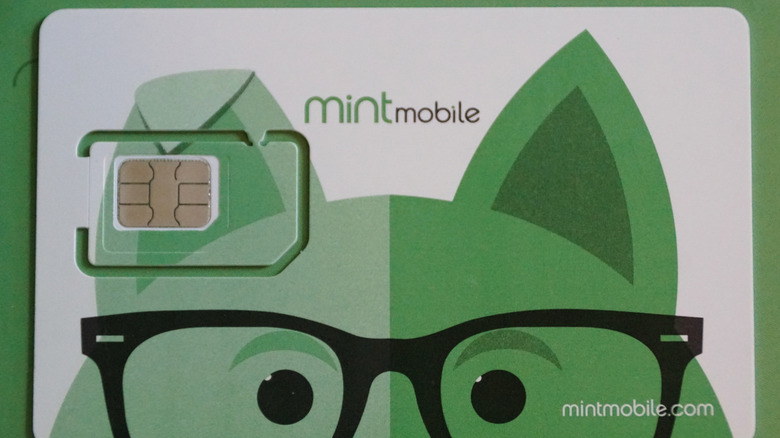
Mint Mobile: Now owned by T-Mobile, Mint Mobile is renowned for its prepaid, multi-month payment structure. Customers pay upfront for three, six, or twelve months of service, with the per-month cost decreasing significantly with longer commitments. Its most popular offering is often the 12-month, 6GB data plan, priced as low as $15 per month. Mint also offers higher data tiers, including 17GB, 23GB, and a 50GB "unlimited" plan, all leveraging T-Mobile’s extensive 5G network. The acquisition by T-Mobile signals a growing trend of MNOs absorbing successful MVNOs, potentially offering Mint customers improved integration while maintaining its budget-friendly appeal.
-
Visible: Operated directly by Verizon, Visible offers a simplified approach with primarily unlimited data plans. Its core plan, priced around $25 per month (or $275 annually), includes unlimited talk, text, and data, along with unlimited mobile hotspot usage, all running on Verizon’s robust 4G LTE and 5G networks. Higher tiers grant access to Verizon’s faster Ultra Wideband 5G network and additional perks like international usage days. Being an MNO-owned MVNO, Visible often benefits from slightly better network priority than independent MVNOs, making it a compelling option for those seeking Verizon’s network quality at a lower price point.
-
US Mobile: This MVNO stands out for its exceptional flexibility. US Mobile allows customers to choose between all three major networks (Verizon, T-Mobile, AT&T via a partner), offering unprecedented choice during setup and the option to switch for a small fee (or freely with premium plans). Beyond unlimited data offerings, US Mobile provides custom plans where users can precisely select the amount of minutes, texts, and data they need. It also supports family plans that share a single data pool, making it ideal for households seeking tailored solutions.
-
Google Fi Wireless: Positioned as an excellent option for international travelers, Google Fi Wireless operates on T-Mobile and UScellular networks. Its "Unlimited Premium" plan, though pricier at around $65 per month, includes 50GB of high-speed data that works seamlessly in over 200 countries without extra charges or international roaming passes. For those with variable data usage, the "Flexible" plan offers talk and text for $20 per month, plus $10 per GB of data, which also extends to international usage. Google Fi’s integration with Google services and its focus on global connectivity cater to a distinct user base.
-
Other Notable MVNOs: The market also features other significant players like Boost Mobile (operating on T-Mobile and AT&T networks, with some Dish Network infrastructure), Cricket Wireless (AT&T-owned), and Metro by T-Mobile (T-Mobile-owned). These MNO-backed MVNOs often provide a blend of budget pricing with slightly better network priority or access to some MNO-specific perks, blurring the lines between traditional carriers and independent virtual operators.
The MVNO Experience: Making the Switch
Transitioning to an MVNO is generally straightforward, though it requires a few preparatory steps. The first is to verify device compatibility and network coverage. Most MVNO websites offer tools to check if a specific phone will work on their network (via IMEI lookup) and to assess coverage in a given area.
A critical consideration for many is their current device. If a user is still paying off a phone through a major carrier, they will typically need to settle the remaining balance before switching. Once paid off, the device must be unlocked by the outgoing carrier to function with a new provider. Alternatively, customers can purchase an unlocked phone directly from a manufacturer or from the MVNO itself. The advent of eSIM technology has significantly streamlined the activation process; instead of waiting for a physical SIM card to arrive in the mail, users can often activate their service almost instantly through the MVNO’s app, a particularly convenient feature for devices like the newer iPhones that exclusively use eSIMs. Number porting, the process of transferring an existing phone number to a new carrier, is a standard procedure facilitated by all MVNOs, typically taking a few hours to a few business days.
For consumers who have made the switch, the MVNO experience is largely positive. Many users, like the author who has utilized MVNOs since 2015, report no significant degradation in service quality compared to major carriers. Network speeds are typically sufficient for everyday tasks, including streaming video, web browsing, and video calls. The primary benefits revolve around financial savings and flexibility. By purchasing unlocked phones outright and opting for tailored, budget-friendly plans, consumers avoid the hidden costs and long-term commitments often associated with "free" phone deals from MNOs. The ongoing trend of MVNOs increasing data allowances on existing plans without raising prices further underscores their commitment to value.

Broader Impact and Implications
The rise of MVNOs carries significant implications for both consumers and the broader telecommunications industry.
For consumers, MVNOs represent a powerful force for empowerment. They foster greater transparency in pricing, allow for more control over monthly expenditures, and provide a wider array of choices tailored to diverse needs. This increased competition ensures that major carriers cannot rest on their laurels, compelling them to offer more competitive plans and services.
For the telecom industry, MVNOs have acted as disruptors, driving innovation in pricing models and customer service. While major carriers initially used MVNOs to monetize excess capacity, the success of these virtual operators has forced MNOs to re-evaluate their own strategies, leading to the creation of budget brands and more flexible plan options within their own offerings. The acquisition of successful MVNOs by MNOs also indicates a strategic shift, where the established players recognize the value of these leaner, customer-centric models.
Looking ahead, the MVNO sector is poised for continued growth. The ongoing rollout of 5G networks, including 5G Standalone (SA), presents new opportunities for MVNOs to offer enhanced services. As IoT (Internet of Things) devices proliferate, there’s also potential for specialized MVNOs to cater to the connectivity needs of these devices. The economic climate, coupled with evolving consumer preferences for flexibility and value, ensures that MVNOs will remain a vital and growing segment of the mobile market.
In conclusion, the notion that a lower price must compromise quality is effectively debunked by the MVNO model. For millions of consumers, the choice to opt for an MVNO is not merely about saving money; it is about embracing a smarter, more flexible, and equally reliable approach to mobile connectivity. By carefully evaluating their actual data usage, investing in unlocked devices, and exploring the diverse offerings of MVNOs, individuals can significantly reduce their phone bills without sacrificing the quality of service they need in an increasingly connected world.