Chandra Wibowo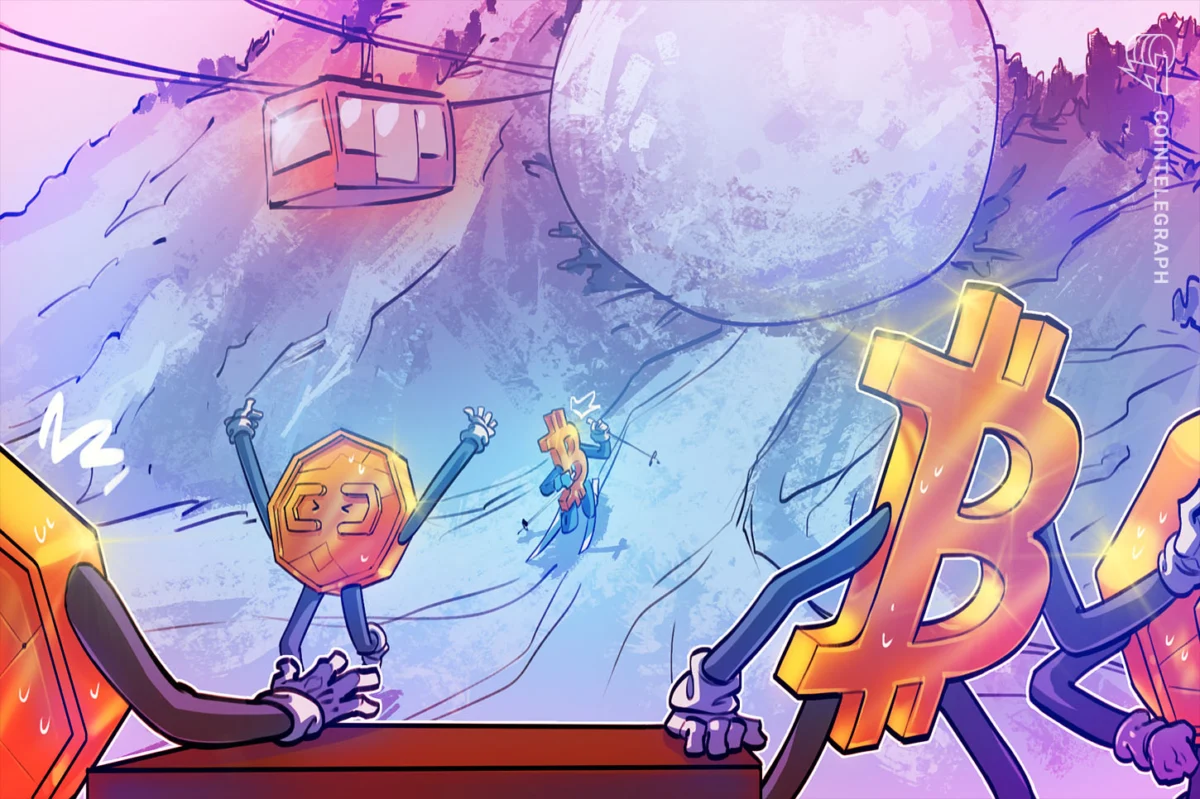
The United States labor market delivered a robust performance in August, significantly exceeding economists’ projections and immediately impacting financial markets, particularly Bitcoin. The Bureau of Labor Statistics reported the addition of 162,000 nonfarm payroll jobs, a figure that dwarfed the consensus forecast of approximately 56,000. This unexpected strength in employment has injected fresh uncertainty into the outlook for Federal Reserve interest rate policy, with Bitcoin experiencing a notable price dip following the announcement.
The economic data released on Friday holds particular significance as it arrives just ahead of the Federal Open Market Committee (FOMC) meeting scheduled for September 15-16. Unlike in previous eras under different Federal Reserve chairs, where forward guidance often anchored market expectations, the current environment is characterized by a notable lack of explicit forward guidance from Chair Kevin Warsh and the potential for dissenting opinions within the committee. This has amplified market volatility and made economic indicators, such as employment figures, more potent catalysts for price action.
The market’s reaction was swift and pronounced. Bitcoin (BTC), which had been trading around $81,300 prior to the jobs report, experienced a sell-off, reaching local lows of $78,600. At the time of writing, it had partially recovered to $79,500, but the immediate reaction underscored the sensitivity of digital assets to macroeconomic signals.
Fed Rate Outlook: A Shifting Landscape
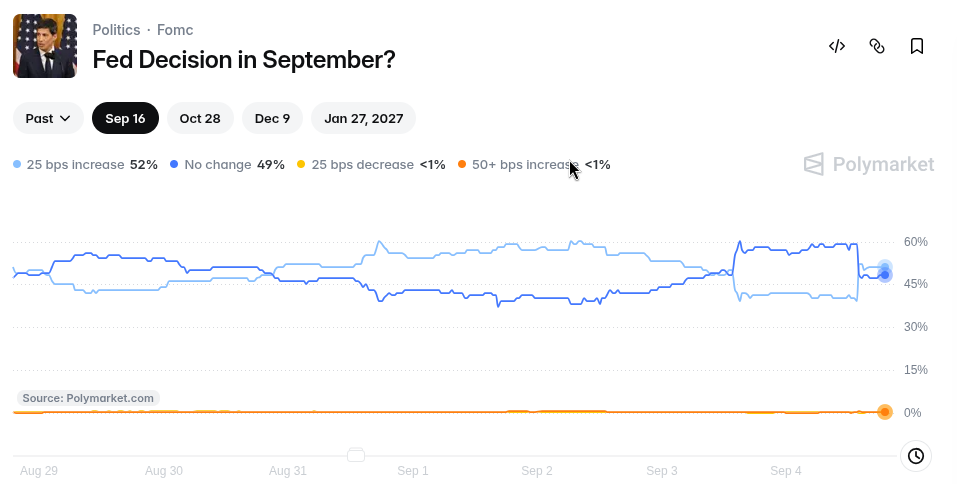
The prevailing sentiment regarding the Federal Reserve’s next move on interest rates has been a closely watched battleground. Prior to the August jobs report, indications were leaning towards a potential pause. This sentiment was bolstered by comments from Fed Governor Christopher Waller on Thursday, who expressed a preference for holding rates steady pending further analysis of upcoming inflation data. This statement had shifted the probabilities on prediction markets like Polymarket, with a 60% chance favoring a pause and a 40% likelihood of a 25 basis-point interest rate hike.
However, the surprisingly strong August jobs report significantly altered this calculus. The implied probabilities on Polymarket subsequently recalibrated to a near 50/50 split between a rate pause and a hike, reflecting the market’s recalibration of the Fed’s potential course of action. This increased uncertainty surrounding monetary policy directly influences risk assets, including cryptocurrencies, which often exhibit inverse correlation to anticipated interest rate hikes.
President Trump’s Renewed Calls for Rate Cuts
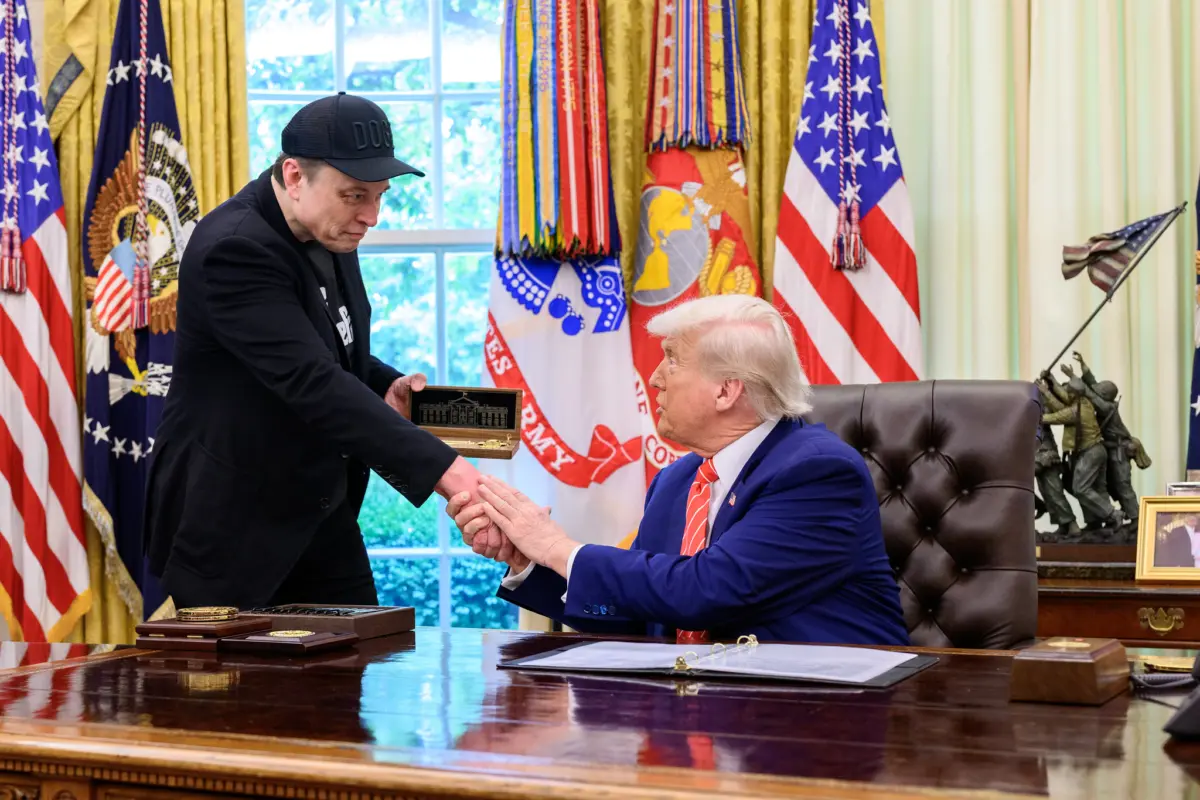
The robust labor market data also prompted an immediate reaction from U.S. President Donald Trump, who reiterated his long-standing calls for the Federal Reserve to lower interest rates. In a post on Truth Social, President Trump urged the Fed Board to "get smart – BE PATRIOTS for a change." He emphasized that "High interest rates put the U.S.A. at a very unfair disadvantage, and I won’t allow that to happen!"
This marks a continuation of President Trump’s vocal criticism of the Federal Reserve’s monetary policy. He had previously and frequently criticized former Chair Jerome Powell for not enacting rate cuts. While his focus had been on Powell, his direct engagement with the current Fed leadership, including Chair Warsh, on Friday indicated a growing impatience with the prevailing interest rate environment. The strong jobs report, while generally viewed as a positive economic sign, has been framed by the President as further justification for easing monetary policy to maintain U.S. economic competitiveness.
The Blake2b Bitcoin Variant Emerges Amidst Network Centralization Concerns
In a separate development within the cryptocurrency space, a new iteration of Bitcoin, utilizing the Blake2b proof-of-work algorithm, has attracted its initial liquidity. This emergence is a direct consequence of a contentious soft fork activation known as BIP-110 on August 7th. The activation of BIP-110 led to a brief, temporary split of the Bitcoin network into two competing chains: one adhering to the new BIP-110 rules and another operating under the established protocols.
The BIP-110 chain experienced significant difficulties in gaining traction, largely due to a perceived lack of sufficient mining power dedicated to extending its blocks. This led to a stall in its development and adoption.
Decentralization Debates Intensify
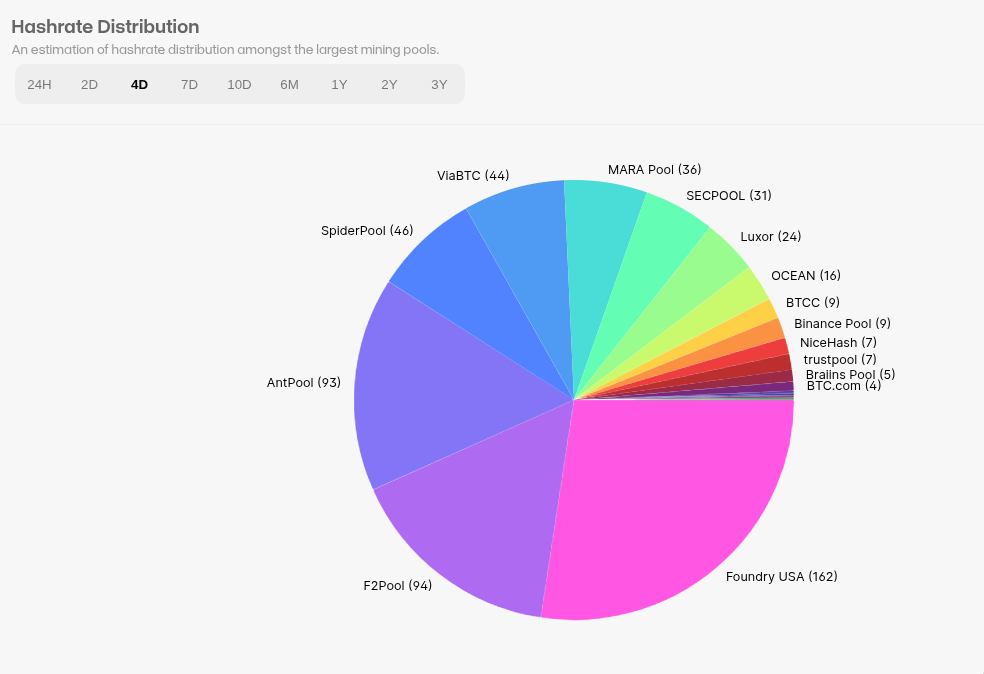
For proponents of BIP-110, the miners’ reluctance to support the user-activated soft fork (UASF) was interpreted as further evidence of increasing centralization within Bitcoin’s mining infrastructure. This criticism was amplified by the absence of a coordinated counter-response from the Bitcoin Core development community, such as a user-rejected soft fork (URSF). The concentration of hashrate control among a handful of mining pools, reportedly five entities commanding the majority of Bitcoin’s processing power, has raised concerns about the potential for undue influence over transaction inclusion and chain progression. This centralization dynamic has been a recurring theme in discussions surrounding the governance and future direction of Bitcoin.
A New Chain with a New Algorithm
In response to these perceived centralization issues and the stalled BIP-110 chain, a segment of BIP-110 supporters, spearheaded by developer Luke Dashjr, opted for a novel approach. They initiated a hard fork on August 30th, aiming to continue the BIP-110 chain but with a fundamental change to its proof-of-work algorithm. The shift to Blake2b was intended to foster the emergence of a new, more decentralized mining ecosystem, facilitated by DATUM gateway technology.
This new Blake2b version of Bitcoin operates under the principle that any address holding SHA-256 Bitcoin prior to the August 7th fork, and potentially thereafter, will possess an equivalent balance on the Blake2b chain. This mechanism ensures a direct airdrop of the new coins to existing Bitcoin holders.
Early Trading and Liquidity
As of this report, the Blake2b version of Bitcoin has seen its first exchange listing on Neoxa. While liquidity remains nascent, the Blake2b coins are reportedly trading at approximately $350 against USDC, with a reported spread of 1.1%. This initial trading activity represents the first tangible market interaction for this new iteration of Bitcoin, born out of a desire for greater decentralization in its mining operations.
The development surrounding BIP-110 and the subsequent creation of the Blake2b Bitcoin variant highlight the ongoing debates and technical innovations within the Bitcoin ecosystem concerning network governance, miner influence, and the pursuit of enhanced decentralization. These internal dynamics, while distinct from the macroeconomic forces influencing Bitcoin’s broader market price, are crucial to understanding the long-term evolution and resilience of the digital asset.
Broader Implications and Future Outlook
The confluence of a surprisingly strong U.S. labor market and the internal developments within the Bitcoin network presents a complex landscape for investors and analysts. The robust jobs data intensifies the debate within the Federal Reserve about the appropriate path for interest rates, creating a more uncertain environment for risk assets. A prolonged period of higher interest rates could pose a headwind for cryptocurrencies, while any signal of easing could provide a tailwind.
Simultaneously, the emergence of the Blake2b Bitcoin variant underscores the inherent dynamism and sometimes contentious nature of decentralized technology development. The success or failure of this new chain will depend on its ability to attract and sustain a decentralized mining base and gain wider adoption and liquidity. The concentration of hashrate in traditional Bitcoin mining remains a critical point of discussion, and the Blake2b experiment offers a potential alternative, albeit in its very early stages.
The coming weeks will be pivotal as the FOMC convenes to make its interest rate decision, and markets will be scrutinizing every statement and data point for clues. Concurrently, the nascent Blake2b Bitcoin network will be under observation to see if it can overcome the initial liquidity challenges and establish itself as a viable alternative within the broader Bitcoin ecosystem. The interplay between global macroeconomic trends and the internal technological evolution of cryptocurrencies will continue to shape market sentiment and asset valuations.