
 George Chandra Eka
A stringent budget in the contemporary smartphone market no longer necessarily relegates consumers to a device devoid of essential functionality. As of 2026, the sub-$100 smartphone segment, while undeniably requiring compromises, offers a surprisingly capable array of devices that fulfill core communication and digital interaction needs. This evolution reflects a significant shift in manufacturing capabilities, market strategies, and consumer expectations, moving beyond the era where affordability equated to outright obsolescence. The prevailing sentiment is that while premium flagships continue to push technological boundaries with features like 200-megapixel cameras and 100x zoom, a substantial portion of the user base prioritizes practical utility over cutting-edge excess. For those primarily seeking reliable calls, messaging, internet access, and essential applications, the $100 price point has become a viable, albeit nuanced, entry point into the smartphone ecosystem.
The landscape of sub-$100 smartphones in 2026 is segmented into three primary categories, each presenting distinct advantages and trade-offs: fully unlocked models, carrier-subsidized prepaid deals, and the robust pre-owned market. Each pathway offers a different balance of hardware specifications, software support, network flexibility, and potential longevity. While a $100 budget invariably necessitates foregoing luxuries such as top-tier processing power, advanced camera arrays, premium build materials, or extensive software update guarantees, it demonstrably secures a full-color touchscreen, access to modern Android applications, ubiquitous connectivity options like Wi-Fi, Bluetooth, and GPS, at least one functional rear camera, and often a battery capable of enduring a full day’s use. The expectation of 720p LCD displays is common among new, fully unlocked devices, yet aggressive prepaid deals can elevate the offering to include 5G connectivity, FHD+ AMOLED screens, 128GB of internal storage, and even multi-lens camera systems, albeit with certain carrier-imposed restrictions.
The Evolving Landscape of Affordable Mobile Technology
The journey of the budget smartphone from rudimentary feature phone successor to a genuinely functional device has been marked by rapid technological advancements and shifting market dynamics. A decade ago, a sub-$100 phone typically featured resistive touchscreens, single-core processors, minimal RAM (often less than 512MB), and basic cameras that produced grainy images. Software was often heavily customized and sluggish, and updates were rare. The primary function was basic communication, with internet browsing being a laborious experience.
By 2026, the baseline expectation for a $100 smartphone has drastically improved. This progress is largely attributable to several factors: the commoditization of components such as System-on-Chips (SoCs) from manufacturers like MediaTek and Unisoc, which now offer multi-core processors with integrated graphics capable of handling everyday tasks; the widespread adoption and cost reduction of LCD and even AMOLED display technologies; advancements in battery chemistry allowing for higher capacities in smaller form factors; and the maturity of Android as an operating system, with initiatives like Android Go Edition optimizing performance for lower-spec hardware.
Furthermore, global economic trends and the imperative for digital inclusion have fueled demand for accessible technology. In many emerging markets, and increasingly in developed nations facing economic pressures, budget smartphones represent the sole gateway to the digital economy, education, and social connectivity. Manufacturers, recognizing this vast market segment, have invested in optimizing their supply chains and product development cycles to deliver maximum value at minimal cost, driving down the overall price floor for acceptable performance. This strategic focus has transformed the budget segment from an afterthought to a critical battleground for market share, influencing design choices and feature sets even at the lowest price points.
Fully Unlocked: Unrestricted, Yet Unambitious
For consumers prioritizing freedom from carrier contracts and the flexibility to switch providers at will, the fully unlocked sub-$100 smartphone market in 2026 presents a clear, albeit modest, proposition. These devices are designed to operate universally across major U.S. carriers, offering unhindered portability. However, this freedom often comes at the expense of cutting-edge specifications, as the cost must be absorbed entirely by the upfront purchase price without carrier subsidies.
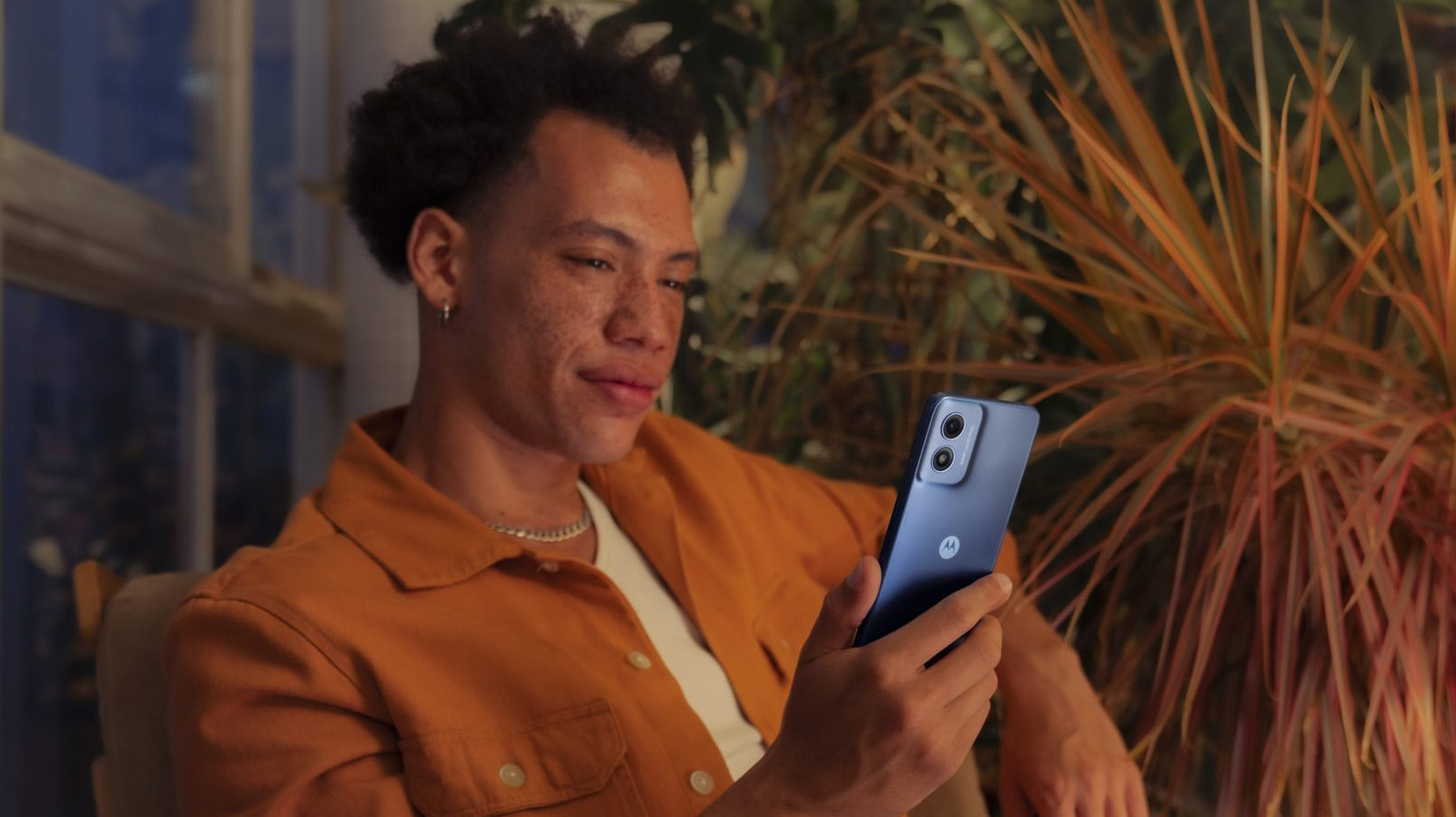
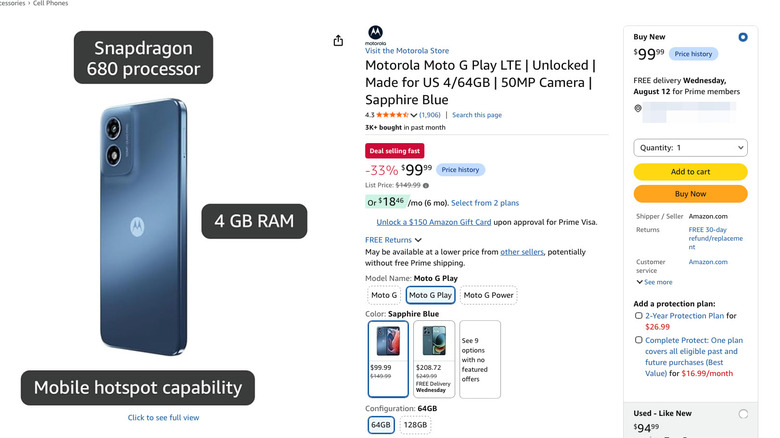
The Motorola Moto G Play (2024) stands out as a leading contender in this category, frequently retailing at or near the $100 mark, discounted from its launch price of $150. This device offers a respectable 6.5-inch HD+ display with a 90Hz refresh rate, a 50-megapixel main camera, 64GB of internal storage expandable via microSD, and 4GB of RAM. Its 5,000mAh battery is a significant asset, promising excellent endurance, and Motorola’s near-stock Android experience is generally well-regarded for its fluidity and minimal bloatware. The primary limitation, however, is its maximum 4G LTE connectivity, placing it behind the curve in an increasingly 5G-dominant world. While its specifications would have been impressive in 2012, in 2026, they represent a bare minimum for a modern smartphone, suitable for users whose digital demands are limited to communication, light browsing, and social media.
Another option, the TCL 30 Z, while advertised as unlocked and carrier-compatible, generally offers a less compelling user experience. With a 6.1-inch HD display, a smaller 3,000mAh battery, 32GB of storage, 3GB of RAM, and a rudimentary 8-megapixel rear camera, it struggles to meet even moderate expectations. The appeal of an "Amazon Renewed" model at approximately $61 is purely cost-driven, underscoring the severe compromises inherent at the lowest end of this segment. Brands like BLU also populate this space, offering new unlocked phones below $100, but these often feature rock-bottom specifications and may encounter compatibility issues with specific carrier bands, leading to a suboptimal network experience.
The core value proposition of these truly unlocked devices lies in their independence. They cater to a niche market of users who value carrier flexibility above all else and are willing to accept a highly functional but ultimately uninspiring user experience. The hardware, while capable of running modern applications, is typically characterized by slower processors, basic camera performance, and minimal design flair. Software updates, particularly for less prominent brands, can also be sporadic, raising concerns about long-term security and access to new Android features.
Prepaid Deals: Subsidized Performance with Carrier Ties
For consumers seeking a more robust smartphone experience without breaking the $100 barrier, prepaid carrier deals represent the most attractive avenue in 2026. These offers, often aggressively priced, enable access to devices with significantly better specifications than their fully unlocked counterparts, primarily because a portion of the device cost is subsidized by the carrier in exchange for a commitment to their network and services. The "catch," however, is precisely this carrier lock, meaning the phone is restricted to a specific network for a period, typically 6 to 12 months, before it can be unlocked.
Samsung’s budget-friendly Galaxy A series frequently features prominently in these prepaid promotions, offering exceptional value. The Galaxy A15 5G, for instance, can be found for as low as $40 to $50 through prepaid providers like Straight Talk, Boost Mobile, or Cricket. At this price point, the A15 5G delivers a 6.5-inch FHD+ AMOLED display, offering superior vibrancy and contrast compared to the LCDs found in unlocked models, alongside 5G connectivity, a capable 50-megapixel main camera, and a substantial 5,000mAh battery. These specifications, combined with Samsung’s generally reliable software experience, provide a user experience that feels remarkably "normal" and far removed from the compromises of the lowest-tier unlocked devices.
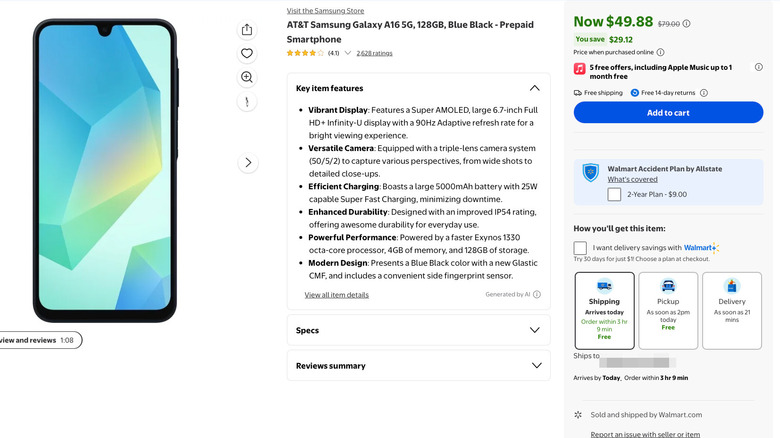
Walmart, in partnership with carriers like AT&T, further enhances these options. As of late 2025/early 2026, an AT&T-locked Galaxy A16 5G was available for a similar price range. This model typically features an even larger 6.7-inch 90Hz display, faster 25W charging capabilities, and up to 128GB of internal storage, further solidifying its value proposition. Stepping up slightly, the Galaxy A26 5G, when offered through Straight Talk, occasionally drops to around the $100 mark. This device boasts 6GB of RAM, a smoother 120Hz display, IP67 water resistance for enhanced durability, and a commitment to longer software support, making it an even more compelling choice for those willing to accept the carrier lock.
The strategic advantage of these prepaid deals lies in the carriers’ ability to leverage device sales to acquire and retain subscribers. By offering attractive hardware at subsidized prices, they entice users into their ecosystems, recouping the cost through service plans. For the consumer, this translates into access to features like higher resolution AMOLED screens, faster 5G connectivity, more capable cameras, and larger storage capacities that would be unattainable in a new, fully unlocked device at the same price. While the initial carrier lock might be a deterrent for some, the significant boost in hardware performance and overall user experience often outweighs this limitation, especially for individuals who are content with their chosen network provider. The trade-off is often minor in comparison to the enhanced daily usability and access to modern mobile technology.
The Used Market: Premium Potential with Inherent Risks
Venturing into the pre-owned smartphone market dramatically expands the options available for under $100, offering access to devices that were once flagship or high-midrange models. This segment provides a unique opportunity to acquire superior hardware, including better screens, more powerful processors, advanced camera systems, and premium build materials, which are simply unattainable in new phones at this price point. However, this path is also fraught with inherent risks, primarily concerning device longevity, battery health, software support, and potential cosmetic or functional degradation.
For Apple enthusiasts on a tight budget, the used market is virtually the only viable avenue. The 2022 iPhone SE, a compact device featuring a 4.7-inch Retina HD display and powered by the capable A15 Bionic chip (the same as in the iPhone 13 series), can occasionally be found for around $100. It also offers 5G connectivity and a 12-megapixel main camera. Older flagships like the iPhone 11 can also dip below this threshold, while the iPhone 12 typically hovers slightly above. A significant advantage of these Apple devices, even when used, is their extended software support. All three models are projected to receive the iOS 27 update in the fall of 2026, ensuring continued security and access to new features for years to come. The trade-off often lies in battery health, which can degrade significantly over time, and the potential for cosmetic wear.
On the Android side, the used market offers an even broader array of choices. Older Samsung Galaxy A series models, such as the Galaxy A52 5G, can frequently be found under $100. More impressively, listings for former flagships like the Galaxy S10 and S10+ or the Galaxy S20 FE 5G often come close to or fall within this budget. These devices, even several years after their release, boast features like dynamic AMOLED displays, significantly more powerful processors than new budget phones, and multi-lens camera systems that outperform their contemporary low-cost counterparts. The Pixel 6a, Google’s well-regarded mid-range phone known for its exceptional camera and software experience, can also be found in the low to mid-$100 range, offering a compelling balance of features.
However, the allure of high-end used hardware is tempered by several critical considerations. Battery degradation is almost universal in older devices, potentially requiring costly replacement. Software support also becomes a major concern; while Apple is renowned for its long update cycles, Android devices, particularly older ones, may have reached their end-of-life for major OS updates, though security patches might continue for a period. Cosmetic condition can vary wildly, from "good" to "fair," indicating scratches, dents, or screen imperfections. The absence of a manufacturer’s warranty and the risk of purchasing a stolen or non-functional device from unverified sellers are also significant factors. Platforms like eBay and Swappa offer some buyer protection, but vigilance is paramount.
There’s also a "Goldilocks" zone within the used market, comprising mid-range phones that aren’t as old as the flagships but still offer superior performance to new budget models. Devices like the Galaxy A53 5G, Moto G Power 5G (2025), and Moto G Stylus 5G (2023) can sometimes appear in this price bracket. These options strike a better balance between age, performance, and software longevity, often providing a more balanced choice for those seeking relative modernity without exceeding the $100 mark. While buying used entails compromises, particularly with battery life which can often be addressed with a replacement, the gains in screen quality, camera performance, and overall design often make it a worthwhile gamble for the savvy consumer.
Beyond Hardware: Software, Security, and Sustainability
The performance of a smartphone, particularly in the budget segment, is not solely dictated by its hardware specifications. Software optimization plays a crucial role in delivering a smooth user experience on less powerful components. Android Go Edition, specifically designed for entry-level smartphones, exemplifies this approach, offering a streamlined operating system and lightweight versions of popular apps that consume less RAM and storage. This ensures that even devices with 2GB or 3GB of RAM can operate efficiently, making the sub-$100 segment genuinely usable.
Security updates are another critical, often overlooked, aspect of device longevity. While major OS updates might cease for older or budget devices, regular security patches are essential to protect user data from evolving threats. Reputable manufacturers like Samsung and Motorola, even for their budget lines, often provide several years of security updates, a factor that should heavily influence purchasing decisions in the used market especially. Devices from lesser-known brands, however, might offer minimal to no long-term security support, exposing users to greater risks.
The growing global focus on sustainability and electronic waste (e-waste) also brings the sub-$100 and used phone markets into sharper relief. Extending the lifespan of existing devices through the used market directly contributes to reducing e-waste. Furthermore, the repairability of these phones becomes increasingly important. While modern flagships are often notoriously difficult to repair, some budget models, particularly older ones, can be more amenable to battery or screen replacements, thus extending their usable life and reducing their environmental footprint. This aligns with a broader consumer trend towards conscious consumption and away from planned obsolescence.
Moreover, the accessibility provided by sub-$100 smartphones plays a vital role in bridging the digital divide, particularly in underserved communities and developing regions. These devices enable access to critical information, educational resources, telemedicine, and financial services, fostering digital inclusion for millions who might otherwise be excluded. This societal impact underscores the importance of a robust and capable budget smartphone market.
Industry Perspectives and Future Outlook
Industry analysts in 2026 generally agree that the budget smartphone segment will continue to be a significant growth driver, especially in emerging markets and amidst global economic uncertainties. Reports from firms like IDC and Counterpoint Research indicate a steady demand for affordable devices, with manufacturers continually refining their strategies to offer compelling features at competitive price points. Companies like Samsung, Xiaomi, and Transsion Holdings (parent company of Tecno, Infinix, and Itel) have successfully carved out substantial market shares by focusing on value-for-money propositions.
Manufacturers are expected to continue leveraging advancements in AI to enhance user experience even on budget hardware. This could manifest as more efficient power management, improved computational photography (compensating for less advanced sensors), and more intuitive user interfaces that require fewer processing resources. The race for 5G penetration will also push more affordable 5G-capable chipsets into the sub-$100 category, making next-generation connectivity a standard feature across all price tiers.
The ethical considerations surrounding device longevity and e-waste are also expected to gain more prominence. Regulatory pressures and consumer advocacy groups may push for greater transparency regarding software update policies and improved repairability scores for all smartphones, including budget models. This could lead to a future where even $100 phones are guaranteed a longer functional life, reducing the churn of devices and their environmental impact.
In conclusion, the $100 smartphone in 2026 is far from the "junk phone" stereotype of yesteryear. While compromises are inherent, careful selection within the unlocked, prepaid, or used markets can yield a device perfectly capable of handling the essential digital demands of modern life. This segment is a testament to the relentless pace of technological advancement and the industry’s commitment to making digital connectivity accessible to a broader global populace, albeit with varying degrees of functionality and longevity. The future suggests continued innovation in this space, promising even greater value and capability for the budget-conscious consumer.







