Evan Lee Salim
Google has announced a significant expansion of its artificial intelligence capabilities, embedding its personal agent, Gemini Spark, deeper into the Google Photos ecosystem. This strategic move allows Gemini Spark to manage extensive Google Photos libraries with advanced AI-driven functionalities, marking a pivotal step in the company’s "AI-first" strategy and its ongoing effort to make AI indispensable for everyday consumers. The integration is designed to transform how users interact with their vast collections of digital memories, automating tasks that were once time-consuming and manual.
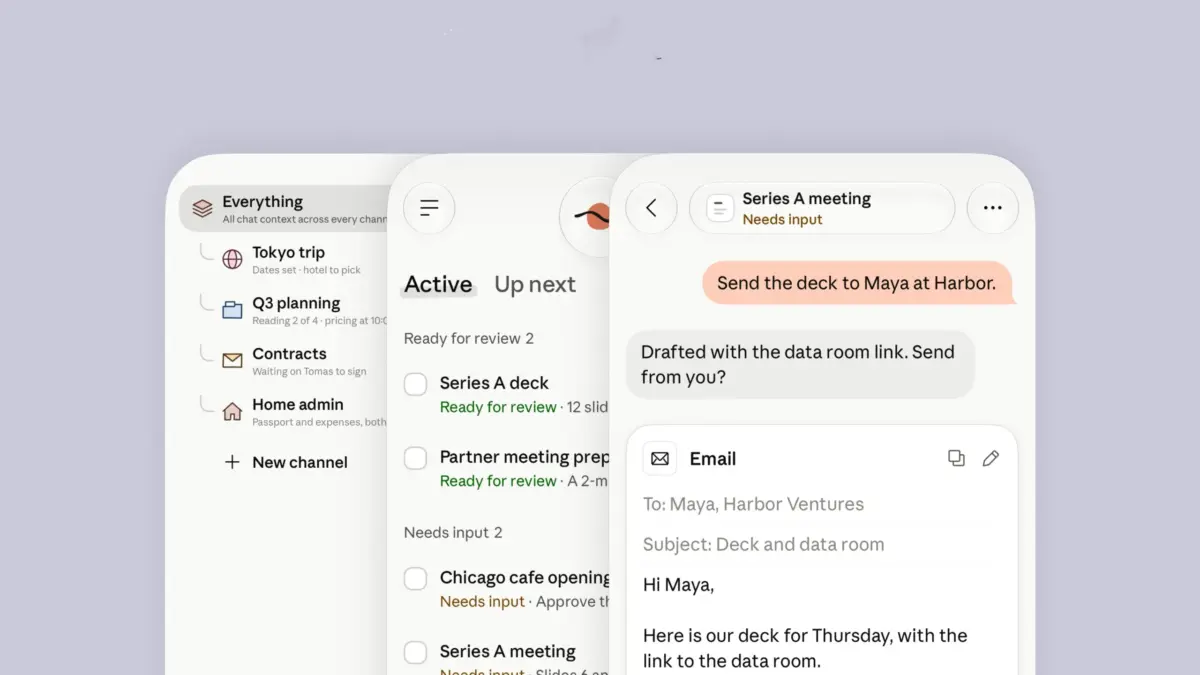
The new suite of capabilities empowers Gemini Spark to execute a diverse range of tasks within Google Photos, including sophisticated image editing, intelligent album curation, the automatic creation of shared albums featuring favorite shots, and even the conversion of visual information, such as concert flyer photos, into actionable calendar appointments. Furthermore, the system will support complex workflow automation, allowing users to initiate multi-step processes through natural language prompts. This enhancement aims to streamline photo management, making it more intuitive and efficient for users grappling with increasingly large digital archives.
The announcement was shared by Shimrit Ben-Yair, Google Photos lead, in a post on X (formerly Twitter) on Thursday evening, September 3, 2026, detailing the upcoming features and their phased rollout. These new capabilities are slated to become available over the next few weeks, exclusively for eligible Gemini AI Pro and Ultra subscribers in the United States, operating in English. Google has not yet provided a timeline or confirmation regarding broader international availability, leaving users in other markets awaiting further updates.
Google’s Strategic Vision: An AI-First Ecosystem
This deep integration of Gemini Spark with Google Photos is not an isolated development but rather a cornerstone of Google’s long-term strategic vision, articulated years ago by CEO Sundar Pichai, to be an "AI-first" company. For nearly a decade, Google has been steadily infusing artificial intelligence across its product portfolio, from search algorithms and Gmail’s smart reply features to Google Maps navigation and Android’s predictive text. The evolution of its AI offerings culminated in the launch of Gemini, positioned as Google’s most advanced and capable AI model to date, designed to be multimodal and highly adaptable.
Gemini’s introduction in late 2023 marked a significant milestone, building upon the foundational technologies of earlier models like LaMDA and PaLM. The subsequent release of Gemini Pro and Ultra tiers, accessible through a subscription model, signaled Google’s intent to offer premium AI experiences with enhanced computational power and advanced reasoning capabilities. These paid tiers, often bundled with Google One subscriptions, aim to monetize Google’s significant investments in AI research and development, providing subscribers with early access to cutting-edge features. The integration with Google Photos for these premium subscribers underscores the company’s strategy to provide tangible, high-value applications for its most sophisticated AI models.
Google Photos itself has a rich history of leveraging AI. Since its inception in 2015, the platform has distinguished itself through features like automatic facial recognition, object detection, geotagging, and context-aware search, allowing users to find specific images with unprecedented ease. Features like "Memories," which resurface old photos and videos, and the "Magic Eraser" for removing unwanted objects, have already demonstrated the practical utility of AI in photo management. The Gemini Spark integration represents a quantum leap, moving beyond reactive AI assistance to a more proactive and agentic system that can understand complex commands and initiate multi-step processes on behalf of the user.
Unlocking New Dimensions of Photo Management with Gemini Spark
The functionalities introduced through Gemini Spark’s integration with Google Photos promise to fundamentally alter the user experience for managing digital media.
- Intelligent Editing: Beyond the existing suite of editing tools, Gemini Spark will enable users to perform advanced, context-aware edits using natural language prompts. This could include complex tasks like "brighten the faces in this group photo without overexposing the background," "change the sky to a sunset in these vacation photos," or "remove distracting elements from the periphery of this portrait." The AI’s ability to understand intent and execute sophisticated manipulations could democratize advanced photo editing, making techniques once reserved for professional software accessible to all.
- Curated Albums: One of the most common challenges for users is organizing a burgeoning photo library. Gemini Spark aims to solve this by intelligently curating albums. By analyzing metadata, content, and user behavior, the AI can identify recurring themes, significant events, and groups of people, automatically assembling coherent albums. For instance, a user could prompt, "create an album of all my family gatherings from the past year," and the AI would identify relevant photos, eliminating the tedious manual sorting process. This feature leverages deep learning to recognize nuances that simple keyword searches might miss.
- Automatic Shared Albums: The AI will be capable of identifying "favorite" shots based on various metrics, including image quality, emotional content, or user engagement (e.g., frequently viewed or edited photos). It can then proactively suggest creating shared albums with relevant contacts, understanding relationships from existing social graphs or frequent interactions. For example, after a family trip, Gemini Spark might suggest, "I’ve identified your best photos from the Hawaii trip; would you like to create a shared album with [family member]?" This proactive sharing could enhance social connections and simplify collaborative memory-keeping.
- Information Extraction and Workflow Automation: The ability to convert concert flyer photos into calendar appointments highlights Gemini Spark’s multimodal understanding and its potential for practical, real-world applications. This capability extends beyond flyers to potentially extracting data from receipts, business cards, recipes, or whiteboards, and integrating that information into other Google services. The broader concept of "running workflows" signifies a paradigm shift: users can define complex sequences of actions. For instance, "find all photos taken at [specific location] last summer, apply a vintage filter, and then upload them to a private album titled ‘Summer Nostalgia 2025’." This automation of multi-step processes promises to save considerable time and effort.
The Broader AI Landscape and the Quest for Product-Market Fit
This announcement comes at a critical juncture for the artificial intelligence industry, which is grappling with the challenge of translating groundbreaking technological advancements into indispensable consumer products. OpenAI CEO Sam Altman recently acknowledged this struggle, telling Bloomberg that the industry has "done a terrible job" communicating the tangible benefits of AI, leading to skepticism and, in some cases, backlash from communities worldwide. Google’s move to integrate Gemini Spark into Google Photos is a direct response to this challenge, aiming to demonstrate clear, practical value to its vast user base.
The competitive landscape in consumer AI is fierce. Tech giants like Apple, Microsoft, and Amazon are all heavily invested in developing their own AI assistants and integrating them into their respective ecosystems. Apple’s Photos app already offers sophisticated AI for organization and recognition, while Microsoft’s Copilot is being woven into Windows and its productivity suite. Amazon’s Alexa continues to evolve as a voice assistant for smart homes. Google’s strategy with Gemini is to offer a more versatile and deeply integrated agent that can traverse across various services, providing a unified AI experience.
Photo management, in particular, has emerged as a crucial battleground for AI integration. With smartphone cameras becoming increasingly sophisticated, users are accumulating unprecedented numbers of digital photos and videos. Google Photos alone hosts trillions of photos and videos, serving over a billion users globally. The sheer volume of this data presents both a challenge (disorganization, difficulty finding specific memories) and an opportunity for AI to provide solutions. By automating tedious tasks and offering intelligent assistance, Google aims to make its AI not just a novelty but an essential tool for navigating the digital deluge.
Implementation Details and Future Implications
For eligible users, integrating Gemini Spark with Google Photos will be a straightforward process. Users will first need to connect their Google Photos account to Gemini, then activate Spark through a toggle in the top corner of the Gemini app, and finally, input their desired prompts in natural language. This user-friendly interface is critical for broad adoption, ensuring that powerful AI capabilities are accessible without requiring technical expertise.
The phased rollout, starting with Gemini AI Pro and Ultra subscribers in the U.S. and in English, is a common strategy for large-scale technology deployments. It allows Google to monitor performance, gather user feedback, and refine the system before a wider release. The absence of an immediate international rollout plan, however, raises questions about potential timelines. Factors such as language localization, adherence to diverse data privacy regulations (like GDPR in Europe), and infrastructure scaling often influence the pace of global expansion for such complex AI services.
From a broader perspective, this integration carries significant implications. While the original article suggests that individual AI features might not always appear "revolutionary" or "necessary" on their own, the cumulative effect of a deeply integrated, proactive AI agent could be transformative. The ability of an AI to manage personal data, automate tasks across services, and even anticipate user needs moves closer to the vision of a truly intelligent personal assistant.
However, such deep integration also brings forth important considerations, particularly concerning data privacy and security. Giving an AI agent extensive access to a personal photo library, which often contains sensitive and intimate memories, necessitates robust privacy protocols and transparency from Google. Users will need assurances about how their data is processed, stored, and protected, and clear controls over what the AI can and cannot access or share. Ethical AI considerations, such as potential biases in AI curation or the responsible use of generative AI in editing, will also remain paramount.
Ultimately, Google’s move to infuse Gemini Spark into Google Photos is a bold statement about the future of consumer technology. It represents a significant stride towards making AI an invisible, yet indispensable, layer that enhances our digital lives. By automating the mundane and empowering creative expression, Google aims to solidify its position at the forefront of the AI revolution, transforming how billions of users interact with their most cherished digital memories. The success of this integration will hinge on Google’s ability to balance powerful functionality with user trust, demonstrating not just what AI can do, but how it can genuinely improve daily life without compromising privacy or control.