admin
admin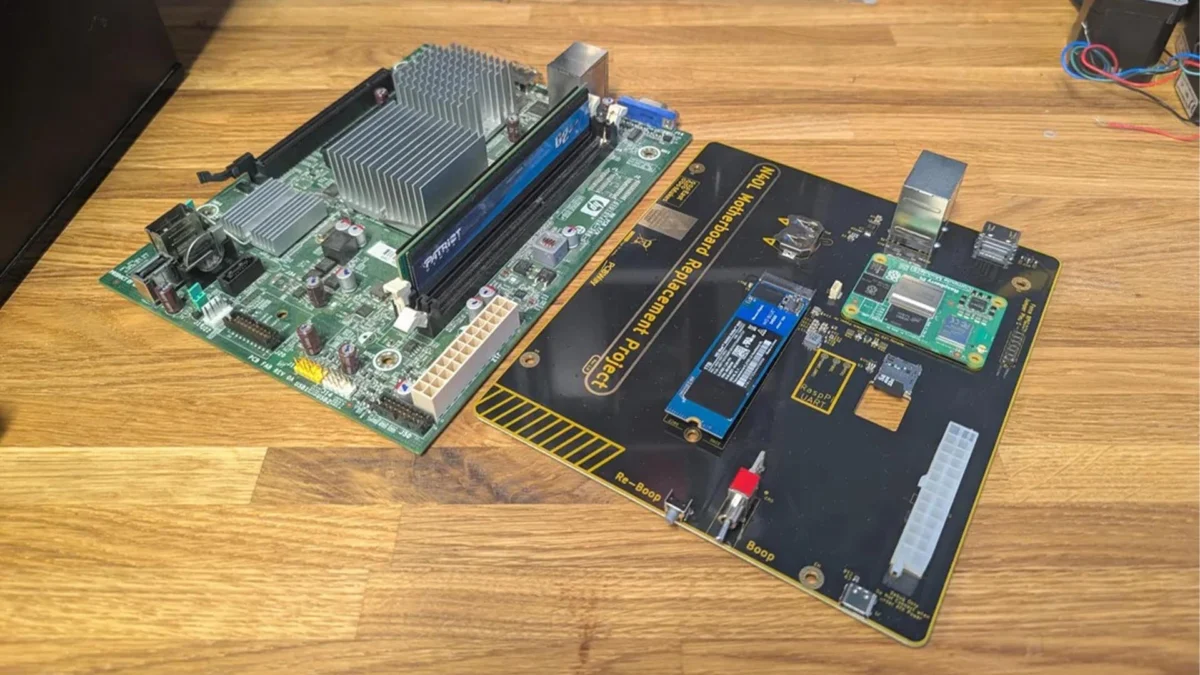
The intersection of legacy enterprise hardware and modern single-board computing has reached a new milestone as a dedicated hardware enthusiast successfully retrofitted an aging HP ProLiant MicroServer with a cutting-edge Raspberry Pi Compute Module 5 (CM5). This project, spearheaded by a developer known online as EastMakes, represents a significant shift in how tech hobbyists and home lab administrators approach the problem of electronic waste and hardware obsolescence. By replacing the original, underpowered x86 internal components with a custom-engineered carrier board designed for the ARM-based CM5, the project demonstrates that high-quality server chassis can remain functional and efficient decades after their original internal components have become obsolete.
The Challenge of Legacy Hardware Obsolescence
The HP ProLiant MicroServer N40L, which serves as the foundation for this project, was originally released over a decade ago. At its launch, it was a darling of the home server community due to its compact form factor, four-bay hot-swap drive cage, and relatively low power consumption for the era. However, the internal specifications—centered around an AMD Turion II Neo N40L dual-core processor and DDR3 RAM—have struggled to keep pace with modern software demands. In contemporary environments, these specifications often lead to severe performance bottlenecks, particularly when running containerized applications, high-bitrate media streaming, or complex network-attached storage (NAS) file systems like ZFS.
Typically, when a server like the N40L reaches this stage of its lifecycle, it is destined for a landfill or an e-waste recycling center. The proprietary nature of many server motherboards makes them difficult to replace with standard off-the-shelf components. The physical dimensions, mounting hole patterns, and rear I/O layouts are often specific to the manufacturer’s chassis, creating a barrier for users who wish to upgrade the internal "brains" of the machine while keeping the high-quality industrial casing.
Engineering a Custom Solution with the Raspberry Pi CM5
Recognizing the inherent value of the HP chassis, EastMakes bypassed the limitations of traditional motherboard replacements by designing a bespoke PCB (Printed Circuit Board) specifically for the Raspberry Pi Compute Module 5. The Raspberry Pi CM5 is the industrial version of the popular Raspberry Pi 5, designed to be integrated into custom hardware solutions. Unlike the standard Raspberry Pi, the Compute Module lacks built-in ports, instead providing high-density connectors that allow a carrier board to break out only the specific interfaces required for a given application.
The custom motherboard developed for this project serves as a bridge between the old world of enterprise servers and the new world of ARM-based efficiency. Key features of the custom board include:

- Direct ATX Power Integration: The board features a standard 24-pin power connector, allowing it to interface directly with the HP ProLiant’s original internal power supply. This eliminates the need for external power bricks and ensures that the server’s internal cooling fans and drive backplanes receive the necessary voltages.
- Storage Modernization: While the original N40L relied on older SATA interfaces for its primary boot drive, the custom CM5 carrier board includes an M.2 NVMe slot. This utilizes the PCIe lanes provided by the BCM2712 SoC on the Raspberry Pi 5, offering vastly superior read/write speeds compared to the original hardware.
- Physical Alignment: The board was engineered to ensure that its Ethernet and USB ports align perfectly with the existing I/O cutouts on the HP chassis. This "factory-fit" approach preserves the aesthetic and structural integrity of the server.
- Custom User Interface: In a nod to the DIY nature of the project, the developer included tactile switches on the front edge of the board. Labeled "Boop" for power and "Re-Boop" for reset, these buttons provide a whimsical yet functional interface for system management.
Technical Specifications: Old vs. New
The performance delta between the original HP hardware and the Raspberry Pi CM5 is substantial. The original AMD Turion II Neo N40L operated at 1.5 GHz with two cores and two threads, built on a 45nm process. In contrast, the Raspberry Pi CM5 utilizes the Broadcom BCM2712, featuring a quad-core ARM Cortex-A76 processor running at 2.4 GHz.
Architecturally, the Cortex-A76 provides significantly higher instructions per clock (IPC) than the aging AMD K10 microarchitecture. Furthermore, the transition from DDR3 to the LPDDR4X memory utilized by the CM5 provides a massive increase in memory bandwidth, which is critical for the high-speed data transfers typical of server workloads. By moving to the ARM architecture, the user also benefits from a much lower thermal design power (TDP), which reduces heat output and allows the server to run more quietly and efficiently.
A Chronology of the Retrofit Movement
The project by EastMakes is part of a growing "SBC-as-a-Server" trend that has evolved over the last several years.
- 2012-2015: Early Raspberry Pi models were used as simple file servers (NAS), but were hampered by shared USB/Ethernet bandwidth and a lack of SATA or PCIe connectivity.
- 2019: The launch of the Raspberry Pi 4 brought true Gigabit Ethernet and USB 3.0, making SBC-based servers more viable for small-scale home use.
- 2021: The Raspberry Pi Compute Module 4 (CM4) introduced accessible PCIe lanes, leading to the first wave of custom carrier boards that could support multiple SATA drives or NVMe storage.
- 2023-2024: The release of the Raspberry Pi 5 and the subsequent CM5 provided the raw CPU performance necessary to compete with older x86 low-power servers, enabling projects like the HP ProLiant retrofit to offer a genuine performance upgrade rather than just a lateral move.
Environmental and Economic Implications
The success of this project highlights a critical path forward for environmental sustainability in the tech industry. Electronic waste is one of the fastest-growing waste streams globally. Much of this waste is comprised of perfectly functional mechanical components—chassis, power supplies, and drive cages—that are discarded because their logic boards are no longer supported or performant.
By focusing on "chassis reuse," enthusiasts are demonstrating a modular approach to computing. If the industry were to move toward more standardized internal mounting for small-form-factor servers, the "motherboard swap" could become a mainstream method for extending the life of hardware. Economically, this project allows a user to obtain a high-quality, four-bay server for the cost of a Raspberry Pi and a custom PCB, which is significantly cheaper than purchasing a brand-new commercial NAS from vendors like Synology or QNAP.
Community Reactions and the Future of Custom PCBs
The response from the "HomeLab" and "Self-Hosted" communities on platforms like Reddit has been overwhelmingly positive. Many users expressed interest in purchasing the custom carrier board to save their own decommissioned HP MicroServers. This demand suggests a potential market for "retrofit kits" designed for popular legacy chassis.

Industry analysts suggest that as PCB manufacturing becomes more accessible through low-cost, rapid-prototyping services, we will see an increase in these types of bespoke hardware solutions. The ability for an individual to design a professional-grade motherboard in a home office and have it manufactured and shipped within a week has fundamentally changed the landscape of hardware hacking.
Broader Impact on the Single-Board Computer Market
This project also serves as a high-profile validation of the Raspberry Pi Foundation’s Compute Module strategy. By providing the core computing components in a flexible, high-density package, Raspberry Pi has enabled a level of creativity that standard single-board computers cannot match. It positions the CM5 not just as a tool for industrial automation, but as a viable engine for high-performance consumer and enthusiast hardware.
As ARM-based computing continues to gain parity with x86 in the server space—driven by the efficiency of chips like Amazon’s Graviton and Ampere’s Altra—projects like this bridge the gap for the average consumer. They prove that the ARM ecosystem is mature enough to handle the rigors of 24/7 server operations while providing a modern software stack that is often easier to manage than legacy x86 BIOS-based systems.
Conclusion
The revitalization of the HP ProLiant MicroServer via the Raspberry Pi CM5 is more than just a clever hobbyist project; it is a blueprint for the future of sustainable computing. It challenges the "disposable" nature of modern technology and proves that with a combination of modern silicon and custom engineering, the hardware of yesterday can be transformed into the high-performance tools of tomorrow. As the CM5 becomes more widely available, it is likely that more "zombie" servers will be brought back to life, reducing e-waste and empowering users to take full control of their hardware destiny.