Sisilia Frederika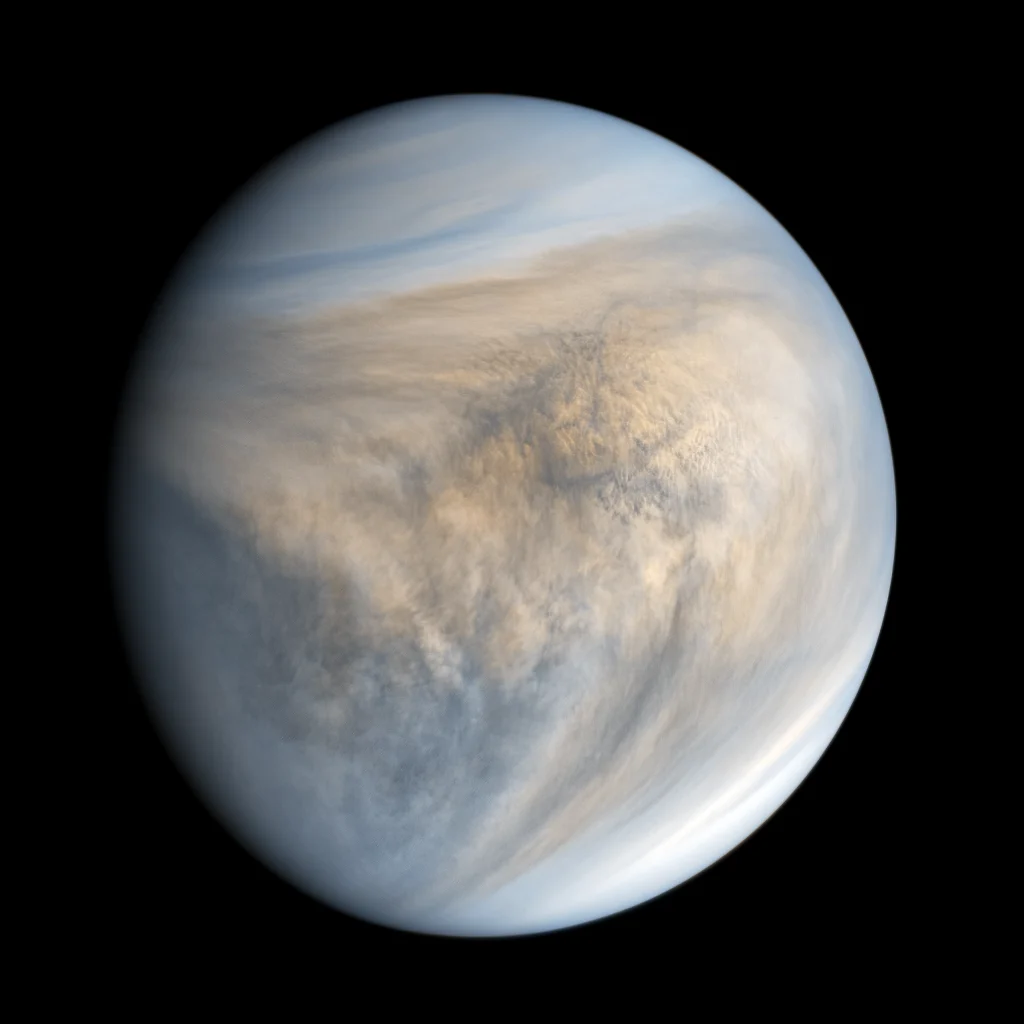
The enduring mystery of why Venus, often described as Earth’s "twin" due to its similar size and composition, lacks a natural satellite has long perplexed the planetary science community. While Earth boasts a large, stabilizing moon that has played a critical role in the development of life, Venus remains a solitary wanderer in the inner solar system. New research led by Stephen Kane, a prominent planetary astrophysicist at the University of California, Riverside, suggests that this absence is not merely a cosmic accident but rather a predictable consequence of tidal physics. According to a study published in The Astrophysical Journal, any moon that may have once orbited Venus was likely doomed from the outset, destined to be reclaimed and destroyed by the planet it orbited.
Through sophisticated gravitational modeling, Kane and his colleagues demonstrated that the unique rotational characteristics of Venus create a hostile environment for long-term satellite stability. The team’s simulations indicate that in the vast majority of plausible evolutionary scenarios, a Venusian moon would have spiraled inward, eventually crossing the Roche limit—the threshold where a planet’s tidal forces overcome the internal gravity holding a moon together. This process would have culminated in the moon being torn apart, potentially within the first billion years of the solar system’s history, leaving Venus as the moonless world observed today.
The Mechanics of Orbital Decay and the Roche Limit
To understand why a Venusian moon would meet such a violent end, it is necessary to examine the gravitational "tug-of-war" that occurs between a planet and its satellite. This interaction is governed by tidal forces, which are the same physical principles that cause Earth’s oceans to rise and fall. In Earth’s case, the planet rotates faster than the Moon orbits it. This creates a tidal bulge on Earth that pulls the Moon forward in its orbit, adding energy and causing the Moon to gradually migrate outward at a rate of approximately 3.78 centimeters per year.
However, Venus presents a radically different scenario. The planet possesses an exceptionally slow and retrograde (clockwise) rotation, taking 243 Earth days to complete a single turn on its axis. This is longer than its orbital period around the Sun, which lasts approximately 225 Earth days. Because Venus rotates so slowly, any hypothetical moon would likely have an orbital period faster than the planet’s rotation. In this configuration, the tidal bulge on the planet lags behind the moon, acting as a gravitational drag. Instead of being pushed away like Earth’s Moon, a Venusian satellite would be sapped of its orbital energy, causing its orbit to decay and spiral toward the planet.
The critical "deal breaker" in this process is the Roche limit. For Venus, Kane’s team calculated this limit to be approximately 2.85 Venus radii, or roughly 17,000 kilometers from the planet’s center. Once a moon crosses this invisible boundary, the differential gravitational pull on its near and far sides becomes so intense that the moon’s structural integrity fails. It is shredded into a ring of debris, much like the rings of Saturn, before eventually raining down onto the Venusian surface as a series of catastrophic impacts.
Chronology of a Vanished Moon
The timeline proposed by the research suggests that the window for a Venusian moon’s existence was relatively brief in geological terms. If Venus acquired a moon early in its history—perhaps through a giant impact similar to the one that formed Earth’s Moon 4.5 billion years ago—the tidal evolution would have begun immediately.
- Formation (4.5 Billion Years Ago): A massive collision during the chaotic early stages of the solar system could have ejected debris that coalesced into a moon.
- Tidal Interaction (4.5 to 3.5 Billion Years Ago): Due to Venus’s slow rotation, the moon’s orbit began to contract. The rate of this decay would depend on the moon’s mass and the internal viscosity of Venus at the time.
- The Roche Limit Breach (Within the First Billion Years): As the moon reached the 17,000-kilometer mark, it would have been torn apart by tidal stresses.
- Debris Accretion (Post-Destruction): The resulting ring of material would eventually lose its orbital velocity and collide with Venus, potentially altering the planet’s atmospheric chemistry and surface geology.
This model suggests that the lack of a moon is a natural outcome of ordinary tidal physics rather than a result of an exotic or highly improbable catastrophe. Kane noted that a moon could only have survived if the early Venus had been spinning much faster or if the moon itself had been significantly smaller and farther away, conditions that do not align with the current state of the Venusian system.
Supporting Data and Simulation Parameters
The research utilized a comprehensive computer model to track the gravitational interactions between Venus, a hypothetical moon, and the Sun over several billion years. The simulations were not limited to a single set of variables; instead, the team systematically adjusted several key factors to ensure the robustness of their findings:
- Initial Rotation: Variations in Venus’s early spin rate were tested to see if a faster initial rotation could have saved a moon.
- Moon Mass: The team modeled satellites ranging from small captured asteroids to objects as massive as Earth’s Moon.
- Orbital Eccentricity: The researchers accounted for non-circular orbits, which can accelerate tidal heating and orbital decay.
- Interior Properties: The model considered the "Q-factor" (tidal dissipation) of Venus, which measures how efficiently the planet converts tidal energy into heat.
The results consistently pointed toward orbital instability. While Earth’s fast rotation (currently 24 hours) provided the necessary momentum to push our Moon to a safe distance, Venus’s sluggishness acted as a gravitational trap. The study emphasizes that Earth’s own moon was not a guaranteed outcome of planetary formation; it required the specific "goldilocks" conditions of a high-energy impact and a fast-spinning host planet.
Implications for Planetary Habitability
The absence of a moon has profound implications for Venus’s history and its current uninhabitable state. In the case of Earth, the Moon acts as a gyroscopic stabilizer. Its gravitational presence prevents Earth’s axial tilt (obliquity) from wandering chaotically. This stability is vital for maintaining a consistent climate over millions of years, allowing life to evolve under relatively predictable seasonal patterns.
Without a large moon, a planet’s tilt can vary wildly due to the gravitational influence of other planets. Venus currently has an axial tilt of about 3 degrees (or 177 degrees if considering its retrograde orientation), but without a moon, it may have experienced dramatic shifts in the past. These shifts would cause extreme climate swings, potentially contributing to the runaway greenhouse effect that eventually turned Venus into a scorched world with surface temperatures hot enough to melt lead.
"Losing a moon removes one source of long-term climate stability," Kane explained. This suggests that the divergence between the "twin" planets—one a lush haven for life and the other a toxic hellscape—may be partially rooted in their different lunar histories. The presence of a moon may be a more critical factor in the "habitability checklist" than previously recognized.
A Testable Hypothesis: The DAVINCI Mission
While the theory of a destroyed Venusian moon is mathematically sound, direct physical evidence remains elusive. However, this could change with NASA’s upcoming DAVINCI (Deep Atmosphere Venus Investigation of Noble gases, Chemistry, and Imaging) mission. Scheduled for launch in the late 2020s, DAVINCI will consist of an orbiter and a descent probe that will plunge through the thick Venusian atmosphere.
Scientists believe that if a moon was indeed destroyed and its material fell onto Venus, it would leave a chemical "fingerprint" in the atmosphere. Specifically, the abundances of noble gases—such as xenon, krypton, and neon—and their isotopic ratios could provide clues. These gases are chemically inert and serve as sensitive tracers of a planet’s evolutionary history.
A late delivery of lunar material would have a distinct isotopic signature, though researchers acknowledge that distinguishing this from volcanic outgassing will be a complex task. If DAVINCI’s in-situ measurements reveal anomalies in these isotopic ratios, it would provide the first tangible evidence that Venus was once a multi-body system.
Broader Impact on Exoplanet Research
The findings of Kane and his colleagues extend far beyond our own solar system. As astronomers discover more "exo-Venuses"—rocky planets orbiting close to their parent stars—this research provides a framework for predicting their lunar environments.
The study predicts that slow-spinning, rocky planets located near their stars should generically be moonless. As the next generation of telescopes, such as the James Webb Space Telescope and the upcoming Extremely Large Telescopes, begin to characterize the atmospheres of distant worlds, the presence or absence of moons will be a key metric in assessing habitability. If the "moonless Venus" model holds true for other systems, it may suggest that stable, life-supporting climates are rarer than the sheer number of rocky planets would imply.
Conclusion: The Branching Paths of Planetary Evolution
Venus serves as a stark reminder of how small differences in initial conditions—such as rotation speed—can lead to vastly different planetary outcomes. While Earth and Venus started with similar materials and positions in the solar nebula, their evolutionary paths diverged billions of years ago.
The work of Stephen Kane and his team highlights that the "wrong" side of the rotational spin boundary can seal a planet’s fate. Earth’s spin allowed it to keep its moon and maintain its stability, while Venus’s slow rotation forced it into a lonely existence. As planetary scientists continue to peel back the layers of Venus’s history, the story of its "lost moon" offers a compelling explanation for the unique and harsh reality of Earth’s closest neighbor. The upcoming decade of exploration will determine if the ghosts of this ancient satellite still linger in the Venusian clouds, waiting to be discovered.