Sisilia Frederika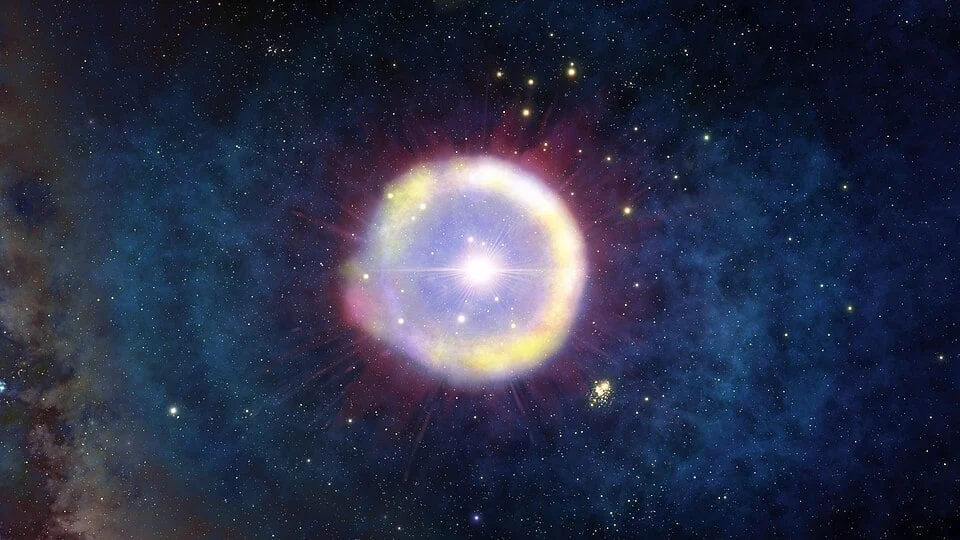
The astronomical community stands on the precipice of a fundamental breakthrough in understanding the genesis of the cosmos as researchers refine their search for Population III stars, the theoretical first generation of stars to illuminate the darkness of the early universe. These celestial objects, composed entirely of pristine hydrogen and helium forged during the Big Bang, represent the missing link in the evolutionary history of the universe. While modern telescopes have allowed humanity to peer deeper into the "Cosmic Dawn" than ever before, definitive evidence of these massive, metal-free stars has remained elusive. However, a new study led by Tae Bong Jeon from the Cosmic Frontier Center at the University of Texas at Austin suggests that these ancient giants may be detectable by the James Webb Space Telescope (JWST) under specific conditions, even appearing much later in cosmic history than previously theorized.
The Nature of Population III Stars and the Cosmic Dawn
To understand the significance of Population III (Pop III) stars, one must first understand the chemical evolution of the universe. In the immediate aftermath of the Big Bang, the universe was a hot, dense soup of subatomic particles. As it expanded and cooled, the first nuclei formed—primarily hydrogen (about 75%) and helium (about 25%), with trace amounts of lithium. For hundreds of millions of years, the universe remained dark, a period known as the "Dark Ages," as matter slowly clumped together under the influence of gravity.
When the first stars finally ignited, they were unlike anything seen in the modern universe. Because they lacked "metals"—a term astronomers use for any element heavier than helium—the physics of their formation and life cycles were fundamentally different. In modern stars (Population I, like our Sun) and older stars (Population II), heavy elements act as efficient coolants, allowing gas clouds to fragment into smaller pieces and form many small-to-medium-sized stars. Without these metals, the primordial gas clouds could only collapse into massive, hot, and incredibly luminous entities. These Pop III stars are theorized to have been tens or even hundreds of times more massive than the Sun, burning through their nuclear fuel in just a few million years before exploding as colossal supernovae.
The Temporal Paradox of Late-Blooming Stars
Standard cosmological models originally suggested that Pop III stars should have vanished shortly after the first billion years of the universe’s existence, replaced by the metal-enriched Population II stars. However, data from the JWST has introduced a fascinating complication. Observations have hinted at the presence of pristine starbursts—galaxies undergoing intense star formation—at periods much later than expected, specifically near the end of the Epoch of Reionization.
This "late-blooming" phenomenon presents a paradox: how can pockets of the universe remain pristine and unpolluted by the heavy elements ejected by the first supernovae for hundreds of millions of years? For a Pop III starburst to occur late in cosmic history, two specific "existential traps" must be avoided. First, the primordial gas clouds must be prevented from collapsing into stars too early. Second, these clouds must remain shielded from "metal pollution"—the dispersal of heavy elements from neighboring, more evolved star systems.
Thermodynamics of the Early Universe: The Role of Molecular Hydrogen
The mechanism of star formation is a delicate balance between gravity and thermal pressure. For a cloud of gas to collapse into a star, it must be able to radiate away the heat generated by gravitational compression. In the modern universe, heavy elements like carbon and oxygen are excellent at this. In the early universe, the only available coolant was molecular hydrogen (H2).
Molecular hydrogen allowed dark matter "halos"—the gravitational wells where galaxies form—to pull enough gas together to trigger the first instances of nuclear fusion. However, because molecular hydrogen is a relatively inefficient coolant compared to heavy metals, it usually required the gas to reach a certain density before collapse could occur. If molecular hydrogen was abundant, stars would form relatively quickly and early.
To delay this process, a mechanism must exist to suppress the cooling effect of molecular hydrogen. The research led by Tae Bong Jeon highlights the critical role of Lyman-Werner (LW) radiation.
Lyman-Werner Radiation: A Cosmic Delaying Agent
Lyman-Werner radiation consists of soft ultraviolet photons in a specific energy range (11.2 to 13.6 eV). These photons have the unique ability to dissociate molecular hydrogen, breaking it back down into individual hydrogen atoms. Atomic hydrogen is a far less effective coolant than molecular hydrogen at the temperatures typical of these early gas clouds.
When a primordial gas cloud is bathed in LW radiation from nearby star-forming regions, its ability to cool and collapse is severely inhibited. This forces the cloud to remain in a gaseous state for a longer duration, growing larger and more massive as it continues to accumulate matter. Star formation is delayed until the cloud reaches the "atomic cooling" stage. At this point, the cloud has become so massive and its internal gravity so intense that it undergoes a "catastrophic collapse," leading to a massive starburst of Population III stars. This delay explains how these pristine stars could potentially appear much later in the timeline of the universe than traditional models predicted.
Modeling the Shielding Effect of Dark Matter Halos
The research team at the University of Texas at Austin utilized sophisticated simulations to model how dark matter halos respond to varying levels of LW radiation. Their findings revealed a complex internal structure within these halos. As the halo is exposed to external UV radiation, the outer layers become extremely hot, creating a thermal barrier.
However, this outer layer also acts as a shield. The core of the halo, protected by the density of the surrounding gas, remains cooler and continues to accumulate mass. This "self-shielding" allows the inner region to eventually reach the critical threshold for atomic cooling. The result is a delayed but incredibly powerful burst of star formation, producing stars that are potentially more massive and numerous than those formed in the very first wave of star birth.
The Race Between Radiation and Pollution
For a late Pop III starburst to be "pure," it must also remain free of heavy metals. This is a challenge because the same stars that produce LW radiation eventually explode as supernovae, scattering metals across the intergalactic medium.
Jeon’s paper points out a crucial physical distinction: the speed of travel. LW radiation travels at the speed of light, reaching distant gas clouds almost instantaneously on a cosmic scale. In contrast, the physical debris from a supernova—the heavy elements—travels at much slower, non-relativistic speeds. This creates a "pristine window" of hundreds of millions of years. A gas cloud can be hit by the "delaying" radiation from a distant galaxy, but it may take eons for the actual metal pollution from that same galaxy to reach it. During this window, the cloud remains chemically pure, allowing for the formation of late-stage Pop III stars.
Observation Challenges and Gravitational Lensing
Even with the power of the JWST, detecting individual Pop III stars or even small clusters at such immense distances is a technical feat of the highest order. These objects are located at high redshifts, meaning their light has been stretched by the expansion of the universe into the infrared spectrum.
The authors of the study suggest that the most viable path to discovery lies in gravitational lensing. This phenomenon, a consequence of Einstein’s General Relativity, occurs when a massive foreground object—such as a galaxy cluster—acts as a natural magnifying glass, bending and brightening the light of more distant objects behind it.
While gravitational lensing provides the necessary magnification, it requires a rare alignment. The "late-blooming" Pop III starburst must be positioned directly behind a lensing galaxy relative to Earth’s perspective. Despite these odds, the researchers calculate that dedicated surveys could be successful. Specifically, the GLIMPSE survey, which is optimized to leverage gravitational lensing for deep-field observations, could potentially identify up to nine of these massive, late-stage Pop III starbursts.
Implications for Modern Cosmology and Future Research
The discovery of Population III stars would be a landmark achievement in 21st-century astronomy. It would provide the first direct evidence of the transition from a chemically simple universe to the complex, metal-rich environment that eventually allowed for the formation of planets and life.
Furthermore, the existence of massive "late" Pop III starbursts would challenge our understanding of galaxy assembly and the Epoch of Reionization—the period when the first stars stripped the electrons from neutral hydrogen, making the universe transparent to light. If massive starbursts were occurring later than thought, they may have played a more significant role in reionizing the universe than previously credited.
As the scientific community continues to analyze data from the JWST and prepares for future missions like the Nancy Grace Roman Space Telescope, the search for the first stars remains a primary objective. The work of Tae Bong Jeon and the Cosmic Frontier Center provides a crucial roadmap for this search, suggesting that the "first light" of the universe might still be visible, waiting to be found in the magnified pockets of the distant past. If the predicted starbursts are identified in the coming years, it will validate the theory that the universe’s earliest giants "died with passion," leaving behind a chemical legacy that shaped everything we see today.