admin
admin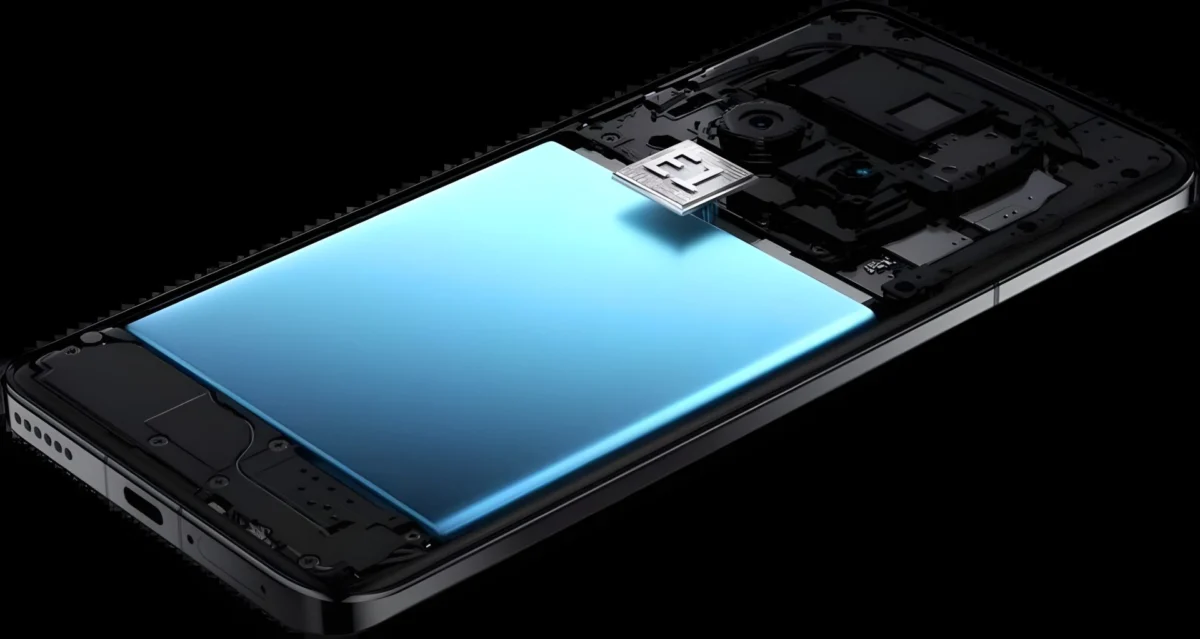
Samsung Electronics is reportedly preparing a significant shift in its mobile energy strategy, signaling an end to the decade-long stagnation in smartphone battery capacities. After years of maintaining a conservative approach to battery chemistry and density—largely as a safeguard against the safety risks that famously plagued earlier flagship models—the South Korean conglomerate is poised to adopt silicon-carbon (Si/C) battery technology. Industry insiders and supply chain reports suggest that this transition will culminate in the release of the Galaxy S27 series, which is expected to feature battery capacities significantly exceeding the 5,000mAh ceiling that has characterized the company’s flagship offerings since 2020. This move marks a strategic pivot as Samsung seeks to regain its competitive edge against Chinese manufacturers who have aggressively integrated high-density battery solutions into their premium and mid-range devices.
The Evolution of Battery Chemistry: Silicon-Carbon vs. Graphite
To understand the magnitude of Samsung’s impending shift, one must examine the fundamental chemistry of modern energy storage. For the better part of three decades, lithium-ion batteries have relied on graphite anodes. While graphite is stable and reliable, it has reached its theoretical limit for energy density. In a conventional lithium-ion cell, lithium ions are stored within the layers of the graphite anode during charging. However, the physical capacity of graphite to hold these ions is relatively low.
Silicon-carbon batteries represent the next frontier in material science for consumer electronics. Unlike graphite, silicon has the capability to hold up to ten times more lithium ions by volume. This translates to a massive increase in energy density, allowing manufacturers to either significantly shrink the physical size of the battery or dramatically increase the total milliampere-hour (mAh) capacity without increasing the device’s thickness. The "carbon" element in the Si/C composite acts as a structural buffer. Pure silicon expands and contracts by nearly 300% during charge and discharge cycles, which can lead to mechanical failure, "pulverization" of the anode, and a rapid decline in battery life. By using a nanostructured silicon-carbon composite, engineers can mitigate this expansion, providing a stable framework that retains the high capacity of silicon while maintaining the structural integrity required for long-term use.
A Decadelong Stagnation and the Shadow of the Galaxy Note 7
Samsung’s reluctance to move toward experimental battery chemistries is deeply rooted in its corporate history. In 2016, the Galaxy Note 7 disaster, caused by volatile battery manufacturing defects, resulted in a global recall and billions of dollars in losses. This event fundamentally altered Samsung’s risk tolerance. While competitors like Xiaomi, Honor, and Vivo began experimenting with silicon-anode technology to achieve 5,500mAh or 6,000mAh capacities in slim chassis, Samsung remained steadfast with its 5,000mAh graphite-based cells.
The 5,000mAh benchmark has been a constant for Samsung since the release of the Galaxy S20 Ultra in 2020. Even the Galaxy A9 Pro, released as far back as 2016, featured a 5,000mAh battery, illustrating how little the raw capacity of Samsung’s power cells has evolved in nearly ten years. During this period, the company focused on software optimization and the efficiency of its Exynos and Snapdragon processors to extend battery life, rather than increasing the physical energy reserves. However, as 5G connectivity, high-refresh-rate displays, and generative AI processing increase the power demands on modern smartphones, the limitations of the 5,000mAh graphite cell have become a bottleneck for the "Ultra" user experience.
Samsung SDI’s Rigorous Development and Testing Timeline
The journey toward silicon-carbon adoption has been managed by Samsung SDI, the group’s dedicated battery manufacturing arm. Internal reports from late 2025 indicated that Samsung SDI was engaged in an ambitious testing phase involving several high-capacity prototypes. These included a massive 20,000mAh dual-cell configuration intended for specialized devices or tablets. This specific prototype utilized a primary cell of 12,000mAh (6.3mm thick) and a secondary cell of 8,000mAh (4mm thick).
Despite the impressive capacity, the 20,000mAh project faced significant hurdles in longevity. Testing revealed that the cells failed after approximately 960 charge cycles, falling short of Samsung’s stringent internal requirement of 1,500 cycles to ensure a three-to-four-year lifespan for the average consumer. This failure prompted a strategic recalibration. Instead of pursuing extreme capacities that compromised longevity, Samsung SDI shifted its focus to perfecting 6,000mAh to 8,000mAh cells that could meet the 1,500-cycle threshold.

Additional testing throughout 2026 involved an 18,000mAh cell and a more compact 12,000mAh dual-cell arrangement (combining a 6,800mAh and a 5,200mAh unit). These iterative tests allowed engineers to refine the separator layers—the thin membranes that prevent short circuits between the anode and cathode—and the battery management system (BMS) firmware, which regulates voltage and temperature during rapid charging.
The Technical Breakthrough: Reworking the Architecture
Recent intelligence suggests that Samsung’s engineering teams are currently "cracking the code" on silicon-carbon longevity. The breakthrough lies in a three-pronged approach involving stacking architecture, improved separators, and advanced firmware.
- Stacking Architecture: Traditionally, battery layers are "wound" like a jelly roll. Samsung is transitioning to a "stacking" method, similar to the technology used in electric vehicle (EV) batteries. This allows for tighter packing of the silicon-carbon material and better heat dissipation, reducing the thermal stress that contributes to cycle degradation.
- Advanced Separators: The development of more resilient, fracture-resistant separator layers is crucial for managing the physical expansion of the silicon-carbon anode. These new materials are designed to maintain their porosity and ion-conductivity even under the mechanical pressure of the expanding anode.
- BMS Firmware Optimization: Samsung is reportedly developing a sophisticated AI-driven Battery Management System. This firmware will monitor the health of the silicon-carbon cells in real-time, adjusting charging speeds and voltage curves based on the battery’s age and thermal profile. This proactive management is expected to push the longevity of Si/C cells to the elusive 1,500-cycle mark.
Market Implications and Competitive Pressure
Samsung’s move toward Si/C technology is not occurring in a vacuum. The Chinese smartphone market has become a crucible for battery innovation. Brands like Honor have already successfully marketed "Silicon-Carbon" batteries in their Magic series, offering capacities like 5,600mAh in devices that remain remarkably thin. For Samsung to maintain its status as the premier Android manufacturer globally, it cannot afford to be perceived as technologically stagnant in the power department.
The Galaxy S27 Ultra, slated for a 2027 release, is identified as the most likely candidate for the commercial debut of this technology. By integrating a silicon-carbon battery, Samsung could potentially offer a 6,000mAh or even 7,000mAh capacity while maintaining the sleek profile of the Ultra line. This would provide a definitive answer to the "battery anxiety" often cited by power users and would provide the necessary headroom for the intensive AI features Samsung is currently integrating into its One UI ecosystem.
Broader Impact on the Mobile Ecosystem
The successful deployment of silicon-carbon batteries by a market leader like Samsung will likely have a "halo effect" across the entire mobile industry. If Samsung can prove that Si/C batteries are safe and long-lasting, it will accelerate the supply chain’s transition away from graphite. This could lead to a reduction in the cost of silicon-carbon composites as economies of scale take effect.
Furthermore, the implications for foldable devices are profound. One of the primary constraints of the Galaxy Z Fold and Z Flip series has been battery life, dictated by the thinness required for a foldable chassis. Silicon-carbon technology could allow Samsung to fit significantly larger batteries into these form factors, potentially solving the single greatest criticism of the foldable category.
Conclusion: A Measured Leap Forward
While the "morally upright" stand Samsung took regarding battery safety may have cost it market share in terms of raw specifications over the last few years, the company’s cautious R&D approach appears to be nearing a successful conclusion. By focusing on the 1,500-cycle longevity standard rather than rushing a high-capacity but volatile product to market, Samsung aims to avoid a repeat of past failures while finally delivering the generational leap in battery life that consumers have demanded.
As the industry moves toward 2027, the Galaxy S27 series will serve as a critical test case for whether silicon-carbon technology can truly replace the graphite standard. If Samsung’s engineers have indeed solved the longevity and stability issues inherent in silicon anodes, the Galaxy S27 Ultra may not only be remembered for its processing power or camera capabilities but as the device that finally broke the 5,000mAh barrier, setting a new standard for the next decade of mobile computing.