Sisilia Frederika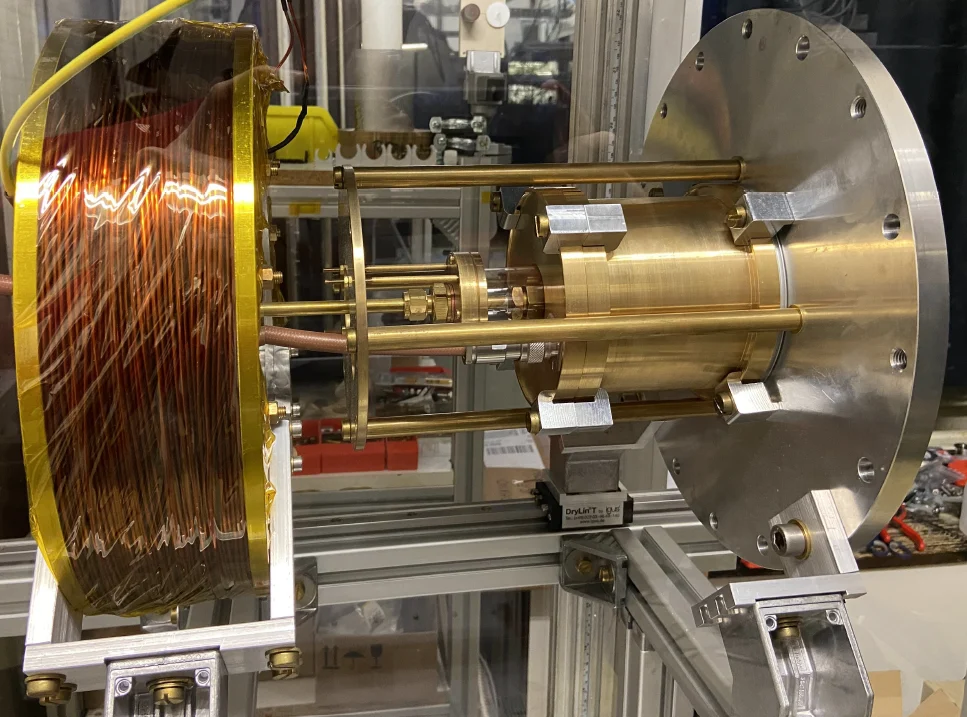
The strategic landscape of orbital mechanics is undergoing a fundamental shift as researchers seek to exploit the untapped potential of Very Low Earth Orbit (VLEO). Defined as the region between 100 and 450 kilometers above the Earth’s surface, VLEO offers transformative advantages for satellite operations, including enhanced imaging resolution, reduced communication latency, and natural orbital decay that mitigates the growing threat of space debris. However, these benefits are historically offset by the significant challenge of atmospheric drag, which necessitates constant propulsion to maintain altitude. Traditionally, this has required the use of onboard propellants such as Xenon or Krypton—gases that are both expensive and limited in supply, effectively capping the operational lifespan of any VLEO mission.
A breakthrough in this field has emerged from the University of Stuttgart, where researcher Francesco Romano, as part of his doctoral thesis recently detailed on the arXiv preprint server, has developed a novel Atmosphere-Breathing Electric Propulsion (ABEP) system. This technology aims to eliminate the "propellant bottleneck" by utilizing the ambient atmospheric molecules responsible for drag as the primary fuel source for a plasma engine. By harvesting the very air that threatens to pull a satellite back to Earth, Romano’s design suggests a future where satellites could remain aloft indefinitely, powered by the sun and the thin vestiges of the upper atmosphere.
The Strategic and Scientific Allure of VLEO
To understand the significance of Romano’s work, one must first consider the unique environment of VLEO. Most commercial and scientific satellites operate in Low Earth Orbit (LEO), typically at altitudes between 500 and 2,000 kilometers. At these heights, the atmosphere is negligible, allowing satellites to orbit for years with minimal station-keeping. However, descending into VLEO (below 450 km) offers three primary advantages that are currently driving a new "space race" among private and governmental entities.
First, the proximity to the surface drastically improves the performance of remote sensing equipment. A camera at 250 km provides significantly higher spatial resolution than the same camera at 600 km. Similarly, radar systems require exponentially less power to achieve the same signal-to-noise ratio because the distance the signal must travel is halved. Second, for telecommunications, the lower altitude reduces signal latency, a critical factor for the next generation of high-speed satellite internet. Third, VLEO is inherently self-cleaning. If a satellite fails at 300 km, atmospheric drag will ensure it re-enters and burns up within weeks or months, preventing it from becoming a permanent hazard to other spacecraft.
Despite these perks, the "drag tax" is heavy. At 200 km, the atmospheric density is orders of magnitude higher than at 500 km. Without a continuous thrust to counteract this resistance, a spacecraft would lose velocity and fall out of orbit almost immediately. Current solutions, like the European Space Agency’s (ESA) GOCE satellite, used sophisticated ion thrusters fueled by pressurized Xenon. When the Xenon ran out in 2013, the mission ended. Romano’s ABEP system proposes to replace these finite gas tanks with a "scoop" that gathers nitrogen and oxygen from the vacuum-like environment.
Overcoming the Technical Hurdles of Atmosphere-Breathing Systems
The concept of an atmosphere-breathing engine is not entirely new, but its implementation has been stymied by the harsh chemistry of the thermosphere. The primary obstacle is Atomic Oxygen (AO). At VLEO altitudes, intense ultraviolet radiation from the sun breaks apart molecular oxygen (O2) into single oxygen atoms. This atomic oxygen is highly reactive and aggressively oxidative. In traditional ion engines, AO quickly erodes metal electrodes, acceleration grids, and the cathodes used to generate electrons.
Furthermore, standard ion propulsion requires a "neutralizer"—essentially an electron gun that sprays electrons into the exhaust plume. Without this, the spacecraft would accumulate a massive negative charge as it ejects positive ions, eventually causing the ejected ions to be pulled back toward the ship, resulting in zero net thrust. In an atmosphere-breathing context, the neutralizer’s cathode is particularly vulnerable to AO "poisoning," which causes it to burn out rapidly.
A secondary challenge is the extreme variability of the medium. The density of the atmosphere at 200 km is not constant; it fluctuates based on the day-night cycle, geomagnetic storms, and the 11-year solar cycle. An engine designed for these altitudes must be capable of maintaining stable plasma discharge across a wide range of pressures and gas compositions.
The Stuttgart Innovation: RF Helicon Thrusters and Specular Intakes
Romano’s research addresses these challenges through a two-pronged engineering approach: an optimized intake system and a contactless, neutralizer-less Radio-Frequency (RF) Helicon Plasma Thruster.
The Evolution of the Atmospheric Intake
Capturing enough air to generate thrust in a near-vacuum is a feat of fluid dynamics. Romano tested three distinct intake architectures to determine which could most efficiently funnel rarefied gas into the engine:
- The Enhanced Funnel: A molecular trap designed to catch particles in a regime where they rarely collide with one another.
- The Diffuse Intake: A hexagonal structure made of coated titanium alloy, designed to bounce particles toward the engine core.
- The Specular Intake: A parabolic mirror-like collector coated with graphite or silicon dioxide.
The specular intake emerged as the superior design. During wind tunnel simulations using nitrogen, argon, and atomic oxygen, the specular intake achieved a collection efficiency of approximately 94.3%. Remarkably, the design proved robust against alignment errors; even when tilted at a 15-degree angle—common during orbital maneuvers—the efficiency only dropped by 8%. This high capture rate is vital for ensuring the engine has a steady supply of "fuel" to maintain constant thrust.
The Birdcage Antenna and Contactless Propulsion
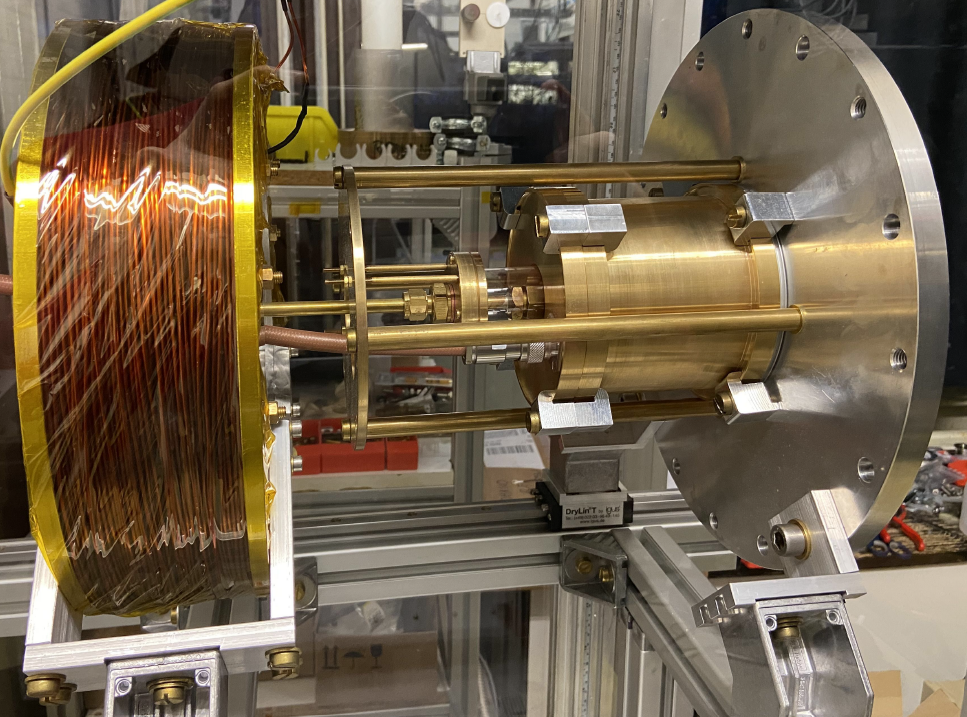
The centerpiece of Romano’s thesis is the RF Helicon Plasma Thruster. To bypass the erosion caused by Atomic Oxygen, Romano looked toward medical technology—specifically the "birdcage" antennas used in Magnetic Resonance Imaging (MRI) machines.
By using an RF-based system, the engine does not require internal electrodes or grids to come into direct contact with the plasma. Instead, RF energy is coupled into the gas through the antenna, ionizing the air into a high-density plasma. The use of the birdcage configuration allowed for a power coupling efficiency of 99%, meaning nearly all the electrical energy provided by the satellite’s solar panels is converted into plasma energy.
Crucially, the design eliminates the need for a separate neutralizer. By using a solenoid to create a specific magnetic field geometry, the thruster ejects a "quasi-neutral" jet containing both positive ions and electrons in equal measure. This "contactless" nature ensures that the corrosive effects of Atomic Oxygen are mitigated, as there are no sensitive metallic components exposed to the high-energy plasma flow.
Experimental Validation and Comparative Performance
The viability of the system was confirmed through rigorous testing in vacuum chambers designed to simulate the atmospheric composition of VLEO. Romano demonstrated that the engine could generate a steady plasma stream using only 50 to 60 watts of RF power. This is a remarkably low threshold, easily supported by the small-scale solar arrays found on CubeSats or small-form-factor commercial satellites.
To place these results in a real-world context, Romano applied his propulsion models to the parameters of the GOCE (Gravity Field and Steady-State Ocean Circulation Explorer) mission. GOCE operated at an altitude of approximately 250 km and weighed over a ton. Romano’s calculations suggest that an ABEP system based on his design could maintain a GOCE-class satellite indefinitely at altitudes between 190 km and 250 km using less than 1.6 kW of power. Given that GOCE’s solar wings produced about 1.3 kW a decade ago, modern high-efficiency solar cells would easily meet the requirements for a perpetual mission.
Beyond Earth: Applications for Mars Exploration
While the primary focus of the research is Earth’s VLEO, the implications extend to the Red Planet. Mars possesses a thin atmosphere composed of approximately 95% carbon dioxide. Traditional ion engines struggle with CO2 because it tends to break down and clog internal components. However, Romano’s RF Helicon thruster is gas-agnostic.
The thesis indicates that an ABEP-equipped spacecraft could maintain a stable orbit around Mars at altitudes as low as 120 to 160 km. Currently, Martian orbiters stay much higher to avoid the drag of the CO2 atmosphere. Lowering the orbital floor would allow for unprecedented high-resolution mapping of the Martian surface and more efficient relay of data from surface rovers to Earth.
Broader Impact and the Future of Space Sustainability
The transition from lab-proven theory to orbital deployment remains the final hurdle for Romano’s technology. If successfully commercialized, the ABEP system could fundamentally change the economics of space. By removing the need to launch heavy tanks of Xenon, launch costs are reduced, and the "shelf life" of a satellite is no longer dictated by its fuel gauge, but rather by the durability of its electronics.
Industry experts suggest that this technology could be a cornerstone for future "mega-constellations." As companies like SpaceX and Amazon look to lower their orbits to improve service, the ability to use the atmosphere as a propellant becomes a competitive necessity. Furthermore, national security agencies are increasingly interested in "stealth" orbits in VLEO, where satellites are harder to track and can provide near-instantaneous reconnaissance.
While Dr. Romano’s work currently resides in the academic and experimental realm, the high efficiency and robustness of the birdcage antenna design provide a clear roadmap for future development. As the space industry moves toward more sustainable and long-duration mission profiles, the ability to "breathe" the atmosphere may well be the key to unlocking the next frontier of orbital exploration. The vision of a perpetual satellite—one that cleans up after itself and never runs out of fuel—is no longer a matter of science fiction, but a quantifiable goal of modern aerospace engineering.