Sonny Valindra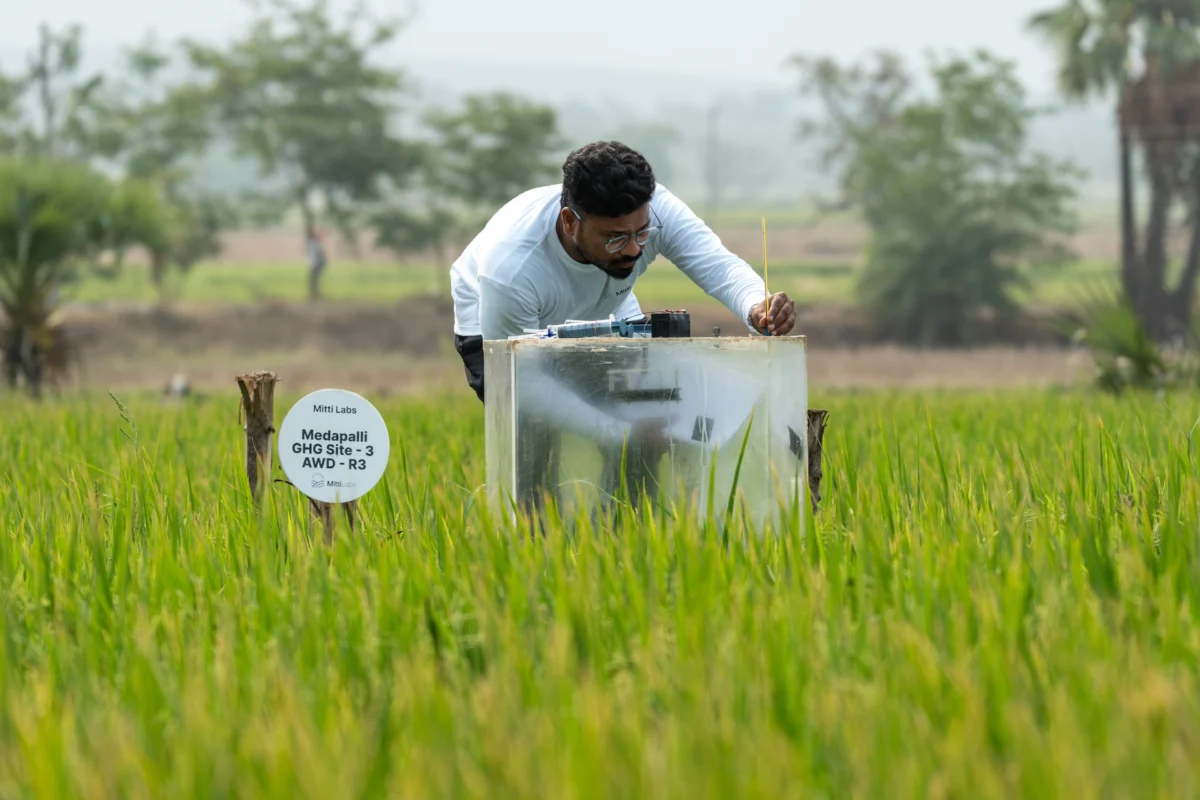
Google has finalized a landmark agreement to purchase one million carbon credits from Mitti Labs, an Indian climate-tech innovator, through 2030. This four-year deal, hailed as the most significant publicly announced transaction for credits generated from cutting methane emissions in rice cultivation, underscores a growing corporate commitment to addressing potent greenhouse gases beyond carbon dioxide. The pact will encompass rice farms across the Indian states of Karnataka, Andhra Pradesh, and Telangana, ultimately impacting approximately 100,000 hectares at peak execution, according to Xavier Laguarta, co-founder of Mitti Labs. While financial specifics of the agreement remain undisclosed, its scale and focus signal a critical development in agricultural climate solutions.
Addressing a Potent Greenhouse Gas: Methane in Rice Cultivation
Rice paddies are a significant source of methane, a greenhouse gas with a warming potential approximately 28 times greater than carbon dioxide over a 100-year period. This potent emissions profile stems from the anaerobic decomposition of organic matter in flooded soils. The agricultural sector, particularly rice farming, is a major contributor to global methane emissions. Globally, agriculture accounts for roughly 40% of anthropogenic methane emissions, with rice cultivation being a substantial portion of that figure. This deal directly targets this critical emission source by incentivizing farmers to adopt practices that alter the flooding cycles in their fields.
The core of Mitti Labs’ project involves compensating farmers for implementing techniques that reduce the duration of continuous waterlogging in rice fields. By allowing fields to dry out periodically, the microbial processes that generate methane are disrupted. This innovative approach not only curtails methane release but also offers significant co-benefits, most notably a substantial reduction in water consumption. Mitti Labs asserts that these adapted farming methods can achieve an estimated 50% reduction in methane emissions and a remarkable 40% decrease in irrigation water usage, all while maintaining crop yields. This dual benefit of climate mitigation and resource conservation is a key driver for the adoption of such technologies.
Google’s Sustainability Imperative and a Growing Carbon Portfolio
This strategic acquisition of carbon credits by Google comes at a pivotal moment for the tech giant’s ambitious environmental goals. The company is striving to achieve net-zero emissions by 2030, a target that is increasingly challenged by its rapid expansion and significant investments in energy-intensive infrastructure, particularly its growing artificial intelligence capabilities. Google’s most recent environmental report, released in June, highlighted an 18% year-over-year increase in its greenhouse gas emissions for 2025, reaching approximately 14.5 million metric tons of carbon dioxide equivalent. This increase underscores the ongoing complexities of decarbonizing a rapidly growing global enterprise.
The company’s pursuit of carbon credits reflects a multi-faceted strategy to offset its unavoidable emissions. While Google continues to invest heavily in renewable energy procurement and operational efficiency, the voluntary carbon market offers a pathway to address emissions that are currently difficult to abate. The selection of Mitti Labs’ project signals Google’s strategic interest in high-impact, verifiable carbon removal and reduction projects, particularly those addressing potent greenhouse gases like methane. The tech giant’s rigorous due diligence process, which involved extensive scrutiny of Mitti Labs’ monitoring technology and on-site farm visits, indicates a commitment to quality and integrity in its carbon offsetting investments.
The Genesis of a Landmark Partnership: A Year in the Making
The discussions between Mitti Labs and Google commenced approximately a year prior to the announcement, as Google actively explored expanding its carbon credit portfolio to include methane-reduction initiatives. According to Laguarta, Google was particularly attracted to the project’s potential for significant water savings and Mitti Labs’ demonstrable capacity for scalable implementation. This aligns with Google’s broader sustainability objectives, which increasingly emphasize projects with multiple environmental and social co-benefits.
Mitti Labs, founded in 2023, has rapidly emerged as a key player in agricultural climate solutions. The startup has developed a sophisticated GeoAI platform that integrates satellite radar imagery with on-the-ground measurements. This technology enables the remote monitoring of crucial agricultural parameters, including crop growth, soil moisture levels, and the extent of flooding across dispersed smallholder farms. The platform leverages synthetic aperture radar (SAR) imagery from both commercial and public satellites, offering resolutions that range from a highly detailed 50 centimeters to a broader 10 meters. This high-resolution data is further enhanced by proprietary field data, meticulously collected to train and refine Mitti Labs’ artificial intelligence models.
Over the past two years, Mitti Labs’ initiatives have already yielded impressive results, contributing to the conservation of over 500 billion liters of water. The substantial commitment from Google is poised to catalyze Mitti Labs’ expansion, providing the necessary scale to engage with larger corporate buyers and further entrench its position in the climate-tech landscape. "Having Google, one of the most sophisticated buyers in the market with rigorous due diligence processes, is obviously a good signal for us," Laguarta remarked, emphasizing the credibility and visibility this partnership bestows upon the startup.

Rigorous Verification and Certification Standards
The carbon credits generated by Mitti Labs’ projects and purchased by Google adhere to stringent international verification and certification standards. These credits can be issued under frameworks such as Gold Standard or Verra (formerly VCS), two of the most reputable carbon credit certification bodies globally. This ensures that the emissions reductions are real, measurable, permanent, and additional – meaning they would not have occurred in the absence of the project.
The certification process involves independent third-party verification, a critical step that validates the integrity and effectiveness of the emission reduction methodologies employed by Mitti Labs. This multi-layered approach to verification provides assurance to buyers like Google that their investments are contributing to genuine climate action. The rigor of these processes is essential for building trust and confidence in the voluntary carbon market, especially as it grows and evolves to address a wider array of greenhouse gases and emission sources.
Expanding Reach and Impact: From India to Southeast Asia
The agreement with Google represents Mitti Labs’ largest offtake deal to date, a significant milestone for the young company. Beyond Google, Mitti Labs has cultivated a diverse client base that includes prominent entities such as the carbon marketplace Cool Effect, the rice producer Ebro Foods, and the agricultural giant Syngenta. These partnerships highlight the broad appeal and applicability of Mitti Labs’ solutions across different sectors of the food value chain.
Currently, Mitti Labs collaborates with over 100,000 farmers and harbors ambitious plans to extend its reach to millions by 2030. The Google deal is instrumental in propelling the startup toward this expansive goal by facilitating the scaling of its projects and on-the-ground operations. A significant portion of the revenue generated from Mitti Labs’ projects is channeled directly back to the participating farming communities, fostering economic empowerment and incentivizing sustainable practices. While the precise financial benefits for farmers involved in the Google project were not disclosed, the model prioritizes equitable distribution of project proceeds.
While the current Google-backed project is geographically focused on India, Mitti Labs is strategically expanding its international footprint. The company is set to launch operations in the Philippines later this year and has plans to enter the Indonesian market and other Southeast Asian nations in 2027. This expansion is driven by the recognition of the vast potential for methane reduction in rice farming across these regions, which are home to a significant proportion of the world’s rice cultivation.
The Broader Implications for Agricultural Climate Solutions
The growing corporate interest in agricultural climate solutions, particularly those targeting methane, signals a maturing understanding of the climate crisis. Approximately 150 million farmers cultivate rice across India, Southeast Asia, and China, representing a colossal opportunity for impactful climate interventions. As more companies recognize the substantial environmental benefits and co-benefits of supporting agricultural mitigation projects, the market for such solutions is poised for significant growth.
Google’s engagement with Mitti Labs is not an isolated event within its Indian sustainability strategy. In January 2025, the technology behemoth entered into an agreement with Varaha, an Indian startup, to purchase 100,000 tons of carbon credits. This prior deal marked Google’s inaugural large-scale purchase of carbon removal credits in India and represented the largest transaction involving biomass-produced biochar globally at that time. These investments highlight India’s growing prominence as a hub for innovative climate solutions and carbon market activity.
Furthermore, Google is actively addressing its supply chain emissions through investments in clean energy projects within India. The company has secured an agreement tied to a 150-megawatt solar project in Rajasthan, thereby increasing its contracted solar capacity with ReNew in the state to a total of 300 megawatts. This multifaceted approach, encompassing both carbon removal and renewable energy procurement, demonstrates Google’s comprehensive strategy to decarbonize its operations and value chain. The success of the Mitti Labs partnership could pave the way for further collaborations in agricultural methane reduction, both within India and across other key rice-growing regions globally. The increasing demand for credible, impactful carbon credits, especially those addressing potent greenhouse gases, is driving innovation and investment in sectors previously underrepresented in climate action efforts.