admin
admin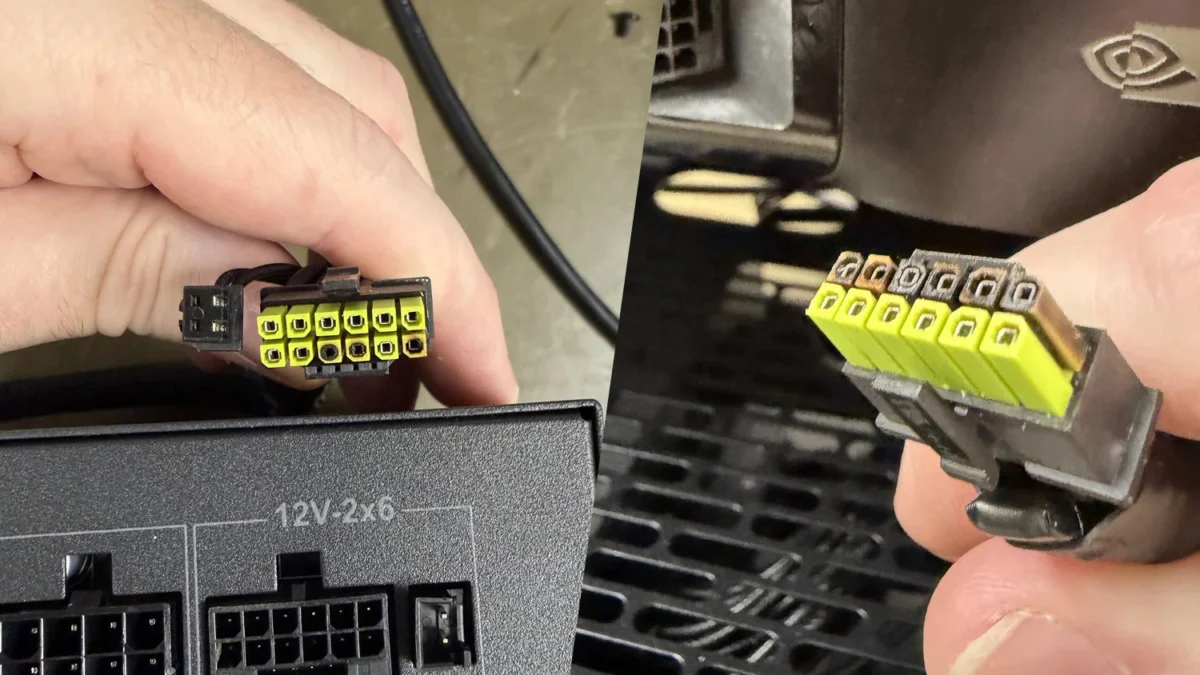
The high-end PC hardware community is once again grappling with the reliability of high-power delivery standards following a significant failure involving ASRock’s flagship power supply unit and an elite NVIDIA workstation GPU. A recent report from a user on the Reddit community r/pcmasterrace, identified as u/ScientiEtRatio91, has detailed a catastrophic melting event involving the 16-pin power connector on an ASRock Taichi TC1650T PSU. The incident is particularly notable because it occurred despite the use of ASRock’s specialized 12V-2×6 L-Type cable, which features an integrated Negative Temperature Coefficient (NTC) sensor designed specifically to prevent such thermal failures.
The user, who characterized the failure as "Truly Space Age Engineering from ASRock," shared images and technical details of the damage, which manifested on the power supply side of the connection. This event marks a troubling milestone in the ongoing saga of the 16-pin power connector, suggesting that even advanced thermal monitoring and revised connector designs may not be foolproof against the intense electrical demands of modern high-performance silicon.
Technical Overview of the Hardware Involved
The hardware configuration in question represents the absolute upper echelon of professional computing. The workstation was powered by the NVIDIA RTX 6000 PRO, a flagship GPU based on the Blackwell architecture (though often associated with the Ada Lovelace generation in current professional naming conventions, the user notes the Blackwell workstation context). This GPU is a critical tool for AI development, high-fidelity rendering, and scientific simulations, carrying a market price of approximately $15,000.
To provide power to this high-draw component, the user employed the ASRock Taichi TC1650T. This power supply is a 1650W monster designed to meet the most stringent modern standards, including ATX 3.1 and PCIe 5.1 compliance. A key selling point of this specific PSU is its inclusion of dual 16-pin connectors and the proprietary ASRock L-Type cables. These cables were marketed as a definitive solution to the melting issues that plagued earlier iterations of the 12VHPWR standard.

The ASRock 12V-2×6 L-Type cable is equipped with an NTC sensor, a component that monitors the temperature of the connector in real-time. According to ASRock’s technical specifications, this sensor is programmed to trigger an immediate system shutdown if the connector temperature exceeds 105°C. The logic behind this design was to eliminate the risk of fire or permanent hardware damage caused by poor contact or high resistance, which leads to localized overheating.
Analysis of the Failure and the NTC Sensor’s Role
Despite these layers of protection, the Reddit user reported that the connector "got cooked" at high temperatures, resulting in visible melting of the plastic housing on the PSU side. The user explicitly stated that the connectors were fully seated on both the GPU and PSU ends, theoretically ruling out the "user error" or "incomplete insertion" arguments that NVIDIA and other manufacturers have frequently used to explain previous connector failures.
A critical observation made by the user concerns the physical placement of the NTC sensor within the cable assembly. Upon inspection, it appeared that the sensor was positioned on the ground side of the 16-pin cable rather than the 12V power delivery side. In electrical engineering, heat generation in a failing or high-resistance connector typically originates at the power pins carrying the current. If the thermal sensor is located on the ground pins, there may be a significant "thermal lag" or a complete failure to detect a temperature spike on the power pins until the surrounding plastic has already begun to liquefy.
This potential design flaw suggests that while the NTC sensor was functioning, it was not monitoring the specific points of failure where the highest thermal stress occurs. This would explain why the 105°C safety threshold was not reached—or at least not detected—before the structural integrity of the connector was compromised.
The Evolution of the 16-Pin Connector Crisis
To understand the gravity of this failure, one must look at the timeline of the 16-pin (12VHPWR/12V-2×6) connector’s development and the industry’s response to its initial flaws:

- Late 2022: NVIDIA launches the GeForce RTX 4090 featuring the 12VHPWR connector. Reports of melting connectors begin to surface almost immediately, leading to a massive PR crisis and investigations by groups like PCI-SIG and various independent labs.
- Early 2023: Investigations suggest that "user error" (failure to fully plug in the cable) and extreme cable bends are the primary causes. However, enthusiasts point to the fragility of the small sense pins and the high current density of the design.
- Mid-2023: The PCI-SIG introduces the 12V-2×6 revision. This update features shorter sense pins, ensuring that if the cable is not fully inserted, the GPU will not receive full power, thus preventing a high-resistance thermal event.
- Late 2023/Early 2024: Manufacturers like ASRock, Seasonic, and MSI begin introducing further proprietary "fixes," such as right-angled (L-Type) connectors and NTC sensors, to provide additional peace of mind for users of high-wattage hardware.
- Present Day: The failure of an ASRock Taichi system—using both the revised 12V-2×6 standard and an additional NTC safety layer—indicates that the underlying issues of the 16-pin standard may still persist in certain high-load scenarios.
Industry Implications and Economic Risks
The financial stakes involved in these failures are escalating. While earlier reports focused on the $1,600 RTX 4090, the current incident involves a $15,000 professional-grade RTX 6000 PRO. In a professional environment, the cost of the hardware is often secondary to the cost of downtime. For a laboratory or a rendering house, a PSU failure that takes out a primary workstation can result in thousands of dollars of lost productivity per day.
Fortunately, the user in this case reported that the RTX 6000 PRO itself appears to have survived the incident, with the damage localized to the PSU and the modular cable. However, the psychological impact on the market is significant. If a "fail-safe" PSU from a reputable brand like ASRock cannot guarantee the safety of a workstation, IT managers and professional builders may become increasingly hesitant to adopt the current 16-pin standards for mission-critical systems.
This event also raises questions about the upcoming NVIDIA RTX 50-series "Blackwell" consumer GPUs. Rumors suggest these cards will continue to use the 16-pin standard, potentially with even higher power limits (up to 600W or more). If the 12V-2×6 standard with NTC monitoring is still susceptible to melting, the launch of the next generation of GPUs could be met with significant skepticism regarding long-term durability.
Potential Official Responses and Corrective Actions
While ASRock has not yet issued a formal public statement regarding this specific Reddit report, the company has historically been proactive in addressing hardware concerns. In previous instances of connector failure across the industry, manufacturers have often replaced the affected PSU and cables under warranty. However, a "silent" revision of the L-Type cable may be necessary if the community’s analysis of the NTC sensor placement proves accurate.
Technical experts suggest several potential corrective paths for the industry:

- Sensor Relocation: Moving NTC sensors to the 12V power rails rather than the ground rails to ensure faster detection of thermal excursions.
- Redundant Monitoring: Implementing sensors on both the PSU side and the GPU side of the cable, as heat can build up at either interface depending on the contact quality.
- Material Science Improvements: Utilizing higher-grade, high-temperature plastics for the connector housings that can withstand temperatures well beyond the 105°C shutdown threshold without deforming.
- Re-evaluating Connector Density: Some engineers have argued that the 16-pin connector is simply too small for the amount of current it is asked to carry, suggesting a return to multiple 8-pin connectors or a completely new, larger-format high-power interconnect.
Conclusion
The melting of a 16-pin connector on an ASRock Taichi TC1650T PSU, despite the presence of an NTC safety sensor, serves as a stark reminder of the challenges inherent in modern PC power delivery. As GPUs continue to push the boundaries of power consumption, the margin for error in electrical interconnects becomes razor-thin.
For the enthusiast and professional community, this incident highlights the importance of regular hardware inspections, even when using "protected" equipment. For manufacturers, it is a signal that the "16-pin problem" is not yet solved. As the industry moves toward the next generation of high-performance computing, the focus must shift from reactive workarounds to fundamentally robust engineering solutions that can guarantee the safety of multi-thousand-dollar components. The outcome of ASRock’s internal investigation into this failure will likely be closely watched by competitors and consumers alike, as it may dictate the future design of power delivery systems for years to come.