admin
admin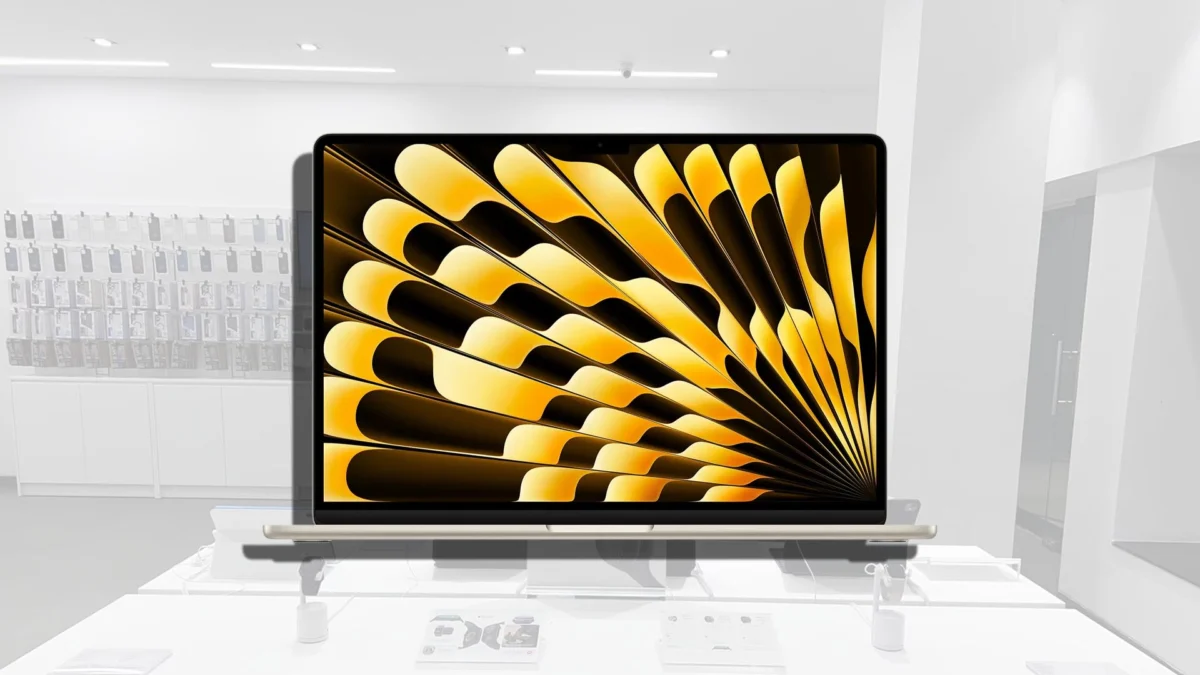
The landscape of consumer electronics after-sales support is often characterized by depreciating returns and the eventual sunsetting of hardware support, yet Apple has recently reinforced its reputation for premium service through a significant hardware replacement gesture. A user recently reported that the technology giant provided a brand-new M5 MacBook Air as a complimentary replacement for a 2020 Retina MacBook Air, an Intel-based machine that had reached the end of its functional lifecycle. This exchange, documented by a member of the Reddit community, highlights a specific intersection of Apple’s "vintage" product policies and its commitment to maintaining customer satisfaction for those enrolled in extended protection plans.
The incident involved a Redditor known as "simalary44," whose 2020 Retina MacBook Air—the final iteration of the MacBook Air to feature an Intel processor—suffered a critical battery failure. While the device was no longer the user’s primary workstation, as they had transitioned most heavy workloads to a 14-inch M3 Pro MacBook Pro, the portable 2020 model remained a secondary device covered under the AppleCare protection program. When the battery became unusable, the owner sought a standard repair, only to find that the machine’s status on Apple’s official support hierarchy complicated the logistics of a simple battery swap.
Understanding the Vintage Hardware Designation
Central to this story is Apple’s internal classification of hardware lifecycles. According to the company’s official support documentation, products are considered "vintage" when Apple stopped distributing them for sale more than five and less than seven years ago. In the case of the 2020 Retina MacBook Air, while it may seem relatively recent in the context of computing history, the rapid transition to Apple Silicon (beginning with the M1 in late 2020) accelerated the phasing out of Intel-based components.
For vintage products, Apple provides hardware service and parts through its service providers and Apple Store locations, but this service is strictly "subject to parts availability." Unlike newer models, where components are stocked in high volumes globally, vintage parts are often depleted. When a customer brings in a vintage device for a covered repair and the necessary components are no longer in the global inventory, Apple’s internal protocols occasionally allow for a "customer satisfaction" (CS) upgrade. This involves replacing the non-repairable unit with a contemporary equivalent or a superior model currently in production.
Chronology of the Replacement Process
The transition from a failing Intel-based laptop to a cutting-edge M5 machine followed a structured series of interactions between the user and Apple’s support infrastructure. Upon identifying the battery failure, the user contacted Apple Support, cognizant of the fact that the 2020 model was listed as vintage. The initial expectation was a standard repair or perhaps a notification that the device could no longer be serviced.
After an initial consultation and a brief period on hold, a senior advisor informed the customer of a fortunate logistical outcome. Because the specific parts required to refurbish the 2020 Retina MacBook Air were unavailable, Apple opted to fulfill its service obligation by providing a current-generation 13-inch M5 MacBook Air.

The specifications of the replacement device represent a massive generational leap in performance and value. The user received a configuration featuring:
- Processor: Apple M5 chip with a 10-core CPU and 10-core GPU.
- Memory: 16GB of unified memory.
- Storage: 512GB Solid State Drive (SSD).
- Market Value: Approximately $1,299 at major retailers such as Amazon and the Apple Store.
To finalize the exchange, the user was required to follow strict security and data protocols. This included disabling the "Find My" feature, signing out of iCloud, and performing a complete data erasure of the 2020 Intel machine. Furthermore, because the original device was still under an active AppleCare contract, the representative initiated a cancellation of the old agreement, informing the user that they would receive a pro-rated refund for the remaining duration of the coverage on the defunct machine.
A Comparative Analysis: 2020 Intel vs. M5 Apple Silicon
The technological gap between the original hardware and the replacement is substantial, marking one of the most significant shifts in the history of personal computing. The 2020 Retina MacBook Air was powered by 10th-generation Intel Core processors. While capable for its time, the Intel architecture in that specific chassis was frequently criticized for thermal throttling and loud fan noise under moderate loads.
In contrast, the M5 MacBook Air utilizes Apple’s latest proprietary silicon architecture. The M5 chip offers a paradigm shift in performance-per-watt, providing significantly faster processing speeds and superior graphical capabilities without the need for an internal cooling fan. For the user, this upgrade translates to:
- Thermal Efficiency: A completely silent operation compared to the frequently active fans of the 2020 Intel model.
- Battery Life: The M5 architecture typically offers nearly double the real-world battery endurance of the 2020 Intel Air.
- Unified Memory: 16GB of unified memory on Apple Silicon is more efficient than 16GB of DDR4 RAM on an Intel system, allowing for smoother multitasking and faster data access.
- Neural Engine: The M5 includes advanced AI processing capabilities via its Neural Engine, which were entirely absent in the 2020 Intel models.
Broader Context of Apple’s Service Strategy
While the replacement of a 2020 Air with an M5 model is an exceptional outcome, it is not an isolated incident. There is a documented history of Apple providing high-value upgrades when service parts for older, protected machines are unavailable.
Earlier reports indicated that a user seeking a battery service for a 2018 MacBook Pro was recently compensated with a 16-inch M4 Max MacBook Pro. That specific replacement carried a retail value of approximately $4,000, representing a massive upgrade in both screen real estate and raw processing power. In another instance, a customer with a 2019 Intel-powered MacBook Pro received an M5 MacBook Pro as a replacement.
These cases suggest a calculated strategic move by Apple. From a logistical perspective, maintaining a global supply chain for parts belonging to obsolete or vintage Intel machines is a costly endeavor. The storage, shipping, and manufacturing of niche components for 5-to-7-year-old laptops can often exceed the internal cost of a new unit produced at scale. By providing a new machine, Apple not only resolves a logistical bottleneck but also secures immense brand loyalty and positive public relations.

Implications for the Consumer Electronics Industry
This event serves as a case study in the value of extended warranty programs like AppleCare+. For many consumers, the annual or upfront cost of such insurance is viewed as an unnecessary expense. However, in the "vintage" phase of a product’s life, these contracts act as a guarantee of functionality. If the company cannot fix the device, they are contractually or ethically obligated to provide a working solution, which often results in a hardware "windfall" for the user.
Industry analysts suggest that these occurrences reinforce Apple’s "walled garden" strategy. By turning a potential negative (a broken, unrepairable laptop) into an overwhelming positive (a free upgrade to the latest technology), Apple ensures that the user remains within the ecosystem. A user who receives a free M5 MacBook Air is significantly more likely to purchase an iPhone, iPad, or Apple Watch in the future, viewing the brand as a reliable partner rather than just a hardware vendor.
Conclusion and Practical Takeaways
The story of the M5 MacBook Air replacement is a reminder of the complexities of modern hardware lifecycles. As the industry moves toward more integrated, proprietary chipsets, the repairability of older machines becomes more difficult. However, for those with active protection plans, these difficulties can result in unexpected benefits.
For owners of Intel-based MacBooks that are approaching the "vintage" or "obsolete" designations, this event highlights several key points:
- Documentation Matters: Keeping a device under a protection plan through its entire lifecycle can yield high returns if parts become scarce.
- Communication is Key: Engaging with senior advisors rather than standard automated support can lead to more flexible solutions.
- Ecosystem Readiness: Users should always be prepared for a device exchange by maintaining regular backups, as Apple’s replacement protocols require immediate data erasure and iCloud sign-outs.
As Apple continues to iterate on its M-series silicon, the gap between legacy Intel machines and current hardware will only widen. While not every "vintage" repair will result in a free upgrade to the latest flagship, the precedent set by cases like those of "simalary44" confirms that Apple’s after-sales support remains a cornerstone of its premium market positioning.