Garick Elordi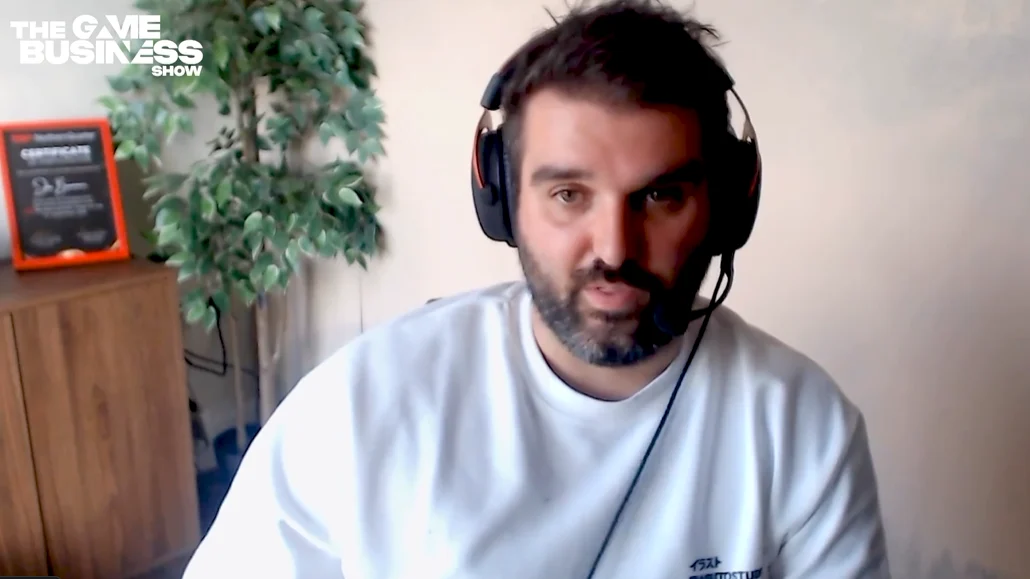
Joe Brammer, the Chief Executive Officer of Bulkhead—the United Kingdom-based development studio responsible for titles such as The Turing Test, Battalion 1944, and the recent commercial hit Wardogs—has become the center of an intensive industry debate regarding studio labor practices. The controversy follows a series of candid remarks made by Brammer during a recent podcast appearance, where he discussed the studio’s internal culture, his expectations regarding "crunch" periods, and the unconventional methods used during the recruitment process. After facing significant criticism on social media and in trade publications, Brammer has issued a comprehensive clarification to Eurogamer, attempting to contextualize his comments within the broader framework of Bulkhead’s operational philosophy.
The Core Controversy: Crunch Expectations and Candidate Screening
The current discourse began following Brammer’s appearance on "The Game Business" podcast, hosted by Chris Dring. During the wide-ranging interview, the conversation pivoted toward the perennially sensitive topic of "crunch"—the practice of working intensive, often mandatory overtime to meet development milestones. Brammer was notably forthright about his stance, suggesting that while the studio attempts to avoid it, he views it as an inevitable reality of high-level game production.
Brammer stated during the podcast that he expects his team to engage in crunch when necessary and suggested that those who are ideologically opposed to the practice might not be a suitable fit for Bulkhead. He explicitly mentioned that the studio monitors the social media presence of potential job applicants. If a candidate frequently posts "anti-crunch messaging," Brammer noted, they are unlikely to be hired because they "won’t be happy" in the studio’s environment.
"A lot of people who may have an issue with crunch—rightly so, I understand that issue, we always try and avoid it, but we don’t hide that this is going to happen at some point," Brammer told the podcast. He further explained that if employees care about the final result, they feel valued, but if they do not share that passion, they may feel "slave-driven." These comments immediately ignited a firestorm across social media platforms like X (formerly Twitter) and LinkedIn, with industry professionals and labor advocates questioning the legality and ethics of vetting candidates based on their personal views on labor rights.
Chronology of the Backlash and Bulkhead’s Response
The timeline of the controversy progressed rapidly following the podcast’s release. Within 24 hours, several major gaming news outlets reported on the comments, with a PC Gamer headline specifically using the word "mandatory" to describe the studio’s crunch policy. This prompted a swift rebuttal from Brammer on social media, who claimed his words were being taken out of context.
In his initial defense on X, Brammer argued that the term "mandatory" was an editorial interpolation and did not accurately reflect his statements. He countered the narrative by listing several pro-employee initiatives at Bulkhead, including a history of four-day work weeks during half of the development cycle for Wardogs, a studio-wide closure throughout December, and a unique equity-sharing model where 80 percent of the studio’s shares are owned by 50 percent of the staff.
However, critics pointed out that earlier in the same podcast, Brammer had been quite firm about his expectations. He stated, "At Bulkhead and online, people know what I believe. They know I don’t believe in work from home for making video games… They know I expect people to crunch. I own that." This perceived contradiction between "expecting" crunch and it not being "mandatory" became the focal point of the subsequent debate.
Legal Implications of Social Media Vetting in the UK
One of the most scrutinized aspects of Brammer’s interview was the admission of screening applicants’ social media for specific viewpoints. In the United Kingdom, employment law and data protection regulations provide a framework for how employers can use publicly available information.
According to guidelines provided by the Information Commissioner’s Office (ICO), the UK’s independent regulator for data protection, pre-employment vetting should be limited and transparent. The ICO states that such checks should only occur if there is a legal obligation or if there are "significant and particular risks" associated with the role. Furthermore, candidates should ideally be informed in advance if their social media profiles are to be audited as part of the recruitment process.
In a follow-up statement to Eurogamer, Brammer characterized his podcast comments as "speaking informally about our culture" rather than a description of a formal HR protocol. He maintained that any consideration of public information is conducted in compliance with UK law and that the studio does not access private accounts or perform "covert" checks. Legal experts suggest that while vetting for "anti-crunch" sentiment may not explicitly violate specific anti-discrimination laws (as it does not pertain to a protected characteristic like race or religion), it occupies a precarious "grey area" regarding the right to privacy and fair recruitment practices.
Experimental Labor Practices: Paternity Leave and the Four-Day Week
The interview also touched upon Bulkhead’s attempts to deviate from traditional UK labor standards, which Brammer described as sometimes "restrictive." He detailed an experiment with extended paternity leave that he deemed a "disaster." The studio had initially offered 10 weeks of paternity leave, but Brammer claimed that upon returning in the 11th week, employees and their partners struggled with the sudden transition back to full-time work.
In response, the studio pivoted to a "minimum" two-week statutory paternity leave, followed by a phased return-to-work schedule. This included third-week half-days to help parents establish a routine, with an additional three weeks of flexible leave to be used throughout the first year. Brammer acknowledged that this approach might be interpreted by HR law as providing "more holiday" to some staff over others, but he expressed a "sue us" attitude, arguing that the flexibility was more beneficial to families than a single block of time.
Brammer also discussed the studio’s trial of a four-day work week. While the concept has gained traction globally—with a major 2022 UK trial involving 61 companies showing that 92 percent intended to continue the practice—Bulkhead ultimately returned to a five-day schedule. Brammer explained that while the benefits to staff wellbeing were evident, the studio eventually required the fifth day of productivity to meet development goals for Wardogs.
The Financial Success of Wardogs and the "Return on Crunch"
The controversy comes at a time of unprecedented financial success for Bulkhead. Their latest release, Wardogs, sold over two million copies within its first five days on Steam Early Access. This success is a significant milestone for the mid-sized UK studio, particularly after the mixed reception and eventual sunsetting of their previous shooter, Battalion 1944.
Brammer argued that the success of Wardogs justifies the periods of intense work. He emphasized that the studio’s equity-sharing model ensures that the financial rewards are not restricted to the founders. "I’m going to be really excited to see juniors who have been with us for two or three years who are going to get money to buy a house," Brammer stated, framing the "crunch" as a high-stakes investment by the staff that results in "life-changing" bonuses.
He further clarified the nature of a recent crunch period in June 2024, noting it involved an extra two hours of work from Monday to Thursday for a duration of four weeks. He claimed that four employees opted out of this overtime without professional repercussion, though he admitted that "social pressure within a tight-knit team" could still make those individuals feel uncomfortable.
Industry Context: The Evolving Debate on Game Labor
The situation at Bulkhead reflects a broader, ongoing tension within the global video game industry. For decades, "crunch" was an accepted, if not celebrated, part of game development history. High-profile cases at studios like Rockstar Games (during the development of Red Dead Redemption 2), CD Projekt Red (Cyberpunk 2077), and Naughty Dog (The Last of Us Part II) have brought the human cost of these practices into the public eye.
In recent years, there has been a significant push toward unionization and the implementation of "no-crunch" policies at various studios. Many developers now view the practice not as an inevitable part of the creative process, but as a failure of project management and scheduling. Brammer’s comments stand in stark contrast to this shifting industry sentiment, representing a more traditional "hard-work" philosophy that prioritizes the final product and its commercial success.
As the industry matures, the debate over Bulkhead’s practices serves as a case study for the challenges facing independent and mid-sized studios. Balancing commercial viability, employee wellbeing, and adherence to evolving labor standards remains one of the most complex tasks for modern studio leadership. Whether Bulkhead’s "life-changing" financial rewards will be seen as a fair trade for its admitted culture of crunch remains a point of contention among developers and labor advocates alike. For now, Wardogs continues its successful run on Steam, even as its creator remains at the heart of an industry-wide conversation regarding the future of game development culture.