Sisilia Frederika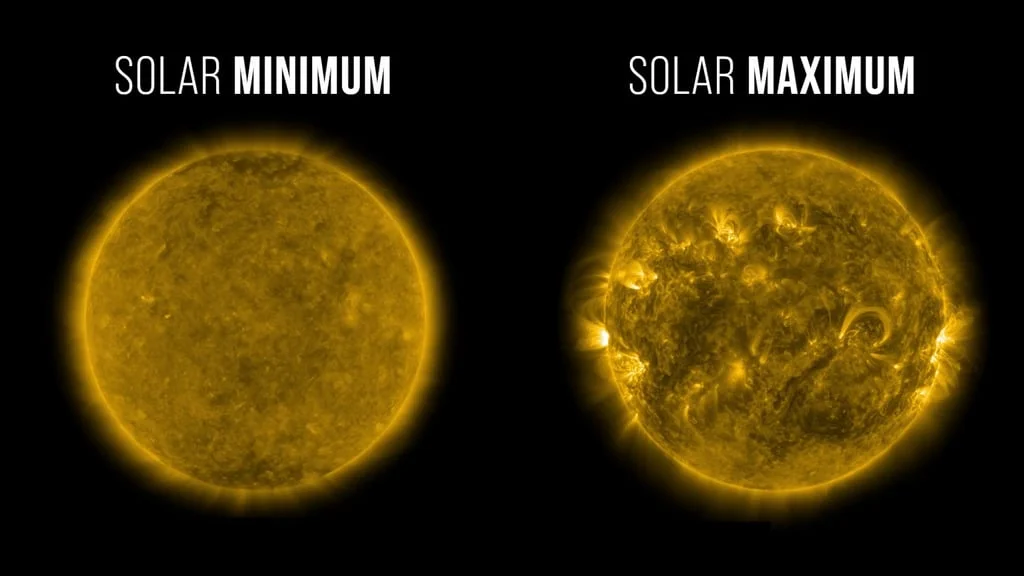
Solar Cycle 25 is currently navigating its peak, a period characterized by heightened magnetic turbulence and frequent solar phenomena, yet astrophysicists are already looking toward the next decade to understand the Sun’s future behavior. A seminal study authored by Sandra Chapman, published in The Astrophysical Journal, introduces a novel methodology for forecasting solar activity by identifying specific "switch-off" points in the solar cycle. This research suggests that Solar Cycle 26, projected to begin around 2030, may exhibit lower intensity than the current cycle, providing a critical window for technological preparation on Earth.
For centuries, the Sun has been recognized as a dynamic and often unpredictable engine of nuclear fusion. While it appears as a constant fixture in the sky, its magnetic personality undergoes dramatic shifts. Since the mid-19th century, astronomers have tracked these fluctuations through the observation of sunspots—dark, cooler regions of intense magnetic activity on the solar surface. These observations revealed an approximate 11-year periodicity known as the solar cycle. However, despite over 200 years of recorded data, predicting the exact timing and magnitude of a solar maximum remains one of the most significant challenges in heliophysics.
The Discovery of the Sharp Cutoff Point
The research led by Sandra Chapman offers a departure from traditional models that view solar cycles as smooth, bell-shaped curves of rising and falling activity. By analyzing historical data from previous solar cycles, Chapman identified a recurring phenomenon: solar maxima do not merely fade away; they experience a sharp, identifiable cutoff point. At this specific juncture, the number of sunspots and the associated magnetic turbulence drop precipitously rather than tapering off gradually.
This "switch-off" point serves as a precursor for the subsequent cycle. Chapman’s analysis indicates a strong correlation between the number of sunspots present at this cutoff and the eventual peak intensity of the following solar maximum. While there is a secondary, weaker correlation between the overall strength of one maximum and the next, the sharp cutoff provides a much more precise diagnostic tool for long-term forecasting.
According to the study, the Sun is currently in the declining phase of Cycle 25, which officially commenced in 2019. While the peak of this cycle has likely just passed, the Sun will remain active until the anticipated "switch-off" in 2028. Based on the data gathered during the rise of Cycle 25, Chapman’s current modeling suggests that Cycle 26 will be somewhat weaker in intensity. This early prediction provides a tentative roadmap for space weather agencies, though a "hard prediction" will only be possible once the 2028 cutoff point is reached and measured.
A Chronology of Solar Observation and Cycle 25
The history of solar cycle tracking began in earnest with Samuel Heinrich Schwabe in 1843, who noticed the 11-year pattern after 17 years of diligent observation. Since then, the scientific community has standardized the numbering of these cycles, starting with Cycle 1 in 1755.
The transition from Cycle 24 to Cycle 25 occurred in December 2019, marking a period of solar minimum. Cycle 24 was notably one of the weakest cycles in a century, leading some researchers to speculate that the Sun might be entering a "Grand Solar Minimum" similar to the Maunder Minimum of the 17th century. However, Cycle 25 has defied these expectations, showing significantly more activity than its predecessor.
The timeline for the current and upcoming cycles is as follows:
- 2019: Solar Cycle 25 begins at solar minimum.
- 2023–2025: Cycle 25 reaches its solar maximum, featuring high sunspot counts and frequent solar flares.
- 2026–2027: Activity begins a steady decline toward the "switch-off" point.
- 2028: The predicted "switch-off" point occurs, providing the data necessary for a firm prediction of Cycle 26.
- 2030: Solar Cycle 25 concludes, and Cycle 26 begins.
- Mid-to-Late 2030s: Solar Cycle 26 reaches its maximum, testing the accuracy of Chapman’s model.
Supporting Data and the Mechanics of Solar Magnetism
The Sun’s behavior is driven by the solar dynamo, a process involving the rotation of plasma and the movement of ionized gases which generate massive magnetic fields. Every 11 years, the Sun’s magnetic poles flip—north becomes south and vice versa. This reversal coincides with the solar maximum, the period of highest activity.
Chapman’s study utilizes the International Service of Geomagnetic Indices and historical sunspot counts to validate the "precursor" theory. Historically, when the "switch-off" point occurs at a higher baseline of sunspot activity, the following cycle tends to be more aggressive. Conversely, a clean and low-activity cutoff usually heralds a quieter following decade.
Data from Cycle 24 showed a distinct decline that allowed researchers to observe the transition into Cycle 25. The current observations of Cycle 25 suggest a peak that was robust but not record-breaking. By comparing the rate of decay in sunspot numbers during the current declining phase to historical cycles like Cycle 19 (the strongest on record) and Cycle 20 (a notably weaker one), Chapman has established a statistical framework that places Cycle 26 in a "moderate-to-weak" category.
Implications for Modern Technological Infrastructure
The ability to predict solar cycle intensity is not merely an academic exercise; it is a necessity for the protection of global infrastructure. Solar activity manifests in several ways, most notably through solar flares and Coronal Mass Ejections (CMEs). These events release vast quantities of charged particles and electromagnetic radiation into the solar system.
When a CME is directed toward Earth, it interacts with our planet’s magnetosphere, causing geomagnetic storms. The implications are multifaceted:
- Power Grids: Geomagnetic storms can induce extra currents in high-voltage power lines, potentially damaging transformers and causing widespread blackouts. A famous example is the 1989 Quebec solar storm, which collapsed the Hydro-Québec power grid in seconds.
- Satellite Operations: Increased solar radiation can damage satellite electronics and increase atmospheric drag, causing low-Earth orbit satellites to lose altitude. In early 2022, SpaceX lost 40 Starlink satellites due to a minor geomagnetic storm that prevented them from reaching their intended orbit.
- Communication and GPS: Solar flares disrupt the ionosphere, interfering with high-frequency radio communication and degrading the accuracy of GPS signals, which are vital for aviation, maritime navigation, and precision agriculture.
- Astronaut Safety: For missions involving the International Space Station or future lunar and Martian exploration, solar protons pose a significant radiation risk to crews outside the protection of Earth’s atmosphere.
A weaker Cycle 26, as suggested by Chapman’s study, could mean a lower frequency of extreme "Carrington-class" events. However, even a weak cycle can produce a singular, devastating storm. Therefore, accurate modeling allows satellite operators and grid managers to schedule maintenance and implement shielding during the most volatile years.
Expert Perspectives and Scientific Analysis
The heliophysics community has reacted to Chapman’s findings with cautious optimism. While traditional models like the "Babcock-Leighton" dynamo model focus on the transport of magnetic flux from the solar equator to the poles, Chapman’s work focuses on the temporal "envelope" of the cycle.
Inferred reactions from space weather monitoring bodies like the National Oceanic and Atmospheric Administration (NOAA) and the Space Weather Prediction Center (SWPC) emphasize that every new model contributes to a "weighted consensus" of forecasting. If Chapman’s model proves accurate in 2028, it could revolutionize how we prepare for solar cycles by providing a two-year "early warning" before the next cycle even begins.
Analysts suggest that if Cycle 26 is indeed weaker, it might offer a period of relative "space weather calm," which would be ideal for the ambitious Artemis missions planned by NASA and its partners. A quieter Sun reduces the risk of radiation exposure for astronauts returning to the Moon. However, scientists also warn against complacency, noting that the "cutoff" point itself can be a period of erratic and unpredictable flares.
Looking Ahead to 2028 and Beyond
The next four years will be critical for validating this new predictive framework. As Solar Cycle 25 continues its descent, researchers will be monitoring sunspot counts with unprecedented precision using assets like the Solar Dynamics Observatory (SDO) and the Parker Solar Probe.
The year 2028 stands as a pivotal milestone. If the "switch-off" occurs as predicted and the sunspot count at that moment aligns with Chapman’s projections, the scientific community will have a powerful new tool for long-range planning. By the mid-to-late 2030s, when Cycle 26 hits its peak, we will have definitive proof of whether the Sun’s "sharp cutoff" is the master key to unlocking the secrets of the solar cycle.
In an era where humanity is increasingly dependent on orbital technology and interconnected electrical grids, understanding the pulse of our star is no longer a matter of curiosity—it is a matter of resilience. Chapman’s research represents a significant step forward in our quest to coexist with the temperamental heart of our solar system.