Sisilia Frederika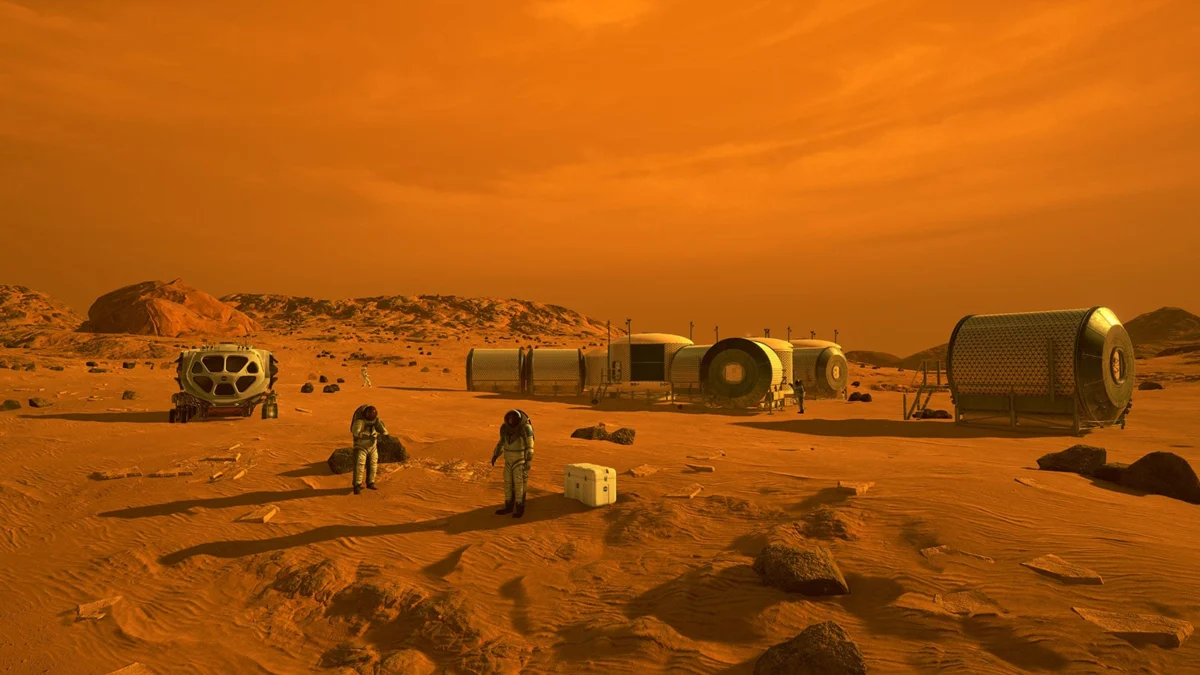
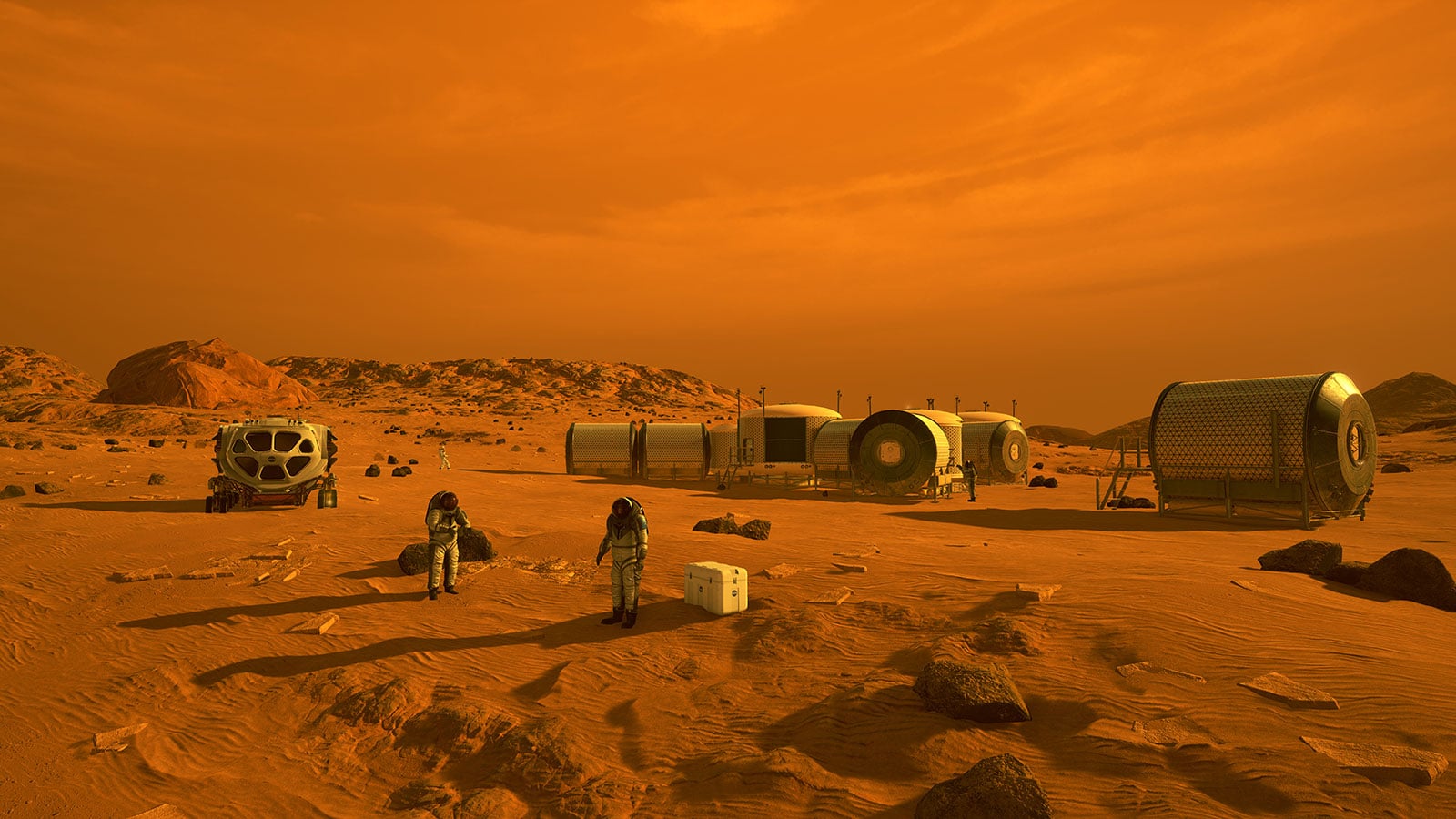
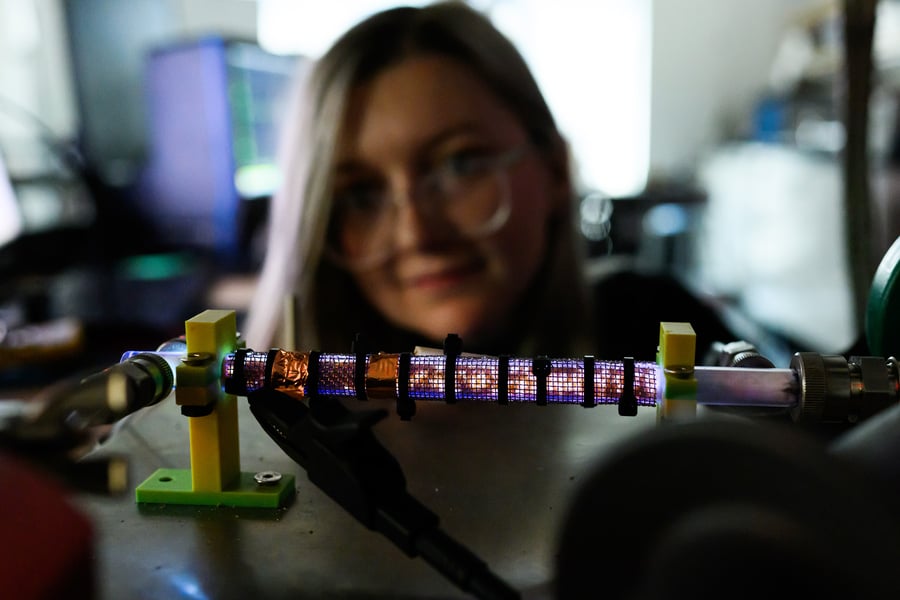
The realization of human exploration on Mars, a primary objective for both NASA and the China National Space Administration (CNSA) over the next two decades, hinges on overcoming several formidable engineering and logistical barriers. Among the most critical challenges are the development of advanced propulsion systems, the mitigation of health risks associated with long-duration cosmic radiation, and the establishment of a reliable method for generating return-trip propellant. To address the latter, scientists are increasingly looking toward In-Situ Resource Utilization (ISRU)—the practice of harvesting and processing local extraterrestrial materials to sustain mission operations. At the forefront of this research is a team from the Massachusetts Institute of Technology (MIT), where PhD candidate Lanie McKinney and the Aerospace Plasma Group are developing groundbreaking technology designed to transform the thin Martian atmosphere into life-sustaining oxygen and rocket fuel.
The Science of Cold Plasma: Converting the Martian Atmosphere
The Martian atmosphere is composed of approximately 95.3% carbon dioxide (CO2), a composition that offers a vast, albeit chemically stable, reservoir of resources. Traditional methods of extracting oxygen from CO2 often require high temperatures and significant energy inputs. However, McKinney’s research focuses on the use of cold plasma—specifically, a Nanosecond Repetitively Pulsed Dielectric Barrier Discharge (NRP-DBD) reactor—to dissociate CO2 molecules into oxygen (O2) and carbon monoxide (CO).
Cold plasma, or non-thermal plasma, is characterized by having electrons at a much higher temperature than the heavy particles (ions and neutrals). This allows for chemical reactions to occur at lower overall temperatures, significantly increasing energy efficiency. The NRP-DBD reactor functions by applying ultra-short, high-voltage pulses to the gas. These pulses create an electric field strong enough to strip electrons from molecules, initiating a cascade of chemical breakdowns without the need to heat the entire gas volume to extreme levels.
The resulting output is a mixture of O2 and CO. While oxygen is vital for life support and as an oxidizer for rocket engines, carbon monoxide can also be utilized as a fuel component. However, a significant technical hurdle remains: separation. Once the CO2 is split, the oxygen must be rapidly isolated to prevent it from recombining with carbon monoxide to reform CO2. McKinney’s current work involves integrating the plasma reactor with an oxygen-selective membrane. This membrane is designed to pull oxygen out of the reactive mixture instantaneously. The challenge lies in the unpredictable nature of the plasma environment; the interaction between the highly reactive ionized gas and the delicate membrane structure is a frontier in aerospace engineering that McKinney and her mentor, Associate Professor Carmen Guerra-Garcia, are currently navigating.
A Chronology of Innovation: From Competitions to Prototyping
McKinney’s trajectory at MIT is marked by a series of high-stakes NASA-sponsored competitions and interdisciplinary collaborations that have shaped her approach to space sustainability. This journey began with student-led initiatives that emphasized practical, "proof-of-concept" solutions for long-term lunar and Martian habitation.
In her early work with the MIT Space Resources Workshop, McKinney and her team participated in a design challenge focused on the architecture of a 10-year self-sustaining Mars mission. This foundational experience highlighted the necessity of closed-loop systems, where every byproduct is treated as a potential resource.
In March 2024, the focus shifted toward waste management through NASA’s LunaRecycle Challenge. McKinney co-led the MIT "Composites for Extraterrestrial Recycling By Engineering the Reuse and Upcycling of Zotek" (CERBERUZ) team. The project addressed a glaring issue in mission logistics: the accumulation of trash. On a multi-year mission, discarded packaging, broken tools, and biological waste become a burden. The CERBERUZ system proposed a method to grind mixed waste into a fine powder, which could then be processed via injection molding or used as filament for 3D printing. This approach effectively turns a waste stream into a hardware supply chain, allowing astronauts to manufacture spare parts on demand. The team’s innovative approach earned them first prize in Phase 2 of the competition, along with a $775,000 award to further develop the technology.
The Economic and Logistical Case for ISRU
The importance of McKinney’s work is underscored by the "gear ratio" of space travel. Currently, for every kilogram of fuel needed to land on Mars, many times that mass must be launched from Earth to get the fuel into orbit and across the interplanetary gulf. By producing propellant on the Martian surface—effectively building "gas stations on Mars"—NASA could reduce the initial launch mass of a Mars mission by hundreds of metric tons. This reduction significantly lowers costs and increases the safety margin for the crew.
Supporting data from NASA’s MOXIE (Mars Oxygen In-Situ Resource Utilization Experiment) on the Perseverance rover has already proven that oxygen production on Mars is possible using Solid Oxide Electrolysis. McKinney’s plasma-based approach represents the next generation of this technology, aiming for higher efficiency and scalability. While MOXIE demonstrated the principle, the NRP-DBD reactor seeks to optimize the power-to-oxygen ratio, a critical metric for a mission powered by limited solar or nuclear energy.
Interdisciplinary Solutions: Lunar Bricks and Radiation Shielding
Beyond fuel and recycling, McKinney has contributed to the field of space architecture. Through MIT’s Space Architecture course, she collaborated with architects and structural engineers to address the lethal threat of solar and galactic cosmic radiation on the lunar surface. Because the Moon lacks an atmosphere and a magnetic field, long-term habitats must be buried or shielded by thick layers of material.
The team developed a method to produce interlocking bricks from lunar regolith (soil) that do not require mortar or chemical binders. These bricks could be stacked using robotic systems to create protective shells over pressurized habitats. This "regolith-to-structure" pipeline exemplifies the ISRU philosophy: utilizing the environment’s inherent properties to solve its most dangerous challenges.
Official Perspectives and the Spirit of Collaboration
The success of these projects is largely attributed to the collaborative environment fostered by MIT’s Aerospace Plasma Group. Under the mentorship of Carmen Guerra-Garcia, the Esther and Harold E. Edgerton Associate Professor, the research has transitioned from theoretical physics to applied aerospace hardware.
"The kinds of innovative solutions that can be discovered when you work on a team that brings together different expertise and experiences was one of the project’s major takeaways," McKinney stated in a recent report by MIT News. She emphasized that the complexity of Mars exploration exceeds the capabilities of any single discipline. The integration of plasma physics, materials science, and architectural design is not just beneficial—it is mandatory for survival.
Industry analysts suggest that the technologies being developed by McKinney and her peers will likely be integrated into the broader "Artemis to Mars" roadmap. This roadmap relies on public-private partnerships, where university-led research provides the high-risk, high-reward innovation that commercial partners like SpaceX or Blue Origin can later scale for operational use.
Analysis of Implications for Future Exploration
The implications of successful ISRU technology extend far beyond the technical achievement of making fuel. It represents a fundamental shift in how humanity views space exploration. Rather than "camping" on other worlds—carrying everything needed and leaving nothing behind—ISRU enables "homesteading."
If the NRP-DBD reactor can be successfully scaled, it will provide the foundation for a permanent human presence. The ability to generate oxygen on-site allows for larger crews and longer stays, which in turn facilitates more comprehensive scientific research. Furthermore, the carbon monoxide byproduct of the plasma process can be combined with hydrogen (potentially harvested from Martian ice) to create methane (CH4), the primary fuel for engines like SpaceX’s Raptor.
However, the path forward is not without risks. The "separation problem" mentioned by McKinney remains a critical failure point. If the oxygen-selective membranes fail or become fouled by the reactive species in the plasma, the entire fuel production chain could collapse. Future research will need to focus on the durability of these materials under the harsh, dust-heavy conditions of the Martian surface.
Conclusion
Lanie McKinney’s work at MIT serves as a vital link between current experimental successes and the future of crewed planetary exploration. By leveraging the unique properties of cold plasma to harvest the Martian atmosphere and developing circular economies for space waste, her research addresses the core requirements for a sustainable human presence beyond Earth.
As NASA prepares for the next phase of the Artemis program, the focus will increasingly shift from the Moon to the Red Planet. The "gas stations" and "regolith bricks" envisioned by McKinney and the Aerospace Plasma Group are no longer the stuff of science fiction; they are the essential infrastructure of a multi-planetary future. The ultimate goal, as McKinney suggests, is to transition from the struggle of getting to Mars to the opportunity of doing "amazing science" once we arrive. Through multidisciplinary cooperation and persistent innovation, the return journey from Mars is moving from a logistical impossibility to a tangible reality.