admin
admin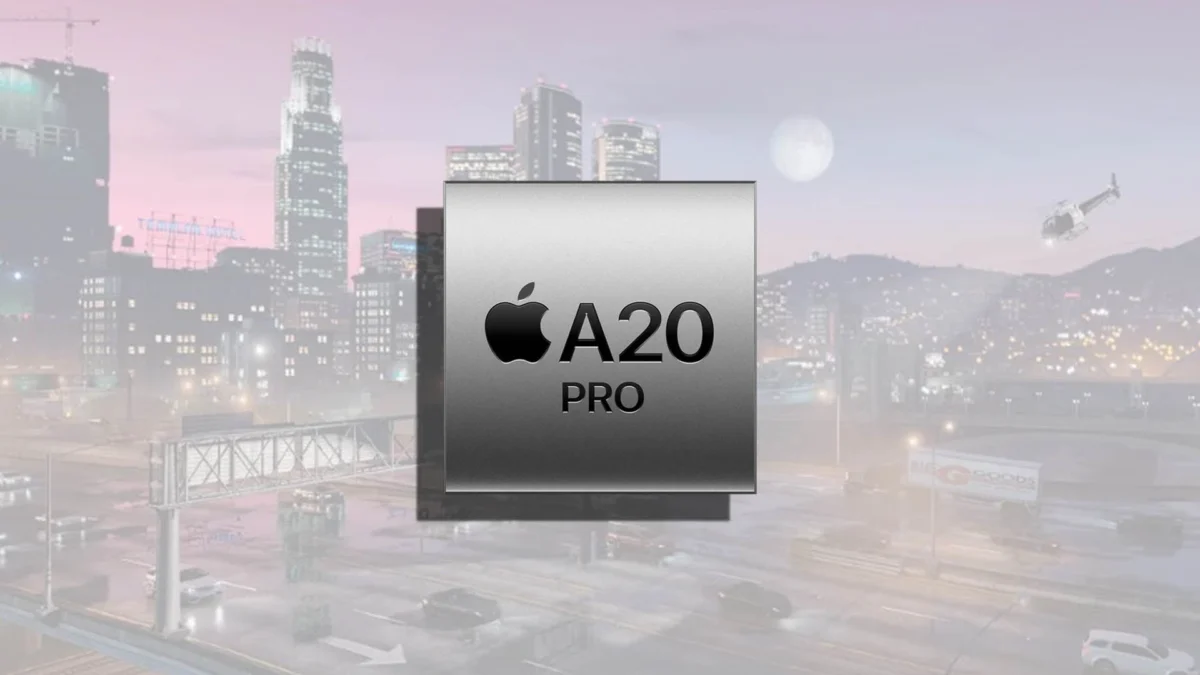
The landscape of mobile computing has reached a definitive turning point in 2026 as Apple’s latest silicon, the A20 Pro, demonstrates graphical capabilities that were once the exclusive domain of dedicated desktop gaming hardware. In a series of recent performance demonstrations, the A20 Pro SoC (System on Chip) powering the iPhone 18 Pro Max has shown it can match the performance of the NVIDIA GeForce GTX 1650—a popular discrete desktop GPU—while running Grand Theft Auto 5 (GTA 5). This milestone represents the culmination of a multi-year trajectory that began with the A17 Pro’s introduction of hardware-accelerated ray tracing, signaling a new era where the hardware gap between flagship smartphones and entry-level gaming PCs has effectively closed.
The Benchmarking Breakthrough: GTA 5 on Mobile Silicon
The recent performance data stems from a technical demonstration conducted by a developer known as Vapor, who has been working on a sophisticated emulation layer designed to bring high-fidelity PC titles to iOS. Unlike native ports, which are optimized specifically for the ARM architecture of Apple’s chips, emulation requires the hardware to translate x86 instructions and DirectX APIs in real-time. This process typically incurs a significant performance penalty, making the A20 Pro’s results even more noteworthy.
During the built-in benchmark of Grand Theft Auto 5, the iPhone 18 Pro Max achieved an average frame rate of 66 FPS during intensive "City Drive" sequences. In less demanding scenes, the frame rate climbed to an average of 80 FPS. These figures were recorded at a resolution of 1080p with DirectX 11 enabled. The visual configuration was not set to "Low" settings; instead, the test utilized High Texture settings, FXAA (Fast Approximate Anti-Aliasing), and 16x Anisotropic Filtering. Other parameters included a 75 percent population density and 50 percent distance scaling, with Sharp Shadows enabled and MSAA (Multi-Sample Anti-Aliasing) disabled.
Achieving a stable 60+ FPS at 1080p with high-quality textures places the A20 Pro directly in competition with the GTX 1650, a card that for years served as the baseline for 1080p PC gaming. This level of performance on a device that fits in a pocket and operates within a fraction of the power budget of a desktop PC highlights the massive leaps in efficiency provided by Apple’s 2nm manufacturing process.
Architectural Evolution: The Road to 2nm and WMCM Packaging
The A20 Pro’s ability to sustain such high performance is not merely a result of increased clock speeds but a fundamental shift in architectural design and packaging. The chipset is Apple’s first to be built on a 2nm process node, which allows for significantly higher transistor density compared to the 3nm process used in previous generations. This density enables the inclusion of a more robust 7-core GPU, which serves as the primary engine for the graphical throughput seen in the GTA 5 benchmarks.
However, raw compute power is often hindered by the physical limitations of smartphone chassis, which lack active cooling fans. To combat thermal throttling, Apple introduced Wafer-Level Multi-Chip Module (WMCM) custom packaging for the A20 Pro. Traditional smartphone SoCs often stack DRAM directly on top of the processor to save space, but this creates a "heat sandwich" that traps thermal energy. The WMCM approach moves the DRAM to the side of the silicon die, allowing the heat-generating components of the CPU and GPU to have more direct contact with the device’s internal cooling system.
Complementing this packaging change is a significantly enlarged vapor chamber within the iPhone 18 Pro Max. This hardware refinement ensures that the A20 Pro can "flex its muscles" for longer periods without the aggressive downclocking that plagued earlier iterations of mobile gaming. Data from previous comparative tests indicates that these thermal improvements have led to a 77 percent gain in 1% low frame rates compared to the A19 Pro, meaning that even when the system is under heavy load, the "stutter" or "jank" associated with thermal spikes is nearly eliminated.
Chronology of Apple’s AAA Gaming Ambitions
The journey to the A20 Pro’s current dominance began in 2023 with the launch of the A17 Pro in the iPhone 15 Pro series. At that time, Apple announced partnerships with major publishers like Capcom and Ubisoft to bring native versions of Resident Evil Village and Death Stranding to the platform. While impressive, those early efforts were often seen as "proof of concept" titles that pushed the hardware to its absolute thermal limits.

By 2024, the A18 Pro refined the efficiency of hardware ray tracing, but it was the 2025 release of the A19 Pro that truly began to bridge the gap toward consistent 1080p gaming. Even so, running GTA 5 on the A19 Pro via the XeniOS Xbox 360 emulator resulted in performance that rarely exceeded 20 FPS, rendering the game largely unplayable by modern standards.
The jump from the A19 Pro to the A20 Pro represents a 50 percent overall performance improvement in gaming benchmarks. The shift from 20 FPS on the previous generation to 60–80 FPS on the current generation via Vapor’s emulation layer suggests that the A20 Pro is not just an incremental update, but a generational leap that redefines the capabilities of mobile hardware.
Technical Analysis: Emulation vs. Native Performance
It is critical to distinguish between the performance achieved through emulation and what might be possible with a native port. Emulation layers like Vapor must translate DirectX calls to Apple’s Metal API on the fly. This translation layer acts as a middleman, consuming CPU and GPU cycles that could otherwise be used for rendering the game.
If the A20 Pro can achieve GTX 1650 levels of performance through an emulation layer, a native port of GTA 5—optimized specifically for the Metal API—would likely see even higher frame rates or allow for 4K resolution output via DisplayPort over USB-C. This has led to renewed speculation regarding Rockstar Games’ plans for its back catalog. With the A20 Pro proving it can handle the technical demands of the RAGE (Rockstar Advanced Game Engine) with ease, the barriers to bringing the world’s most popular open-world titles to mobile are now purely commercial rather than technical.
Comparative Data and Market Implications
The comparison to the GTX 1650 is particularly telling. The GTX 1650, released in 2019, was based on the Turing architecture and featured 4GB of GDDR5/GDDR6 VRAM with a 75W TDP (Thermal Design Power). In contrast, the A20 Pro operates within a TDP that typically peaks at around 5W to 8W for sustained gaming workloads.
| Feature | NVIDIA GTX 1650 (Desktop) | Apple A20 Pro (iPhone 18 Pro Max) |
|---|---|---|
| Architecture | Turing (12nm) | Apple Silicon (2nm) |
| Typical Power Draw | 75W | 5W – 10W (Estimated) |
| GTA 5 Avg FPS (1080p High) | ~60-70 FPS | 66-80 FPS (Emulated) |
| Cooling | Active (Fans) | Passive (Vapor Chamber) |
| Memory | 4GB Dedicated GDDR6 | Unified Memory (LPDDR5X/6) |
This comparison underscores the massive lead Apple has maintained in performance-per-watt metrics. The implications for the broader gaming market are significant. As smartphones become capable of running the most popular PC titles of the last decade at high settings, the market for dedicated handheld gaming consoles like the Nintendo Switch or even the Steam Deck faces a new type of competition. While the Steam Deck offers the advantage of a native Linux-based library, the sheer ubiquity of the iPhone means that the "addressable market" for high-end mobile gaming is expanding into the hundreds of millions.
Industry Reactions and Future Outlook
While Apple has not officially commented on the specific "Vapor" benchmarks, the company has consistently emphasized its transition into a "gaming first" hardware philosophy during its keynote presentations. Developers within the emulation community have reacted with astonishment at the A20 Pro’s throughput. "The fact that we are seeing 80 FPS in GTA 5 on a phone without it melting through the floor is a testament to the WMCM packaging," noted one independent software engineer. "The bottleneck used to be heat; now, it’s just how fast the software can translate the code."
Looking forward, the success of the A20 Pro sets a high bar for competitors like Qualcomm and MediaTek. The upcoming Snapdragon 8 Gen 5 and Dimensity 9500 series will likely attempt to match these graphical benchmarks, but Apple’s vertical integration—controlling everything from the 2nm design to the Metal API—gives it a distinct advantage in sustained performance.
As the iPhone 18 Pro Max begins to reach more consumers, the focus will likely shift from "Can it run it?" to "When will we get native versions?" The hardware hurdle has been cleared. The A20 Pro is no longer just a smartphone chip; it is a high-performance graphics processor that happens to live inside a phone. For the gaming industry, the message is clear: the most powerful gaming console for the average person may soon be the device already in their pocket.