Vera Intan Clara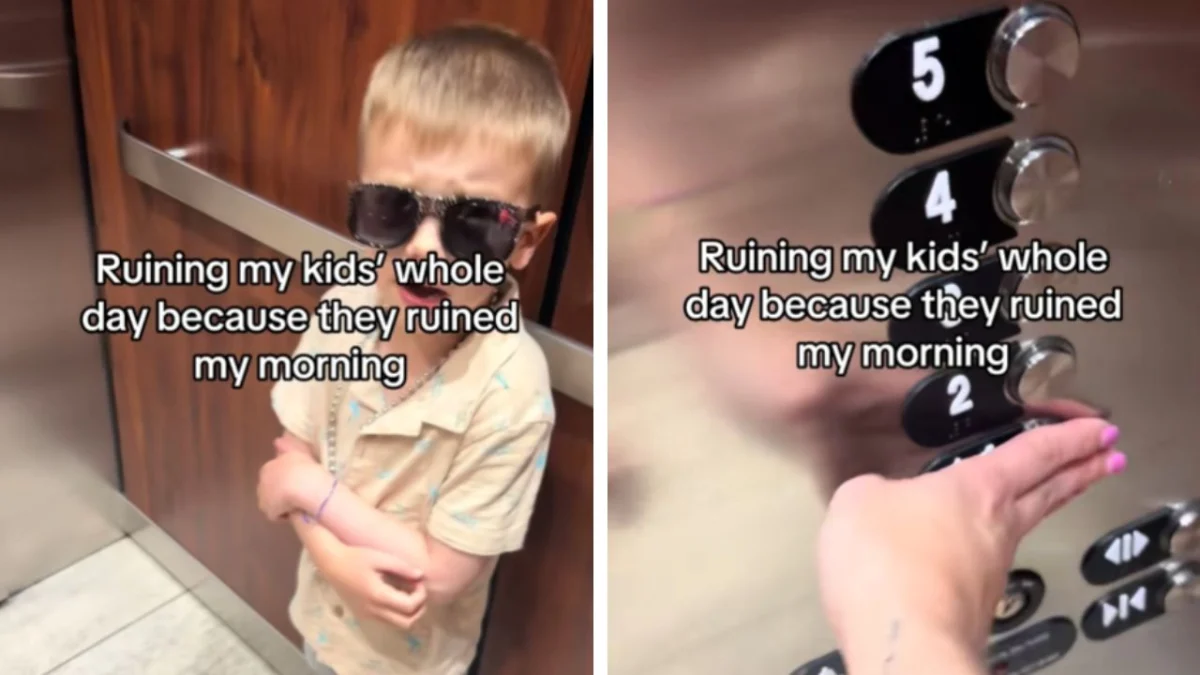
A TikTok video posted on August 7, featuring a mother’s deliberate refusal to concede to her child’s tantrum over a simple elevator button, has rapidly become a focal point of intense discussion across social media platforms, sparking a global conversation about contemporary parenting methods. The video, shared by user Kristen Bright, quickly amassed over 1.4 million likes and 2,500 comments, introducing many to the contentious concept of "petty parenting" and prompting parents worldwide to share their own unusual disciplinary tactics.
The Genesis of a Trend: Kristen Bright’s Viral Clip
The video in question, a brief but impactful snippet, captured a seemingly mundane morning interaction that resonated deeply with a significant segment of the online parenting community. Bright’s post depicted a mother and her son entering an elevator in Louisville. As the child eagerly reached out to press the button for their desired floor, his mother pre-empted him, pressing the button herself. This seemingly minor act triggered an immediate tantrum from the son, to which the mother responded with silence and an unwavering demeanor. The video concludes with the child’s distress and the mother’s calm resolve, accompanied by a text overlay that explicitly stated her motivation: "Ruining my kids’ whole day because they ruined my morning." This direct, unvarnished declaration immediately positioned the incident not merely as a random act but as a deliberate, retaliatory disciplinary measure, which Bright subsequently termed "petty parenting" in her accompanying caption. The ambiguity of the video, particularly regarding whether the mother offered an explanation to her child after the incident or if this was part of a larger disciplinary framework, only fueled further speculation and debate among viewers.
"Petty Parenting" Defined: A Spectrum of Tactics
The term "petty parenting," as popularized by Bright’s video, quickly became shorthand for a range of disciplinary actions characterized by a perceived tit-for-tat dynamic, where parents employ minor inconveniences or seemingly disproportionate consequences in response to a child’s misbehavior. Unlike traditional punitive measures, "petty parenting" often involves a parent mirroring a child’s perceived transgression or imposing a consequence that, while not physically harmful, is designed to evoke a strong emotional or psychological impact, often rooted in frustration or a desire to "teach a lesson" through direct experience of discomfort. This approach stands in contrast to conventional disciplinary models that typically emphasize clear communication, natural consequences, and positive reinforcement.
Real-World Applications: Anecdotes from the Comments Section
The comments section of Bright’s video transformed into a sprawling forum where parents openly shared their own interpretations and applications of "petty parenting," illustrating the diverse and often creative ways caregivers navigate challenging behaviors. These anecdotes provided a rich, albeit anecdotal, dataset for understanding the contours of this emerging disciplinary trend:
- The Lollipop Incident: One commenter recounted an incident involving her three-year-old child who, without permission, opened a lollipop at a checkout counter. Instead of simply paying for it and moving on, the parent instructed the child to place the unwrapped candy on the counter. After purchasing it, the parent then asked the cashier to discard the lollipop. The stated aim was to teach the child about respecting property and the consequences of impulsive actions, demonstrating that a desired item could be lost even after being obtained through misbehavior.
- The Easter Basket Donation: Another parent shared a more elaborate scenario. Their child had expressed dissatisfaction about not receiving enough toys. In response, after the child had already chosen an Easter basket filled with toys and candy, the parent took the entire basket to a local food bank and had the child personally donate the items. This act was intended to instill gratitude and an understanding of scarcity, forcing the child to experience the consequence of their complaint by giving away what they had previously desired.
- The McDonald’s Deception: A less serious, yet equally illustrative, example involved a parent who had promised her daughter a trip to McDonald’s for a week. After discovering the daughter had recently lied, the parent, on the designated day, simply drove past a McDonald’s restaurant and, without stopping, told her child, "Yeah, I lied." The parent claimed this act, a direct mirroring of the child’s own recent deception, was sufficient to teach the daughter the impact and meaning of words and promises.
These examples, while varied, share a common thread: they involve parents intentionally orchestrating situations designed to create an immediate, often uncomfortable, consequence directly linked to the child’s preceding behavior. The effectiveness and ethical implications of these methods, however, remain hotly contested.
The Broader Context: Social Media and the Evolving Landscape of Parenthood
The virality of Bright’s video is not an isolated phenomenon but rather emblematic of a larger trend wherein social media platforms, particularly TikTok, have become influential arenas for sharing and debating parenting philosophies. In an era marked by heightened parental stress and the constant pursuit of effective child-rearing strategies, platforms like TikTok offer a readily accessible, if often unfiltered, space for parents to connect, vent, and seek validation.
The rise of "momfluencers" and "dadfluencers" has democratized the dissemination of parenting advice, moving it from traditional expert channels to peer-to-peer exchanges. While this fosters community and shared experiences, it also presents challenges. The performative nature of social media can incentivize extreme or attention-grabbing content, potentially prioritizing virality over pedagogical soundness. Furthermore, the lack of immediate context or professional oversight means that nuanced approaches to child development can be oversimplified or misrepresented, leading to widespread adoption of methods that may not be universally beneficial or appropriate for all children. The current climate of parenting advice sees a pendulum swing between highly permissive "gentle parenting" and more structured, consequence-based approaches, with "petty parenting" emerging perhaps as a frustrated response to perceived excesses of either extreme.
Pedagogical Underpinnings: Consequences, Learning, and Emotional Development
At its core, the debate around "petty parenting" intersects with fundamental principles of child psychology and developmental pedagogy. The concept of teaching children about the consequences of their actions is a cornerstone of effective discipline. Psychologists often differentiate between:
- Natural Consequences: Outcomes that occur naturally without adult intervention (e.g., if a child refuses to eat, they will be hungry).
- Logical Consequences: Outcomes that are logically related to the misbehavior and are imposed by an adult (e.g., if a child leaves toys out, they cannot play with them for a period).
- Punishment: Consequences that are often arbitrary, unrelated to the behavior, and primarily designed to inflict discomfort or fear to deter future actions.
Proponents of "petty parenting" often argue that their methods fall under the umbrella of logical consequences, or even a form of "gentle parenting" when applied thoughtfully. They contend that by allowing children to directly experience the outcome of their actions, even if orchestrated by the parent, it fosters accountability, resilience, and a deeper understanding of cause and effect. They believe that such controlled situations offer valuable learning opportunities that can prevent more significant behavioral issues later. The idea is to make the lesson palpable and memorable, sometimes through a mild dose of their own medicine.
Expert Perspectives: Navigating Discipline with Care
Child development experts and psychologists, while not directly commenting on specific TikTok videos, generally emphasize a nuanced approach to discipline. Their collective insights suggest that while consequences are crucial, the manner in which they are delivered significantly impacts their effectiveness and a child’s long-term emotional well-being.
- Communication is Key: Experts stress the importance of explaining the connection between behavior and consequence in an age-appropriate manner. Without clear communication, a child may perceive the action as arbitrary punishment or parental malice rather than a learning opportunity.
- Age-Appropriateness: Disciplinary strategies must be tailored to a child’s developmental stage. What might be a logical consequence for a ten-year-old could be confusing or emotionally damaging for a three-year-old who lacks the cognitive capacity to fully grasp complex causal links or abstract concepts like "lying."
- Emotional Impact: Experts caution against tactics that induce shame, humiliation, or fear, as these can erode trust, foster resentment, and negatively impact a child’s self-esteem and emotional regulation skills. The goal of discipline should be to teach, not to punish for punishment’s sake.
- Consistency and Predictability: Children thrive on consistency and predictability. While "petty parenting" might appear to offer novel solutions, a lack of consistent application or a perceived arbitrary nature could lead to confusion and anxiety rather than behavioral improvement.
- Focus on Repair and Growth: Effective discipline aims to teach children how to make amends, understand boundaries, and develop internal self-control, rather than simply avoiding punishment.
The Defense: Teaching Accountability and Resilience
Many who defend "petty parenting" emphasize its potential to cultivate accountability and resilience in children. They argue that shielding children from all negative experiences can hinder their ability to cope with life’s inevitable disappointments. By experiencing a parent-orchestrated consequence, even if it feels "petty," children might learn to:
- Understand Boundaries: Realize that actions have limits and that disrespecting those limits carries repercussions.
- Develop Empathy: In some cases, experiencing a mirrored consequence (like the McDonald’s example) might help them understand the feelings of others.
- Build Frustration Tolerance: Learning to cope with unmet desires or unexpected outcomes, rather than always having their way.
- Appreciate What They Have: As seen in the Easter basket example, understanding the value of possessions and the act of giving.
Some proponents even align "petty parenting" with aspects of "gentle parenting," asserting that when implemented with clear intentions and explanations (even if not shown in the brief TikTok clips), it can be a non-violent, non-shaming way to allow children to learn from their mistakes in a controlled environment. The argument is that these methods, when not overly harsh, can be more effective than yelling or traditional punishments because they directly relate to the child’s action.
The Critique: When Discipline Becomes Punishment
Despite its defenders, "petty parenting" faces significant criticism, with many questioning its ethical boundaries and psychological impact. Opponents raise concerns that some tactics venture too far into punitive territory, potentially causing more harm than good. Key points of contention include:
- Emotional Harm and Resentment: Critics argue that intentionally upsetting a child, especially by taking away or destroying their favorite items, can be deeply distressing and lead to resentment, distrust, and a damaged parent-child relationship. Children may focus on the perceived unfairness or cruelty of the parent’s action rather than the lesson intended.
- Punishing Normal Childhood Behavior: Many of the "misbehaviors" cited, such as a three-year-old opening a lollipop or wanting to press a button, are considered typical developmental behaviors driven by curiosity, impulse control challenges, or a desire for autonomy. Critics argue that these moments should be met with guidance and teaching, not "petty" retaliation.
- Erosion of Trust: A child who feels intentionally tricked or punished in a seemingly arbitrary way may lose trust in their parent, making future disciplinary efforts more challenging and undermining the secure attachment bond crucial for healthy development.
- Modeling Negative Behavior: When parents resort to "lying" or "getting even," they may inadvertently model the very behaviors they are trying to extinguish in their children.
- Lack of Clarity: As highlighted by the ambiguity in Bright’s video, without clear communication and explanation, children may not understand the why behind the parent’s actions, leading to confusion rather than learning.
Ethical Considerations: Children’s Privacy in the Digital Age
Beyond the pedagogical debate, the viral nature of videos depicting children in moments of vulnerability raises significant ethical questions regarding children’s privacy and digital footprint. Sharing a child’s tantrum or moments of distress for public consumption, even with the intention of demonstrating a parenting method, can expose them to widespread scrutiny and judgment without their consent. The potential for these videos to live online indefinitely and be viewed by millions, including future peers or employers, adds another layer of complexity. Child advocacy groups often caution parents against publicly sharing content that could embarrass or negatively impact their children in the long run.
The Long-Term Impact: Shaping Parental Norms and Child Well-being
The ongoing debate surrounding "petty parenting" on platforms like TikTok is more than just a fleeting internet trend; it reflects deeper societal anxieties about raising children in a complex world. As parents grapple with evolving social norms, economic pressures, and the pervasive influence of digital media, they continuously seek effective ways to instill values, manage behavior, and foster resilient, well-adjusted individuals.
The virality of "petty parenting" highlights a potential desire among some parents for disciplinary methods that feel more immediate and impactful than traditional approaches, or perhaps a reaction against what they perceive as overly permissive trends. However, the critical pushback underscores a fundamental concern for children’s emotional well-being and the integrity of the parent-child relationship.
Ultimately, the discussion serves as a vital reminder that while there is no one-size-fits-all approach to parenting, strategies that prioritize clear communication, empathy, age-appropriateness, and the cultivation of trust are generally favored by experts. The "petty parenting" phenomenon, for all its controversy, compels a broader reflection on the intent behind our disciplinary actions and their lasting impact on the most vulnerable members of our society. As digital platforms continue to shape the narrative around family life, the ongoing dialogue will undoubtedly influence how future generations approach the delicate art and science of raising children.