George Chandra Eka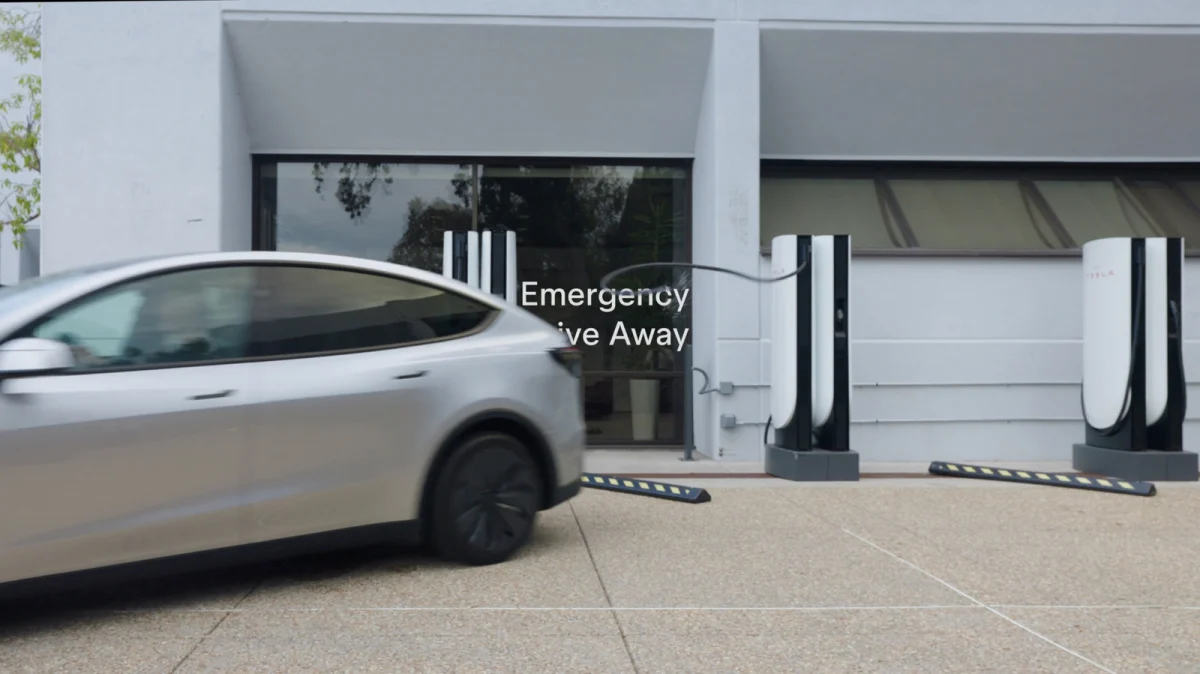
Tesla has officially rolled out a groundbreaking new safety feature, "Emergency Drive Away," designed to allow drivers to rapidly disengage their vehicles from Superchargers and depart immediately, even while still physically connected. This significant update, currently exclusive to Superchargers in the United States, comes in direct response to a critical incident where a Tesla driver was shot while charging their vehicle, highlighting a dangerous vulnerability in standard charging protocols. The feature aims to provide a vital escape mechanism in life-threatening situations, though it also carries stringent warnings about potential damage and severe penalties for deliberate misuse.
The Catalyst: A Tragic Incident in Twin Falls
The impetus for the "Emergency Drive Away" feature stems from a harrowing event that occurred just a couple of months prior to its announcement. In August 2026, a Tesla taxi driver found himself in a life-threatening situation while charging his vehicle at a Supercharger station located near an In-N-Out Burger in Twin Falls, Idaho. During the charging process, the driver became the victim of a shooting incident inside his car. This terrifying experience underscored a critical design limitation: the standard procedure for disconnecting an electric vehicle from a charging station.
In conventional circumstances, a Tesla driver must perform a specific action to unlock the charge port before driving away. This can involve interacting with the vehicle’s infotainment system, utilizing the Tesla mobile app, or pressing a dedicated button on the Supercharger handle itself. While these steps are designed to ensure secure connections and prevent accidental dislodgement, they present an insurmountable barrier when seconds count and immediate escape is paramount. In the Twin Falls shooting incident, the inability to swiftly detach from the charger potentially prolonged the driver’s exposure to danger, prompting widespread calls from the Tesla owner community for an urgent solution. Owners articulated a clear need for a "quick get-away" system, even suggesting a fee-based model to prevent abuse while ensuring availability for genuine emergencies. This collective outcry from the user base evidently resonated with the automaker, leading directly to the accelerated development and deployment of the new safety measure.
Previous Charging Protocols: A Vulnerability Identified
Before the introduction of "Emergency Drive Away," the standard protocol for disengaging a Tesla from a Supercharger was designed with security and integrity in mind, not rapid egress under duress. When a Tesla is plugged into a Supercharger, the charge port locks securely to the charging cable. This lock serves multiple purposes: it prevents accidental disconnection, deters theft of electricity, and ensures a stable connection for optimal charging rates. To unlock this port and prepare the vehicle for departure, drivers typically have three main options:
- Infotainment System: Navigating through the vehicle’s central touchscreen to the charging menu and selecting the "Unlock Charge Port" option.
- Tesla Mobile App: Using the smartphone application to remotely unlock the charge port, a convenient feature for drivers not immediately inside the vehicle.
- Charger Handle Button: On most Supercharger cables, there’s a small button near the vehicle connector. Pressing and holding this button for a few seconds will typically release the lock.
While effective for routine charging, these methods inherently require a conscious, deliberate action and a few precious seconds of time. In a rapidly unfolding emergency such as a carjacking attempt, an active shooter scenario, or a sudden medical crisis requiring immediate transport, these few seconds and deliberate actions could prove catastrophic. The Twin Falls incident brought this theoretical vulnerability into sharp, terrifying reality, forcing Tesla to re-evaluate its safety mechanisms in extreme, low-probability but high-impact scenarios. The incident served as a stark reminder that as electric vehicles become more integrated into daily life, and as charging infrastructure expands into diverse public spaces, safety protocols must evolve to address unforeseen threats.
How "Emergency Drive Away" Works
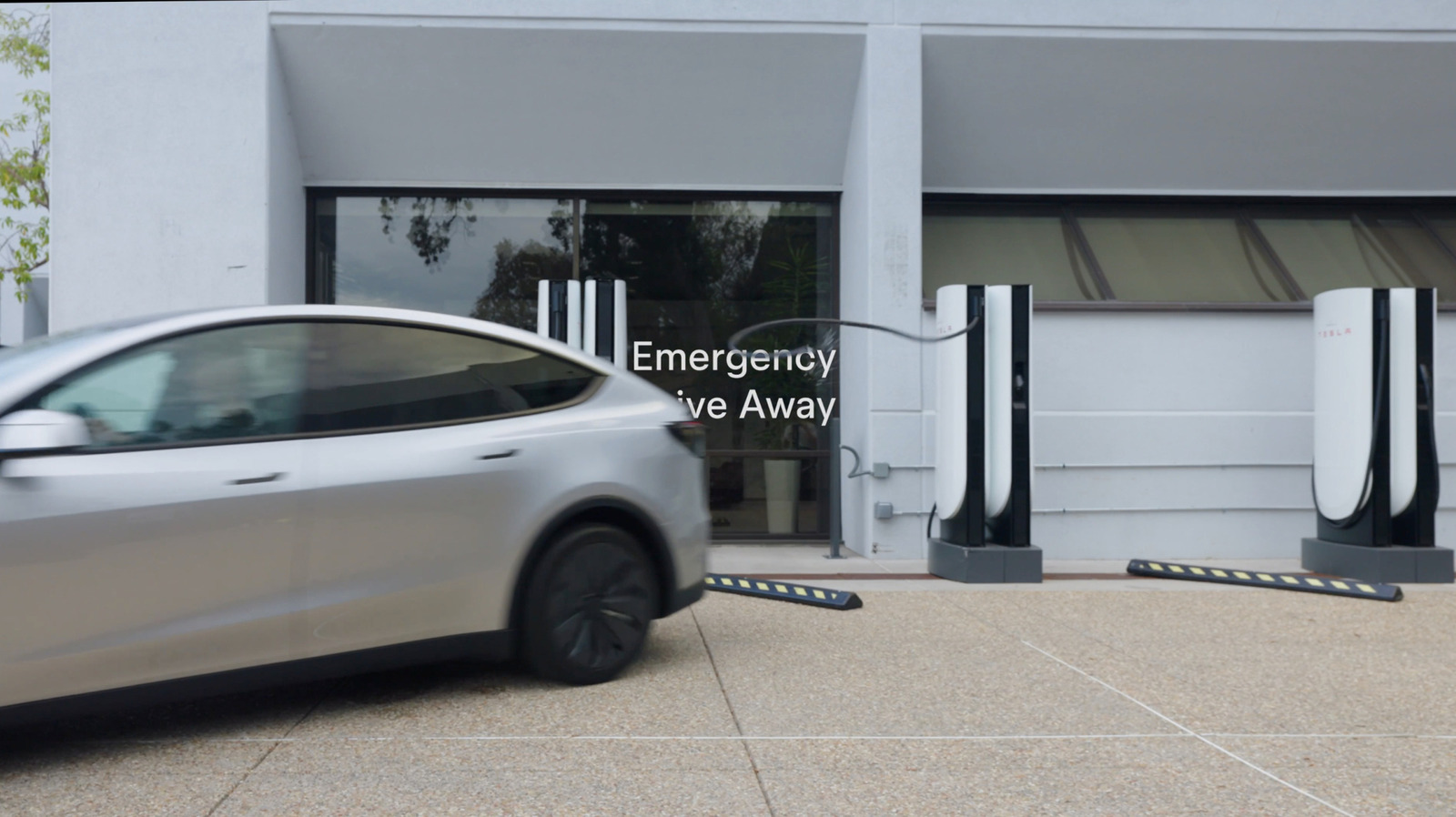
Tesla announced the "Emergency Drive Away" feature on its official Tesla Charging account on X (formerly Twitter) on October 1, 2026, accompanied by a brief demonstration video illustrating its activation. The system is designed to override the standard charge port lock in dire circumstances, prioritizing driver safety above all else.
When a driver finds themselves in an emergency situation and attempts to shift the vehicle into "Drive" while the Supercharger cable is still connected, the vehicle’s infotainment system will immediately display a prominent notice. This notification alerts the driver that the charge port is still locked and prompts them to activate the "Emergency Drive Away" feature to override the locking mechanism. Crucially, the system also presents an explicit warning about the potential consequences of such an action: "Driving with the cable connected will cause damage to your car and to the Supercharger station. Use only in an emergency." This warning underscores the extraordinary nature of the feature and its intended use solely as a last resort.
To activate the "Emergency Drive Away" function, the driver must simultaneously hold down the brake pedal and tap the "Activate" button displayed on the infotainment screen. This two-step process—requiring both physical action (brake pedal) and digital confirmation (screen tap)—is likely implemented to prevent accidental activation and ensure the driver’s deliberate intent to engage the emergency override. Once activated, the vehicle’s system releases the charge port lock, allowing the car to be driven away, effectively sacrificing the integrity of the charging cable and potentially the port itself for the immediate safety of the occupants. The entire sequence is designed to be as swift and intuitive as possible under duress, minimizing the cognitive load on a driver in a high-stress situation.
Technical Specifications and Geographic Rollout
The implementation of "Emergency Drive Away" is not universally available across all Tesla vehicles and Supercharger locations. To access this critical safety feature, vehicle owners must ensure their Tesla is running the absolute latest software version. This requirement suggests that the feature relies on recent software algorithms and possibly updated firmware to manage the override protocol safely and effectively.
Currently, the "Emergency Drive Away" feature is exclusively operational with Superchargers located within the United States. This geographical limitation could be attributed to several factors. It might be part of a phased rollout strategy, allowing Tesla to monitor performance and gather feedback in a controlled environment before expanding globally. Alternatively, it could be influenced by varying regulatory landscapes and legal frameworks concerning liability and vehicle safety standards in different countries. Each market may have unique certification requirements that necessitate localized testing and approval processes.
Furthermore, there are specific vehicle compatibility restrictions. Pre-2021 Model S and Model X vehicles are explicitly stated as not being supported by the new feature. This exclusion strongly implies that the "Emergency Drive Away" functionality requires certain hardware components or deeper software integration that are present only in newer vehicle architectures. Older models may lack the necessary electronic control units, wiring harnesses, or charge port mechanisms capable of safely executing an emergency detachment override without risking more severe damage or system malfunctions. This highlights the continuous evolution of automotive technology and the challenges of retrofitting advanced safety features into older platforms. Tesla’s decision to limit the feature’s availability initially underscores a cautious and methodical approach to deploying a system with significant physical and financial implications.
Balancing Safety with Responsibility: Misuse and Penalties
While the "Emergency Drive Away" feature is a welcome enhancement to driver safety, Tesla has made it unequivocally clear that its use is strictly for genuine emergencies. The company has implemented a robust system of deterrents to prevent deliberate misuse, which could lead to significant financial and civil penalties. On X, Tesla explicitly stated that "deliberate misuse ‘will invoke additional penalties.’" When pressed for clarification on the potential physical and monetary damages associated with using the feature, the company replied that "electrical and civil cost can be up to $25k."
This substantial penalty serves as a powerful deterrent against frivolous or malicious activation of the feature. Deliberate misuse could involve scenarios such as a driver attempting to avoid paying for charging, intentionally damaging equipment out of spite, or even using the feature as a shortcut to disconnect when the standard procedure would suffice. The $25,000 figure is likely calculated to cover the potential costs of repairing or replacing a damaged Supercharger cable and connector, the vehicle’s charge port, and any associated electrical infrastructure at the station. These components are precision-engineered and robust, but they are not designed to withstand the forces of a vehicle abruptly pulling away while still physically tethered. The damage could range from a severed cable to a compromised charging pedestal, requiring specialized technicians and parts for repair, leading to station downtime and significant operational costs.
A critical point of ambiguity, however, remains regarding the application of these penalties in actual emergency situations. The original article notes, "It’s not quite clear if Tesla will ask you to pay for activating the drive-away feature in case of actual emergencies." This ambiguity is a source of concern for some owners. While the spirit of the feature is undoubtedly to save lives, the financial burden of potentially $25,000, even after surviving a critical incident, could be daunting. Tesla will likely need to establish clear protocols for investigating incidents where the feature is used, distinguishing between genuine emergencies and deliberate misuse. This could involve reviewing vehicle telemetry data, external security footage, and potentially requiring police reports or other official documentation to validate an emergency claim. The balance between providing a life-saving tool and protecting infrastructure from abuse is delicate, and Tesla’s approach will need to navigate this complexity carefully to maintain user trust and ensure the feature’s integrity.
Broader Implications for EV Charging Security
The introduction of Tesla’s "Emergency Drive Away" feature carries significant implications not only for Tesla owners but for the broader electric vehicle industry and the evolving landscape of public charging infrastructure security. As EV adoption continues its exponential growth, with millions more electric vehicles expected on roads globally in the coming decade, the demand for public charging stations will likewise surge. These stations, often located in accessible but sometimes isolated areas like parking lots, rest stops, and commercial centers, inherently present new security considerations.
The Twin Falls shooting incident served as a stark reminder that EV charging, while typically routine, can expose drivers to potential risks. Unlike gasoline refueling, which is a very quick process, EV charging often requires vehicles to remain stationary for longer periods—ranging from 20 minutes to several hours, depending on the charger speed and battery state. This extended vulnerability window makes drivers more susceptible to various threats, including violent crime, carjacking, or other forms of assault. The "Emergency Drive Away" feature directly addresses this vulnerability by empowering drivers with an immediate escape option, thereby enhancing their personal safety.
This move by Tesla could set a new precedent for the entire EV industry. Other electric vehicle manufacturers and charging network operators may now face pressure to develop and implement similar emergency disconnection features. While proprietary charging standards (like Tesla’s NACS, now widely adopted, or CCS) dictate the physical connection, the software and vehicle-side protocols for emergency overrides could become a new frontier in EV safety innovation. This could lead to industry-wide discussions about standardized emergency features, best practices for charging station design to enhance security (e.g., improved lighting, security cameras, emergency call buttons), and the integration of these features with broader automotive safety systems.
Furthermore, the feature underscores the growing need for comprehensive safety strategies around public charging. This might involve greater collaboration between automakers, charging infrastructure providers, local law enforcement, and urban planners to ensure that the expansion of EV charging networks prioritizes not just convenience and speed, but also the physical security of users. The economic implications are also noteworthy; the cost of potential damage and the associated penalties highlight the delicate balance between user safety and infrastructure protection. As EVs become ubiquitous, the concept of "charging safety" will expand beyond electrical safety to encompass personal security, and features like "Emergency Drive Away" will play a crucial role in shaping that future.
Industry Response and Future Outlook
The immediate response to Tesla’s announcement from the EV community has been largely positive, with many owners expressing relief and appreciation for the company’s responsiveness to a critical safety concern. The rapid development and deployment of such a complex feature, moving from a user request following an incident in August to a full rollout by October, demonstrates Tesla’s agile development capabilities and its commitment to addressing real-world safety issues faced by its customer base.
However, the ongoing dialogue around the $25,000 penalty for misuse and the ambiguity concerning costs in genuine emergencies will likely continue. Tesla may need to provide further clarification or establish a clear process for evaluating and waiving penalties in verified emergency situations to fully reassure its users. This could involve leveraging the advanced telemetry data collected by Tesla vehicles, which can record precise details about events leading up to and during an incident, to differentiate between legitimate threats and deliberate abuse.
Looking ahead, the "Emergency Drive Away" feature is likely to be a harbinger of more sophisticated safety and security innovations in the EV space. As autonomous driving capabilities advance, for instance, future systems might incorporate even more proactive emergency response mechanisms. Furthermore, as the feature expands beyond the US, Tesla will undoubtedly navigate varying regulatory landscapes and cultural contexts, potentially leading to region-specific adaptations. The very existence of this feature signifies a maturation of the EV ecosystem, moving beyond simply providing propulsion to comprehensively addressing the safety and security challenges inherent in new modes of transportation. It reinforces the notion that vehicle design and infrastructure must constantly evolve to protect occupants from both mechanical failures and external threats, ensuring that the transition to electric mobility is not just sustainable but also fundamentally safe.