Vera Intan Clara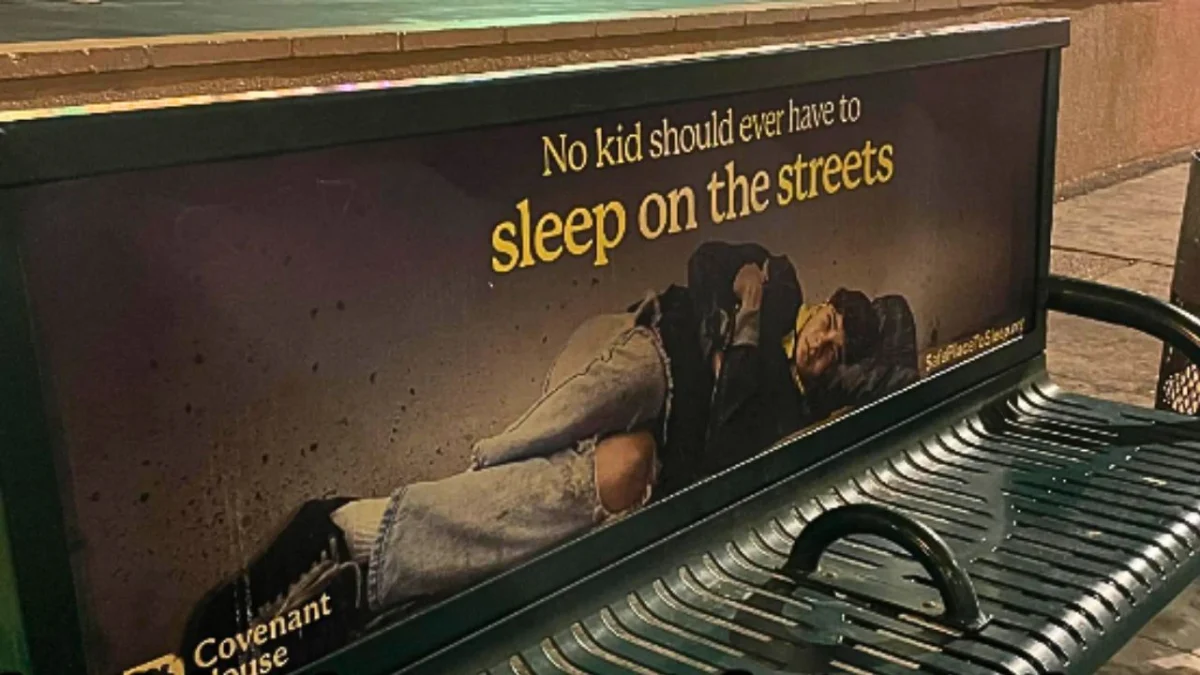
The recent emergence of a powerful image on TikTok, shared by user @@free_yourmind., has thrust the contentious practice of hostile architecture into the global spotlight, sparking widespread outrage and critical discussion across social media platforms. The photograph, which has garnered nearly 96,000 likes since its publication, depicts a seemingly ordinary green public bench, albeit one equipped with prominent metal armrests strategically placed to divide its seating spaces. What transforms this otherwise unremarkable urban fixture into a symbol of modern societal paradox is its direct placement beneath an advertisement from Covenant House, a leading organization dedicated to assisting homeless youth, which boldly proclaims: "No kid should ever have to sleep on the streets." This stark juxtaposition has ignited a furious online debate, compelling thousands of commenters and the original poster to critically examine the ethical implications of urban design, public messaging, and the often-unseen struggles of vulnerable populations.
The Anatomy of a Viral Controversy: A Bench, an Ad, and a Deeper Meaning
The image itself is a masterclass in unintentional irony. The green bench, a common feature in many public parks and urban areas, is characterized by its multiple, unyielding metal armrests. These dividers are not merely aesthetic; they serve a distinct functional purpose, making it impossible for an individual to lie down or stretch out across the bench. This design choice is a classic example of what urban planners and critics refer to as "hostile architecture" or "defensive design." Such features are deliberately incorporated into the built environment to discourage specific behaviors, often targeting unhoused individuals who might seek respite or shelter in public spaces.
Directly above this bench, the Covenant House advertisement, with its poignant message, creates an almost unbearable tension. "No kid should ever have to sleep on the streets" is a plea for empathy, a call to action against the tragedy of child homelessness. Yet, the very infrastructure beneath it appears designed to enforce the reality it decries, by limiting access and comfort in public areas, effectively pushing those without private shelter further into the margins. This visual dichotomy, as noted by countless TikTok users, is not merely striking; it is, for many, a profound indictment of the disconnect between societal aspirations for compassion and the harsh realities embedded in urban planning.
The TikTok post’s caption further elaborated on the concept of hostile architecture, educating a wide audience about its prevalence and implications. It explained that such urban design purposefully guides behavior and often excludes the public from genuinely accessing public spaces, particularly those who might need them most. This pedagogical element amplified the post’s impact, transforming a simple observation into a broader critique of modern urban environments.
The Rise of Hostile Architecture: A Historical and Ethical Overview
Hostile architecture, also known as anti-homeless architecture, exclusionary design, or defensive urbanism, is not a new phenomenon, but its visibility and critique have grown significantly in recent years. Its origins can be traced back to various periods in urban history, often coinciding with efforts to control public order and manage perceived "undesirable" populations. Early examples might include sloped window sills designed to prevent pigeons from roosting, evolving into more pointed applications targeting human behavior.
The core principle behind hostile architecture is to deter certain actions—such as sleeping, skateboarding, loitering, or even prolonged sitting—in public spaces through physical design. Beyond divided benches, common manifestations include:
- Spikes or studs: Installed on ledges, window sills, or flat surfaces to prevent people from sitting or lying down.
- Uneven or sloped surfaces: Designed to make prolonged sitting or lying uncomfortable.
- Enclosed or individual seating: Benches that are too short to lie on, or individual chairs that cannot be moved together.
- Rough textures or uncomfortable materials: Used in areas where people might otherwise congregate.
- Limited public restrooms or water fountains: Reducing basic amenities that support human dignity in public spaces.
- High-frequency sonic devices: Emitting sounds audible primarily to young people, used to disperse gatherings.
Proponents of hostile architecture often argue that such designs are necessary for public safety, crime prevention, and maintaining cleanliness in urban areas. They might cite concerns about vandalism, drug use, or the general "deterioration" of public spaces. However, critics vehemently argue that these designs disproportionately target vulnerable populations, especially unhoused individuals, by making it increasingly difficult for them to exist in public. This, they contend, effectively criminalizes poverty and homelessness, pushing those already marginalized further out of sight, rather than addressing the root causes of their plight.
Ethically, hostile architecture raises profound questions about who public spaces are truly for. Are they universal commons, or are they increasingly privatized by design, catering primarily to consumers and those with the means to access private amenities? The debate underscores a fundamental tension between perceived public order and genuine social inclusion.
Chronology of the Online Outcry and Public Reactions
The TikTok post, published by @@free_yourmind., rapidly gained momentum following its initial upload. Within days, it accumulated tens of thousands of likes and thousands of comments, quickly becoming a viral sensation. The post’s virality was not merely a fleeting moment of online engagement; it served as a catalyst for a broader, more profound conversation about societal values and urban design.
Commenters expressed a range of emotions, from visceral anger and frustration to a dark, often sarcastic, sense of humor. Many shared personal anecdotes related to homelessness, highlighting the systemic failures that push individuals onto the streets. One poignant comment detailed a personal journey from the child welfare system directly into homelessness, underscoring the cyclical nature of poverty and lack of support for vulnerable youth. Another user eloquently tied the issue to economic inequality, asking, "Not enough wages though to keep us off them; how’s that fair?" This immediately connected the visual critique of the bench to the larger economic struggles that lead to housing insecurity.
The dystopian quality of the image resonated deeply with many. Several users likened the scene to a "prison cell" or drew parallels to the bleak, futuristic urban landscapes depicted in popular culture, such as the video game Cyberpunk 2077. One commenter ominously declared that society was "genuinely turning into cyberpunk," while another labeled the image "absolute ragebait architecture," capturing the intense emotional response it provoked. The accompanying second image in the TikTok post, overlaid with the question, "Is this the great future they promised us in the past?" further amplified this dystopian sentiment, serving as a critical reflection on societal progress and the promises of modernity.
Interestingly, a minority of users offered an alternative interpretation, suggesting that the advertisement might have been intentionally placed to satirize or comment on the prevalence of anti-homeless architecture. While this interpretation offers a layer of meta-commentary, it does not diminish the potent symbolism or the widespread criticism directed at the bench’s design itself. Regardless of intent, the perceived irony remained the dominant narrative.
The Broader Context: Homelessness in America and Covenant House’s Mission
The controversy surrounding the bench and the advertisement cannot be fully understood without examining the grim reality of homelessness, particularly among youth, in the United States. According to the U.S. Department of Housing and Urban Development (HUD), hundreds of thousands of individuals experience homelessness on any given night, with a significant portion being children and young adults. Youth homelessness is often distinct, stemming from family conflict, abuse, neglect, aging out of foster care, or identity-based discrimination. These young people are incredibly vulnerable, facing increased risks of exploitation, trafficking, and mental health challenges.
Covenant House, the organization behind the advertisement, is a leading non-profit committed to combating this crisis. With a presence in multiple cities across the Americas, Covenant House provides immediate shelter, food, clothing, and crisis care to homeless, runaway, and trafficked young people. Beyond immediate needs, they offer comprehensive support services, including educational programs, job training, mental health counseling, and substance abuse treatment, all aimed at helping youth transition to independent living. Their mission, "No kid should ever have to sleep on the streets," is not just a slogan; it is the fundamental principle guiding their tireless work to provide a safe haven and a path forward for thousands of young lives.
The profound irony of their compassionate message juxtaposed with a physical barrier to comfort for the very population they serve underscores the complex, often contradictory, layers of urban planning and social responsibility.
Inferred Statements and Reactions from Stakeholders
While the original TikTok post does not include official statements from the entities involved, it is possible to infer potential reactions based on their known missions, public responsibilities, and industry standards:
-
Covenant House: If prompted for a statement, Covenant House would likely reaffirm its unwavering commitment to providing safe havens for homeless youth. They would emphasize their advocacy for policies that support vulnerable populations and decry any urban design that exacerbates the struggles of those without shelter. They might express concern over the visual irony, reinforcing that their message stands in stark contrast to such exclusionary design practices, regardless of the specific placement of the ad. Their focus would remain on the urgent need for housing, support services, and compassionate solutions.
-
Urban Planners and Architects (Professional Bodies): Professional organizations representing urban planners and architects often advocate for inclusive design principles that consider the needs of all community members. They might issue a statement emphasizing the importance of ethical urban design, promoting spaces that are accessible, welcoming, and equitable. While acknowledging the challenges of maintaining public order and safety, they would likely highlight that solutions should not come at the expense of human dignity or by intentionally excluding vulnerable groups. They might call for a re-evaluation of design choices that contribute to social fragmentation.
-
City Officials/Public Works Departments: A city government or public works department responsible for installing and maintaining public infrastructure might issue a statement acknowledging the public concern. They could explain that the bench design might have been chosen for reasons such as durability, ease of maintenance, or to deter vandalism, without explicit intent to target the homeless. They might also state that the placement of advertisements is often managed by third-party advertising companies and not directly by the city, creating a disconnect between the ad’s content and the underlying infrastructure. Some might commit to reviewing public space designs in light of community feedback, while others might defend existing policies.
-
Homeless Advocacy Groups: Organizations dedicated to advocating for the rights of unhoused individuals would almost certainly condemn the bench design as a prime example of hostile architecture. They would frame it as part of a broader pattern of criminalizing homelessness and making public spaces inhospitable for those who rely on them. They would use the viral image to highlight the urgent need for affordable housing, increased social services, and a fundamental shift in societal attitudes towards homelessness, emphasizing dignity and support over exclusion and punishment.
Supporting Data: The Economic and Social Drivers of Homelessness
The economic undercurrents of the comments section – particularly the question about insufficient wages – point to a critical factor in the homelessness crisis: the severe lack of affordable housing and the stagnation of wages relative to the cost of living.
- Affordable Housing Crisis: According to reports from organizations like the National Low Income Housing Coalition (NLIHC), there is a severe shortage of affordable rental housing across the United States. Millions of extremely low-income renters spend more than half of their income on housing, leaving little for other necessities. This gap has widened significantly over decades, pushing more individuals and families into precarious housing situations.
- Wage Stagnation: While housing costs have soared, wages for many low-income workers have not kept pace. The federal minimum wage, for example, has not been raised since 2009, failing to provide a living wage in most parts of the country. This economic disparity creates an impossible situation for many, where even full-time employment is not enough to secure stable housing.
- Systemic Factors: Beyond economics, systemic issues such as racial inequality, lack of adequate mental health care, insufficient support for veterans, and the ongoing opioid crisis contribute significantly to homelessness. Certain demographic groups, including Black, Indigenous, and LGBTQ+ individuals, are disproportionately affected by homelessness due to historical and ongoing discrimination and systemic barriers.
Broader Implications and The Future of Urban Design
The viral TikTok post and the ensuing debate serve as a powerful reminder of the profound impact of urban design on social equity and human dignity. It forces a critical examination of the unwritten rules that govern public spaces and the values they implicitly uphold.
The implications extend beyond the immediate controversy:
- Ethical Urban Planning: The incident underscores the growing demand for more ethical and empathetic urban planning. There is a strong movement towards "inclusive design" and "design for all," which prioritizes creating spaces that are welcoming, accessible, and supportive for every member of the community, regardless of their socioeconomic status.
- The "Public" in Public Space: The debate re-centers the question of who public spaces truly belong to. Are they meant to be universally accessible resources, or are they increasingly managed and policed to serve specific, often commercial, interests? The incident highlights the tension between the ideal of a democratic public commons and the reality of exclusionary practices.
- Role of Social Media: Social media platforms like TikTok have become powerful tools for accountability and activism. They provide a rapid and far-reaching avenue for individuals to highlight injustices, mobilize public opinion, and pressure institutions to address societal issues that might otherwise remain unseen or ignored.
- Reimagining Urban Environments: The criticism levied against hostile architecture prompts a broader discussion about alternative design solutions. Instead of deterring behavior, cities can adopt strategies that promote positive engagement, such as providing comfortable, flexible seating, integrating green spaces, offering accessible amenities, and investing in comprehensive social support systems that address the root causes of homelessness.
In conclusion, the seemingly simple image of a divided bench beneath a compassionate advertisement has become a potent symbol of modern societal contradictions. It has ignited a crucial dialogue about the ethics of urban design, the pervasive issue of homelessness, and the fundamental question of how compassionate and inclusive our public spaces truly are. As urban environments continue to evolve, the challenge lies in designing cities that not only prioritize order and aesthetics but also genuinely reflect a commitment to human dignity, social equity, and the well-being of all their inhabitants. The viral post serves as a poignant call to action, urging a re-evaluation of how our built environments either perpetuate or alleviate the struggles of the most vulnerable among us.