Sisilia Frederika
The traditional narrative of the supermassive black hole depicts a celestial entity of pure consumption, a gravitational sink from which neither light nor matter can escape. For decades, astrophysicists have largely viewed these behemoths at the centers of galaxies as the primary agents of "quenching"—a process where the intense radiation and powerful winds from a black hole’s vicinity strip a galaxy of its cold gas, effectively halting the birth of new stars. However, groundbreaking new research led by the Harvard-Smithsonian Center for Astrophysics (CfA) is challenging this one-sided perspective. A comprehensive study of nine nearby Seyfert galaxies reveals that active galactic nuclei (AGN) are not merely cosmic terminators; they are also active participants in the creation of stars, utilizing complex feedback mechanisms to "jolt" the interstellar medium into new cycles of productivity.
The study, spearheaded by Peixin Zhu, a graduate student at the Harvard Center for Astrophysics, utilizes high-resolution data to demonstrate a consistent pattern of star formation, shock fronts, and energized gas associated with the outflows of supermassive black holes. By analyzing the intricate relationship between a black hole’s accretion—the process of drawing matter inward—and its injection—the process of blasting energy outward—the research team has mapped a sophisticated co-evolutionary dance that shapes the architecture of the local universe.
The Dual Nature of Supermassive Black Holes
At the heart of almost every large galaxy lies a supermassive black hole. When these black holes are actively feeding on surrounding gas and dust, they are classified as Active Galactic Nuclei. The energy released during this feeding frenzy can outshine all the stars in the host galaxy combined. Historically, this energy was thought to be primarily destructive to star-forming regions. The logic was straightforward: the heat and kinetic energy from the AGN would disperse the cold, dense molecular clouds required for star birth.
The findings presented by Zhu and her team provide a more nuanced "dual-role" framework. While AGNs do indeed consume material, they also redistribute energy in a way that can compress gas clouds, triggering gravitational collapses that lead to the formation of new stars. "Once we resolved them, we could see that they not only accrete things, but they also eject things," Peixin Zhu noted in the study’s release. "The injection and accretion are linked with each other." This realization marks a shift in how astronomers perceive galactic feedback, moving from a model of simple suppression to one of complex regulation.
Analyzing the Nine Seyfert Galaxies
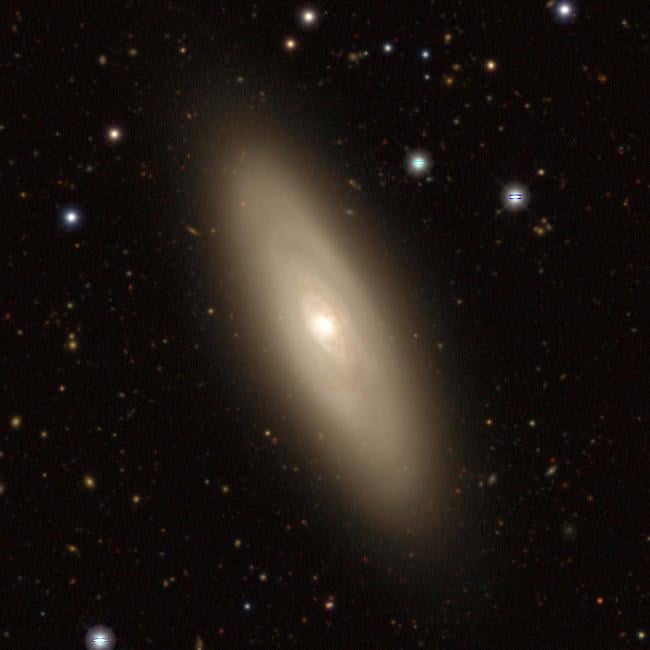
The research focused on a specific class of objects known as Type 2 Seyfert galaxies. Located within a relatively close proximity of 360 million light-years from Earth, these galaxies serve as ideal laboratories for high-resolution study. Unlike quasars, which are so bright they often drown out the light of their host galaxies, Seyfert galaxies allow astronomers to see both the central engine and the surrounding galactic structure.
Type 2 Seyferts are characterized by their bright infrared signatures and relatively narrow emission lines. The velocities of their gas outflows are typically more moderate than those found in more extreme AGN classes, making it easier to track the interaction between the black hole’s energy and the galaxy’s interstellar medium (ISM). By focusing on these nine specific targets, the team was able to identify commonalities that suggest a universal mechanism at play.
The observations were primarily conducted using the Very Large Telescope (VLT) in Chile, an instrument capable of the extreme precision necessary to distinguish between different sources of light and energy within the crowded centers of galaxies. To confirm their findings, the team cross-referenced the VLT data with X-ray observations from the Chandra X-ray Observatory. This multi-wavelength approach allowed the researchers to separate the "glow" of star formation from the "glare" of black hole radiation.
The Discovery of Star-Forming Rings and Arcs
One of the most striking results of the study was the identification of distinct geometric patterns of star formation. The researchers discovered arcs and rings of newly formed stars located in close proximity to the galactic centers—typically within a range of 0.8 to 6 kiloparsecs (approximately 2,600 to 20,000 light-years).
These rings are not random occurrences. They appear to be directly influenced by the "feedback cycle" of the AGN. As the black hole accretes matter, it produces ionized cones of radiation that extend outward into the galaxy. Perpendicular to these cones, the team observed fast shock fronts moving through the interstellar medium. These shocks are created when the outflows from the black hole’s jets collide with the surrounding gas.
"The most interesting phenomena about shocks is that they always go perpendicular to where the black hole’s injected outflows go," Zhu explained. "It is very common, and we see it consistently appearing across the whole nine galaxies." These shocks act as a "jolt," compressing the gas in the galactic plane and creating the high-density conditions necessary for star formation to begin.
The Physics of Feedback: Quenching vs. Triggering
To understand the significance of this research, it is necessary to look at the broader timeline of galactic evolution theory. For much of the late 20th century, the "AGN Feedback" model was primarily used to explain why massive galaxies stopped growing. If black holes didn’t shut down star formation, galaxies would theoretically grow much larger than what we observe in the universe today.
However, the "positive feedback" model—where AGNs actually promote star formation—has gained traction over the last decade. The data from Zhu’s team provides some of the clearest evidence to date for this positive feedback in the nearby universe.
The process can be broken down into a chronological sequence:
- Accretion Phase: Gas flows toward the galactic center, fueling the supermassive black hole.
- Injection Phase: The AGN ignites, sending out powerful jets and cones of radiation.
- Shock Interaction: These outflows strike the interstellar medium, creating shock waves that travel outward.
- Compression and Starbirth: The shock waves compress local gas clouds. If the compression is sufficient, it overcomes the internal pressure of the gas, leading to the formation of stellar nurseries in rings or arcs.
- Evolutionary Impact: The new stars contribute to the galaxy’s luminosity and chemical enrichment, while the AGN eventually exhausts its immediate fuel supply, leading to a period of dormancy until the cycle repeats.
Collaborative Efforts and Technological Precision
The success of this research highlights the importance of interdisciplinary collaboration and advanced instrumentation. Lisa Kewley, an astrophysicist and director of the Center for Astrophysics | Harvard & Smithsonian, served as Zhu’s advisor and emphasized the importance of the study’s scope.
"We’re seeing that black holes are not just consuming material at the centers of galaxies, but they’re actively reshaping their surroundings," Kewley stated. "This work helps us understand a complex feedback cycle that plays an important role in galaxy evolution."
The use of the VLT’s spectroscopic capabilities allowed the team to map the velocity and temperature of gas in these galaxies with unprecedented detail. By combining this with theoretical models of Seyfert activity, they could distinguish between gas energized by the black hole’s light (photoionization) and gas energized by physical collisions (shocks). The Chandra X-ray data acted as a vital "sanity check," ensuring that the regions identified as star-forming were not merely being misinterpreted due to the high-energy environment of the AGN.
Broader Implications for Cosmic History
While the study focused on nearby galaxies, the implications reach back to the earliest epochs of the universe. During the "Cosmic Noon"—a period roughly 10 billion years ago when star formation and black hole growth were at their peak—these feedback cycles were likely much more intense.
By understanding how AGNs shape galaxies today, astronomers can better interpret the blurry images of distant, ancient galaxies captured by the James Webb Space Telescope (JWST). If the "perpendicular shock" mechanism is a universal constant of AGN activity, it provides a predictable framework for how galaxies built their stellar populations over billions of years.
Furthermore, this research forces a re-evaluation of the "life cycle" of a galaxy. Instead of a linear progression from an active, star-forming spiral to a "red and dead" elliptical, galaxies may undergo multiple pulses of activity. The AGN acts as a regulator, sometimes stopping growth and sometimes jump-starting it, ensuring that the galaxy evolves in a balanced, albeit violent, manner.
Future Research Directions
Despite the clarity of the findings in these nine galaxies, many questions remain. Astronomers are now looking to investigate the specific driving mechanisms of these shocks. While jets are the most likely culprit, other factors such as radiation pressure or large-scale galactic winds could also play a role.
Future studies will need to delve deeper into the interstellar medium’s physical properties, such as gas density and pressure gradients. Understanding the energy balance—exactly how much energy from a shock is lost to radiation versus how much is converted into the kinetic energy of collapsing clouds—will be crucial for refining galactic evolution models.
As Peixin Zhu and her colleagues continue to expand their sample size, the scientific community moves closer to a unified theory of galactic co-evolution. The black hole, once feared as the "great destroyer" of the cosmos, is increasingly being recognized as one of the universe’s most essential architects, carving out the structures that allow stars, planets, and ultimately life, to flourish.