
 Evan Lee Salim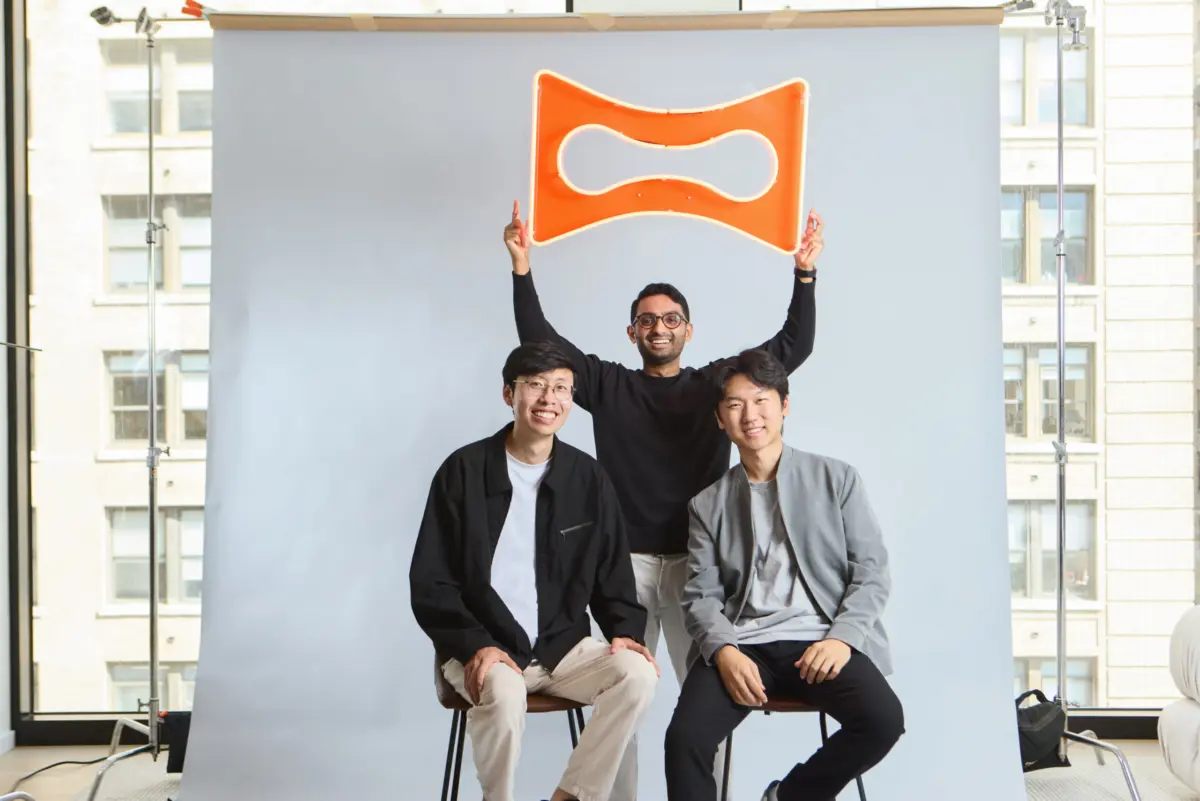
Melius, an innovative artificial intelligence platform specializing in the generation of advertising campaigns, images, and videos, announced on Tuesday the successful closure of a $25 million funding round. This significant capital infusion comprises a $20 million Series A round led by prominent venture capital firm CRV, complemented by a $5 million seed round spearheaded by General Catalyst. The New York-based startup has quickly distinguished itself in the burgeoning AI creative space, reporting an impressive annualized revenue exceeding $1 million within just two months of emerging from stealth mode in July. This financial backing and early traction underscore investor confidence in Melius’s refined vision and its capacity to disrupt the digital advertising landscape.
A Strategic Pivot: From Performance Optimization to Creative Generation
The journey to Melius’s current success was not without its initial challenges, a candid admission from co-founder Joowon Kim. Over a year ago, Kim, alongside co-founders Young Kim and Arnav Ramu, initially launched Melius with a different focus: an AI-powered performance marketing tool aimed at optimizing ad spend. The trio brought a strong engineering pedigree to the venture, having previously worked together at Ramp, the corporate spending and finance software company known for its sophisticated financial solutions and rapid growth. Their shared background at a data-intensive software firm provided a solid foundation in building scalable and efficient technological infrastructure.
However, after dedicating more than six months to developing their initial product, the co-founders arrived at a critical juncture. Joowon Kim revealed to TechCrunch that their original concept "didn’t have legs," indicating a realization that the market fit or competitive advantage was insufficient to sustain long-term growth. This moment of introspection led to a bold, decisive, and ultimately transformative strategic pivot. "We scrapped the entire codebase; we burned all of it," Kim stated, illustrating the team’s unwavering commitment to pursuing a more viable and impactful direction. This complete overhaul, a testament to entrepreneurial agility, saw Melius quickly reorient its efforts towards what it identified as a far larger and more compelling opportunity: directly building the tools that generate creative assets and entire campaigns. Nearly a year after its initial launch, Melius re-emerged with its current platform, which it describes as an "agents lab for creative work," signaling a profound shift from merely optimizing existing campaigns to empowering users with the ability to create them from scratch using advanced AI.
The Exploding Market of Generative AI in Advertising
Melius’s re-focused strategy places it squarely within one of the most dynamic and rapidly expanding sectors of the technology industry: generative artificial intelligence applied to creative production. The global digital advertising market is a colossal entity, projected to reach approximately $740 billion in 2024 and continuing its upward trajectory. Within this vast market, the demand for engaging, personalized, and high-volume creative content is insatiable. Marketers and brands are constantly striving to capture audience attention across an ever-increasing array of platforms, necessitating a rapid pace of content generation and iteration that traditional creative workflows often struggle to match.
The advent of sophisticated generative AI models has provided a powerful solution to this "content velocity" challenge. These AI systems can produce high-quality images, videos, and ad copy at unprecedented speeds and scales, dramatically reducing the time and resources traditionally required for creative development. This technological shift is not merely about automation; it’s about enabling a new paradigm of personalized marketing, A/B testing at scale, and rapid adaptation to evolving consumer trends. Industry reports indicate that the market for generative AI in marketing is expected to grow at a compound annual growth rate (CAGR) exceeding 30% over the next decade, highlighting the immense potential Melius aims to tap into. Companies that can effectively harness this technology to deliver impactful, brand-aligned creative assets are poised for significant success.
Navigating a Competitive Landscape
While Melius has demonstrated impressive early traction, it operates within an increasingly crowded and competitive landscape. The promise of AI-driven creative generation has attracted numerous startups, all vying for market share among ad agencies, marketers, and brands. Notable competitors include Higgsfield, a three-year-old company that has already achieved a staggering $5.4 billion valuation in August, reporting over $700 million in annualized revenue. Higgsfield’s rapid ascent underscores the significant capital and market demand present in this sector. Beyond this established player, smaller but innovative startups like Krea and Flora AI are also making strides, each bringing their unique approaches to AI-powered creative production.
Despite the formidable competition, Joowon Kim expresses a calm confidence regarding Melius’s position. He acknowledges Higgsfield’s rapid growth, noting it "is growing like mad," but emphasizes that the overall market size is so expansive that it can comfortably support multiple successful entities. "There are a lot of players, which is pretty exciting," Kim told TechCrunch. "That means there are customers to be won and there is demand in this space." This perspective reflects a mature understanding of market dynamics, where a large, underserved demand can foster a thriving ecosystem of competitors rather than a zero-sum game. Melius’s differentiation could lie in its specific "agents lab" approach, potentially offering a unique workflow, superior integration capabilities with existing marketing tech stacks, or a particular focus on actionable campaign generation rather than just standalone assets. The ability to seamlessly translate creative concepts into fully deployable campaigns, optimized for various platforms and audiences, could be a key differentiator in a market hungry for efficiency and effectiveness.
Investor Confidence and Strategic Rationale
The backing from CRV and General Catalyst, two highly respected venture capital firms, speaks volumes about the perceived potential of Melius. CRV, with a long history of investing in category-defining technology companies, often seeks out disruptive innovations with strong founding teams and scalable business models. Their lead in the Series A round signals a strong belief in Melius’s long-term vision and its capacity to become a leader in the AI creative space. General Catalyst, known for its investments in transformative companies across various sectors, from enterprise software to fintech, similarly looks for ventures that can reshape industries. Their early investment in the seed round indicates an early conviction in the founders and the initial concept, a conviction that was presumably reinforced by Melius’s successful pivot and rapid post-stealth growth.
For investors, the Melius story offers a compelling narrative: a technically adept founding team from a successful startup (Ramp), demonstrating remarkable agility and resilience through a critical pivot, followed by rapid market validation in a booming sector. This combination of strong leadership, a proven ability to adapt, and early revenue traction in a massive and growing market makes for an attractive investment proposition. The funding will likely be strategically deployed to accelerate product development, expand the engineering and sales teams, and potentially explore new market segments or geographic expansions, solidifying Melius’s competitive standing.
The Human Element: From Aspiring YouTuber to AI Visionary
The personal story of co-founder Joowon Kim adds a compelling human dimension to Melius’s technological ambition. Kim, who describes himself as a social media influencer, reveals a lifelong passion for creating digital media, particularly short videos, dating back to his elementary school days. His early aspirations included becoming a famous YouTuber, a dream that fueled countless hours of vlogging attempts. "I tried my best to make vlogs," he recounts, admitting that while his father was skilled with professional editing software like FinalCut Pro, he personally struggled with the complexities of production.
Though his early vlogs never achieved viral fame, this persistent fascination with the mechanics and artistry of digital media creation remained. This deep-seated personal drive to simplify and democratize content creation directly informs Melius’s mission. Joowon Kim is now building the very tool he always wished he had: a platform that empowers anyone, from aspiring content creators to seasoned creative directors, to translate their ideas into high-quality digital reality using intuitive, plain language commands. This connection between personal passion and entrepreneurial endeavor is a powerful motivator, ensuring that Melius is not just a technological solution but a product built with a genuine understanding of creative challenges and aspirations. It suggests a user-centric design philosophy, aiming to make sophisticated creative tools accessible and efficient for a broad spectrum of users.
Broader Implications and Future Trajectory
Melius’s success and the broader trend of AI creative platforms carry significant implications for the advertising and marketing industries. For agencies, these tools can streamline production workflows, allowing creative teams to focus on strategy and conceptualization rather than repetitive tasks. For in-house marketing departments, they offer the ability to produce a higher volume of personalized content, test variations more rapidly, and respond to market trends with unprecedented agility. The ability to generate diverse creative assets—images, videos, and copy—that are tailored to specific audience segments and platform requirements, all through simple textual prompts, represents a paradigm shift in how campaigns are conceived and executed.
However, the proliferation of AI-generated content also raises important considerations. Ethical guidelines for AI in creative work, maintaining brand authenticity and voice, ensuring quality control, and addressing potential copyright issues will become increasingly crucial. While AI can augment human creativity, human oversight and strategic direction will remain indispensable to ensure relevance, impact, and ethical compliance.
Looking ahead, Melius’s $25 million funding will undoubtedly be instrumental in fueling its next phase of growth. This capital will likely be allocated towards aggressive talent acquisition, particularly in AI research and development to further enhance its generative capabilities. Expanding its product features, such as more sophisticated video generation tools, advanced personalization engines, and deeper analytics integrations, will be key to staying ahead in the competitive market. Furthermore, market expansion, both domestically and internationally, could be on the horizon as Melius seeks to bring its "agents lab for creative work" to a wider global audience. The long-term vision appears to be one where the platform evolves into a comprehensive creative hub, empowering businesses and individuals alike to unlock their full creative potential, making the previously complex process of ad campaign development as intuitive as describing an idea. Melius stands as a testament to the power of adaptation, innovation, and a clear vision in an industry ripe for technological transformation.








