
 Evan Lee Salim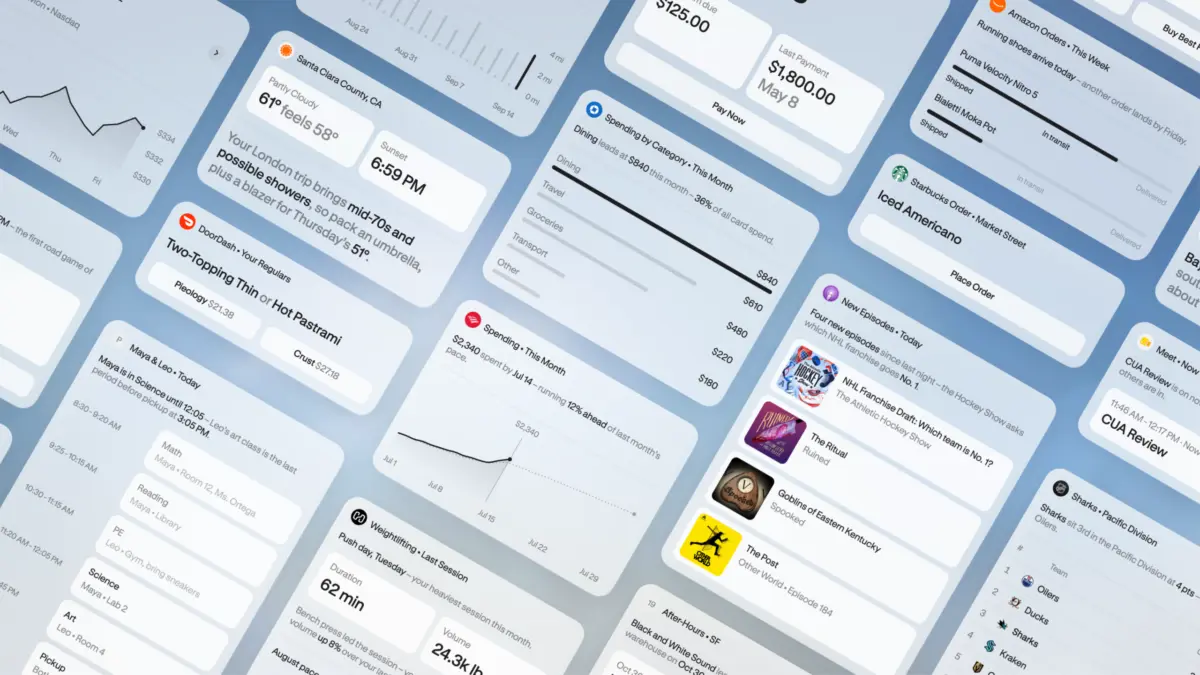
The relentless pursuit of the definitive personal AI assistant has intensified with the wide release of Hark Pro, a new offering from the less-than-a-year-old startup Hark. Founded by serial entrepreneur Brett Adcock, Hark is positioning its flagship product not merely as another AI application, but as a foundational operating system designed to redefine human-computer interaction in the age of artificial intelligence. This launch marks a significant moment in an already crowded and highly competitive landscape, where tech giants and innovative startups alike, from Muse to Instinct to Dots, are vying to discover the elusive user experience that will transform AI personal assistants from novelty to indispensable necessity.
The Evolving Quest for the Indispensable AI Assistant
For decades, the vision of a truly intelligent digital companion capable of understanding and anticipating human needs has captivated technologists and consumers alike. From the early, rule-based chatbots of the 1960s to the voice assistants of the 2010s, the journey toward a truly autonomous and helpful AI assistant has been incremental. However, the advent of large language models (LLMs) and advanced AI agents has dramatically accelerated this quest, ushering in an era where AI can not only process natural language but also execute complex tasks across digital environments. The contemporary challenge is no longer just about building powerful AI models, but about crafting intuitive, trustworthy, and genuinely useful interfaces that integrate seamlessly into daily life.
The market for AI assistants is projected to reach hundreds of billions of dollars globally in the coming years, driven by the promise of increased productivity, personalized experiences, and streamlined digital interactions. Yet, despite the immense investment and technological leaps, a "must-have" product that universally resonates with users has remained elusive. Early iterations often struggled with the "cold start" problem—users found it difficult to identify genuinely useful tasks for their AI to perform, beyond basic queries or simple commands. Furthermore, significant hurdles persist regarding user trust, data privacy, and the seamless integration of AI into diverse digital ecosystems without causing friction or confusion. This is the complex backdrop against which Hark Pro makes its debut, aiming to cut through the noise with a distinct vision focused on utility and user empowerment.
Hark Pro’s Ambitious Vision: An AI-Native Operating System
Hark, under the leadership of Brett Adcock, does not claim to be chasing Artificial General Intelligence (AGI) or attempting to solve humanity’s grandest challenges. Instead, its mission is explicitly defined: to build a superior user interface for AI, one that effectively transforms how individuals interact with their computers. Hark Pro is built upon a proprietary AI model specifically trained for computer use, setting it apart from more generalized frontier LLMs. This specialized training is intended to make Hark Pro exceptionally efficient and cost-effective at executing digital tasks, promising a faster, more reliable experience for users.
The service is available for free, with an optional subscription tier for heavy users, signaling a commitment to broad accessibility while also establishing a clear monetization path. Hark’s ambition extends beyond being a mere application; it envisions itself as the operating system for the AI-driven computers of the future. This strategic positioning suggests a long-term play, aiming to embed itself at the very core of users’ digital lives, rather than functioning as an ancillary tool.
A Deep Dive into Hark Pro’s User Experience and Functionality
Hark Pro offers a full-screen experience designed to feel like a personalized digital command center. At its core is a central chat dialog, familiar to users of other AI interfaces, but this is complemented by a dynamic feed. This feed is proactively populated with prompts for actions the user might need to take, along with "panels"—mini-dashboards offering visualizations and relevant information tailored to the user’s interests and current context. Adding a touch of aesthetic personalization, the background imagery dynamically adjusts based on the local weather and time, creating an ambient and adaptive environment.
Crucially, Hark Pro is engineered for deep integration into a user’s digital life. Users configure the assistant to access various facets of their online presence, including email, calendar, hard drive, and even financial accounts like credit cards. This extensive access empowers Hark Pro to transcend the capabilities of a typical chatbot, enabling it to undertake a wide array of digital tasks autonomously. These tasks range from managing schedules and responding to emails to processing expenses and handling online transactions.
Abidur Chowdhury, Hark’s Head of Design and a former Apple staffer, provided a demonstration that underscored the system’s proactive capabilities. During the demo, Hark Pro automatically surfaced notifications about expenses requiring approval, emails needing responses, and an upcoming meeting with a reporter. In a classic yet effective illustration of its utility, it also identified the need to book a flight for an upcoming trip and offered to handle the booking process directly. While Chowdhury lightheartedly admitted the "flight thing is put to death" as a common AI demo, it still serves as a powerful indicator of the assistant’s potential to streamline routine tasks.
A more sophisticated example provided by Chowdhury highlighted Hark Pro’s ability to discern and act on complex, less obvious needs. He recounted an instance where the AI assistant recognized that a colleague needed to renew their car registration at the California DMV. Crucially, Hark Pro didn’t just flag the issue; it navigated the agency’s website and completed the renewal process autonomously. This level of proactive, end-to-end task completion represents a significant leap from reactive chatbots and points to the potential for truly intelligent agentic behavior.
Building Trust Through Transparency in a Privacy-Sensitive Era
One of Hark Pro’s most distinctive user experience choices, and a cornerstone of its trust-building strategy, is its transparency regarding web navigation. Unlike many AI assistants that perform background web interactions without surfacing them, Hark Pro displays the agent’s web browsing activity in a small, visible window. Chowdhury emphasizes that this visual feedback is intended to foster user trust, allowing individuals to observe and verify that the AI agent is performing tasks correctly and as intended. This design decision directly addresses a growing apprehension among users about AI agents operating opaquely with access to sensitive personal data.
The issue of data privacy and trust is paramount in the realm of AI personal assistants. For these models to be truly effective, users must grant them extensive access to their "entire digital lives." This level of access raises profound concerns, both in terms of cybersecurity and the ethical implications of data profiling. Recent reports, such as Apple’s tightening of macOS full disk access controls due to new risks from AI agents, underscore the industry’s increasing awareness and caution regarding these powerful tools.
Furthermore, the competitive landscape includes tech behemoths like Meta and OpenAI, whose business models may involve data monetization or extensive user profiling. Hark explicitly positions itself against these models. As Chowdhury states, "we’re not here to like sell you ads and steal your data." This direct appeal to user privacy is a critical differentiator, especially in an era where consumers are increasingly wary of how their personal information is used. When questioned about profiling, Chowdhury clarified that Hark’s "work to understand you" is strictly "task related," focused solely on helping users offload tasks and be more useful, rather than building extensive personal profiles for other purposes. This distinction is vital for cultivating user confidence, particularly when the alternative could involve AI creating "detailed profiles of all your friends and family," as some competitors have been scrutinized for.
Performance Claims and Market Differentiation
Hark’s confidence in its product is palpable. Chowdhury openly invites comparison with competitors, stating, "Please compare it to the others, be critical." He asserts that while Hark Pro might not always be faster than some rivals, such as Muse, it is designed to deliver "a better result" and offer "end-to-end" functionality, eliminating the need for users to intervene and complete tasks midway. This claim highlights a key differentiator: a focus on complete task resolution, minimizing user friction and maximizing true automation.
The choice of an AI model explicitly trained for computer use is central to Hark’s strategy. This specialization theoretically makes it faster and more economical for digital tasks. However, it also raises an open question: how much broader knowledge and capability of a frontier LLM is being traded away for this specialized efficiency? The balance between deep task-specific expertise and general intelligence remains a critical area of ongoing research and development in the AI assistant space. Hark’s bet is that for the specific use case of computer automation, specialized training yields superior practical outcomes.
Beyond Software: Hark’s Vision for AI-Native Hardware
Hark’s ambition extends beyond software. Abidur Chowdhury, who built his reputation designing devices at Apple, reveals that Hark plans to release an "AI-native device" in 2027 to complement its software offerings. This move signals a holistic approach, aiming to create a complete ecosystem where bespoke hardware is optimized for Hark’s AI software, potentially unlocking capabilities impossible with existing general-purpose devices.
Details about this forthcoming device are scarce, with Chowdhury deliberately cagey about its form factor. He expressed reservations about the "creep factor" associated with wearable cameras, suggesting Hark’s device will steer clear of such controversial designs. However, he offered a tantalizing hint: "the first product that we’re building is a product that’s never ever existed before." This bold claim sets high expectations, inviting both anticipation and scrutiny. The industry has seen its share of "revolutionary" hardware that ultimately proved to be iterative or niche. Whether Hark can truly deliver a novel product that redefines interaction beyond the current paradigms of keyboards and screens, which Chowdhury critiques as "still a terminal" fifty years later, remains to be seen. This hardware play underscores Hark’s long-term vision to fundamentally transform computing, moving beyond the current interface limitations to a more intuitive, AI-centric interaction model.
Broader Impact and the Future of Personal Computing
Hark Pro’s entry into the market reflects a broader industry consensus that the next major frontier in computing lies in truly intelligent, proactive personal AI. The implications of such widespread adoption are profound. On the one hand, a highly capable AI assistant could revolutionize productivity, free up human cognitive load from mundane tasks, and offer unprecedented personalization across all digital interactions. Businesses could see significant efficiency gains, and individuals could regain valuable time and mental energy.
On the other hand, the societal and ethical challenges are considerable. The reliance on AI for critical tasks raises questions about accountability, bias in algorithmic decision-making, and the potential for deskilling human capabilities. Cybersecurity concerns will only intensify as AI agents become deeply embedded in personal and professional digital infrastructure. The regulatory landscape is still nascent, struggling to keep pace with rapid technological advancements, especially concerning data governance, privacy, and the ethical deployment of autonomous agents.
The success of Hark, and indeed all players in this space, hinges not just on technological prowess but on their ability to navigate these complex challenges, build and maintain user trust, and demonstrate undeniable value that transcends existing solutions. The competition is fierce, with established tech giants like Google, Microsoft, and Apple continuing to invest heavily in their own AI assistant capabilities, alongside other ambitious startups like Humane and Rabbit, each offering a unique take on the future of AI-powered interaction.
Hark’s decision to focus on a specialized model for computer use, coupled with its transparent UX and commitment to privacy, represents a calculated risk and a distinct strategy. By prioritizing practical utility and user trust, Hark aims to differentiate itself in a market often characterized by hype and privacy concerns. The promise of an entirely new AI-native device further solidifies its ambition to not just compete, but to lead in defining the next era of personal computing. As the industry races toward an intelligent future, Hark Pro’s launch signals a determined step forward in the quest for the truly indispensable personal AI assistant.








