Lina Irawan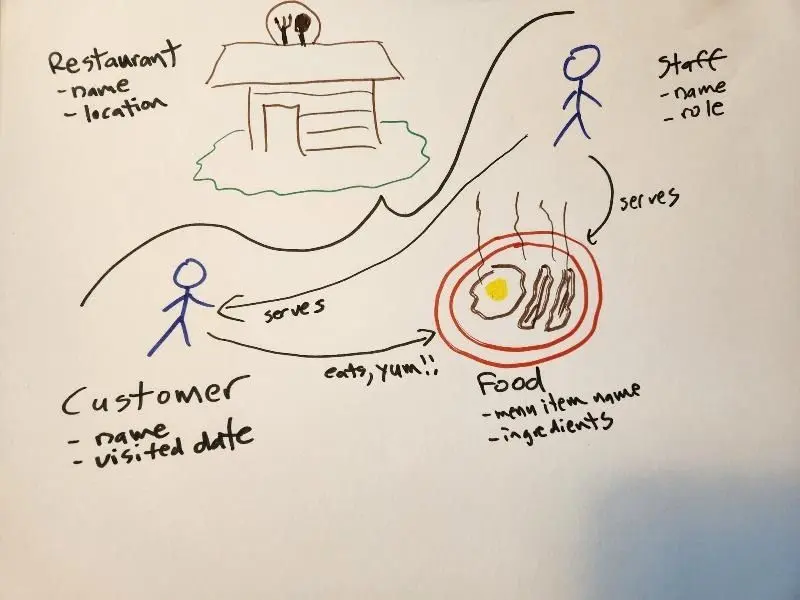
The software engineering landscape is witnessing a renewed interest in Model Oriented Programming (MOP), a paradigm that prioritizes high-level abstractions over traditional imperative coding structures. Initially pioneered over a decade ago through the development of the Mo+ Integrated Development Environment (IDE), MOP seeks to bridge the gap between conceptual system requirements and executable code. While the technology was utilized extensively in enterprise-level projects throughout the early 2010s, its mainstream adoption remained limited. However, as the industry moves toward AI-driven development and increasingly complex cloud-native architectures, the core principles of MOP—structure, hierarchy, and model-oriented properties—are being re-evaluated for their potential to streamline software lifecycles and enhance the capabilities of large language models (LLMs).
Foundations of Model Oriented Programming
At its core, Model Oriented Programming is defined by the utilization of an electronic model to create and maintain a software system. Unlike Object Oriented Programming (OOP), which focuses on the interaction between objects and their states, MOP treats the model as the primary driver of the system’s logic and structure. A model, in this context, is defined by two primary components: structure and data. The structure establishes the rules or "schema," which is invariably hierarchical, while the data populates that structure in accordance with the established rules.
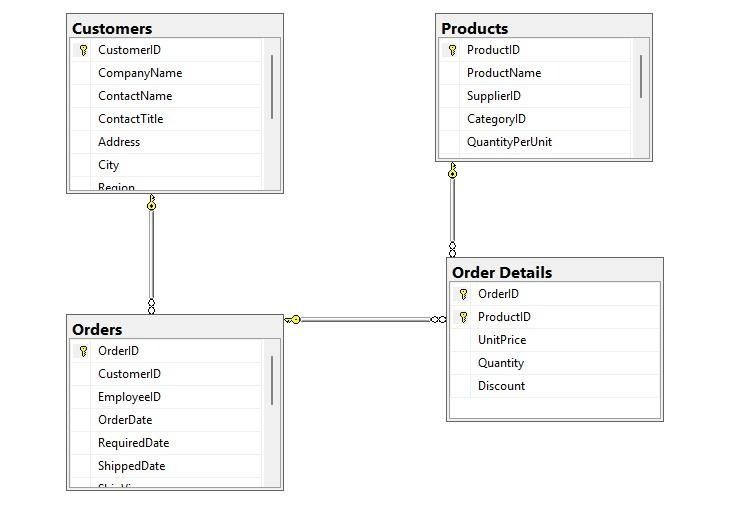
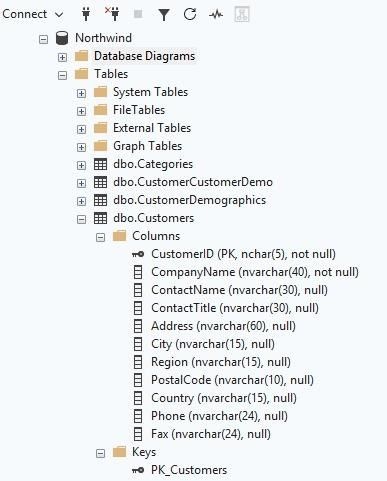
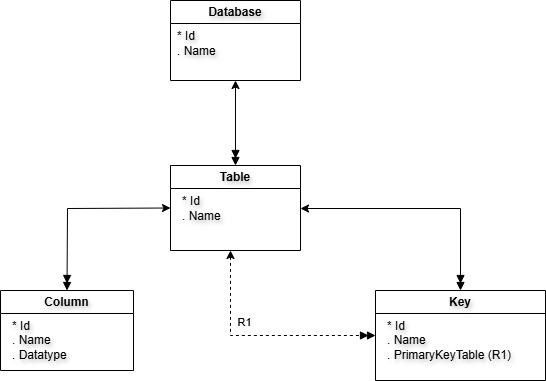
Technical specifications for MOP define model structures through nodes and attributes. While traditional relational databases may appear non-hierarchical in a diagrammatic view, the underlying schema—comprising databases, tables, columns, and keys—follows a strict tree-like organization. This hierarchical nature allows MOP languages to traverse complex data sets with greater efficiency than traditional languages, which often require extensive boilerplate code to map relationships.
A Chronological Overview of MOP Development
The trajectory of Model Oriented Programming has been marked by specific milestones in IDE development and shifts in industry focus.
- 2011: The Emergence of Mo+: The first fully-featured model-oriented programming language and IDE, Mo+, was developed. It was designed to facilitate the rapid generation of enterprise systems by allowing developers to program directly against a model rather than manual class definitions.
- 2012–2014: Enterprise Application: The technology was integrated into various workplace projects, demonstrating the ability to manage approximately 80% to 90% of a target enterprise environment through automated model interpretation. In 2014, Mo+ was released as a Visual Studio add-on, aiming to provide a bridge between standard UML modeling and active source code management.
- 2015–2018: The Shift to Framework-Centric Development: As the industry leaned heavily into frameworks like Angular, React, and various Object-Relational Mappers (ORMs) such as Entity Framework, "Inline MOP" became the dominant form. During this period, the developer of Mo+ transitioned into maritime engineering, yet the underlying principles of the language remained relevant as software complexity continued to scale.
- 2019–Present: AI and the Resurgence of Modeling: The rise of AI-assisted coding has created a new demand for structured, machine-readable requirements. Industry researchers are now looking back at decoupled and coupled MOD (Model Oriented Development) as a means to provide AI agents with the necessary context to generate high-fidelity codebases.
Categorization of Model Oriented Development (MOD)
To understand the practical application of MOP, it is necessary to categorize the various forms of Model Oriented Development. Each category offers a different level of abstraction and integration with the final system.
Informal MOD
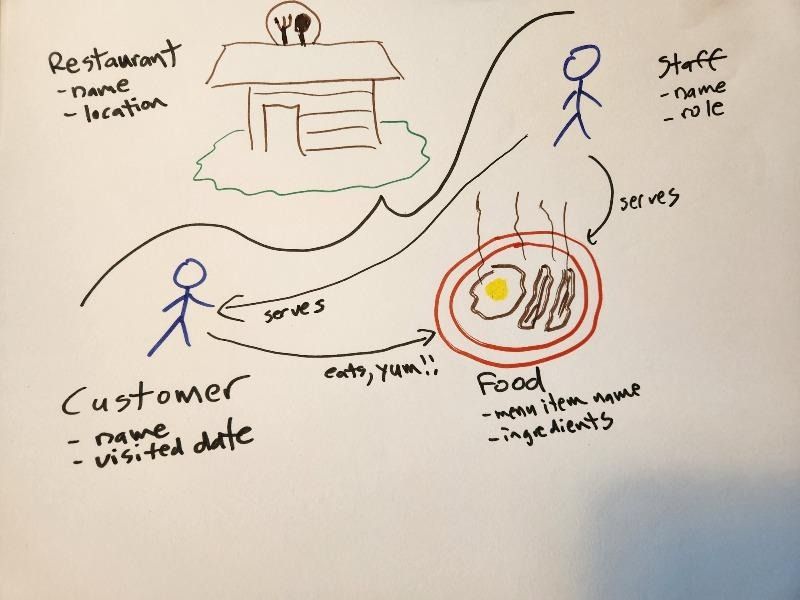
Informal MOD involves non-standard models, such as whiteboards, sketches, or basic drawing tools. While these lack a formal electronic structure, a robust MOP language can be designed to interpret these informal structures if they are converted into a readable electronic format. This form is typically used for early-stage ideation and team-specific documentation.
Inline MOD
Currently the most popular form, Inline MOD utilizes standard model structures within existing frameworks. Examples include ORMs like NHibernate or Entity Framework, where the model is often defined directly in the code (Code-First approach). While effective, the scope of the MOP language is often limited to the specific constraints of the framework being used.
Coupled MOD
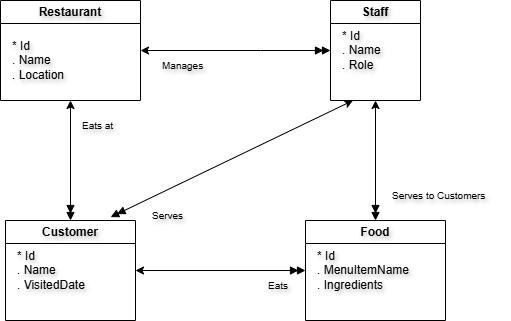
Coupled MOD is most frequently associated with Unified Modeling Language (UML). In this approach, modeling tools and source code are tightly integrated. Changes in the model reflect in the code, and vice versa. This form is widely used in systems where design clarity and component-level architecture are paramount.
Decoupled MOD
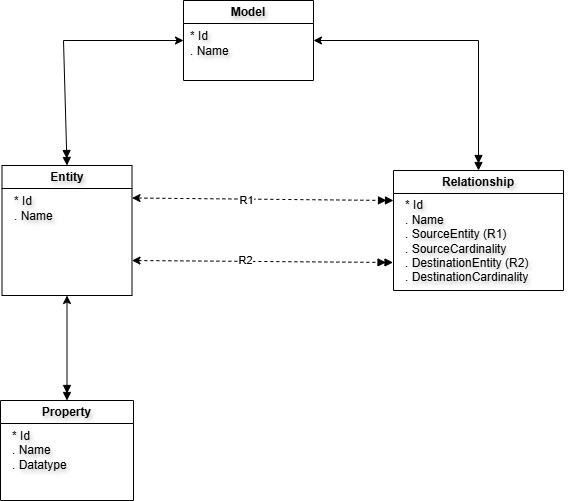
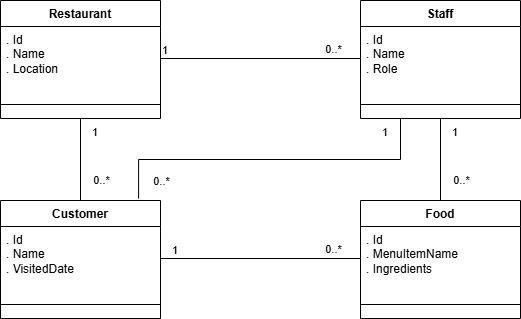
In Decoupled MOD, the model serves to clarify requirements—primarily data and workflow—without referring to specific software components. For instance, a "Restaurant" entity in a decoupled model does not represent a specific class or table but rather a requirement that may eventually manifest as multiple UI components, web services, and database rows. This approach, often utilizing the Shlaer-Mellor method, allows for a cleaner separation between business logic and technical implementation.
Key Features of MOP Languages
For a MOP language to be considered fully featured, it must incorporate several unique grammatical and functional elements that distinguish it from imperative or object-oriented languages.
Programming Sessions and Model Context
A fundamental concept in MOP is the "Programming Session," a period where the model structure is established and the model data is sealed as read-only. Within this session, the language utilizes "Model Context"—a mechanism that allows the language to access data from any point in the hierarchical tree. Unlike OOP, which requires the instantiation of variables to hold state, MOP uses a context stack to navigate the model, significantly reducing the need for temporary variables.
Dynamic and Contextual Grammar
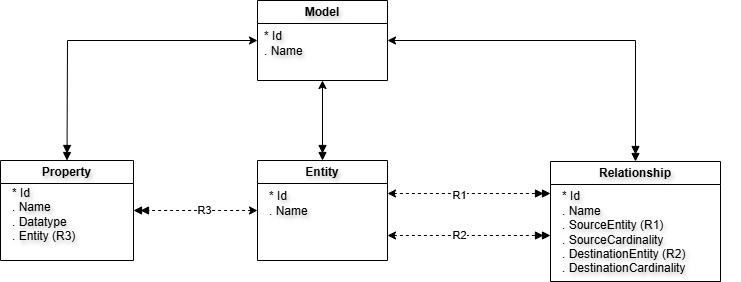
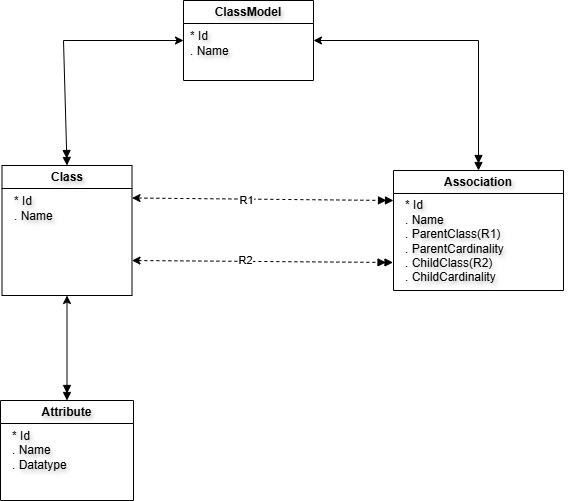
A MOP language interpreter can implement a "Grammar Builder," which reads a model structure and adds it to the language grammar at the start of a session. This means the language itself changes based on the model it is processing. If a developer adds a "MaxLength" attribute to a "Property" node in the model, the language grammar immediately recognizes and supports that attribute. This dynamic nature allows MOP to adapt to non-standard or industry-specific models without requiring a compiler update.
Model Oriented Properties
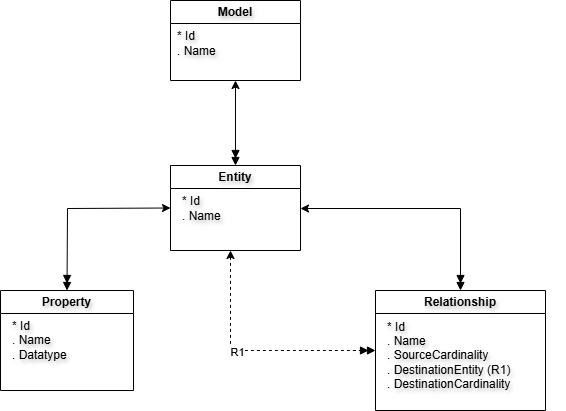
Unlike object-oriented properties tied to a specific class, model-oriented properties are independent snippets of code associated with a node type. These properties can be evaluated multiple times across different instances of a node, serving as "codified best practices." For example, a property designed to generate a public class declaration can be reused across every entity in a model, ensuring consistent naming conventions and structural integrity.
Technical Analysis: The Impact on Code Efficiency
The shift toward MOP has significant implications for code maintainability and performance. In traditional programming, developers spend a substantial amount of time managing state and variables. In contrast, Transitional MOP—the process of using a model to maintain a target system—requires remarkably few variables. Reports from early Mo+ implementations suggest that variables were required for less than 1% of the model-oriented properties developed.
Furthermore, because model data is read-only during a programming session, there is a high potential for parallelism. Interpreters can cache the results of property evaluations, leading to massive performance gains when generating large-scale enterprise systems. This efficiency is particularly relevant for "Transitional MOP," where the goal is to interpret model data to maintain source code, configuration files, and documentation.
Implications for Artificial Intelligence and Future Research
The current evolution of AI in software development presents a unique opportunity for the integration of MOP. Large Language Models (LLMs) often struggle with the "hallucination" of code structures when provided with ambiguous requirements. By using a model-oriented approach, developers can provide AI with a rigid, hierarchical structure that acts as a "source of truth."
Industry analysts suggest that a MOP-based IDE could serve as a sophisticated prompt-engineering environment. Instead of asking an AI to "write a restaurant management system," a developer would define the model structure and data, then use model-oriented properties to guide the AI in generating the specific implementation details. This would ensure that the generated code adheres to best practices and architectural constraints.
Challenges in Target MOP Integration
While Transitional MOP (generating code from a model) is well-understood, "Target MOP"—where the MOP language is used directly as the primary programming language for a running system—remains an area for ongoing research. The primary challenge lies in the integration of custom, hand-written code with model-generated frameworks.
To address this, researchers are exploring the concept of "customization points" or smart IDEs that can graphically reconcile updates to the model with manual changes to the target code. If a model’s structure changes, the language’s grammar changes simultaneously, potentially creating compilation errors in the target code. Solving this requires a high degree of sophistication in IDE design, involving automated refactoring tools and visual diffing engines that understand the relationship between the model and the executable system.
Conclusion
Model Oriented Programming represents a paradigm shift that could redefine how enterprise software is built and maintained. By elevating the model to a first-class citizen within the programming environment, MOP reduces boilerplate, ensures architectural consistency, and provides a structured foundation for the next generation of AI-assisted development tools. As software systems continue to grow in complexity, the industry may find that the most effective way to manage this growth is to return to the foundational principles of model-driven design, utilizing the unique capabilities of MOP languages to bridge the gap between human requirements and machine execution.