
 Vera Intan Clara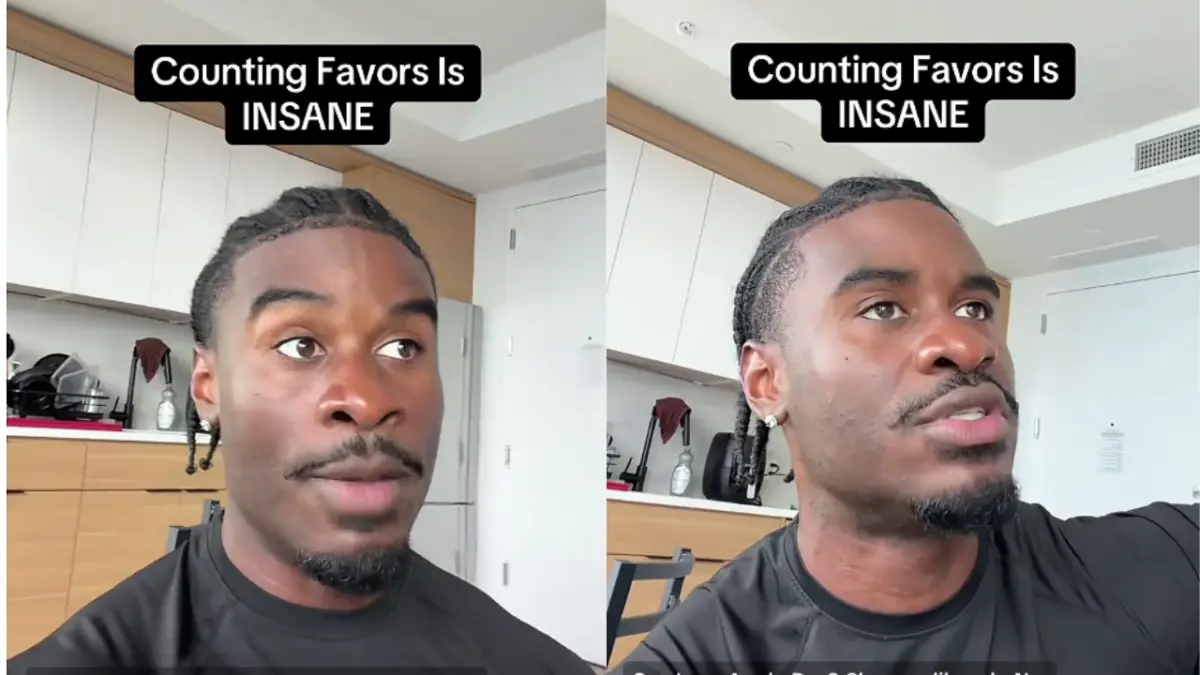
A recent viral video shared by TikTok creator @maxwellvision has ignited a widespread discussion across social media platforms, delving into the complex and often unspoken rules governing financial interactions within friendships. The incident, as recounted by Maxwell, describes a situation where a friend initially offered to cover a meal without expecting repayment, only to confront him weeks later about the outstanding debt. The video, which has garnered an impressive 1.7 million views and over a thousand comments, highlights a common social dilemma, sparking debate about the nuances of generosity, reciprocity, and clear communication among peers.
The Genesis of a Viral Dilemma: A Birthday Dinner and a Forgotten Wallet
The narrative unfolds around a celebratory birthday dinner for one of Maxwell’s female friends, attended by a convivial group of their mutual acquaintances. The evening, filled with camaraderie and good cheer, took an unexpected turn when the time came to settle the bills. In a move to ensure individual accountability, the birthday girl’s best friend requested separate checks for everyone at the table, with the exception of her own meal.
Maxwell, upon receiving his $65 bill, which he noted was an accurate reflection of his food and drink orders, discovered to his dismay that his wallet was conspicuously absent. A quick mental retrace of his steps suggested it was either left in the ride-share vehicle he had taken to the restaurant or, more fortunately, safely at home. Utilizing the tracking capabilities of his wallet’s attached AirTag, he confirmed the latter, bringing a sigh of relief regarding its security but leaving him in a precarious position regarding payment. With no cash or physical cards on hand, Maxwell explored immediate payment alternatives. He first inquired about Apple Pay, hoping to utilize his smartphone, but was informed that the restaurant’s machine was out of service. Reluctant to impose on his friends, he initially hesitated to ask for assistance.
However, remembering the convenience of peer-to-peer payment applications, Maxwell decided to approach a friend, Jack, with a proposal: Jack would cover his $65 meal, and Maxwell would immediately transfer the funds back via Zelle. What transpired next set the stage for the subsequent social entanglement. To Maxwell’s surprise, Jack not only agreed to cover the meal but emphatically declined immediate repayment. "Zelle me the money? You good… You don’t gotta Zelle me nothing. How much is it? $65.00… Bro, you good," Jack reportedly stated, dismissing Maxwell’s offer.
From Maxwell’s perspective, this explicit refusal of repayment transformed the transaction from a temporary loan into a gesture of goodwill—a favor or even a gift. He interpreted Jack’s words as a clear indication that no immediate or future financial obligation was expected. This interpretation aligned with what Maxwell understood to be the unwritten code of close friendships: mutual support and an implicit understanding that such favors would be reciprocated in kind, perhaps by him covering Jack’s meal on a future outing, rather than through direct monetary repayment. The evening concluded on what Maxwell believed was a positive and amicable note, reinforcing the bonds of friendship.
The Unforeseen Confrontation: Two Weeks Later
The perceived harmony of the situation was shattered approximately two weeks later, under entirely different circumstances. Maxwell had joined a group of friends, including Jack, for a basketball session at a local gym. Following several competitive games, the group was naturally fatigued and thirsty. Another friend, Eric, expressed a desire for a Gatorade from a vending machine, which, inconveniently, only accepted cash. Maxwell, possessing about $4 in cash, readily offered it to Eric to purchase his drink.
It was at this moment that Jack intervened, his tone and words carrying an unexpected edge. "For real, bro? That’s crazy… That’s wild," Jack remarked, his gaze fixed on Maxwell. Confused by the sudden shift in atmosphere, Maxwell inquired about the problem. Jack’s reply unveiled the simmering resentment that had been brewing beneath the surface: "Bro, you don’t think it’s weird that you’re giving other people money when you owe me money? I paid for your dinner, you said you would pay me back."
Maxwell, taken aback, immediately reminded Jack of their conversation at the birthday dinner, emphasizing Jack’s explicit refusal of repayment and Maxwell’s initial offer to Zelle the money. Jack’s subsequent explanation provided a stark contrast to Maxwell’s initial interpretation. Jack admitted that his earlier dismissal of repayment was merely a social nicety, a polite gesture, and that he had, in fact, expected Maxwell to reimburse him. He further added that if Maxwell genuinely couldn’t afford to pay him back, he would understand—a statement Maxwell interpreted as an insinuation about his financial capacity.
Feeling the weight of this misunderstanding and the implied accusation, Maxwell promptly retrieved his phone and sent the $65 to Jack via Zelle. His rationale was clear: he perceived Jack as "counting the favor," a behavior he found antithetical to the spirit of genuine friendship. He did not wish for a $65 debt, real or perceived, to cast a shadow over their relationship.
The Shifting Landscape of Friendship and Finance: Analysis and Implications
Maxwell’s viral account provides a compelling case study on the evolving dynamics of friendship in the digital age, particularly concerning financial transactions. The incident highlights several critical areas of contemporary social interaction:
1. The Ambiguity of "Favors" vs. "Loans":
The core of the conflict lies in the divergent interpretations of Jack’s initial offer. Maxwell understood it as a favor or gift, consistent with the implicit reciprocity often found in close friendships, where financial exchanges are not strictly tracked but balanced over time through mutual generosity. Jack, however, viewed it as a temporary loan, disguised by a polite refusal of immediate repayment. This ambiguity underscores a fundamental challenge in social etiquette: the distinction between a genuinely selfless act and a loan extended with a tacit expectation of reimbursement. The absence of explicit clarification at the point of transaction created fertile ground for misunderstanding and resentment.
2. The Impact of Digital Payment Platforms:
The proliferation of instant digital payment apps like Zelle, Venmo, and PayPal has fundamentally altered the landscape of peer-to-peer financial exchanges. These platforms make immediate repayment incredibly convenient, often removing the logistical barriers that once necessitated delayed reimbursement. In this context, Jack’s refusal of an immediate Zelle transfer could reasonably be interpreted as a genuine waiver of repayment, as the means for instant settlement were readily available. Had such apps not existed, the expectation of delayed repayment might have been more implicit and universally understood.
3. The Culture of "Social Niceties" and Communication Breakdown:
Jack’s admission that he only said he didn’t need repayment "to be nice" points to a broader cultural phenomenon where individuals may prioritize politeness over direct communication, especially concerning sensitive topics like money. While well-intentioned, such indirectness can lead to significant interpersonal friction when intentions are misconstrued. In a friendship, clear and honest communication, even if initially uncomfortable, is often crucial for maintaining trust and avoiding future conflict. The incident serves as a potent reminder that assumptions, even seemingly benign ones, can erode relationships.
4. Social Media as a Forum for Social Etiquette Debates:
The virality of Maxwell’s video on TikTok demonstrates the platform’s role as a contemporary public square for discussing personal dilemmas and seeking communal validation or advice. Users frequently turn to platforms like TikTok to share experiences, allowing millions to weigh in, offer perspectives, and collectively define evolving social norms. Such videos often tap into universal experiences, prompting users to reflect on their own interactions and the unwritten rules that govern their relationships.
Public Reaction: A Collective Call for Clarity
The comments section of Maxwell’s video became a vibrant forum for discussion, with the overwhelming sentiment siding with Maxwell’s interpretation. Many commenters expressed frustration with Jack’s approach, emphasizing the importance of clear communication when money is involved.
One prevalent theme among the 1,192 comments was the idea of reciprocal generosity within friendships, where direct repayment is less common than taking turns covering expenses. As one commenter articulated, "Me and my buddies don’t pay each other back, we just take turns buying stuff for everyone." This highlights a shared understanding among many that close friendships operate on a different economic model than transactional relationships, often favoring a fluid system of mutual support rather than strict ledger-keeping.
Another significant point raised by viewers was the imperative for individuals to articulate their expectations clearly from the outset. "He should’ve been straight forward with his intentions. Also, if you don’t rock with him like that, you could’ve sent him the money right away to avoid this," a commenter wrote, echoing the sentiment that Jack bore responsibility for the misunderstanding by not being explicit about his expectation of repayment. Many argued that if Jack intended it as a loan, he should have accepted the immediate Zelle payment or clearly stated his expectation for reimbursement, rather than relying on an unspoken agreement that contradicted his words.
Broader Societal Impact and Expert Insights (Inferred)
While no formal "official responses" are available for a personal anecdote shared on TikTok, the widespread engagement and consensus among commenters offer a valuable insight into contemporary social norms. Sociologists and social psychologists often note that financial dealings are among the most common stressors in friendships and family relationships. The incident underscores the delicate balance between maintaining social harmony and asserting financial boundaries.
Experts might suggest that:
- Clear Expectations are Paramount: When lending or borrowing money, even small amounts, explicitly stating whether it is a gift or a loan, and if a loan, the expected repayment timeline, can prevent future conflict.
- The Power Dynamic of Generosity: The act of offering to pay can create a subtle power dynamic. When the recipient tries to repay, and the offerer declines, it can be seen as an act of heightened generosity. To then demand repayment retroactively can feel like a violation of that implicit social contract.
- The Psychological Cost of "Favor Counting": Friendships thrive on mutual trust and spontaneous acts of kindness. When individuals begin to meticulously track favors or debts, it can introduce a transactional element that erodes the emotional fabric of the relationship. Maxwell’s swift repayment was a defensive move to prevent such "favor counting" from lingering and potentially poisoning the friendship.
This viral story serves as a cautionary tale and a valuable lesson in social communication. In an era where digital interactions often lack the full context of face-to-face communication, and where social niceties can obscure true intentions, the need for explicit and honest dialogue has never been greater. Whether it’s a $65 meal or a larger financial transaction, clarity in communication remains the cornerstone of healthy and enduring relationships.
The Daily Dot was unable to independently verify the events described by @maxwellvision, which are based solely on his account of the interaction with his friend.








