Evan Lee Salim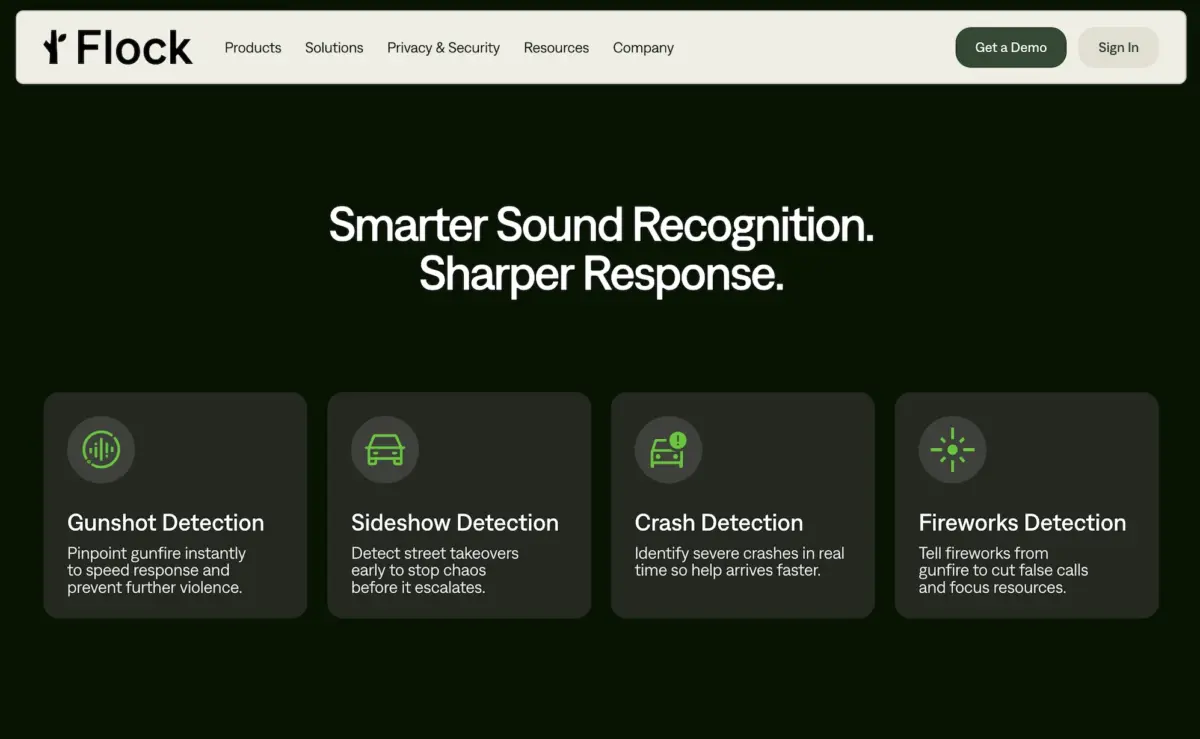
Flock Safety, a prominent provider of surveillance technology, is facing renewed scrutiny following remarks by CEO Garrett Langley at TechCrunch Disrupt, where he asserted that the company’s gunshot detection microphones exclusively detect "just gunshots." This statement stands in stark contrast to the company’s own website, which outlines a significantly broader range of ambient audio detection capabilities for its "Gunshot Detection" product, raising questions about transparency, the scope of mass surveillance, and the company’s evolving narrative around its technology. The discrepancy has reignited a heated public debate about the balance between public safety and individual privacy, especially as resistance to such surveillance systems continues to mount across the United States.
The Contradictory Narrative: CEO vs. Website
During his appearance at TechCrunch Disrupt, Garrett Langley, co-founder of Flock Safety, presented a simplified view of his company’s audio-collection product. He defended the technology, emphasizing its primary function of listening for gunshots to provide "earlier awareness" to potential public safety events. When pressed specifically on the functionality, Langley unequivocally stated, "It’s just gunshots." He further elaborated that the system would "notify if a gun goes off, and if not, that’s all it’s going to listen to."
However, a direct examination of Flock Safety’s official website paints a far more expansive picture of the system’s capabilities. The website explicitly states that the audio systems can not only instantly pinpoint gunfire but also "detect street takeovers early to stop chaos before it escalates," "identify severe crashes in real time so help arrives faster," and "expand awareness beyond gunfire with alerts for car crashes, fireworks, and sideshows." An FAQ section on the site further clarifies, "in addition to gunshots, Flock Gunshot and Audio Detection can detect fireworks, sideshows, and other disruptive community events," noting that the company’s "detection library is continually expanding to include emerging threats that are relevant" to customer needs.
In response to inquiries about this apparent contradiction, Flock spokesperson Paris Lewbel offered a clarification. Lewbel stated that "Flock’s gunshot detection technology is primarily used to detect gunfire but is also capable of detecting fireworks, sideshows, and potential car crashes." The spokesperson added that CEO Langley’s remarks were "intended to emphasize that Flock’s Audio Detection technology is not designed to monitor conversations or analyze speech and does not currently detect human screaming or distress." This explanation, while attempting to reconcile the statements, inadvertently confirms the broader detection capabilities hinted at on the website, thereby deepening the concerns of privacy advocates.
A Timeline of Evolving Claims and Public Pushback
The current debate is not an isolated incident but rather the latest chapter in a series of controversies surrounding Flock Safety’s audio detection capabilities. The "Gunshot Detection" feature, initially announced last year, immediately drew significant criticism, particularly concerning its initial claim to listen for "screaming."
- Initial Announcement (Year Prior): Flock Safety introduces its audio detection feature, stating it would listen for gunshots and "screaming."
- Privacy Group Condemnation: Organizations like the Electronic Frontier Foundation (EFF) swiftly condemned the company for its intent to listen for human voices, raising alarms about potential privacy invasions and the chilling effect on public spaces. The EFF, a leading digital rights group, has consistently voiced concerns about the expansion of surveillance technologies into public and private lives, citing risks of data misuse, algorithmic bias, and erosion of civil liberties.
- Company Amendment: Following intense pushback, Flock Safety amended its website language, changing "screaming" to "sounds of human distress." This semantic shift, while seemingly minor, still indicated an intent to capture and analyze human vocalizations beyond simple gunshot acoustics.
- Further Retraction and CEO’s Explanation: Flock later announced it had "pulled the ability to detect ‘distress’" altogether from the customers who had been prototyping it. During the TechCrunch Disrupt interview, Langley acknowledged making mistakes in this process. He explained that while the core product was designed for gunshots, some customers, particularly those with systems in parking lots, requested features to detect abductions or harm. "The idea seemed logical," Langley stated, leading to prototyping and rollout to a few customers. However, "some people then had a lot of concerns," prompting the company to revert to a "gunshots only" stance for these specific prototypes. This explanation, however, does not fully align with the current broader capabilities still listed on the public website.
This pattern of introducing broader detection features, facing public outcry, and then narrowing the public-facing description, only to maintain broader capabilities on the website, has fueled a perception of inconsistency and a lack of transparency.
The Technology: How Flock’s Audio Detection Intersects with Urban Surveillance
Flock Safety’s audio detection system operates through a network of microphones strategically placed in neighborhoods. These acoustic sensors are designed to identify specific sound patterns indicative of certain events. While the company maintains it does not record conversations or analyze speech, the ability to differentiate between fireworks, sideshows, car crashes, and gunshots requires sophisticated algorithms capable of analyzing complex acoustic signatures.
Langley indicated that the number of Flock’s microphones is "comparable to ShotSpotter," a long-standing competitor in the gunshot detection market. ShotSpotter, as of 2024, reportedly had approximately 25,000 microphones deployed, according to Wired magazine. This comparison underscores the potentially vast reach of Flock’s audio surveillance network. When integrated with Flock’s primary product—Automated License Plate Readers (ALPRs)—the combined system creates a formidable and comprehensive surveillance infrastructure, capable of capturing both visual and auditory data across wide urban areas. ALPRs are known for collecting millions of data points on vehicle movements, storing them for extended periods, and making them accessible to law enforcement. The addition of wide-area acoustic sensors significantly enhances the data collection capabilities, moving towards a more pervasive "smart city" surveillance model.
Mounting Public Opinion and Resistance

The controversy surrounding Flock Safety’s audio detection is unfolding against a backdrop of increasing public unease about mass surveillance. Public opinion surveys indicate a growing sentiment against police use of license plate cameras and other pervasive surveillance technologies. For instance, a TechCrunch report in August 2026 noted that more Americans oppose police license plate cameras than support them, reflecting a broader shift in attitudes towards privacy in the digital age.
This growing opposition has manifested in various forms:
- Protests: As Langley spoke at TechCrunch Disrupt in San Francisco, protesters gathered outside the venue to voice their opposition to Flock Safety and its surveillance practices. These demonstrations often highlight concerns about civil liberties, racial profiling, and the potential for these technologies to disproportionately impact marginalized communities.
- Vandalism: Some frustrated citizens have resorted to actively destroying Flock surveillance cameras, an act that, while illegal, underscores the intensity of the opposition and the feeling among some that traditional avenues for dissent are insufficient.
- Governmental Pushback: Several jurisdictions have begun to reconsider or terminate their contracts with Flock Safety. Both Texas and Florida, states often seen as bellwethers for policy trends, have moved to end their relationships with the company over privacy concerns. This indicates a growing awareness among policymakers about the societal implications of pervasive surveillance.
- Corporate Partnership Cancellations: Even corporate allies have distanced themselves. Amazon’s Ring, a popular home security camera company, canceled its partnership with Flock, which had facilitated a network of AI cameras used by federal agencies like ICE and local police departments. This decision by Ring, itself a subject of privacy debates, signals a significant blow to Flock’s network expansion and legitimacy.
These developments collectively illustrate a hardening stance against unchecked surveillance and a demand for greater accountability and transparency from companies operating in this sensitive space.
The Rationale: Balancing Public Safety and Civil Liberties
Garrett Langley’s justification for the gunshot detection product hinges on the idea that "Most people don’t call 911 when they hear a gunshot." This suggests a gap in traditional public safety response mechanisms that technology aims to fill, providing law enforcement with "earlier awareness" to intervene more quickly in critical situations. The stated goal is to enhance public safety, reduce crime, and provide rapid assistance in emergencies like car crashes or violent events.
Indeed, the need for rapid response to gun violence is a pressing concern in many communities. The average response time for emergency services can vary significantly, and in situations involving active threats, every second counts. Proponents of gunshot detection argue that these systems can dramatically cut down response times, potentially saving lives or mitigating harm. They also point to the potential for these systems to help deter crime by increasing the perceived likelihood of detection and apprehension.
However, privacy advocates argue that the perceived benefits come at a steep cost to civil liberties. Organizations like the ACLU and EFF contend that pervasive audio surveillance creates a "chilling effect," where individuals may feel less free to express themselves or gather in public spaces if they believe their sounds are being constantly monitored and analyzed. Concerns also include:
- Scope Creep: The gradual expansion of detection capabilities, as seen in Flock’s evolving website claims, fuels fears that systems initially deployed for a narrow purpose will eventually be used for broader, less justifiable surveillance.
- False Positives: Acoustic detection systems, including ShotSpotter, have been criticized for high rates of false positives, leading to unnecessary police deployments and potential for escalation in non-threatening situations. The risk of misidentifying fireworks or car backfires as gunshots is a known issue, which can strain police resources and increase community tension.
- Data Retention and Access: Questions remain about how long audio data is stored, who has access to it, and how it might be used beyond immediate public safety incidents. The potential for this data to be used for predictive policing, immigration enforcement, or even commercial purposes raises significant ethical and legal questions.
- Lack of Transparency and Oversight: Critics argue that the deployment of such powerful surveillance tools often occurs without sufficient public debate, robust regulatory frameworks, or independent oversight, leading to a system where technology companies and law enforcement agencies dictate the terms of public surveillance.
The debate over Flock Safety’s audio detection technology encapsulates a fundamental tension in modern society: how to leverage technological advancements to enhance safety while simultaneously safeguarding fundamental rights to privacy and freedom.
Broader Implications for the Future of Urban Surveillance
The ongoing saga with Flock Safety is indicative of a larger trend towards the integration of sophisticated surveillance technologies into the fabric of urban environments. As cities become "smarter," they increasingly rely on networks of sensors, cameras, and data analytics to manage everything from traffic flow to public safety. While this promises greater efficiency and responsiveness, it also introduces unprecedented challenges to privacy and democratic governance.
The case of Flock Safety highlights the critical need for:
- Clearer Definitions and Transparency: Technology companies must be more precise and consistent in describing the capabilities and limitations of their products. Ambiguity between CEO statements and website claims erodes public trust and fuels suspicion.
- Robust Regulation and Oversight: Governments and legislative bodies need to establish clear legal frameworks and independent oversight mechanisms for the deployment and use of surveillance technologies. This includes defining permissible uses, data retention policies, access protocols, and accountability measures for misuse.
- Public Engagement and Democratic Control: Decisions about deploying pervasive surveillance systems should involve extensive public consultation and democratic processes, ensuring that community values and concerns are adequately addressed.
- Ethical AI Development: As AI plays an increasingly central role in analyzing sensory data, there is a heightened need for ethical guidelines, bias mitigation strategies, and transparent algorithmic decision-making to prevent discriminatory outcomes.
As Flock Safety navigates these controversies, its future, and indeed the future of urban surveillance, will depend on its ability to build trust through greater transparency, consistent messaging, and a demonstrated commitment to respecting privacy alongside its pursuit of public safety solutions. The ongoing resistance from the public, privacy groups, and even government partners signals a critical juncture where the unchecked expansion of surveillance technology is being increasingly challenged by a society demanding greater accountability and a reassertion of digital rights.