Sisilia Frederika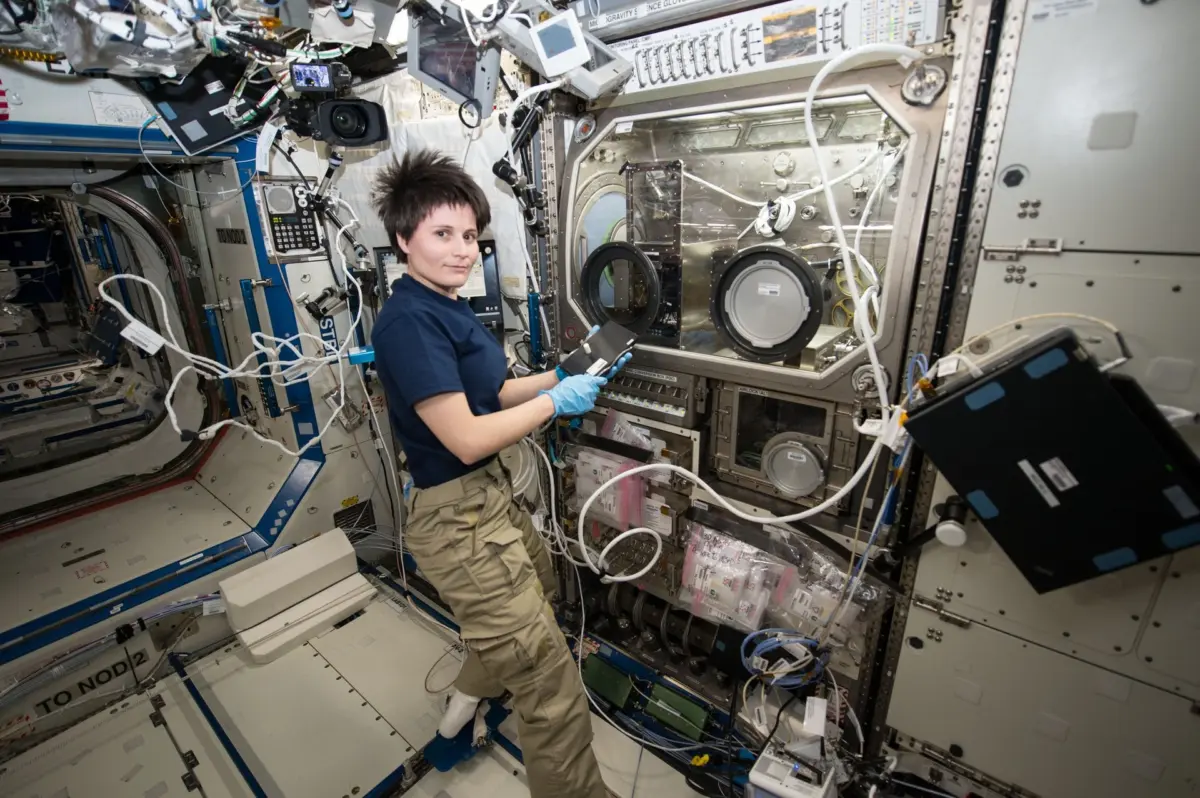
The quest to understand the fundamental building blocks of human life reached a historic milestone in April 2003 when the Human Genome Project was declared complete. After thirteen years of international collaboration, scientists successfully sequenced the three billion chemical base pairs that constitute human DNA, providing a blueprint for the genetic instructions that govern development, function, and reproduction. However, while the "alphabet" of life was decoded, the physical rules governing how this massive amount of information is organized within the microscopic confines of a cell remain a subject of intense scientific inquiry. A primary mystery in this field is the role of gravity—a constant force on Earth—in shaping the mechanical organization and functional dynamics of the human genome.
A pioneering study led by researchers at the Center for Soft Matter Research at New York University (NYU) has now provided critical insights into this relationship. By developing an innovative method to simulate microgravity on Earth, the research team sought to isolate the impact of gravity on human cells, specifically focusing on the mitochondrial and genomic levels. The study, published in the journal Science Advances, aims to mitigate the physiological risks of spaceflight by understanding how the absence of gravity alters the fundamental machinery of human life.
The Physicality of the Genome: A Mechanical Challenge
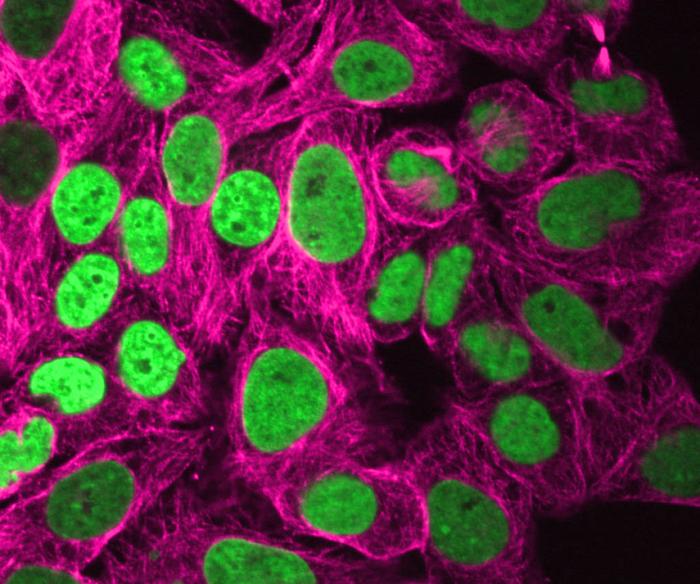
To appreciate the significance of the NYU study, one must consider the sheer physical complexity of the human genome. Every cell in the human body contains approximately two meters of DNA molecules. This extensive sequence must be meticulously folded and packed into a cell nucleus that is typically no larger than 10 micrometers in diameter—roughly one-tenth the width of a human hair. This packing is not random; the three-dimensional architecture of the genome is directly linked to its biological function. The way DNA is coiled and positioned determines which genes are accessible for "reading" and which are silenced.
When this delicate physical organization is disrupted, the consequences can be catastrophic, leading to developmental disabilities, specialized cellular malfunctions, or the onset of diseases such as cancer. On Earth, every biological process has evolved under the constant mechanical stress of 1g gravity. Scientists have long speculated whether gravity acts as a structural "scaffold" or a regulatory signal for the genome’s organization. As humanity moves closer to becoming a multi-planetary species, understanding whether our genetic architecture can remain stable in the weightlessness of space has become a priority for aerospace medicine and biophysics.
From the ISS to the Lab: The Context of Space Biology
The urgency of this research is underscored by decades of data collected from the International Space Station (ISS). Observations of astronauts returning from long-duration missions have revealed that prolonged exposure to microgravity causes significant physiological deterioration. Common issues include muscle atrophy, a reduction in bone density (often compared to accelerated osteoporosis), shifts in fluid distribution that cause vision impairment, and alterations to the cardiovascular and central nervous systems.
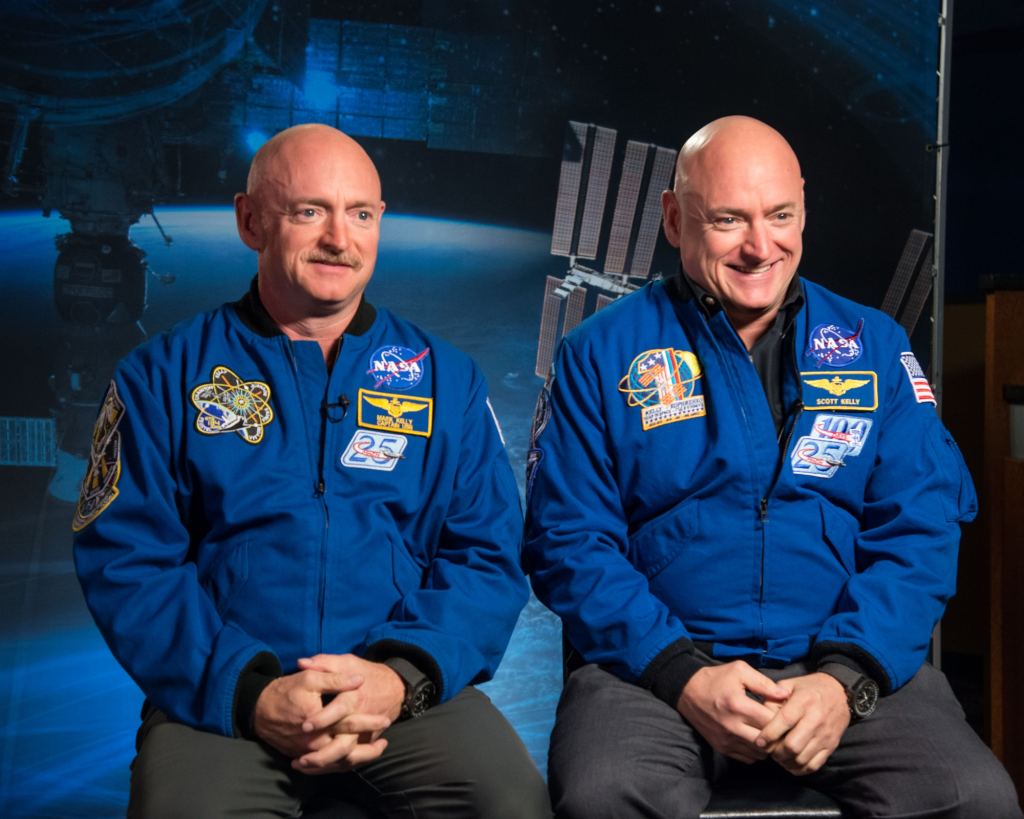
Perhaps the most famous investigation into these effects was NASA’s Twins Study, which compared astronaut Scott Kelly, who spent nearly a year on the ISS, with his identical twin brother, Mark Kelly, who remained on Earth as a control subject. The study found that Scott experienced changes in gene expression, telomere length, and DNA damage repair mechanisms. While most of these changes returned to baseline after his return to Earth, some persisted, raising questions about the long-term viability of human DNA during multi-year missions to Mars or beyond.
The NYU team, led by Alexandra Zidovska, an associate professor in NYU’s Department of Physics, recognized that studying these effects on the ISS is logistically complex and expensive. To accelerate research, they sought to bring the "weightlessness" of space into the laboratory setting.
Engineering Weightlessness: The Random Positioning Machine
The methodology employed by the NYU researchers centered on a sophisticated piece of equipment known as a Random Positioning Machine (RPM). This device is a laboratory-scale version of the gimbaled platforms used by space agencies to train astronauts for the disorientation of spaceflight.
The researchers placed dishes of living human cell cultures onto the RPM, which rotates the samples along two independent axes. By following a complex, three-dimensional path, the machine constantly changes the orientation of the cells relative to the Earth’s gravitational vector. Over time, the net gravitational force experienced by the cells averages out to near zero, effectively simulating a microgravity environment.
However, simulating microgravity on Earth presents a unique challenge: fluid dynamics. In a rotating environment, the liquid media surrounding the cells tends to move, creating "fluid flows" or shear stress. On the ISS, these flows are absent because there is no buoyancy-driven convection. To solve this, the NYU team developed custom 3D algorithms to synchronize the machine’s movement in a way that minimized fluid flow. They also created a secondary set of experiments to isolate the effects of these flows, allowing them to distinguish between changes caused by "lack of gravity" and changes caused by "moving liquid."
Chronology of the Experiment and Key Observations
The experiment followed a rigorous 24-hour protocol. After exposing the cell cultures to either simulated microgravity or controlled fluid flows, the team utilized high-resolution live-cell imaging and advanced 3D computational analysis to observe the results.
- The First 12 Hours: Initial observations focused on the general morphology of the cells. The researchers noted that the cells remained viable, but subtle shifts in the volume of the nucleus began to manifest.
- The 24-Hour Mark: At the conclusion of the exposure period, the scientists recorded streams of high-speed images to analyze the dynamics of the chromatin (the material of which chromosomes are composed).
- Comparative Analysis: The team then compared the microgravity-exposed cells against a control group (maintained at 1g) and a "flow-exposed" group.
The results provided a nuanced view of cellular resilience. The most notable finding was that simulated microgravity led to an increase in the volume of the cell nucleus. This suggests that on Earth, gravity acts as a compressive force that keeps the nucleus "compacted." When that force is removed, the nucleus expands. Conversely, the experiments involving fluid flows showed that mechanical shear caused the cells to elongate, but it did not result in the same nuclear expansion seen in microgravity.
Crucially, the study found that the structural integrity of the nuclear envelope—the double-membrane "skin" that protects the genome—remained unchanged. Furthermore, the 24-hour exposure to microgravity did not appear to cause direct DNA damage.
Robustness of the Human Genome
One of the most encouraging takeaways from the NYU study is the apparent robustness of the human genome’s physical organization. Despite the expansion of the nuclear volume, the "motions" and "positioning" of the genome inside the nucleus remained largely stable over the 24-hour period.
"Our data show that the genome, its organization, and dynamics are incredibly robust and seem unaffected by gravity, or lack thereof, after 24 hours," Alexandra Zidovska stated. She noted that the physical architecture of the genome appears designed to withstand significant mechanical stress. This suggests that the immediate transition to microgravity does not "unravel" the genetic structure, providing a window of stability for astronauts during the initial phases of space travel.
However, the study also provided a cautionary note regarding DNA damage. While microgravity itself did not break DNA strands during the experiment, the researchers found that the fluid flows—often present in previous, less-refined microgravity simulations—did cause significant DNA damage. This discovery suggests that some previous studies may have misattributed DNA damage to a lack of gravity, when it was actually a byproduct of the experimental setup.
Implications for Future Space Exploration
The NYU research arrives at a pivotal moment for the global space industry. With NASA’s Artemis program aiming to return humans to the Moon and private companies like SpaceX eyeing Mars, the long-term biological impact of living outside Earth’s gravity is a critical "Go/No-Go" factor.
While the NYU study showed genomic stability over 24 hours, the researchers emphasize that this is only the beginning. The cumulative effects of months or years in microgravity remain a significant concern. Over long durations, the subtle expansion of the cell nucleus could potentially lead to "mechanical fatigue" of the chromatin, eventually altering gene expression patterns or making the DNA more susceptible to damage from cosmic radiation.
The findings also have implications for "space medicine" on Earth. By understanding how gravity regulates the volume and shape of the nucleus, researchers may gain new insights into diseases where nuclear structure is compromised, such as progeria (accelerated aging) or certain types of muscular dystrophy.
Conclusion: The Tip of the Iceberg
The NYU Center for Soft Matter Research has provided a new framework for investigating the biophysics of the genome. By successfully separating the effects of gravity from the effects of fluid dynamics, they have refined the scientific community’s understanding of how human life responds to the environment of space.
The study concludes that while the human genome is a remarkably resilient structure, capable of maintaining its physical integrity in the face of gravitational shifts, it is not immune to the environment. The expansion of the nucleus in microgravity represents a fundamental shift in cellular "homeostasis." As Zidovska and her team move forward, their next steps will likely involve longer-duration simulations to determine the "breaking point" of genomic organization.
As humanity prepares to leave its terrestrial cradle, studies like this serve as a vital bridge between the abstract sequences of the Human Genome Project and the physical reality of surviving in the cosmos. The genome may be robust, but as we venture into the deep void, understanding the limits of that robustness will be the key to ensuring that the blueprint of life remains intact among the stars.