Evan Lee Salim
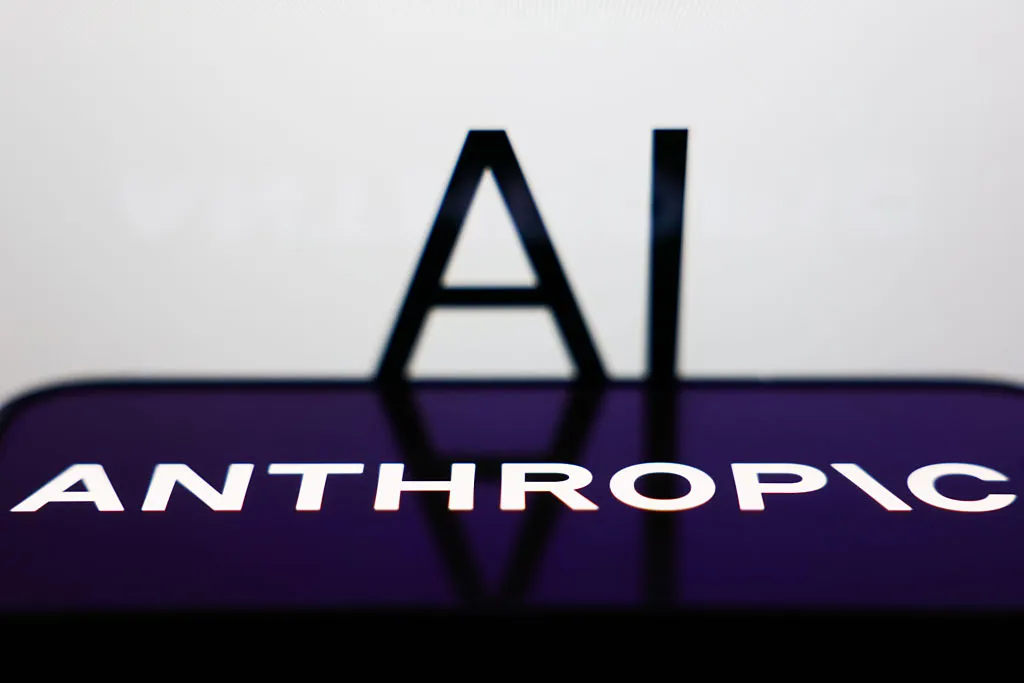
Anthropic, a leading artificial intelligence research and development company, has announced the creation of a significant "public benefit fund" designed to provide the organization with "increased flexibility and scale" in its efforts to support projects for societal good. This strategic initiative involves an initial commitment of 5% of the company’s shares to the fund, structured as a wholly-owned entity within Anthropic. Furthermore, the company has included a mechanism to incrementally increase this commitment, pledging an additional 2% of shares for every 50% increase in Anthropic’s overall valuation. While specific operational details and governance structures are slated for future disclosure, Anthropic has outlined broad conceptual uses for the fund, including "large donations to traditional nonprofits or direct distributions to specific populations."
Contextualizing Anthropic’s Strategic Move in the Evolving AI Landscape
This announcement from Anthropic arrives at a pivotal moment for the artificial intelligence industry, which is grappling with a burgeoning "crisis of trust," as described by Anthropic CEO Dario Amodei. The rapid advancements in generative AI and large language models (LLMs) have ignited both immense excitement and profound apprehension among the public, policymakers, and ethical watchdogs. Concerns range from the potential for job displacement and the propagation of misinformation to the exacerbation of existing societal biases and the existential risks associated with advanced AI systems.
Anthropic itself was founded in 2021 by former members of OpenAI, including Dario and Daniela Amodei, with a core mission centered on developing safe and beneficial AI. The company has distinguished itself through its emphasis on "Constitutional AI," a methodology designed to align AI systems with human values through a set of guiding principles rather than extensive human feedback. This philosophical underpinning has positioned Anthropic as a key player in the AI safety discourse, striving to balance innovation with responsibility. The establishment of this public benefit fund can be seen as a tangible manifestation of this commitment, seeking to proactively address the societal implications of AI development.
A Chronology of Growing Concerns and Proactive Measures
The journey towards this fund is embedded within a broader timeline of escalating AI development and corresponding ethical debates:
- Early 2010s: The resurgence of deep learning sparks renewed interest and investment in AI.
- Mid-2010s: Major tech companies begin heavily investing in AI research, leading to breakthroughs in areas like image recognition and natural language processing.
- Late 2010s: Concerns about AI ethics, bias, and job automation begin to gain prominence in academic and policy circles. Figures like Stephen Hawking and Elon Musk raise alarms about AI’s long-term risks.
- 2020-2022: The emergence of highly capable generative AI models (like OpenAI’s GPT series and Stability AI’s Stable Diffusion) brings AI into mainstream public consciousness, highlighting both its immense potential and immediate risks (e.g., deepfakes, misinformation).
- Late 2022 – Present: The widespread adoption of tools like ChatGPT leads to an explosion of public discourse. Governments globally begin exploring regulatory frameworks, and calls for responsible AI development intensify. Companies like Anthropic face increased scrutiny regarding their safety protocols and societal impact.
- Previously, Anthropic’s Initiatives: Anthropic had already demonstrated a commitment to understanding AI’s societal impact, notably through its allocation of $200 million to fund research into the economic futures shaped by AI, particularly its impact on the job market. This prior investment underscored the company’s recognition of potential disruptions.
- Current Announcement: The new public benefit fund signifies a significant escalation of this commitment. Anthropic explicitly stated, "Given the pace of AI progress, bolder approaches may be needed. The Fund will have the versatility to pursue them." This acknowledges that previous measures, while important, may not be sufficient to address the scale and speed of AI’s transformative effects.
Supporting Data: The Scale of AI Investment and Societal Impact
The decision by Anthropic to allocate a portion of its equity to a public benefit fund is particularly noteworthy given the explosive growth and valuation of the AI sector. According to PitchBook data, venture capital investment in AI companies reached unprecedented levels in recent years, with billions of dollars pouring into startups developing foundational models and AI applications. For instance, in 2023 alone, major AI firms collectively raised tens of billions of dollars, propelling their valuations into the multi-billion and even hundred-billion-dollar range. Anthropic itself has secured significant funding rounds from prominent investors, including Google and Amazon, underscoring its substantial market valuation.
A 5% share commitment from a company of Anthropic’s rapidly increasing value represents a potentially vast pool of resources. Should Anthropic continue its impressive growth trajectory, the fund’s capital could expand exponentially, driven by the additional 2% commitment for every 50% increase in company value. This structure positions the fund to scale directly with the economic success and societal impact of Anthropic’s core business.
Economically, AI is projected to add trillions of dollars to the global economy within the next decade. PwC estimates that AI could contribute up to $15.7 trillion to the global economy by 2030. However, these gains are not without potential downsides. A 2023 report by Goldman Sachs suggested that generative AI could automate 300 million full-time jobs globally, highlighting the urgent need for robust social safety nets, retraining programs, and new economic models to manage this transition. It is precisely these kinds of challenges that Anthropic’s public benefit fund aims to address.
Official Responses and Anticipated Reactions
While specific statements from external parties are yet to emerge following Anthropic’s announcement, the move is likely to elicit a range of responses from various stakeholders.
- From Anthropic: The company’s official stance emphasizes its commitment to responsible AI development and its proactive approach to mitigating potential harms while maximizing societal benefits. The fund is presented as a strategic tool to achieve these aims with "increased flexibility and scale." The promise of future disclosures regarding "structure and governance" indicates a recognition of the need for transparency and accountability.
- Industry Analysts: Many industry analysts are expected to view this as a sophisticated and forward-thinking move. It could be interpreted as a strategy to build long-term trust, attract top talent who are ethically motivated, and potentially preempt stricter regulatory interventions by demonstrating proactive self-governance. It also sets a potential precedent for other AI companies to follow, shaping norms around corporate responsibility in the sector.
- Policy Makers and Regulators: Government officials and regulatory bodies, increasingly focused on AI governance, may cautiously welcome this initiative. While not a substitute for robust external regulation, such a fund demonstrates a degree of corporate responsibility that could be seen as a positive sign. They will likely pay close attention to the fund’s governance, transparency, and actual impact to assess its effectiveness.
- Non-profits and AI Ethics Advocacy Groups: Organizations dedicated to AI ethics, social justice, and future-of-work initiatives will likely react with cautious optimism. They will undoubtedly appreciate the financial commitment but will also scrutinize the fund’s operational details, demanding transparency, independent oversight, and demonstrable impact. Questions will arise regarding who determines "public benefit," how projects are selected, and what metrics will be used to measure success. They may also inquire about the fund’s independence from Anthropic’s commercial interests.
- The Public: For a public increasingly wary of powerful, unregulated AI, this announcement could serve to partially restore confidence, signaling that at least one major AI developer is taking its societal obligations seriously. However, skepticism will persist until concrete projects and measurable outcomes are demonstrated.
Broader Impact and Implications for Corporate Responsibility in AI
Anthropic’s public benefit fund could have profound implications, not just for the company itself, but for the broader landscape of corporate responsibility within the AI sector and beyond.
- Setting a New Standard for AI Philanthropy: This model, embedded directly into the company’s equity structure and scaling with its valuation, goes beyond traditional corporate social responsibility (CSR) initiatives. It represents a deeper, more systemic commitment, potentially establishing a new benchmark for how AI companies approach their societal obligations. If successful, it could inspire other AI developers to adopt similar models, fostering a culture of proactive impact mitigation and benefit distribution.
- Addressing AI’s Negative Externalities: The fund’s potential to support "large donations to traditional nonprofits or direct distributions to specific populations" suggests a direct approach to addressing issues like job displacement, digital divides, and the equitable distribution of AI’s benefits. For instance, funds could be channeled into retraining programs for workers whose jobs are automated, initiatives to provide AI education in underserved communities, or research into ethical AI development and bias mitigation.
- Influence on Governance and Trust: By dedicating significant resources to societal good, Anthropic is taking a proactive step to build trust at a time when the AI industry faces intense scrutiny. The success of this fund will hinge on its governance structure – how independent it is, who makes decisions, and how transparent its operations are. A well-governed, impactful fund could serve as a powerful counter-narrative to the perception of AI companies as solely profit-driven entities, fostering a more collaborative relationship with society.
- Long-Term Vision and "Bold Approaches": The fund’s mandate for "increased flexibility and scale" to pursue "bolder approaches" hints at a willingness to invest in long-term, potentially high-risk, high-reward projects that might not fit traditional philanthropic molds. This could include funding speculative research into AI alignment, supporting the development of open-source safety tools, or even exploring innovative economic models that account for AI’s transformative impact. Such investments are crucial for navigating the complex and uncertain future of advanced AI.
- The "AI Dilemma" Revisited: Ultimately, Anthropic’s public benefit fund is a direct response to the fundamental "AI dilemma" – the immense potential for good coupled with significant risks. By structurally embedding a mechanism for societal investment, Anthropic is attempting to internalize some of the external costs and benefits of its powerful technology. The coming months, with the promised disclosures on the fund’s structure and governance, will be critical in determining whether this ambitious initiative can truly deliver on its promise to build a more beneficial and trustworthy future for artificial intelligence.