Chandra Wibowo

Today in the digital asset landscape, a critical security vulnerability in the widely used PHP programming language sent ripples of concern across global government websites and online services, leading to precautionary shutdowns. Simultaneously, significant regulatory strides were made in the United States concerning stablecoins, with Treasury Secretary Scott Bessent drawing historical parallels, while French authorities proposed holding crypto platforms accountable for certain decentralized finance (DeFi) incidents.
PHP Vulnerability Exposes Global Digital Infrastructure to Risk
The digital world faced a stark reminder of its interconnected vulnerabilities this week as a critical security flaw within the PHP programming language necessitated emergency patches and prompted widespread concern. Government agencies and numerous organizations worldwide took the proactive step of temporarily disabling their websites and online services as a precautionary measure. This widespread disruption stemmed from the discovery of two related critical vulnerabilities in PHP, a foundational technology powering an estimated 77% of all websites globally, according to W3Techs data from late 2023.
The flaws, identified as allowing unauthenticated attackers to execute arbitrary code on vulnerable servers without requiring any form of login, posed a significant threat to data integrity and operational continuity. This meant that malicious actors could potentially gain complete control over affected systems, leading to data breaches, service sabotage, and further exploitation. The urgency of the situation was underscored by the PHP Foundation’s subsequent admission of a "structural failure" that significantly delayed the deployment of a critical security fix.
A Slow Response to a Looming Threat: The PHP Foundation’s Internal Struggle
The PHP Foundation, responsible for maintaining and developing the open-source scripting language, acknowledged in a blog post that a confluence of factors led to the prolonged delay in addressing the discovered vulnerability. The issue was first flagged internally in early 2024. However, the foundation’s developers grappled with the complexity of devising a solution that would not disrupt the vast and intricate ecosystem of software applications built upon PHP. This challenge was compounded by the limited resources available to the core development team, who were already managing numerous responsibilities.
"Combined with the lack of a known path to remote code execution and the small team of core developers with the necessary deep knowledge of the engine occupied with many responsibilities, this decision process caused work on a fix to stall and restart repeatedly over months," stated the foundation in its post-patch release communication. This candid admission highlights the inherent difficulties in patching deeply embedded and widely used open-source software, where even minor changes can have cascading effects. The foundation further elaborated, "We won’t pretend otherwise: the delay was a structural failure, caused by both the security team’s decision process and its lack of resources."
The severity of the vulnerability escalated significantly on August 11, when the security firm Calif, alongside researchers from OpenAI, independently reported the same underlying issue. Calif’s demonstration of unconditional remote code execution solidified the threat, elevating it to a top-tier security priority. This independent verification and demonstration of exploitability served as a critical catalyst, forcing a more rapid response from the PHP Foundation. The emergency patches were subsequently released on Wednesday, prompting the precautionary shutdowns across various sectors. The timeline of events indicates a period of several months where a potentially catastrophic vulnerability remained unaddressed due to internal decision-making and resource constraints within the foundation.
U.S. Treasury Secretary Champions GENIUS Act Stablecoin Regulations with Historical Analogy
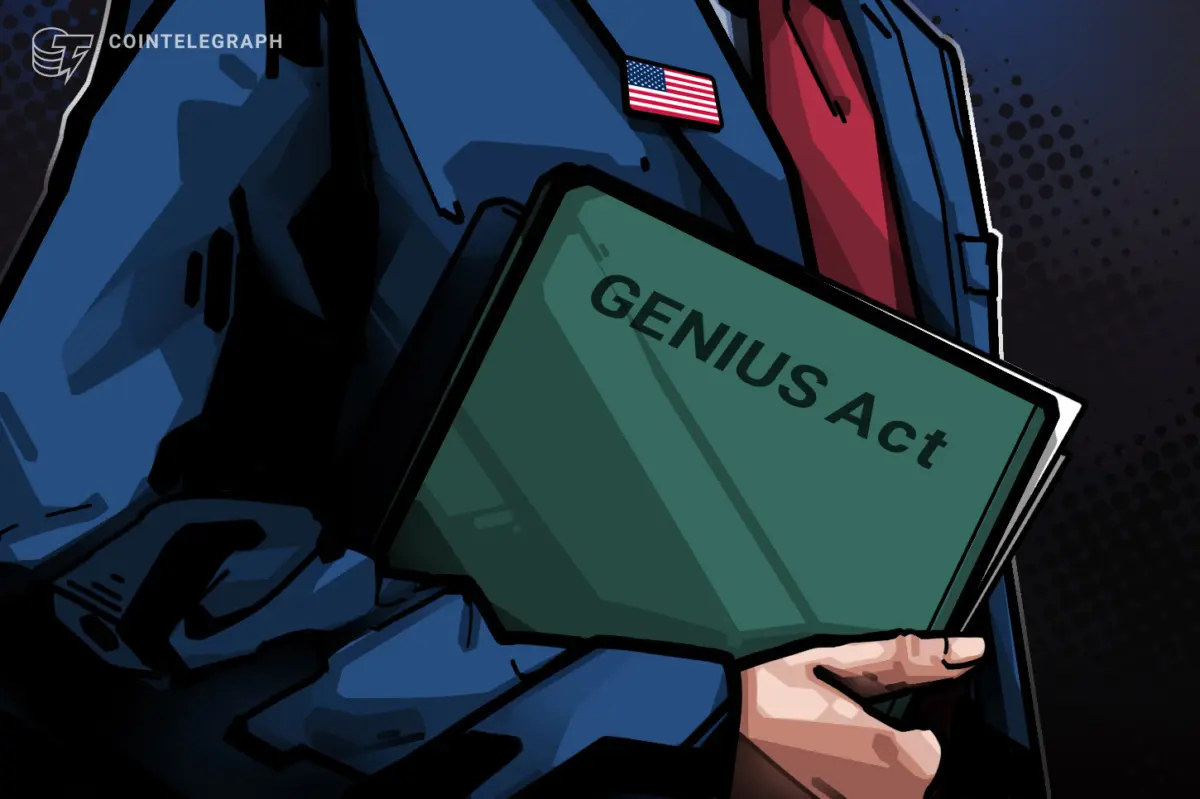
In parallel developments within the digital asset space, the United States is solidifying its regulatory framework for stablecoins. U.S. Treasury Secretary Scott Bessent has drawn a powerful historical parallel, comparing the recently finalized stablecoin regulations under the GENIUS Act to the foundational banking reforms enacted during President Abraham Lincoln’s era. This comparison underscores the perceived significance of the new rules, which the Office of the Comptroller of the Currency (OCC) is preparing to enforce starting in January 2027.
In a statement on X, Secretary Bessent articulated his perspective, describing the GENIUS Act as a "watershed moment in American finance." He meticulously drew parallels with the National Currency Act of 1863, a landmark piece of legislation that established a national banking system and a uniform currency, thereby centralizing and stabilizing the nation’s financial infrastructure. Bessent argued that the GENIUS Act is poised to fulfill a similar role in the contemporary digital age, aiming to modernize U.S. payment systems, foster private-sector innovation in digital assets, and crucially, reinforce American leadership in the rapidly evolving global digital economy.
The OCC’s finalized regulations, detailed in comprehensive documents, establish stringent requirements for stablecoin issuers. These mandates encompass the composition and management of stablecoin reserves, the processes for redemption, robust risk management frameworks, and comprehensive issuer oversight. The regulatory framework is designed to apply to a broad spectrum of entities, including eligible national banks, federally supervised nonbank issuers, and specific foreign stablecoin providers operating within U.S. jurisdiction.
The implementation date of January 18, 2027, signifies a crucial deadline for payment stablecoin issuers. From this date forward, these entities will generally be required to obtain appropriate regulatory authorization to operate legally within the United States. Non-compliance with these new regulations could result in significant penalties, signaling a clear intent by U.S. authorities to bring the stablecoin market under a defined and enforceable regulatory umbrella. This regulatory milestone arrives at a time when dollar-backed stablecoins are witnessing increasing adoption for payment and cross-border transfer purposes, even as the overall growth rate of their circulating supply has shown signs of moderation. The comprehensive nature of these regulations suggests a strategic move to ensure the stability and integrity of this burgeoning segment of the financial system.
France Proposes Increased Liability for Crypto Platforms Facilitating DeFi Access
Further demonstrating a global push for greater accountability in the digital asset sector, French authorities have put forth proposals to hold cryptocurrency platforms liable for certain decentralized finance (DeFi) incidents. This initiative, if adopted, would place new obligations on crypto-asset service providers (CASPs) that facilitate customer access to DeFi protocols, particularly if they fail to conduct adequate due diligence on these protocols or disregard known security risks.
These proposals were detailed in a joint response to a European Commission consultation regarding potential revisions to the European Union’s Markets in Crypto-Assets Regulation (MiCA). The collaborative submission came from key French financial regulatory bodies: the Treasury, the Financial Markets Authority (AMF), the central bank (Banque de France), and the Prudential Supervision and Resolution Authority (ACPR).
The core of the French proposal centers on the principle of active facilitation. "CASPs [crypto-asset service providers] should be liable for certain incidents affecting clients where they actively facilitated access," the authorities stated, indicating a move towards extending investor protections beyond the direct services offered by the CASP itself. Currently, MiCA excludes services provided in a fully decentralized manner without intermediaries. France’s proposal seeks to bridge this gap by imposing new duties on regulated platforms that act as conduits to DeFi protocols, thereby extending investor safeguards into this often less regulated domain.
The European Commission is currently reviewing MiCA to ascertain if updates are necessary in light of the rapid evolution of crypto markets. The consultation specifically sought feedback on activities that fall outside the law’s original scope, including the burgeoning field of DeFi. The responses gathered will inform a comprehensive report to EU lawmakers, which is scheduled for submission by June 30, 2027. This report may include recommendations for amendments to MiCA, potentially ushering in a new era of regulatory oversight for DeFi interactions mediated by centralized entities. The French proposal represents a significant step towards clarifying the responsibilities of intermediaries in the increasingly complex and interconnected world of decentralized finance.
Broader Implications and the Road Ahead
The confluence of these events—a critical global cybersecurity threat, significant regulatory advancements in stablecoin oversight, and proposed expansions of liability in DeFi—underscores the dynamic and maturing nature of the digital asset ecosystem. The PHP vulnerability, while a technical issue, highlights the perennial challenge of securing the foundational infrastructure upon which much of the digital economy relies. The proactive measures taken by governments and organizations, though disruptive, demonstrate a heightened awareness of cyber risks and a commitment to resilience.
The GENIUS Act’s stablecoin regulations, framed by Secretary Bessent as a modern parallel to historical banking reforms, signal a deliberate effort by the U.S. to establish clear rules of engagement for a vital component of the digital finance landscape. The January 2027 enforcement date allows ample time for compliance, suggesting a phased but firm approach to integration.
France’s proposal regarding DeFi liability, on the other hand, points to a growing recognition that regulatory frameworks must adapt to encompass the nuances of decentralized technologies. By seeking to hold platforms accountable for their role in connecting users to DeFi, French authorities are attempting to balance innovation with investor protection, a challenge that regulators worldwide are grappling with. The upcoming report to EU lawmakers could set a precedent for how other jurisdictions approach the regulation of DeFi intermediaries.
Collectively, these developments indicate a global trend towards greater scrutiny, enhanced security protocols, and more defined regulatory boundaries within the digital asset space. As technology continues to evolve at an unprecedented pace, the interplay between cybersecurity, financial regulation, and innovation will remain a central theme in shaping the future of digital finance. The coming years will likely see further refinement of these frameworks, driven by both technological advancements and the imperative to maintain stability and trust in an increasingly digitalized world.