Chandra Wibowo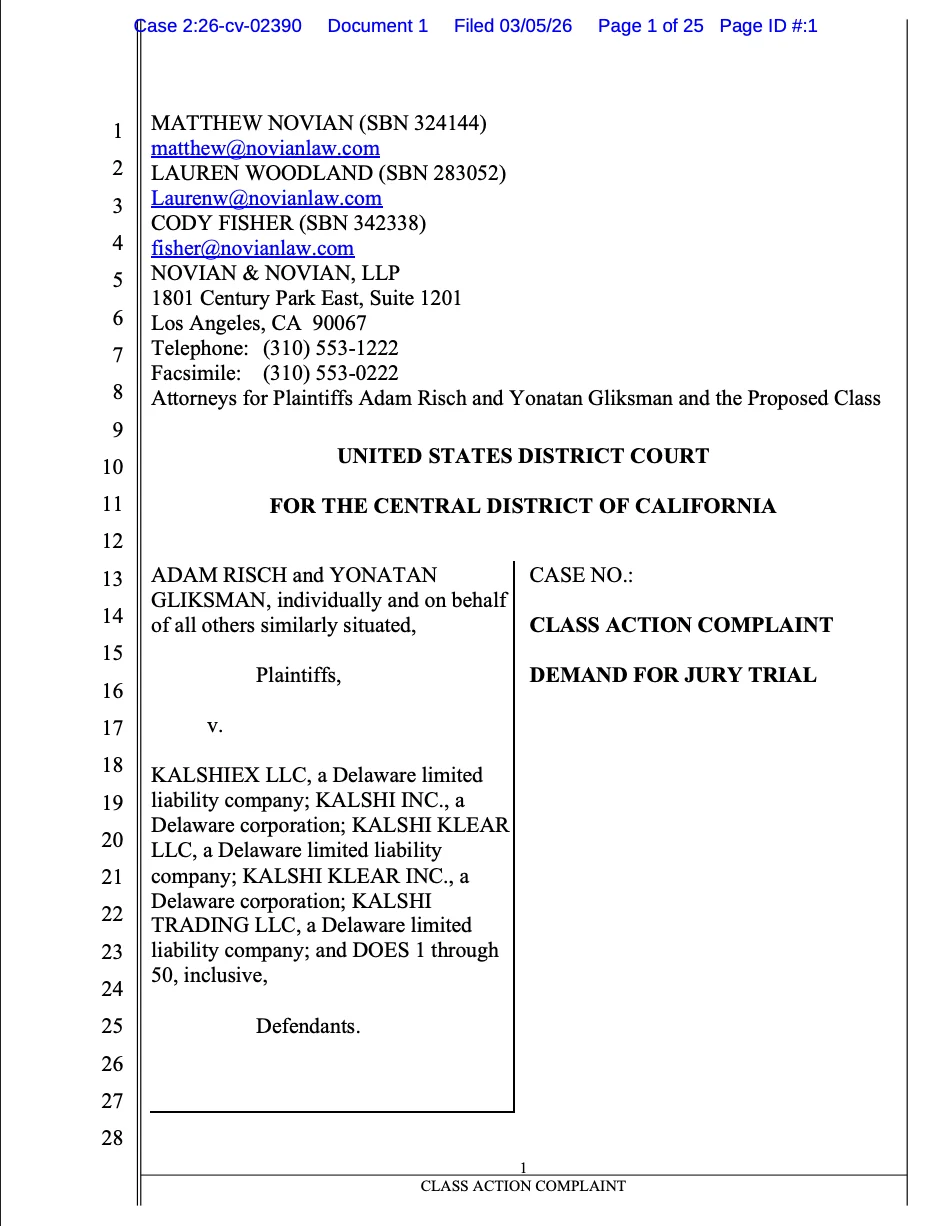
A class-action lawsuit has been filed against the prediction market platform Kalshi, accusing the company of deceptive business practices concerning a market designed to predict the ouster of former Iranian Supreme Leader Ali Khamenei. Plaintiffs allege that a "death carveout" clause within the market’s terms was not adequately disclosed, leading to user confusion and a failure to pay out winning trades following Khamenei’s confirmed death. This legal challenge comes as prediction markets experience a surge in popularity, highlighting the growing scrutiny on their operational transparency and regulatory frameworks.
The core of the dispute centers on the "Ali Khamenei out as Supreme Leader" market. Users who believed Khamenei’s departure from power would occur due to his death, a scenario considered by many as a highly probable outcome given his age and geopolitical circumstances, found their winning trades invalidated. Kalshi, citing its policy against profiting from death, voided these positions, refusing to settle the market with a "yes" outcome. This decision has ignited a legal battle, with plaintiffs arguing that the platform failed to provide clear and conspicuous notice of this critical condition.
Allegations of Deceptive Disclosure and Predatory Practices
The lawsuit, filed in the U.S. District Court, claims that Kalshi’s "death carveout" policy was not integrated into the user-facing rules summary for the market. This omission, plaintiffs argue, prevented a "reasonable consumer" from understanding the policy’s existence or its potential impact on their trades. The plaintiffs contend that this lack of transparency was not merely an oversight but a deliberate tactic, especially considering the volatile geopolitical context surrounding Iran at the time the market was active.
According to the lawsuit filing, the defendants themselves later acknowledged that their prior disclosures were "grammatically ambiguous." This admission, the plaintiffs assert, further substantiates their claims of misleading practices. The plaintiffs characterized the carveout policy as "predatory" and an "unfair" business practice, particularly in the context of this specific market.
The legal document elaborates on the perceived intent behind the market and the alleged deceptive nature of the carveout: "With an American naval armada amassed on Iran’s doorstep and military conflict not merely foreseeable but widely anticipated, consumers understood that the most likely, and in many cases the only realistic, mechanism by which an 85-year-old autocratic leader would ‘leave office’ was through his death. Defendants understood this as well." This statement suggests that plaintiffs believe Kalshi capitalized on a foreseeable outcome without fully disclosing the consequences for traders who bet on it.
Kalshi’s Stance and the "Death Carveout" Policy
Kalshi co-founder Tarek Mansour has publicly defended the platform’s actions, asserting that the company adheres to a strict policy against listing markets directly tied to death. "When there are markets where potential outcomes involve death, we design the rules to prevent people from profiting from death," Mansour stated on social media. He maintained that the policy was clearly outlined in the market rules, contradicting the plaintiffs’ claims of inadequate disclosure.
Mansour further emphasized that Kalshi did not profit from the situation and, in fact, reimbursed all losses out of pocket. "Not a single user walked away losing money from this market," he claimed, highlighting a subsequent announcement regarding reimbursements for affected users. These reimbursements were calculated based on the "last traded price" of the market before Khamenei’s death was confirmed.
However, this reimbursement policy itself faced significant pushback from users. The plaintiffs in the lawsuit have also raised concerns about the transparency of this reimbursement calculation, questioning the methodology and precise timestamps used to determine the "last traded price." The lack of clarity surrounding this process, they argue, further compounds the issue of Kalshi’s alleged lack of transparency.
Chronology of Events and Market Activity
The "Ali Khamenei out as Supreme Leader" market was established on Kalshi, allowing users to bet on whether the Iranian Supreme Leader would be removed from his position. The market’s resolution was contingent on various factors, including Khamenei’s potential resignation, impeachment, or death.
In the period leading up to May 2024, geopolitical tensions involving Iran and international actors, including the United States, were high. Reports and speculation about Khamenei’s health and potential succession also circulated, creating an environment where a market predicting his removal from power gained traction.
On May 19, 2024, news broke of the helicopter crash that resulted in the death of Iranian President Ebrahim Raisi and Foreign Minister Hossein Amirabdollahian. While the market was focused on Supreme Leader Ali Khamenei, the tragic incident involving Raisi, a potential successor to Khamenei, underscored the volatility and unpredictable nature of political leadership in Iran.

Subsequently, on May 20, 2024, reports emerged confirming the death of Ali Khamenei. This event triggered the resolution of the "Ali Khamenei out as Supreme Leader" market. However, instead of resolving to a "yes" outcome, Kalshi voided the market positions due to the presence of the "death carveout" clause.
This decision led to immediate dissatisfaction among traders who had bet on Khamenei’s death as a mechanism for his removal from power. The ensuing outcry prompted Kalshi to announce reimbursement measures, aiming to mitigate financial losses for affected users. However, the legal challenge suggests that these measures were insufficient or inadequately explained, leading to the class-action lawsuit.
The Broader Landscape of Prediction Markets
The incident involving Kalshi occurs against a backdrop of rapidly growing interest in prediction markets. These platforms, which allow users to trade contracts based on the outcome of future events, have seen their trading volumes surge to record highs in recent years. This surge is attributed to increased accessibility, the perceived utility of these markets for forecasting, and their growing integration with financial and political discourse.
Prediction markets function by enabling participants to buy and sell contracts that pay out a fixed amount if a specific event occurs. The price of these contracts is often seen as a reflection of the market’s collective probability assessment of that event. This mechanism has garnered attention from researchers, policymakers, and the public alike, with some viewing them as sophisticated forecasting tools.
However, the growth of prediction markets has also brought regulatory scrutiny and ethical considerations to the forefront. Concerns about insider trading, market manipulation, and the clarity of terms and conditions, as exemplified by the Kalshi case, are becoming increasingly prominent. Regulatory bodies are grappling with how to classify and oversee these platforms, which often operate in a gray area between financial exchanges and information services.
The Kalshi lawsuit raises critical questions about the responsibility of prediction market operators to clearly communicate their terms of service, especially when those terms involve complex or sensitive carveouts. The concept of a "reasonable consumer" is central to many consumer protection laws, and this case will likely test how that standard applies in the novel context of event-based prediction markets.

Analysis of Implications
The outcome of the Kalshi lawsuit could have significant implications for the prediction market industry. If the plaintiffs prevail, it could set a precedent for greater transparency requirements for platforms operating in this space. This might include mandating clearer, more prominent disclosures of all market conditions, particularly those involving potential financial liabilities for users.
Conversely, if Kalshi successfully defends its position, it could reinforce the principle that platform-specific rules, even if complex, are binding on users who agree to them. However, even in such a scenario, the reputational damage and the ongoing debate about ethical business practices could continue to influence user trust and market development.
The lawsuit also highlights the inherent challenges in designing and operating markets that involve sensitive or unpredictable events, such as the death of public figures or geopolitical upheavals. The tension between allowing users to trade on all conceivable outcomes and the platform’s ethical considerations or established policies creates a complex operational landscape.
Furthermore, the legal challenge underscores the need for robust dispute resolution mechanisms within prediction markets. The plaintiffs’ dissatisfaction with the reimbursement process suggests that even well-intentioned efforts to address user grievances can fall short if they lack transparency and clear communication.
As prediction markets continue to evolve and gain mainstream acceptance, legal challenges like the one against Kalshi serve as crucial moments for establishing industry standards and clarifying regulatory expectations. The case will likely be closely watched by market operators, traders, and regulators alike, as it navigates the intersection of financial innovation, consumer protection, and the complexities of predicting future events.
Kalshi, founded in 2019, aims to provide a regulated venue for trading on the outcome of real-world events, distinguishing itself from unregulated offshore platforms. The company has previously emphasized its commitment to compliance and transparency. However, this lawsuit presents a significant test of those principles in a high-stakes market. The broader implications for the future of prediction markets, particularly concerning how they handle sensitive event resolutions and disclose their operating rules, will hinge on the resolution of this legal dispute.