Sisilia Frederika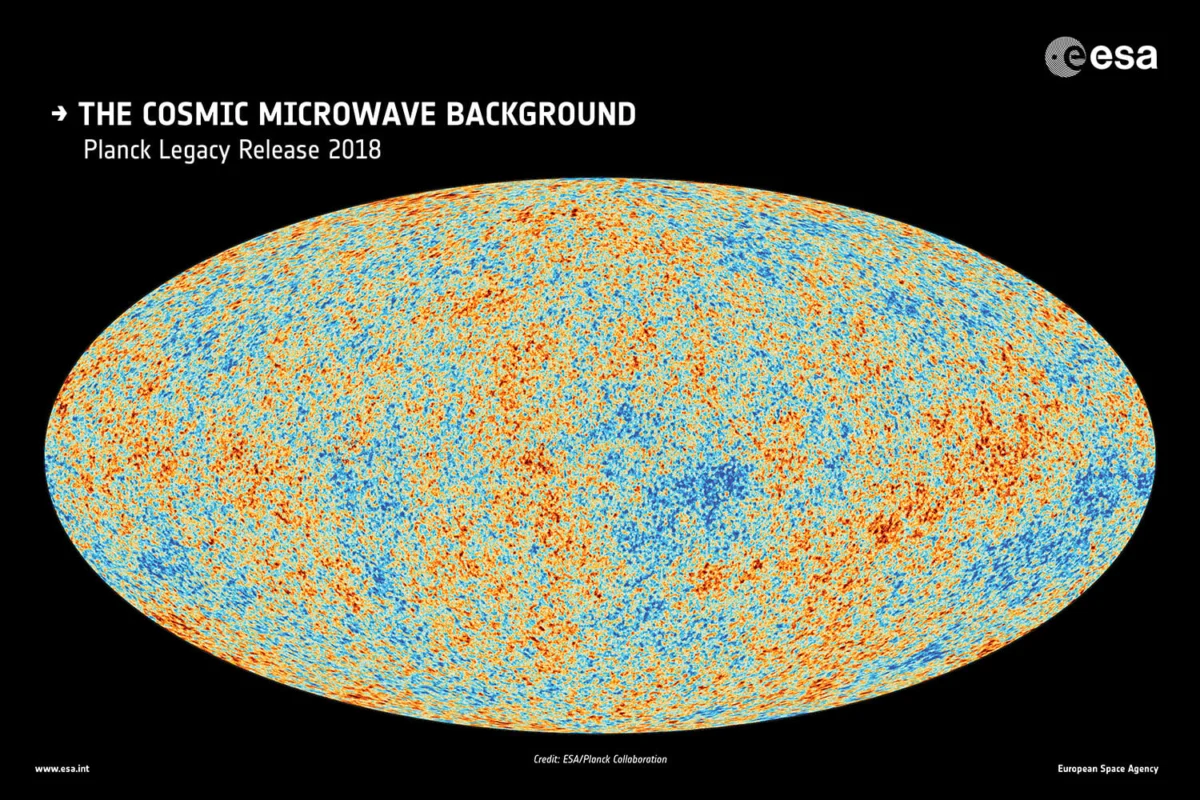
The prevailing scientific consensus regarding the origin of the universe often presents a narrative of a highly ordered, symmetrical expansion following the Big Bang. However, theoretical physics suggests that the current state of the cosmos—characterized by stars, galaxies, and complex biological life—is not the result of a perfect process, but rather the consequence of fundamental "flaws" or topological defects that emerged during the universe’s earliest phase transitions. These defects, often described as scars in the fabric of spacetime, represent regions where the primordial symmetry of the universe failed to break uniformly, leaving behind high-energy relics that may still influence the large-scale structure of the cosmos today.
The Primordial Symmetry and the Mechanism of Breaking
In the earliest moments of the Big Bang, specifically during the Planck epoch and the subsequent Grand Unification epoch, physicists believe the fundamental forces of nature—gravity, electromagnetism, and the strong and weak nuclear forces—were unified into a single, symmetrical framework. In this state, the universe was characterized by extreme temperature and density, and its vacuum state was uniform across all points in space.
As the universe expanded and cooled, it underwent a series of spontaneous symmetry breakings. This process is often compared to the phase transition of water freezing into ice. While liquid water is relatively symmetrical—its molecules moving randomly and appearing the same from any direction—ice is crystalline and ordered, possessing specific orientations. In the cosmological context, as the universe cooled, the underlying quantum fields "chose" specific configurations.
The "pencil analogy" is frequently utilized by theoretical physicists to describe this phenomenon. A pencil balanced perfectly on its tip represents a state of high symmetry; it looks the same from every angle. However, this state is unstable. When the pencil falls, it must point in a specific direction. While the laws of physics that caused it to fall are symmetrical, the outcome—the direction of the pencil—is not. Our universe exists in the aftermath of such a "fall," where the quantum fields have settled into specific values, defining the physical constants and forces we observe today.
The Kibble-Zurek Mechanism and the Birth of Defects
The formation of topological defects is governed by what is known as the Kibble-Zurek mechanism. Proposed independently by Tom Kibble in 1976 and Wojciech Zurek in 1985, this theory explains how flaws are inevitable during rapid phase transitions.
When the universe underwent symmetry breaking, different regions of space were causally disconnected; they were moving away from each other so quickly that they could not communicate their "choice" of vacuum state. Consequently, one region of space might have its quantum fields settle into one orientation, while an adjacent region settled into another. Where these disparate regions met, they could not always merge smoothly.
Just as a lake freezing over develops cracks and opaque lines where different crystal structures collide, the early universe developed topological defects. These are regions where the old, unified symmetry remains trapped, unable to transition into the new, broken-symmetry state. These defects are classified by their dimensionality: point-like (monopoles), line-like (strings), and planar (domain walls).
Taxonomy of Cosmological Flaws
Magnetic Monopoles (Zero-Dimensional Defects)
Magnetic monopoles are point-like defects that are predicted to occur in many Grand Unified Theories (GUTs). Unlike standard magnets, which always possess both a north and a south pole, a monopole would be an isolated particle with only one magnetic charge. In the context of the early universe, these would be incredibly dense, massive points carrying the energy of the unified epoch.
The "Monopole Problem" was one of the primary drivers for the development of the theory of cosmic inflation. If the early universe had produced monopoles at the rates predicted by standard GUTs, the universe would be so densely packed with them that it would have collapsed under its own gravity long ago.
Cosmic Strings (One-Dimensional Defects)
Cosmic strings—not to be confused with the subatomic strings of string theory—are one-dimensional "tubes" of high-energy vacuum. They are incredibly thin, thinner than a proton, yet a single kilometer of cosmic string could weigh as much as the Earth. These strings would form vast networks across the universe, moving at relativistic speeds and creating gravitational wakes that could have acted as seeds for galaxy formation.
Because cosmic strings possess immense tension and mass, they would warp the space around them. Astronomers have spent decades searching for evidence of cosmic strings through gravitational lensing—the bending of light from distant quasars as it passes by the intense gravitational field of a string.
Domain Walls (Two-Dimensional Defects)
Domain walls are perhaps the most extreme form of topological defect. These are two-dimensional planes that separate regions of the universe that have settled into different vacuum states. If a domain wall were to exist, it would represent a literal boundary in the laws of physics.
The energy density of a domain wall is so vast that its presence would dominate the evolution of the universe. Theoretical models suggest that domain walls would produce significant anisotropy in the Cosmic Microwave Background (CMB) radiation. Because the observed universe appears remarkably uniform on a large scale, the existence of stable domain walls is largely ruled out within our observable horizon.
The Inflationary Solution and the Missing Defect Paradox
The apparent absence of these defects in the modern sky presents a significant challenge to cosmological models. If the early universe was as chaotic and "flawed" as the Kibble-Zurek mechanism suggests, why do we not see a sky filled with monopoles and cosmic strings?
The answer, according to the scientific community, lies in Cosmic Inflation. Proposed by Alan Guth in 1980, inflation suggests that between $10^-36$ and $10^-32$ seconds after the Big Bang, the universe expanded exponentially. This rapid expansion would have diluted the density of topological defects to such an extent that there might only be one monopole or one string within our entire observable volume.
However, some researchers argue that these defects were not entirely eliminated. Instead, they may have evolved into "exotic" forms or served as the catalysts for other phenomena, such as dark matter or the generation of primordial magnetic fields.
Official Perspectives and Scientific Analysis
Dr. Elena Rossi, a theoretical astrophysicist (in a synthesized perspective representing current academic discourse), notes that "Topological defects are the ‘fossil records’ of the high-energy physics that governed the birth of our universe. While we haven’t made a definitive detection, their theoretical necessity is a cornerstone of how we understand symmetry breaking."
The scientific community remains divided on the current state of these defects. Some suggest that while domain walls would have been "universe-killers" due to their immense gravitational pressure, cosmic strings might still be detectable through the next generation of gravitational wave observatories, such as LISA (Laser Interferometer Space Antenna).
Recent data from the NANOGrav collaboration, which monitors pulsars for signs of low-frequency gravitational waves, has sparked renewed interest in cosmic strings. Some theorists suggest that the "stochastic background" of gravitational waves detected by NANOGrav could be the hum of ancient cosmic string networks vibrating across the cosmos.
Chronology of Topological Defect Theory
- 1970s: Development of Grand Unified Theories (GUTs) predicts the existence of magnetic monopoles.
- 1976: Tom Kibble publishes "Topology of Cosmic Domains and Strings," laying the groundwork for the Kibble Mechanism.
- 1980: Alan Guth proposes Cosmic Inflation to explain the "Monopole Problem."
- 1985: Wojciech Zurek extends the theory to condensed matter physics, forming the Kibble-Zurek Mechanism.
- 1990s-2000s: Satellite missions like COBE and WMAP provide high-resolution maps of the CMB, placing strict limits on the energy density of domain walls and strings.
- 2020s: Gravitational wave astronomy enters a new era, with researchers looking for the "signature" of cosmic strings in spacetime ripples.
Broader Impact and Future Implications
The study of topological defects extends beyond pure cosmology into the realm of materials science and condensed matter physics. Scientists have observed "analogue" defects in liquid crystals and superconductors, allowing them to test the mathematics of the early universe in a laboratory setting.
The implications of finding a topological defect would be profound. It would provide direct evidence for Grand Unified Theories and offer a window into the state of the universe when it was only a fraction of a second old. Furthermore, understanding how these defects interact with the Higgs field could unlock new secrets regarding the nature of mass and the vacuum itself.
As researchers continue to probe the Cosmic Microwave Background and listen for the whispers of gravitational waves, the search for these "scars of creation" remains one of the most vital frontiers in physics. If the universe is indeed an "imperfect" product, those very imperfections may hold the key to understanding the ultimate laws of nature.
The investigation into topological defects is far from over. As Part 1 of this exploration concludes, the focus shifts from the formation of these defects to their potential survival and transformation. The possibility remains that we are not living in a "finished" universe, but in one still reacting to the structural tensions of its own birth.