Sisilia Frederika
In a landmark achievement for planetary defense and celestial mechanics, NASA has confirmed that the Double Asteroid Redirection Test (DART) mission successfully altered the orbital path of an entire binary asteroid system as it travels around the Sun. This revelation, stemming from a comprehensive study published in the journal Science Advances, marks the first time in human history that the motion of a celestial body has been intentionally changed on a heliocentric scale. While the initial goal of the DART mission was to test whether a kinetic impactor could change the orbit of a small moonlet around its parent asteroid, the broader implications of the impact have now been shown to extend to the entire system’s journey through the solar system.
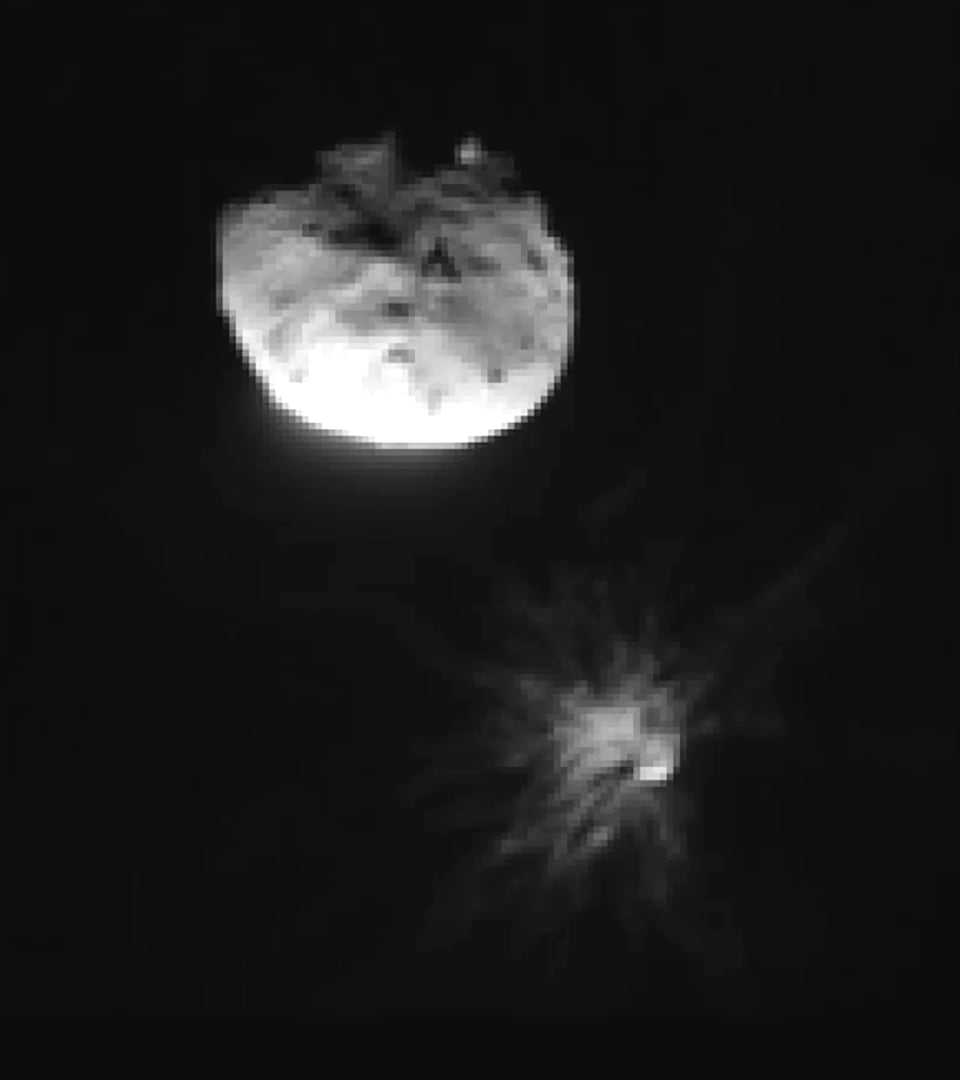
The DART spacecraft, a box-shaped probe roughly the size of a vending machine, intentionally collided with the asteroid moonlet Dimorphos on September 26, 2022. Dimorphos orbits a larger primary asteroid named Didymos. At the time of impact, the pair was approximately 7 million miles (11 million kilometers) from Earth. Although the mission’s primary objective was to demonstrate that a "kinetic impactor"—essentially a high-speed kamikaze spacecraft—could deflect a potentially hazardous asteroid, the precision of the follow-up data has revealed a secondary, even more profound effect: the 770-day orbital period of the Didymos-Dimorphos system around the Sun has been shortened by 0.15 seconds.
The Mechanics of Kinetic Impact and Momentum Enhancement
The success of the DART mission relied on the transfer of kinetic energy from the spacecraft to the asteroid. However, the physics of the collision proved to be more complex and effective than a simple "billiard ball" model would suggest. When DART struck Dimorphos at a staggering speed of approximately 14,000 miles per hour (22,500 kilometers per hour), it did not just come to a halt; it triggered a massive expulsion of rocky debris and dust, known as ejecta.
This cloud of debris carried its own momentum away from the asteroid in the direction of the impact. According to the conservation of momentum, this spray of rocks acted like a temporary rocket engine, pushing the asteroid even further in the opposite direction. Scientists refer to this phenomenon as the "momentum enhancement factor," or "beta." The recent study indicates that the beta factor for the DART impact was approximately 2.2. This means that the recoil from the escaping debris actually doubled the force of the impact itself.
This massive transfer of energy was responsible for the initial 33-minute reduction in Dimorphos’s orbital period around Didymos—a result that far exceeded NASA’s minimum success criteria of 73 seconds. Because Dimorphos and Didymos are gravitationally bound in a binary system, they orbit a shared center of mass, or barycenter. Consequently, the significant change in the moonlet’s velocity inevitably tugged on the larger primary asteroid, leading to the measurable shift in their collective path around the Sun.
Precision Measurements through Stellar Occultations
Proving that a man-made object had altered a heliocentric orbit required a level of observational precision rarely seen in ground-based astronomy. To calculate a change as minute as 0.15 seconds over a two-year orbit, an international team of researchers, led by Rahil Makadia of the University of Illinois Urbana-Champaign and Steve Chesley of NASA’s Jet Propulsion Laboratory (JPL), turned to a technique known as stellar occultation.
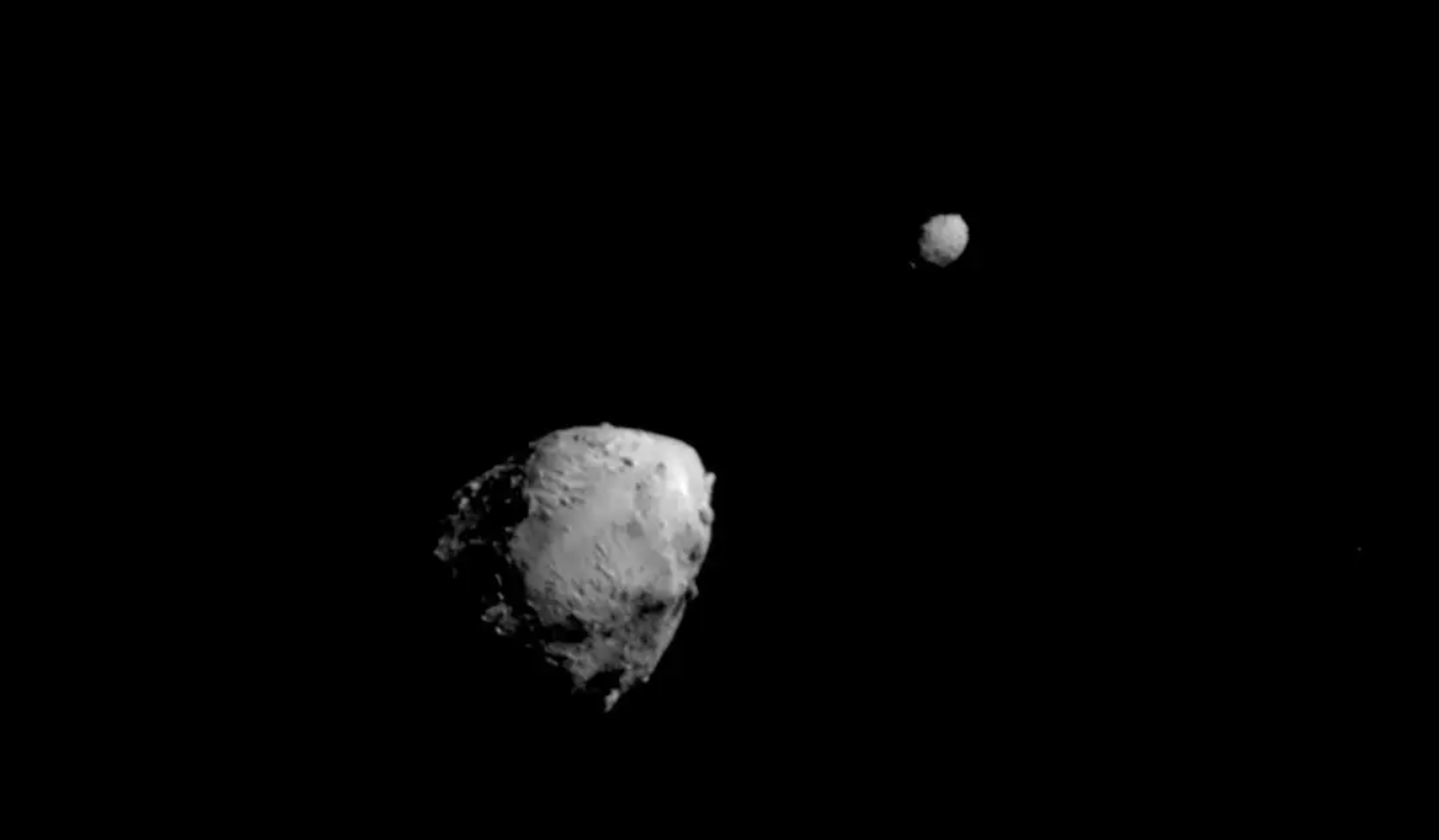
A stellar occultation occurs when an asteroid passes directly in front of a distant star, momentarily blocking its light. By timing exactly when the star "blinks" out and reappears from multiple locations on Earth, astronomers can determine the asteroid’s position, shape, and velocity with extreme accuracy. However, these events are fleeting and require observers to be positioned within a narrow geographical path, often only a few kilometers wide.
Between October 2022 and March 2025, a global network of professional and volunteer astronomers successfully recorded 22 such occultations. These observations were combined with years of historical radar data and light-curve measurements to build a definitive model of the system’s post-impact trajectory. The researchers determined that the binary system’s orbital speed was altered by approximately 11.7 microns per second. While this change—roughly 1.7 inches per hour—seems negligible, its cumulative effect over decades or centuries is substantial enough to move an asteroid out of a collision course with Earth.
Insights into Asteroid Composition and Evolution
The data gathered from the DART impact has also provided scientists with a rare window into the internal structure and origin of the Didymos system. By analyzing how the system’s motion changed, researchers were able to calculate the relative densities of both bodies. The findings suggest that Dimorphos is less dense than the larger Didymos, reinforcing the "rubble pile" theory of asteroid formation.
Under this theory, Dimorphos was likely formed from material shed by Didymos in the distant past. As Didymos spun rapidly, centrifugal forces may have caused loose rocks and dust to lift off its surface and eventually coalesce into a secondary moonlet. This "rubble pile" nature—essentially a loose collection of boulders held together by weak gravity—explains why the DART impact produced such a significant amount of ejecta and why the momentum enhancement was so high. A solid, monolithic asteroid would likely have absorbed the impact differently, potentially resulting in a smaller orbital shift.
A New Era for Planetary Defense
The confirmation that humanity can alter the orbital path of a celestial body around the Sun represents a paradigm shift in how we approach the threat of Near-Earth Objects (NEOs). Thomas Statler, the lead scientist for Solar System small bodies at NASA Headquarters, emphasized that the precision of these measurements validates the kinetic impactor as a viable tool for defending the planet.
"This is a tiny change to the orbit, but given enough time, even a tiny change can grow to a significant deflection," Statler noted in a statement. The mission demonstrates that even a binary system, which complicates the physics of an impact, can be successfully redirected by targeting the smaller of the two bodies.
However, the DART mission is only one component of a broader planetary defense strategy. Experts agree that for a kinetic impactor to be effective, a potential threat must be detected years or even decades in advance. To address this, NASA is currently developing the Near-Earth Object (NEO) Surveyor, a space-based infrared telescope designed specifically to discover and characterize hazardous asteroids and comets that stray into Earth’s neighborhood. Scheduled for launch in the late 2020s, the NEO Surveyor will significantly increase the warning time available for future mitigation missions.
Global Collaboration and Future Exploration
The DART mission’s success was underpinned by international cooperation, involving the European Space Agency (ESA), the Italian Space Agency (ASI), and dozens of research institutions worldwide. The ASI’s LICIACube, a CubeSat that deployed from DART prior to impact, provided the first close-up images of the resulting debris cloud, which were instrumental in calculating the initial momentum transfer.
The next chapter of this investigation will begin in 2026, when the ESA’s Hera mission arrives at the Didymos system. Hera will perform a detailed "crime scene investigation" of the impact site, measuring the size and shape of the crater left by DART and determining the precise mass of Dimorphos. This data will allow scientists to refine their models further, ensuring that if a real threat ever emerges, the global scientific community will know exactly how much force is required to nudge a specific type of asteroid out of harm’s way.
Implications for Long-Term Space Security
While neither Didymos nor Dimorphos poses any threat to Earth, the DART mission has provided a "proof of concept" that is now backed by rigorous physical data. The ability to calculate a 0.15-second change in a 770-day orbit proves that our monitoring capabilities are becoming as sophisticated as our deflection capabilities.
The finding that a human-made object can influence a heliocentric orbit also touches upon the long-term governance of space. As private and national entities look toward asteroid mining and deep-space exploration, the DART results serve as a reminder that every action in space has a reaction. The intentional alteration of a celestial path, however small, is a milestone that signifies humanity’s transition from passive observers of the cosmos to active participants in its mechanical evolution.
As the international team continues to monitor the Didymos system, the legacy of DART remains clear: the Earth is no longer a defenseless target in a cosmic shooting gallery. With the successful validation of the kinetic impactor and the precision tracking of its effects, the groundwork has been laid for a robust, science-based shield that could one day protect civilization from the kind of catastrophic impacts that have shaped Earth’s biological and geological history.