Vera Intan Clara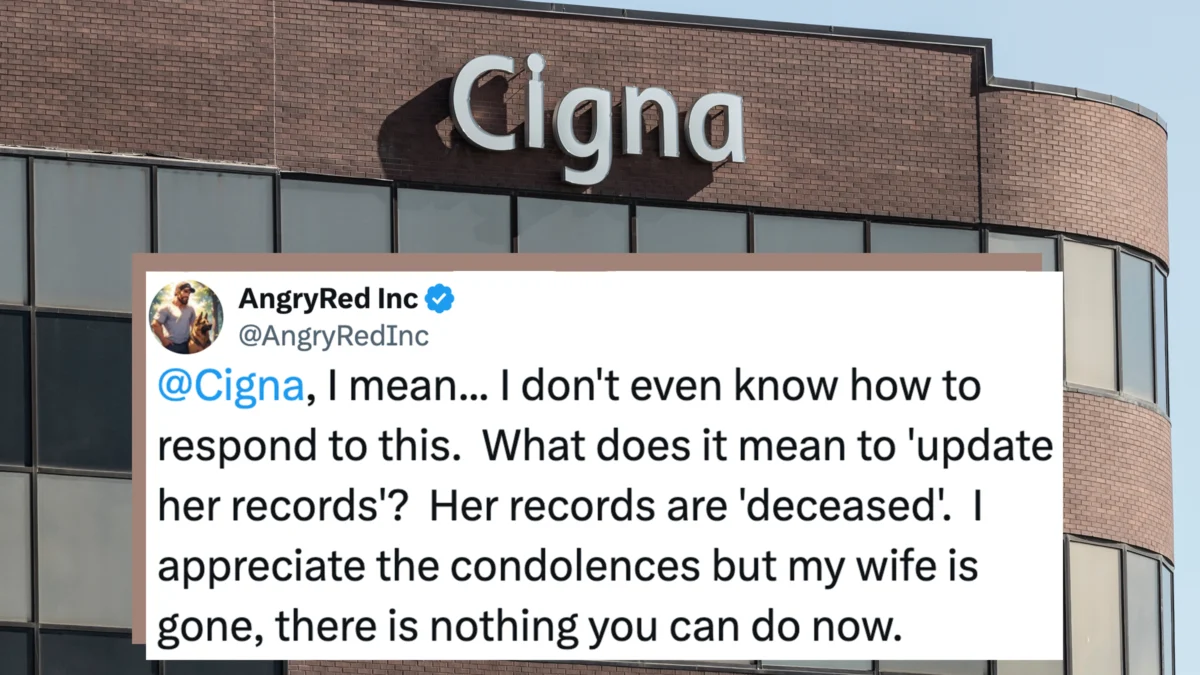
A grieving widower’s harrowing account on the social media platform X, detailing how Cigna Healthcare allegedly denied coverage for crucial diagnostic tests for his late wife’s cancer, has ignited a firestorm of public outrage and cast a harsh spotlight on the complexities and systemic failures within the American healthcare insurance landscape. The man, posting under the handle @AngryRedInc, shared a photo of a denial letter from Cigna, alongside a poignant narrative of his wife’s misdiagnoses, rapid decline, and eventual death, fueling a broader conversation about medical necessity, insurance company practices, and the profound human cost of delayed care.
A Tragic Chronology of Misdiagnosis and Loss
The heartbreaking saga began in January 2025 when the widower’s wife, a 53-year-old woman who had been married for 23 years, started experiencing concerning breathing issues. Seeking answers, the couple visited urgent care centers, emergency rooms, and her general practitioner multiple times. Each visit, however, brought only misdiagnoses, ranging from "bronchitis" to "heartburn," while the underlying, far more sinister condition remained undetected. This period of diagnostic wandering is tragically common in healthcare, where non-specific symptoms can mask severe illnesses, leading to precious time lost.
It wasn’t until the widower "pleaded" with a doctor in an emergency room that a critical breakthrough occurred. This doctor, he recounted, agreed to order an MRI. The results were devastating and immediate. The doctor returned to the room, visibly shaken, delivering a "direct quote" that would forever haunt the couple: "You have Stage IV cancer. It’s everywhere. I couldn’t give you a worse diagnosis and I’m sorry." This abrupt and grim diagnosis, confirming widespread metastatic disease, highlighted the severe progression that had occurred during the preceding months of misdirection.
The diagnosis, delivered in August 2025, left little room for hope. Despite the belated discovery, his wife succumbed to the aggressive cancer just four months later. Her untimely death at 53 underscores the critical importance of early and accurate diagnosis, particularly for cancers that can spread rapidly. The emotional toll on the widower, witnessing his wife’s suffering and the agonizing brevity of her remaining life after diagnosis, forms the core of his viral testimony.
The Heart of the Controversy: Denied Coverage for Crucial Tests
Central to @AngryRedInc’s grievance is Cigna’s alleged denial of coverage for a specific "lab test" designed to identify "gene errors in cancer cells" – often referred to as tumor marker tests or molecular profiling. These advanced diagnostic tools are increasingly vital in modern oncology, providing crucial information about a tumor’s genetic makeup, which can guide personalized treatment strategies, predict response to therapies, and even indicate the aggressiveness of the disease. The denial letter, which quickly went viral, explicitly stated Cigna’s rationale: "The service(s) requested is not medically necessary."
The widower also shared images of his late wife’s Cigna claim history, revealing multiple denials for coverage related to her "brain tumor." He expressed profound bewilderment and anguish over these rejections, stating, "There are so many more, I don’t even know what to think about this. She eventually got radiation, but I wonder how these denials factored into the treatment." This question resonates deeply with patients and healthcare providers alike: how do insurance denials, even if eventually overturned or partially covered, impact the timeliness and efficacy of life-saving treatment? Delays in such critical care can lead to disease progression, reduce treatment options, and significantly worsen prognoses, especially for rapidly advancing cancers.
The Broader Landscape of Insurance Denials and "Medical Necessity"
The term "medically necessary" is a cornerstone of health insurance policies, yet its interpretation often becomes a contentious battleground between insurers and patients. Insurance companies define "medical necessity" based on criteria that may not always align with the evolving standards of care, individual patient circumstances, or the urgency of a diagnosis. This discretion allows insurers to deny coverage for treatments or tests they deem experimental, unproven, or simply too costly, even if a physician believes them to be essential.
The case of @AngryRedInc’s wife is not an isolated incident but rather a visible manifestation of a systemic issue. According to a report highlighted by marketplace.org, "Nearly 1 in 5 in-network claims are denied, with many insurers using AI to automate and increase denial rates." This statistic points to a disturbing trend: the increasing reliance on artificial intelligence and algorithms to process claims, potentially leading to a higher volume of automated denials without thorough human review of complex medical cases. While AI can streamline administrative tasks, its application in medical necessity determinations raises ethical concerns, especially when patient lives are at stake. Critics argue that these automated systems may lack the nuanced understanding required to evaluate individual patient histories, comorbidities, and the specific context of a physician’s recommendation.
The denials for "gene errors in cancer cells" tests are particularly troubling in the context of modern cancer care. Molecular profiling has become standard practice for many cancer types, enabling oncologists to identify specific mutations that can be targeted by precision medicines. Denying such tests can delay or prevent patients from accessing therapies that could offer significant benefits, including improved survival rates and quality of life. The "not medically necessary" stamp, in such cases, can feel arbitrary and devastating.
Cigna’s Public Response and the Widower’s Indignation
As @AngryRedInc’s posts gained traction, Cigna responded publicly on X, offering to discuss the matter offline and stating, "We would like to connect with you to discuss your concerns and offer support." The initial response from a Cigna representative named Martin prompted a visceral and heartbreaking reply from the widower: "Martin, how do [you propose] ‘correcting this for me’? Can you bring my wife back?" This powerful retort encapsulated the profound grief and feeling of irreparable harm, highlighting the chasm between corporate protocols and human suffering.
Cigna’s subsequent attempts to engage were perceived as increasingly tone-deaf. In one instance, the company offered to "update her records with care." The widower’s response laid bare the absurdity of such a suggestion in the face of his loss: "I mean… I don’t even know how to respond to this. What does it mean to ‘update her records’? Her records are ‘deceased’. I appreciate the condolences but my wife is gone, there is nothing you can do now." This exchange perfectly illustrates the disconnect that often arises when large corporations attempt to address deeply personal tragedies through standardized public relations protocols. The widower’s call for a formal apology and "a specific plan on how Cigna will prevent this from happening in the future" resonated with many, shifting the focus from individual grievance to systemic accountability.
Public Outcry and the Power of Social Media
The widower’s story rapidly went viral, drawing an outpouring of sympathy and anger from the online community. Thousands of users shared their condolences, expressed solidarity, and recounted their own frustrating experiences with insurance companies. One commenter articulated the widespread emotional impact: "Your brief account of your wife has left me with a lump in my throat and an ache in my heart for your loss. I’m so sorry. She sounds like a great, great woman, and clearly the love of your life. You made me love her as well." The widower’s simple yet profound reply, "Thank you for the kind words Tamara. She was indeed a wonderful woman who loved her family and friends and was a light in the world," further humanized the tragedy, transforming a personal ordeal into a collective grievance against perceived injustices in the healthcare system.
Social media platforms like X have become powerful tools for individuals to challenge corporate practices and demand accountability. What might once have been a private grievance between a patient and an insurer now has the potential to reach millions, forcing companies to address public sentiment in real-time. This amplification can pressure corporations to review their policies, offer explanations, or even implement changes, albeit often after irreversible harm has been done.
Implications for Healthcare and Patient Advocacy
The tragic case of @AngryRedInc’s wife raises critical questions about the balance between cost containment and patient care in the U.S. healthcare system. It underscores the vital role of early diagnosis in cancer outcomes. Medical experts consistently emphasize that for many cancers, earlier detection significantly improves prognosis, expands treatment options, and can lead to higher survival rates. Delays, particularly for aggressive cancers like the Stage IV diagnosis his wife received, can drastically reduce these chances.
Patient advocacy groups routinely highlight the labyrinthine appeals processes that patients and their families must navigate when claims are denied. These processes are often complex, time-consuming, and emotionally draining, especially for individuals already grappling with serious illness or grief. The burden often falls on patients or their exhausted caregivers to prove the "medical necessity" of treatments recommended by their doctors, effectively putting them in an adversarial position against powerful insurance companies.
The widespread reaction to this story also signals a growing public demand for greater transparency and accountability from health insurance providers. There is an increasing call for clearer, more consistent "medical necessity" criteria that are aligned with current medical best practices, as well as more accessible and fair appeals processes. Discussions around stricter regulations, independent review boards, and even legislative action to limit the ability of insurers to deny life-saving care are likely to intensify in the wake of such high-profile cases.
Conclusion: A Call for Systemic Reflection
The deeply personal tragedy shared by @AngryRedInc serves as a stark reminder of the human stakes involved in healthcare policy and insurance practices. It is a poignant narrative that transcends individual grief, becoming a potent symbol of the systemic challenges faced by countless Americans navigating a complex and often unforgiving healthcare system. While Cigna’s public relations responses have done little to assuage the widower’s pain or public anger, the viral nature of his story has undoubtedly pushed the conversation about insurance denials, the definition of "medical necessity," and the profound impact of delayed diagnoses to the forefront.
As the Daily Dot noted, efforts to reach Cigna and @AngryRedInc for further comment have not yielded immediate responses. However, the resonance of this story is likely to endure, prompting continued scrutiny of the mechanisms that govern access to medical care and igniting further calls for reforms that prioritize patient well-being over corporate bottom lines. The memory of his wife, as a "light in the world," will continue to illuminate the urgent need for a more compassionate and equitable healthcare system.