Lina Irawan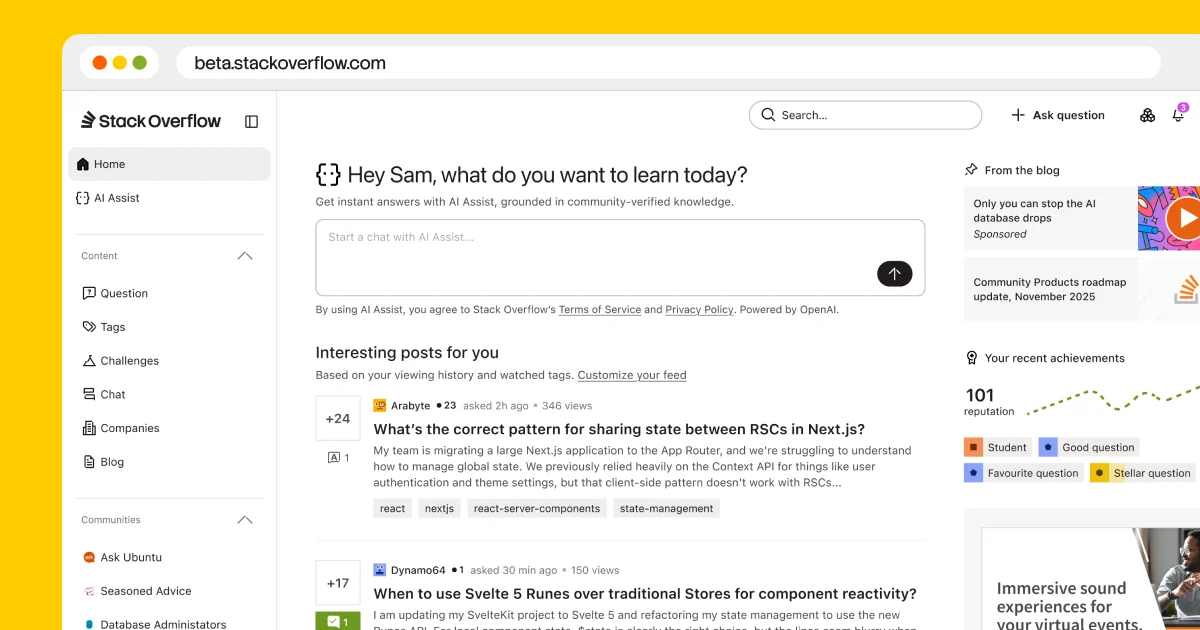
The global developer community is witnessing a significant transformation of its most vital resource as Stack Overflow officially enters a new phase of its platform evolution. Following a year of intensive experimentation and the introduction of several artificial intelligence-driven tools, the company has launched a beta version of a comprehensive site redesign. This move, announced as part of a broader mission to redefine how technologists share knowledge, represents the most substantial aesthetic and functional overhaul in the platform’s history. The initiative aims to bridge the gap between traditional community-driven Q&A and the emerging demands of an AI-integrated development workflow.
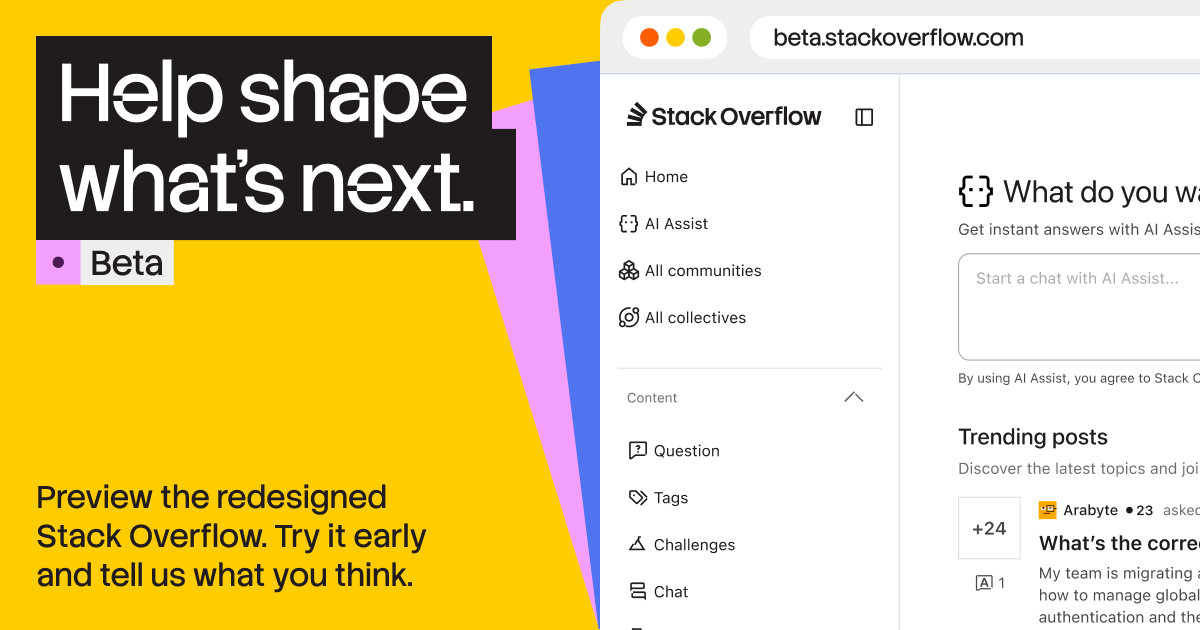
The transition to the new experience is currently hosted on a dedicated URL, allowing the company to gather real-time data and user feedback without disrupting the daily workflows of millions of programmers. As the industry grapples with the rise of Large Language Models (LLMs) and automated coding assistants, Stack Overflow’s redesign signals a strategic pivot toward fostering "human-to-human connection" enhanced—rather than replaced—by artificial intelligence.
A Strategic Pivot: The Road to the 2026 Redesign
The foundations for this week’s beta launch were laid in July 2025 at the WeAreDevelopers World Congress. At that event, leadership at Stack Overflow shared a renewed vision for the future, acknowledging that the landscape of technical information had shifted dramatically. For over fifteen years, Stack Overflow functioned as a static repository of verified solutions; however, the emergence of generative AI necessitated a more dynamic, conversational approach to problem-solving.
Throughout late 2025 and early 2026, the company introduced a series of modular updates that served as precursors to the current redesign. Key among these was "AI Assist," a tool designed to help developers draft better questions and summarize complex threads. This was followed by the introduction of support for open-ended questions—a departure from the platform’s historically strict adherence to objective, single-answer queries. By allowing for more nuanced discussions, the platform began to transition from a "knowledge base" into a comprehensive "collaboration space."
Other notable updates included the launch of Coding Challenges to foster skill development, the creation of a Model Context Protocol (MCP) server to integrate with modern AI development environments, and significant enhancements to the site’s Chat functionality. The current redesign is intended to unify these disparate features into a cohesive user interface that prioritizes accessibility and modern web standards.
Chronology of the Redesign and Beta Rollout
The deployment of the new Stack Overflow experience follows a phased approach, designed to minimize friction for power users while encouraging the adoption of new features. The company has outlined a clear timeline for the transition:
- July 2025: The "New Era of Stack Overflow" vision is unveiled, focusing on experimentation and AI integration.
- August 2025: A research roadmap is established, utilizing community surveys and UX studies to identify pain points in the "classic" layout.
- Late 2025 – Early 2026: Iterative feature releases, including AI Assist, enhanced comments, and broader voting access, are integrated into the existing site.
- February 24, 2026 (Soft Beta Launch): The dedicated beta site is launched. This phase introduces the updated navigation and a "wider web layout," which utilizes modern screen real estate more effectively than the original fixed-width design.
- March 2026 (Beta Launch): The platform will move into a full beta phase. During this period, most planned functionalities will be live. A segment of the user base will be automatically redirected to the beta site, though the option to return to the "classic" view will remain prominent.
- April 2026 (Full Launch): All features are expected to be fully functional. The majority of global traffic will be directed to the redesigned site, marking the formal conclusion of the transition period.
Core Features and User Interface Enhancements
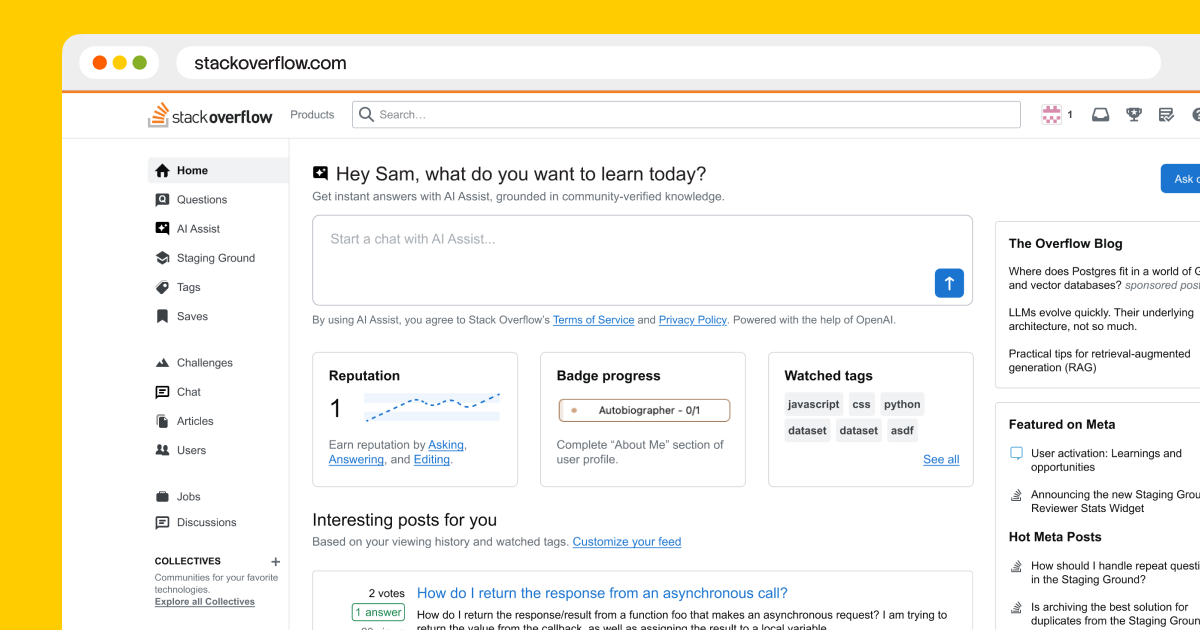
The redesign is not merely a visual update; it represents a fundamental rethinking of the developer’s journey on the site. The "classic" Stack Overflow interface, while iconic, was often criticized for being cluttered and intimidating to new users. The new beta experience addresses these issues through several key design choices.
Modernized Navigation and Layout
The most immediate change is the move toward a wider, more responsive layout. Historically, Stack Overflow utilized a centered column with significant white space on the margins. The new design utilizes the full width of modern monitors, allowing for better organization of sidebars, metadata, and code blocks. Navigation has been streamlined to provide quicker access to specialized "Collectives," Chat, and the newly integrated Coding Challenges.
Integrated AI Capabilities
Rather than sequestering AI tools in a separate tab, the redesign embeds AI Assist directly into the question-creation and answer-browsing workflows. This allows users to leverage AI for formatting, error detection in code snippets, and searching for duplicate content before a question is even posted. This integration is designed to reduce the workload on human moderators while maintaining the high standards of accuracy the site is known for.
Enhanced Social and Collaborative Tools
The redesign places a heavy emphasis on "human-to-human" interaction. Comments have received a visual refresh to make them more readable, and the Chat interface has been modernized to resemble contemporary messaging platforms. The expansion of voting and commenting access is intended to democratize the platform, encouraging more users to participate in the moderation and curation of content.
Supporting Data and Industry Context
The necessity for this redesign is underscored by shifting trends in the developer ecosystem. According to various industry reports from 2024 and 2025, a growing number of junior developers have turned to AI chatbots for immediate coding assistance, leading to a noticeable shift in traffic patterns for traditional documentation sites.
Data from Stack Overflow’s own internal research suggested that while the platform remained the "gold standard" for verified technical truth, the barrier to entry was perceived as too high for many. By introducing a more intuitive UI and supporting "open-ended questions," the platform is positioning itself to capture the "exploratory" phase of coding—where a developer might not have a specific error message but needs to discuss architectural trade-offs.
Furthermore, the launch of the MCP server reflects the company’s data-driven approach to integration. As more developers use IDEs (Integrated Development Environments) that can pull in external context, Stack Overflow’s decision to make its vast repository of human-verified knowledge accessible through standardized AI protocols ensures its continued relevance in an automated world.
Community Reaction and Official Responses
The response from the Stack Overflow community—a group known for its deep investment in the platform’s mechanics—has been a mix of cautious optimism and rigorous critique. On Meta Stack Exchange, the platform’s meta-discussion site, users have been active in reporting bugs and suggesting improvements to the beta’s CSS and navigation logic.
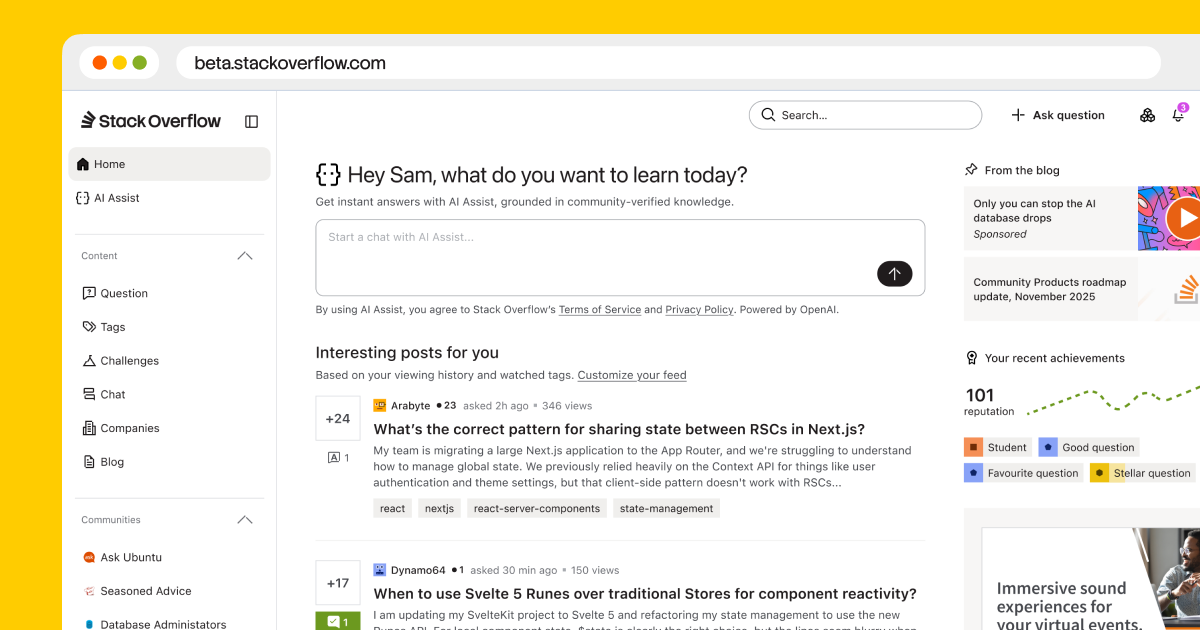
In official statements, Stack Overflow leadership emphasized that the redesign is a collaborative process. "We’re building this new site alongside the community," the company noted in its announcement, acknowledging that "adapting to a redesigned site takes time." To mitigate disruption, the company has committed to maintaining a "toggle" feature, allowing users to switch back to the classic layout during the multi-month beta period. This acknowledgement of user workflow is a direct response to past industry examples where sudden UI changes led to community fragmentation.
Industry analysts suggest that this move is a critical defensive and offensive play. By modernizing the interface, Stack Overflow is defending its position against more modern-looking competitors and AI-native startups. Offensively, it is leveraging its most unique asset: a massive, moderated, and human-curated dataset that AI models still rely on for training and validation.
Broader Impact and Future Implications
The success of the Stack Overflow redesign may serve as a blueprint for other legacy internet platforms navigating the AI transition. The core challenge is maintaining the integrity of a human-generated knowledge base while adopting the speed and convenience of automated tools.
If the April 2026 full launch is successful, the impact will be twofold. First, it will likely lower the "intimidation factor" of the platform, potentially leading to an influx of new contributors who can sustain the community for the next decade. Second, it will solidify the "hybrid" model of technical help, where AI handles the initial synthesis of information and humans provide the final verification and nuanced discussion.
As the beta period continues, the company is expected to release further updates addressing the "rough edges" identified by early testers. For now, the developer community is encouraged to explore the beta site, participate in the ongoing research surveys, and contribute to the evolution of what remains the world’s largest library of technical knowledge. The transition from a "classic" era to a "modern" era is officially underway, and the results will define the next chapter of the global developer experience.