Sisilia Frederika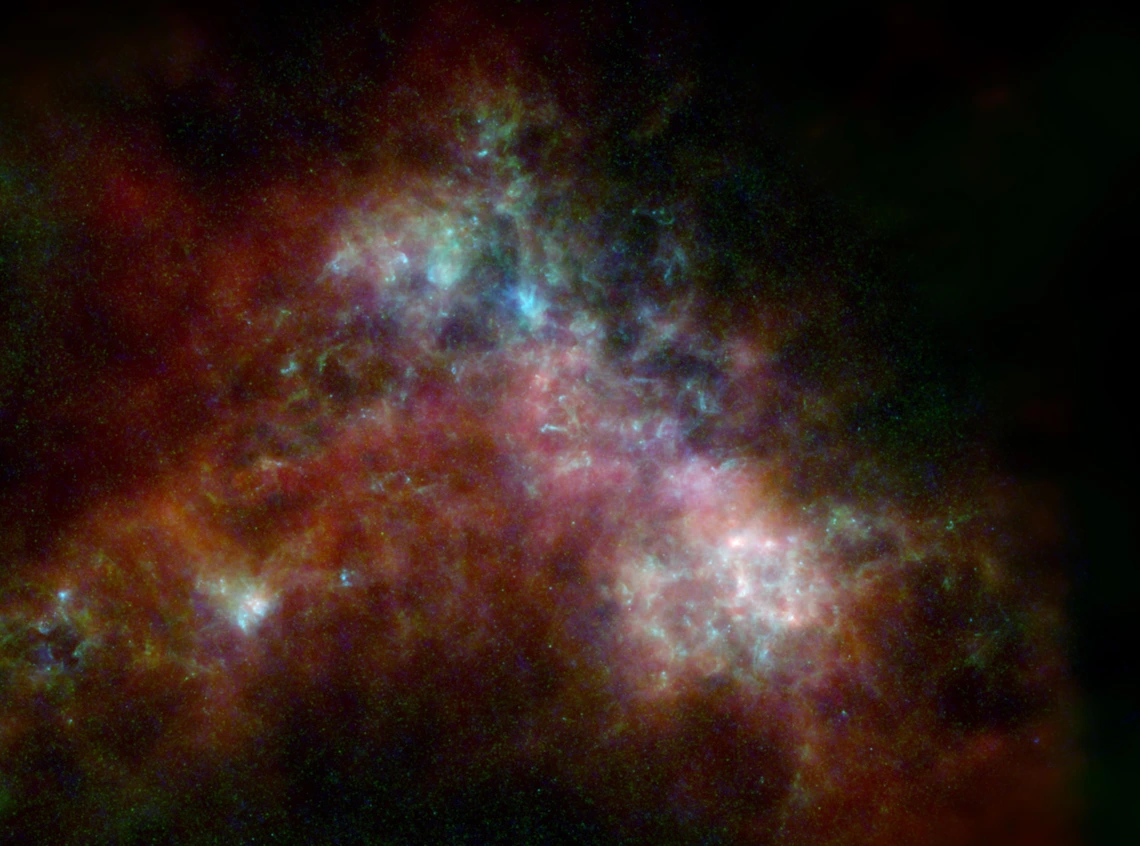
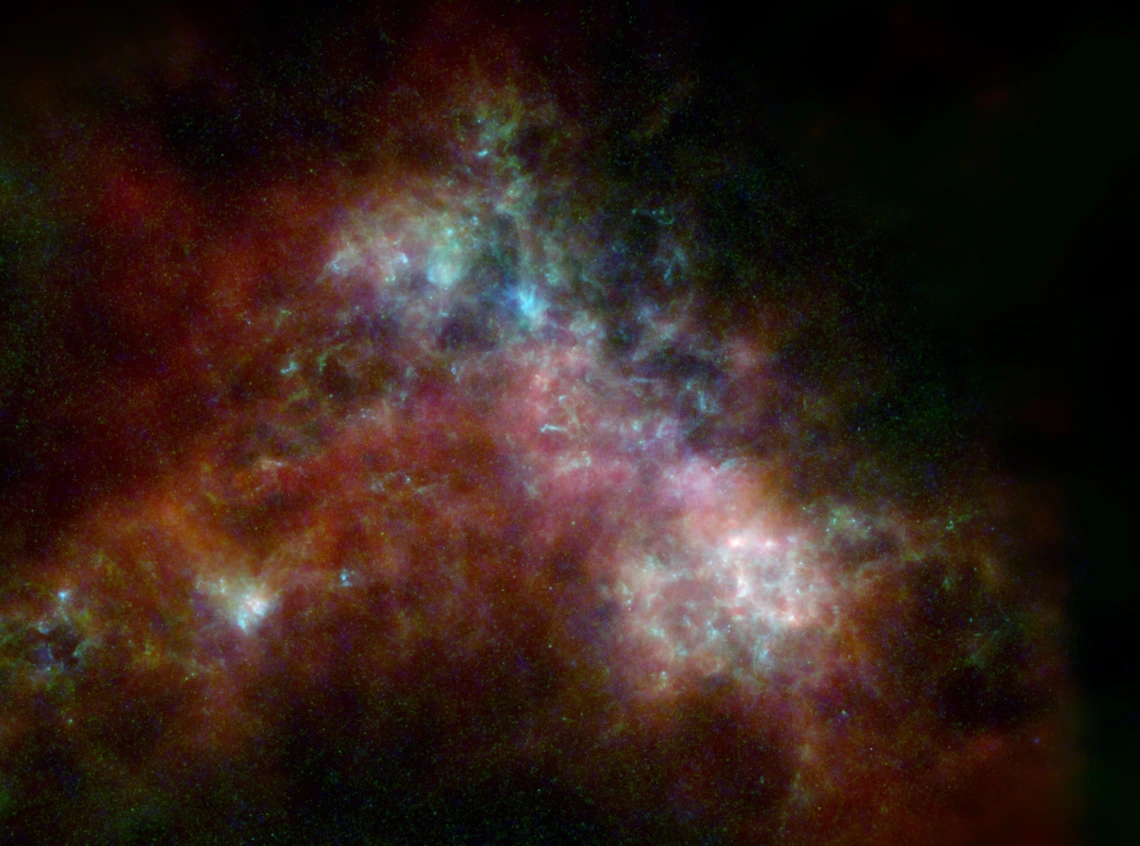
The Small Magellanic Cloud, a prominent dwarf galaxy visible from the Southern Hemisphere, has long presented a structural enigma to the astronomical community due to its lack of organized stellar orbits and its chaotic, irregular morphology. For decades, researchers struggled to explain why the stars within the core of this neighbor galaxy do not revolve around a central point in the predictable, disk-like fashion observed in most other galaxies. Recent findings from a research team at the University of Arizona, led by graduate student Himansch Rathore, have finally pinpointed the catalyst for this cosmic disorder: a direct, catastrophic collision between the Small Magellanic Cloud (SMC) and its larger companion, the Large Magellanic Cloud (LMC). This event, which occurred several hundred million years ago, fundamentally transformed the internal dynamics of the SMC, stripping it of its rotational stability and scattering its stellar populations into a state of kinetic disequilibrium.
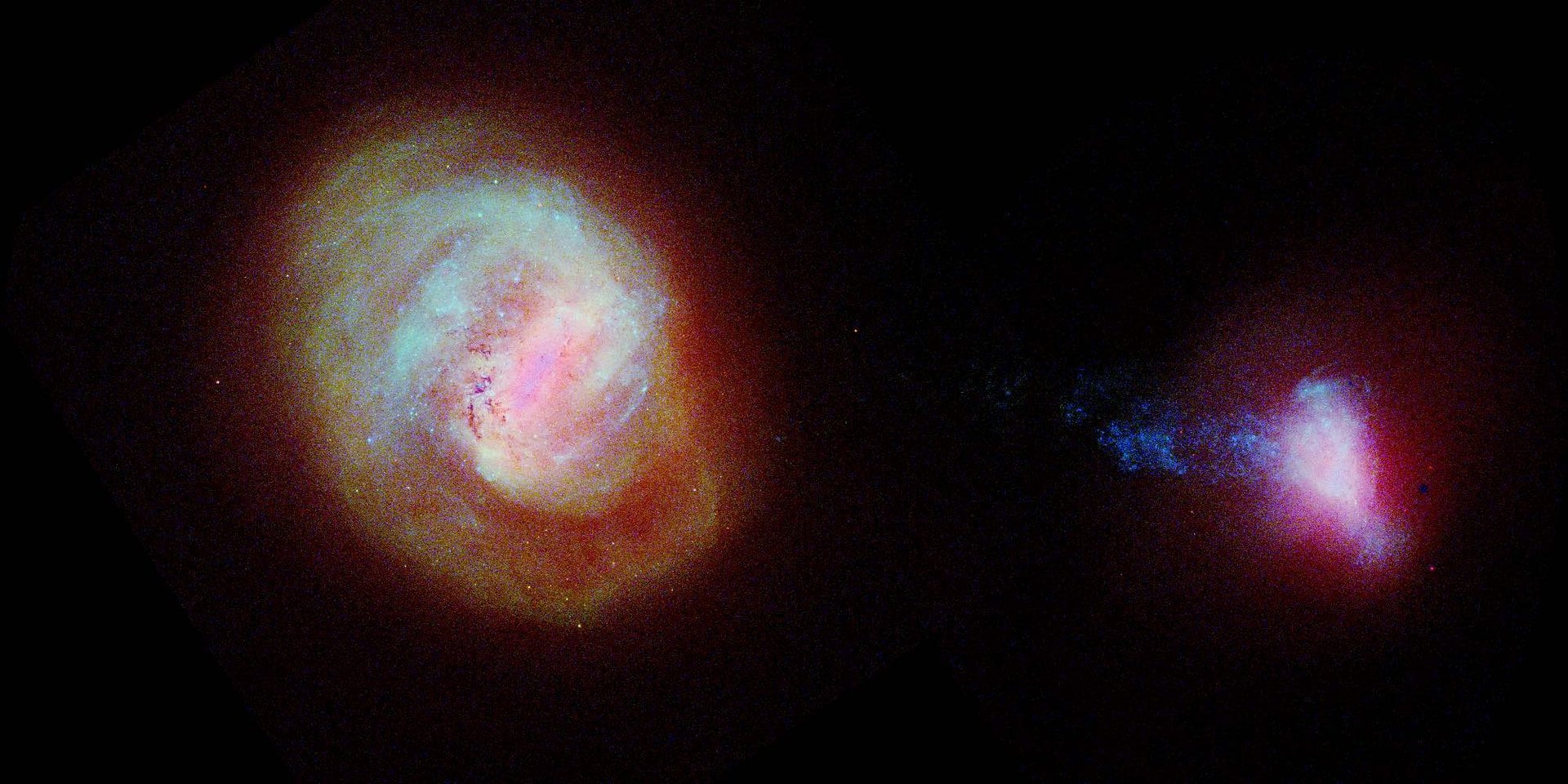
The study, which utilized high-precision data from the European Space Agency’s Gaia mission and the Hubble Space Telescope, suggests that the SMC did not merely pass near the LMC but actually plowed directly through the LMC’s dense gaseous disk. This high-energy encounter injected massive amounts of energy into the SMC’s system, disrupting the gravitational tethering that typically maintains orbital order. As a result, the SMC is currently being observed in a state of "live-action" transformation, providing a rare opportunity for astrophysicists to witness the violent processes that drive galactic evolution in real-time.
The Structural Anatomy of the Small Magellanic Cloud
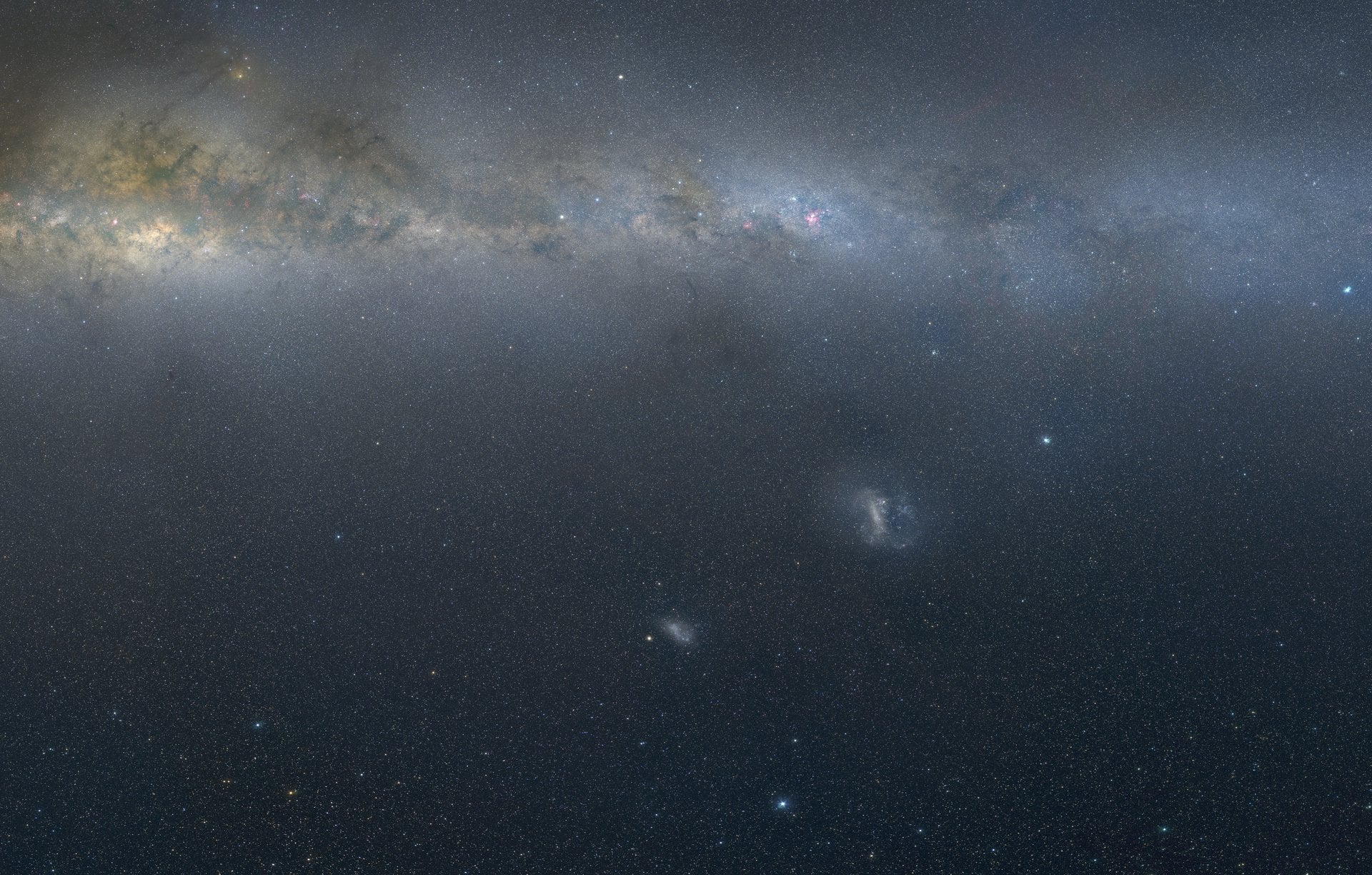
To understand the magnitude of the disruption, one must first consider the baseline characteristics of the Small Magellanic Cloud. Located approximately 200,000 light-years from Earth, the SMC is one of the closest galactic neighbors to the Milky Way. It is classified as a dwarf irregular galaxy, possessing a total mass estimated at roughly 7 billion solar masses. While this is substantial, the SMC is significantly less massive than the Large Magellanic Cloud, which sits at about 158,000 light-years away and exerts a dominant gravitational influence over the entire Magellanic system.
A defining feature of the SMC is its high gas-to-star ratio. Unlike older, "red and dead" galaxies, the SMC is rich in cold neutral hydrogen, the primary fuel for star formation. This gas typically concentrates in giant clouds that cool and collapse under gravity to form new generations of stars. However, the UArizona team discovered that the expected rotation of this gas has been almost entirely obliterated. In a typical galaxy, gas and stars follow a coherent path dictated by the galaxy’s angular momentum. In the SMC, this coherence has been replaced by random, disordered trajectories—a direct consequence of the tidal and hydrodynamic forces experienced during the collision.
A Chronology of Galactic Violence
The history of the Magellanic Clouds is a narrative of gravitational interplay. Astronomers believe that the LMC and SMC have been orbiting one another for billions of years, but it is only recently—on a cosmic timescale—that their paths intersected so violently. Simulations conducted by Rathore’s team indicate that the direct transit occurred a few hundred million years ago. As the SMC moved through the LMC, it encountered the "ram pressure" of the LMC’s own internal gas.
This process is akin to a person walking into a strong headwind; the force of the "wind" (the LMC’s gas) pushes against the "pedestrian" (the SMC’s gas). Because the LMC is significantly more massive and possesses a denser interstellar medium, the pressure was sufficient to stall the SMC’s internal rotation and strip away large quantities of material. This encounter created the "Magellanic Bridge," a vast stream of gas and stars that now stretches between the two galaxies. Within this bridge, the gas is so highly compressed and shocked that it has triggered new bursts of star formation, creating a stellar umbilical cord that links the two systems across 43,000 light-years of space.
Advanced Methodology: Combining Gaia Data with Computer Simulations
Solving the mystery of the SMC’s missing orbits required a sophisticated synthesis of observation and theoretical modeling. The research team relied heavily on the Gaia mission, which provides the most accurate measurements to date of the "proper motion" of stars—how they move across the sky over time. By combining Gaia’s data with the Hubble Space Telescope’s deep-field observations, the researchers could reconstruct the 3D velocities of thousands of individual stars within the SMC.
When the observed velocities failed to match any standard model of galactic rotation, the team turned to N-body computer simulations. These simulations were designed to replicate the specific conditions of the Magellanic system, including the total stellar mass, gas distribution, and the gravitational pull of the Milky Way. By running various scenarios, the researchers found that only a direct, high-velocity collision could replicate the "scrambled" stellar motions measured by telescopes.
Gurtina Besla, a professor at the University of Arizona and senior author of the study, emphasized that this approach allowed the team to develop new diagnostic tools. These methods enable astronomers to interpret the chaotic signatures of post-collision galaxies, which can then be applied to more distant systems where the details are harder to resolve.
The Tilted Bar and the Dark Matter Connection
The 2024 and 2025 findings by Rathore’s team also extended to the Large Magellanic Cloud, revealing that the collision left a physical "scar" on the larger galaxy as well. The LMC features a central, bar-like structure composed of older stars. The study revealed that this bar is significantly tilted out of the primary plane of the LMC’s disk.
This tilt is a crucial data point for one of the most elusive subjects in physics: dark matter. Because dark matter provides the invisible gravitational "glue" that holds galaxies together, the way a galaxy reacts to a collision is dictated by the density and distribution of its dark matter halo. Rathore noted that the specific angle of the LMC’s tilted bar is directly correlated to the amount of dark matter contained within the SMC. By measuring the deformation of the LMC, scientists can indirectly calculate the dark matter profile of the SMC—a breakthrough that offers a new way to study the substance that makes up roughly 85% of the universe’s matter but remains invisible to traditional telescopes.
Implications for the Milky Way and Early Universe Studies
The ongoing interaction between the LMC and SMC is not happening in a vacuum; it is occurring within the gravitational shadow of the Milky Way. This trio of galaxies is locked in a complex dance that is actively reshaping our own galactic home. Data indicates that the LMC is currently causing a measurable warp in the Milky Way’s stellar disk, pulling on our galaxy’s core and disturbing the vast halo of dark matter and gas that surrounds us.
Furthermore, the "Magellanic Stream"—a massive trail of gas pulled from the Clouds—is currently being siphoned into the Milky Way. This inflow of fresh gas acts as a fuel source, allowing the Milky Way to continue forming new stars. Without the violent interactions between the SMC and LMC, the Milky Way might have a much lower rate of starbirth.
Beyond our local neighborhood, the discovery has significant implications for cosmology. Because the SMC is relatively low in heavy elements (metals), it has long been used as a "local analog" for the small, gas-rich galaxies that dominated the early universe. However, Besla warns that if the SMC is "still reeling from a collision," it may not be the "pristine" reference point astronomers once thought. Instead, it serves as a cautionary example of how environmental factors and galactic "accidents" can deviate a galaxy from its expected evolutionary path.
A Transforming Perspective on Galactic Evolution
The work of the University of Arizona team shifts the perception of astronomy from a series of static snapshots to a dynamic, ongoing narrative. The realization that the SMC is a galaxy in the midst of a "catastrophic crash" explains the decades-old mystery of its missing orbits and highlights the importance of galactic interactions in shaping the cosmos.
"We are used to thinking of astronomy as a snapshot in time," Rathore observed. "But these two galaxies have come very close together, gone right through one another, and transformed into something different."
As the SMC continues its trajectory, it will remain a primary laboratory for studying the physics of ram pressure, tidal disruption, and the mysterious properties of dark matter. The findings underscore that even in the relatively quiet suburbs of our Local Group, the universe remains a place of violent, transformative change, where the collision of two clouds can rewrite the history of billions of stars. Future observations with the James Webb Space Telescope are expected to build on this work, peering deeper into the shocked gas of the Magellanic Bridge to see how the first generation of post-collision stars is coming to life.