Evan Lee Salim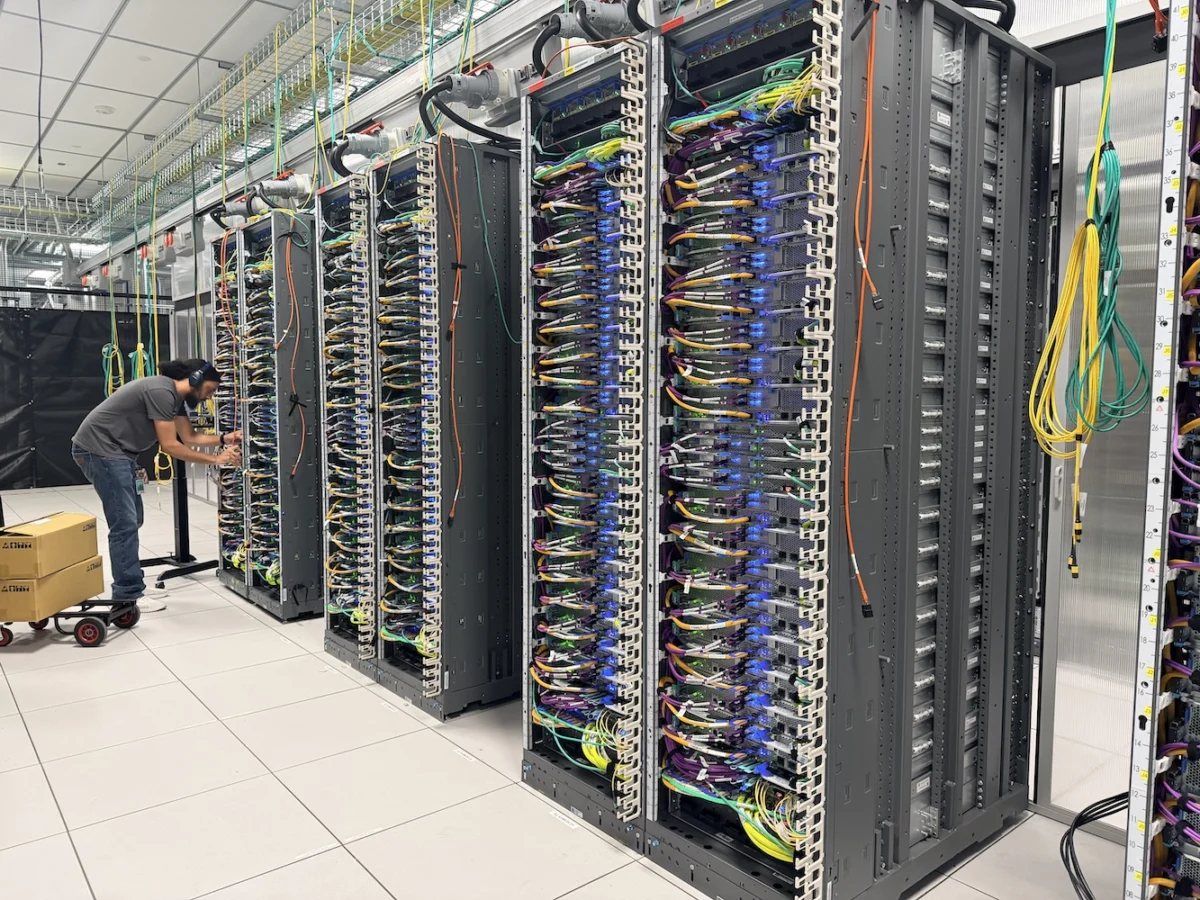
Following Amazon CEO Andy Jassy’s announcement of AWS’s groundbreaking $50 billion investment deal with OpenAI, Amazon extended an invitation for a private tour of the chip development lab central to this monumental agreement. The facility, largely funded by Amazon, is the birthplace of the Trainium chip, a proprietary accelerator designed to power advanced artificial intelligence workloads. Industry analysts are closely monitoring the Trainium chip’s performance and adoption, anticipating its potential to significantly reduce the cost of AI inference and, crucially, to challenge Nvidia’s near-monopoly in the high-performance computing market for AI. The tour offered a rare glimpse into the strategic hardware innovation underpinning Amazon’s ambitious foray into the burgeoning AI infrastructure sector.
AWS’s Decade-Long Strategic Push into Custom Silicon

Amazon’s journey into custom silicon began more than a decade ago, a strategic move designed to optimize performance, control costs, and secure supply chains for its vast AWS cloud operations. The foundational step was the acquisition of Israeli chip designer Annapurna Labs in January 2015 for approximately $350 million. This acquisition brought in a team of seasoned chip engineers and laid the groundwork for Amazon’s internal chip development unit, which still retains its Annapurna roots and distinctive logo throughout its facilities. The initial focus was on developing custom processors that could deliver superior performance and efficiency compared to off-the-shelf components. This strategic imperative aligns with Amazon’s classic playbook: identify critical components or services, then build an in-house alternative that competes aggressively on price and performance, thereby creating a distinct competitive advantage and fostering greater vendor lock-in within its ecosystem.
The fruits of this decade-long labor first emerged with the Graviton processor, a low-power, ARM-based server CPU that quickly gained traction for general-purpose computing tasks within AWS. This was followed by Inferentia, a chip specifically optimized for AI inference workloads. These early successes demonstrated Amazon’s capability to design specialized silicon that could meet the demanding requirements of cloud-scale operations. In 2024, Apple, a company notoriously secretive about its infrastructure, publicly lauded AWS for its Graviton and Inferentia chips, even giving a nod to the then-nascent Trainium. This rare endorsement from a major tech player underscored the credibility and impact of Amazon’s custom silicon strategy, signaling to the market that AWS was a serious contender in the specialized chip arena. The experience gained from these earlier projects proved invaluable, setting the stage for the more ambitious and powerful Trainium series, specifically engineered to tackle the escalating demands of large-scale AI model training and inference.
Trainium: Powering the Future of AI Compute

The Trainium chip represents the pinnacle of AWS’s custom silicon efforts, specifically designed to accelerate AI workloads. Initially conceived to deliver faster and cheaper model training – a paramount concern a few years prior – its capabilities have since been meticulously tuned and expanded to excel in inference tasks as well. This evolution is critical, as AI inference, the process of running a trained AI model to generate responses or make predictions, has rapidly emerged as the most significant performance bottleneck in the artificial intelligence industry. As AI models grow in complexity and usage, the sheer volume of inference requests places immense pressure on computational infrastructure, making efficient inference crucial for cost-effective and responsive AI services.
The latest iteration, Trainium3, launched in December 2025, promises transformative performance gains. Running on AWS’s new specialty Trn3 UltraServers, these chips are projected to offer up to 50% lower operational costs for comparable performance when stacked against traditional cloud servers utilizing generic GPUs. A key innovation accompanying Trainium3 is the development of new Neuron switches, which enable every Trainium3 chip to communicate directly with every other chip in a mesh configuration. This advanced networking significantly reduces latency, allowing for seamless data flow across vast arrays of processors. According to Mark Carroll, Director of Engineering at the Austin lab, this combination is "something huge," propelling Trainium3 to "break all kinds of records," particularly in terms of "price per power." These efficiencies become profoundly impactful when considering the trillions of tokens processed daily by leading AI models.
AWS has already deployed 1.4 million Trainium chips across its three generations. A substantial portion of these, over 1 million Trainium2 chips, are currently powering Anthropic’s Claude, a leading AI model, demonstrating the chip’s proven capability in demanding, real-world scenarios. This massive commitment to Anthropic, through Project Rainier, one of the world’s largest AI compute clusters that went live in late 2025 with 500,000 chips, highlights Trainium’s critical role in the AI ecosystem even before the OpenAI deal. The burgeoning demand from both Anthropic and Amazon’s own Bedrock service underscores the strategic importance of Trainium in meeting the escalating computational needs of generative AI.

Recognizing the prohibitive "switching costs" historically associated with migrating applications from Nvidia’s CUDA platform to other architectures, the AWS chip team has focused on enhancing developer accessibility. They proudly announced that Trainium now natively supports PyTorch, a popular open-source framework for building AI models, which underpins many models hosted on platforms like Hugging Face. This integration drastically simplifies the transition process, requiring "basically a one-line change, and then recompile, and then run on Trainium," according to Carroll. This ease of migration is a direct attempt to erode Nvidia’s market dominance by lowering the barriers for developers to adopt alternative hardware. Furthermore, AWS recently announced a partnership with Cerebras Systems in March 2026, integrating Cerebras’s inference chips with servers running Trainium to deliver what Amazon touts as "superpowered, low-latency AI performance," signaling a continuous push for diversified and optimized AI acceleration.
The OpenAI Alliance and Cloud AI’s Shifting Tides
The recently announced $50 billion investment deal between AWS and OpenAI marks a pivotal moment in the cloud AI landscape. As part of this agreement, AWS has committed to supplying OpenAI with an unprecedented 2 gigawatts of Trainium computing capacity, making AWS the exclusive provider for OpenAI’s new AI agent builder, Frontier. This colossal commitment signifies OpenAI’s strategic move to diversify its compute infrastructure beyond its primary partner, Microsoft, and underscores the confidence placed in Trainium’s ability to handle future AI innovations. The exclusivity surrounding Frontier could prove to be a significant business driver for OpenAI, especially if AI agents fulfill Silicon Valley’s high expectations.

However, the nature of this exclusivity has reportedly introduced a "legal haze." The Financial Times reported in March 2026 that Microsoft may perceive OpenAI’s deal with Amazon as a violation of its existing agreement, which grants Redmond access to all of OpenAI’s models and technology. This potential conflict highlights the intense competition and complex strategic alliances shaping the AI industry, where access to cutting-edge compute and proprietary models is paramount. The unfolding dynamics between these tech giants will likely set precedents for future partnerships and cloud provider relationships in the AI era.
Beyond OpenAI, Trainium chips are already integral to Amazon’s broader AI strategy. Trainium2, for instance, handles the majority of inference traffic on Amazon’s Bedrock service. Bedrock empowers Amazon’s extensive enterprise customer base to build and deploy AI applications using a variety of foundational models, including Amazon’s own and third-party offerings. The rapid expansion of Bedrock’s customer base is a testament to the efficacy of Trainium. Kristopher King, the lab’s director, noted, "Our customer base is just expanding as fast as we can get capacity out there," adding an ambitious projection: "Bedrock could be as big as EC2 one day," referencing AWS’s immensely successful and foundational compute cloud service. This statement underscores the strategic importance of Trainium and Bedrock in AWS’s long-term vision for cloud computing.
Inside the Innovation Hub: Austin’s Chip Development Lab

The nerve center of Amazon’s custom silicon innovation is nestled in Austin, Texas, within the upscale "The Domain" district, often dubbed "Austin’s Silicon Valley." This chrome-windowed building houses the Annapurna Labs team, where the daily grind of chip design and validation unfolds. While the offices present a typical tech corporate ambiance with cubicles, gathering spots, and conference rooms, the true heart of innovation lies in the tucked-away lab space on a high floor, offering sweeping city views.
The lab itself is a noisy, industrial environment, roughly the size of two large conference rooms, bustling with the whirring of equipment fans. It presents a unique blend of a high school shop class and a meticulously designed Hollywood set, where engineers in jeans, not lab coats, bring silicon dreams to life. It’s crucial to note that this facility is not where the chips are manufactured; rather, it’s the domain of the "bring-up" process. The Trainium3, for instance, is a state-of-the-art 3-nanometer chip fabricated by TSMC, a global leader in advanced semiconductor manufacturing, while other chips are produced by Marvell.
The "bring-up" is a critical phase in chip development, described by King as "a big overnight party," where engineers stay locked in for days. After approximately 18 months of intensive design and development, a prototype chip arrives from the fabrication plant. The bring-up is the first time the chip is powered on and tested to verify its functionality against design specifications. This process is rarely without its challenges, as exemplified by a memorable incident during the Trainium3 bring-up. The initial prototype was designed for air-cooling, but the team later pivoted to liquid cooling for enhanced energy efficiency. During the bring-up, the dimensions for attaching the air-cooling heat sink were slightly off, preventing activation. Unfazed, the team resorted to an immediate, unconventional solution: "they immediately got a grinder and just started grinding off the metal," King recounted. To maintain the celebratory "pizza party atmosphere," the grinding was discreetly performed in a conference room. Such improvisation and dedication, King emphasized, are "what silicon bring-up is all about."

The lab is equipped with both custom-made and commercial tools for rigorous testing and analysis. Hardware lab engineer Isaac Guevara, a master welder, demonstrated the incredibly intricate process of welding tiny integrated circuit components under a microscope – a task so demanding that Director of Engineering Mark Carroll openly admitted his inability to perform it, eliciting good-natured laughter from the team. Signal engineer Arvind Srinivasan showcased how each minute component on a chip undergoes meticulous testing.
A prominent feature of the lab is a dedicated wall showcasing each generation of "sleds" designed by the team. These sleds are the custom-engineered trays that house the Trainium AI chips, Graviton CPU chips, and all supporting boards and components. When stacked together on a rack with custom-designed networking components, these sleds form the powerful systems that underpin critical AI infrastructure, such as Anthropic Claude’s operations. The evolution of these sleds reflects continuous innovation in maximizing performance, managing thermal loads, and optimizing space within data centers. The December 2025 AWS re:Invent conference, for instance, featured the Trainium3 sled, highlighting its advanced design for liquid cooling and efficient integration.
Beyond the lab, the team operates its own private data center, a short drive away, specifically for quality assurance and testing. This facility, housed at a co-location site rather than an AWS data center, does not handle customer workloads, ensuring a controlled environment for rigorous validation. Security protocols are stringent, governing access to both the building and Amazon’s specific areas within. The testing data center is an intensely loud environment, with earplugs mandatory due to the cacophony of cooling systems, and the air carries the distinct, acrid scent of heated metal. Here, rows upon rows of servers hum with Amazon’s latest custom chips: liquid-cooled Trainium3, Graviton CPUs, and Nitro virtualization technology, all computing away. The liquid cooling system operates on a closed loop, recirculating coolant, which not only enhances efficiency but also contributes to reduced environmental impact. Hardware development engineer David Martinez-Darrow was observed performing maintenance on a sled within a Trn3 UltraServer, illustrating the continuous, hands-on work required to maintain these advanced systems.

Broader Market Implications and the Future of AI Infrastructure
The advancements in Trainium and AWS’s comprehensive hardware strategy carry significant implications for the broader AI and cloud computing markets. By offering a high-performance, cost-effective alternative to Nvidia’s GPUs, Amazon is directly challenging a near-monopoly that has defined the AI compute landscape for years. The 50% cost reduction promised by Trainium3 running on Trn3 UltraServers, coupled with simplified PyTorch integration, could entice a broader range of AI developers and enterprises to shift their workloads to AWS, thereby diversifying the AI supply chain and potentially mitigating risks associated with relying on a single dominant vendor.
AWS’s control over the entire vertical stack – from custom chips (Trainium, Graviton, Inferentia) to servers, networking components (Neuron switches), virtualization technology (Nitro), and advanced liquid cooling systems – provides a unique competitive advantage. This full-stack approach allows for unprecedented optimization, delivering superior performance-per-watt and cost efficiencies that are difficult for competitors relying solely on third-party hardware to match. It also reinforces AWS’s position as a comprehensive cloud provider, capable of delivering not just software services but also foundational hardware tailored to the most demanding workloads.

The economic impact of cheaper AI inference cannot be overstated. As AI adoption scales across industries, the operational costs of running AI models become a critical factor. By making inference more affordable, Trainium could accelerate the deployment of AI applications, enable new use cases that were previously too expensive, and democratize access to advanced AI capabilities. This aligns with a broader trend among hyperscale cloud providers, with Google developing its Tensor Processing Units (TPUs) and Microsoft investing in its Maia AI accelerators, all aiming for similar benefits of custom silicon.
Amazon CEO Andy Jassy’s continued public endorsement of Trainium underscores its strategic importance to the company. He proudly announced in December 2025 that Trainium was already a "multibillion-dollar business for AWS" and identified it as one of the AWS technologies he is "most excited about." He also highlighted the chip during the OpenAI agreement announcement, signaling its central role in future partnerships. This high-level attention translates into immense pressure on the engineering team, who work around the clock during critical phases like the "bring-up" to ensure rapid development and deployment. Carroll acknowledged this pressure, stating, "It’s very important that we get as fast as possible to prove that it’s actually going to work. So far, we’ve been doing really well."
The AWS-OpenAI deal, powered by Trainium, is more than just a financial transaction; it is a strategic realignment that could reshape the competitive dynamics of cloud AI. It positions AWS as a formidable force in the AI hardware arena, offering a compelling alternative to incumbent solutions. The success of Trainium, as evidenced by its rapid adoption by Anthropic and now OpenAI, demonstrates Amazon’s long-term commitment to innovation in specialized silicon, promising a future where AI compute is not only more powerful but also more accessible and cost-efficient. The journey from the Austin lab to the global data centers highlights the relentless pursuit of engineering excellence that is defining the next era of artificial intelligence.

Disclosure: TechCrunch confirms that Amazon provided airfare and covered the cost of one night at a local hotel for the reporter. In adherence to Amazon’s Leadership Principle of Frugality, this included a back-of-the-plane middle seat and a modest room. TechCrunch covered all other associated travel costs, such as Uber expenses and luggage fees.