Sisilia Frederika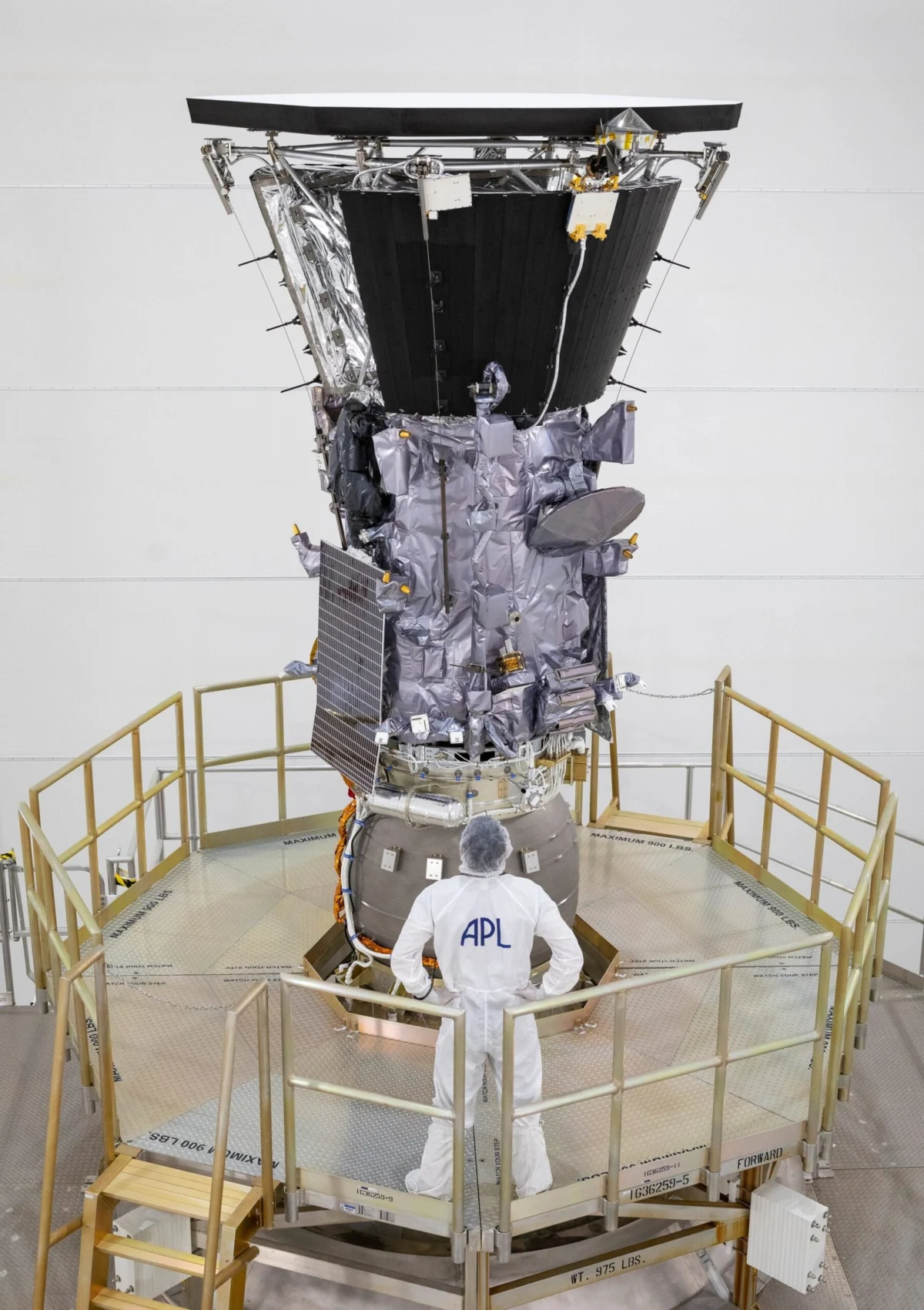
The total solar eclipse of April 8, 2024, provided more than just a momentary spectacle for millions of observers across North America; it served as a critical laboratory for solar physicists seeking to unlock the long-standing mysteries of the Sun’s outer atmosphere. A landmark study led by the University of Hawaiʻi Institute for Astronomy has successfully synthesized high-resolution ground-based images taken during totality with data from deep-space missions to track the evolution of turbulent structures within the solar corona. This research represents a significant leap forward in our understanding of space weather, demonstrating for the first time that complex plasma instabilities originating deep within the inner corona can survive and propagate across the inner solar system, eventually impacting the environment around Earth.
The Solar Coronal Heating Mystery and the Role of Totality
For decades, heliophysicists have grappled with the "solar coronal heating mystery." While the Sun’s visible surface, the photosphere, maintains a temperature of approximately 10,000 degrees Fahrenheit, the corona—the Sun’s tenuous outer atmosphere—soars to temperatures exceeding 2 million degrees Fahrenheit. This inverse temperature gradient defies simple thermodynamic intuition, which suggests that temperatures should drop as one moves further from a heat source. Identifying the mechanisms responsible for this extreme heating and the subsequent acceleration of the solar wind is a primary objective of modern solar science.
The study of the corona is notoriously difficult due to the overwhelming brightness of the photosphere, which typically masks the much fainter coronal light. While space-based coronagraphs can simulate an eclipse by using an occulting disk to block the Sun’s disk, they often struggle to capture the "inner corona," the region closest to the solar limb where the most critical acceleration and heating processes occur. Total solar eclipses provide a unique, naturally occurring opportunity to observe this region with unparalleled clarity. During the few minutes of totality, the Moon serves as a perfect occulting disk, allowing ground-based observers to see the pearly white corona and vibrant red prominences with the naked eye and high-powered telescopes.
Synthesizing Multi-Platform Observations
The recent research, led by Professor Shadia Habbal of the Institute for Astronomy, utilized a multi-decadal dataset of eclipse observations to build a comprehensive picture of coronal dynamics. By linking ground-based data with observations from NASA’s Parker Solar Probe (PSP), the team was able to track the lifecycle of plasma structures as they moved from the Sun’s surface into the far reaches of the heliosphere.
"The science was triggered by the fact that plasma instabilities in general and turbulence in particular are likely to contribute to coronal heating and solar wind acceleration," Habbal explained. "There were no observations of turbulence in the inner corona at the locus of the origination of the solar wind. Our work is based on total solar eclipse observations in white light."
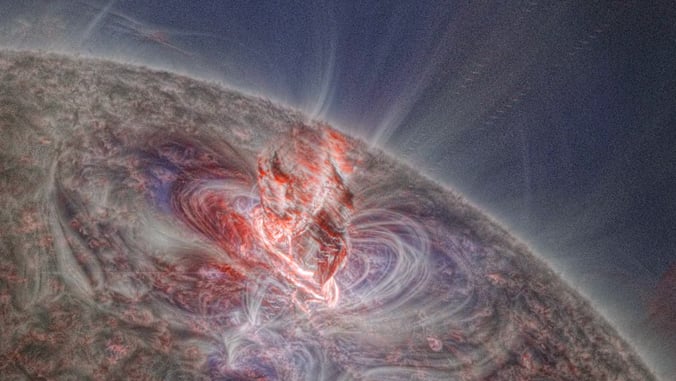
The study relied heavily on sophisticated image processing techniques to reveal the fine-scale structures within the corona. These methods, pioneered in part by the late astrophotographer and mathematician Miloslav Druckmüller, allow scientists to extract high-frequency details from white-light images, making it possible to identify subtle ripples, loops, and vortices that would otherwise remain invisible.
Discovery of Vortex Rings and Plasma Instabilities
The core finding of the study involves the observation of vortex rings and Kelvin-Helmholtz instabilities within the Prominence-Corona Transitioning Region (PCTR). Prominences are massive, relatively cool structures of plasma anchored in the Sun’s photosphere and extending into the corona. Because they are millions of degrees cooler than the surrounding coronal plasma, the interface between a prominence and the corona becomes a site of extreme thermal and magnetic contrast.
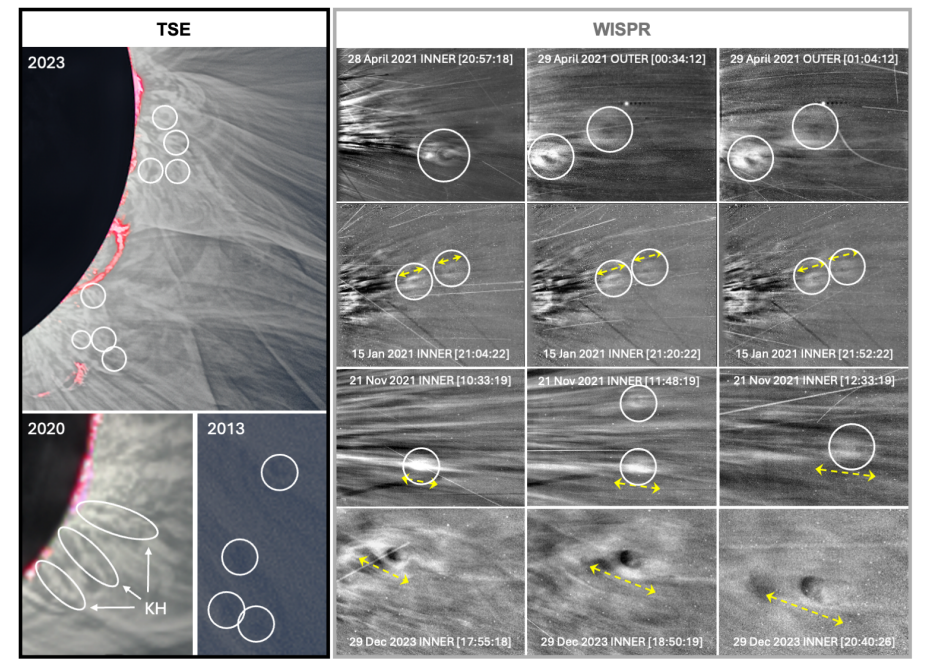
This contrast triggers instabilities. The UH team discovered that these regions produce vortex rings—toroidal structures of rotating plasma—that emerge and move outward. Previously, it was theorized that such small-scale turbulent structures would dissipate quickly as they moved away from the Sun. However, by comparing ground-based eclipse images with data from the Wide-field Imager for the Parker Solar Probe (WISPR), the researchers proved that these structures maintain their integrity over vast distances.
The WISPR instrument, which provides a side-on view of the solar wind as the Parker Solar Probe orbits the Sun, had previously detected what mission scientists called "magnetic bubbles." The UH study successfully linked these bubbles to the expansion of vortex rings and Kelvin-Helmholtz instabilities observed during eclipses. This connection provides a direct observational link between the turbulent processes in the inner corona and the structures measured in situ by spacecraft millions of miles away.
A Chronology of Coronal Observation
The pursuit of understanding solar prominences and the corona is a centuries-old endeavor. Historical records, such as the Laurentian Codex, describe "flame-like" structures during the total solar eclipse of May 1, 1185. While ancient observers likely noted these features, it was not until the 19th and 20th centuries that the physical nature of the corona began to be understood through spectroscopy.
The UH team has been systematically acquiring high-definition eclipse data since 1995. This long-term approach has allowed them to observe the Sun across multiple solar cycles, providing a broader context for how the corona changes as the Sun moves from solar minimum to solar maximum. In instances where ground-based professional teams were hindered by weather, the study incorporated high-quality data from amateur astrophotographers, demonstrating the increasing value of citizen science in high-level astrophysical research.
The April 2024 eclipse occurred during a period of high solar activity, offering a stark contrast to the observations made during the solar minimum eclipses of 2008 and 2019. The increased frequency of Coronal Mass Ejections (CMEs) and the presence of more complex prominence structures in 2024 provided a wealth of data regarding how turbulence contributes to the overall mass loss of the Sun.
Technical Analysis of Space Weather Implications
Understanding the origin and survival of these vortex rings is not merely an academic exercise; it has profound implications for space weather forecasting. Space weather refers to the environmental conditions in Earth’s magnetosphere, ionosphere, and thermosphere, driven largely by solar activity.
Turbulent structures like vortex rings and CMEs can interact with Earth’s magnetic field, potentially causing geomagnetic storms. These storms can disrupt satellite communications, degrade GPS accuracy, induce surges in power grids, and pose radiation risks to astronauts in orbit. By identifying the specific regions of the corona where these instabilities form—specifically the PCTR—scientists can better predict the "seeds" of space weather events before they arrive at Earth.
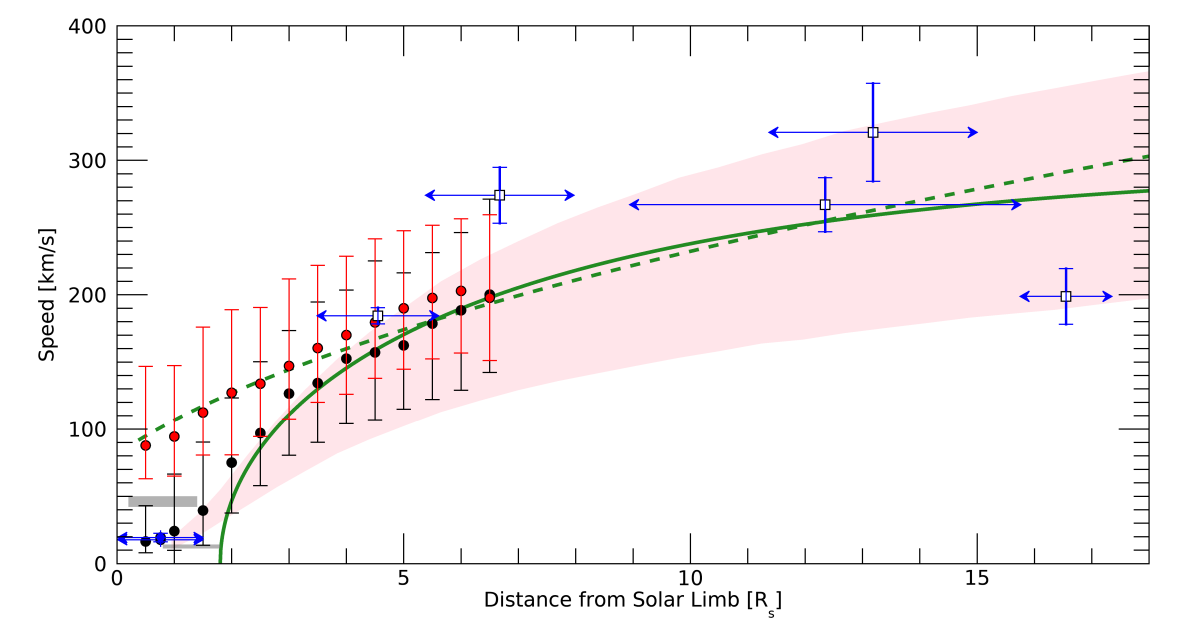
The study’s confirmation that these instabilities survive their journey through the inner solar system suggests that the solar wind is far more structured and "lumpy" than previously modeled. This helps explain the "switchbacks" (sudden reversals in the magnetic field) observed by the Parker Solar Probe, suggesting they may be the remnants of these early-stage plasma instabilities.
The Next Generation of Heliophysics Missions
The success of the UH study comes at a pivotal moment for solar physics, as a new fleet of missions prepares to deepen our understanding of the corona.
- PROBA-3 (ESA): Launched in late 2024, this mission consists of two satellites flying in precise formation to create a "giant coronagraph." One satellite acts as an occulting disk for the other, allowing for continuous observations of the inner corona that were previously only possible during natural eclipses.
- PUNCH (NASA): Scheduled for launch in 2025, the Polarimeter to Unify the Corona and Heliosphere (PUNCH) mission will consist of four small satellites. It is designed to track the transition of the solar corona into the solar wind, specifically focusing on how the "clumpy" structures identified in the UH study evolve as they move outward.
- Parker Solar Probe (NASA): Continuing its mission of "touching the Sun," PSP will make its closest approach in 2025, passing through the very regions where these vortex rings are born.
These missions, combined with the ground-based insights from the 2024 eclipse, are expected to provide the final pieces of the puzzle regarding coronal heating and solar wind acceleration.
Future Outlook: The 2026 Eclipse
The scientific community is already looking toward the next major opportunity for coronal research. On August 12, 2026, a total solar eclipse will sweep across Greenland, Iceland, and Spain. This event will be particularly significant as it will occur near the predicted peak of Solar Cycle 25, potentially offering even more dynamic displays of coronal turbulence than the 2024 event.
Professor Habbal and her team are already preparing for this next "scientific gold mine." The ability to predict the appearance of the corona with high fidelity is a testament to the progress made in recent years, but as the UH study shows, the most valuable insights often come from the smallest, most turbulent details captured in the brief darkness of totality.
The synthesis of historical records, ground-based photography, and cutting-edge space probes has transformed our view of the Sun. No longer seen as a static orb, the Sun is revealed as a roiling, magnetic engine where tiny vortexes born in the depths of the corona can travel millions of miles to shape the environment of the entire solar system. As we move closer to the 2026 eclipse, the data gathered in 2024 will remain a cornerstone of our efforts to understand the tempestuous whims of our host star.