Galang Taruna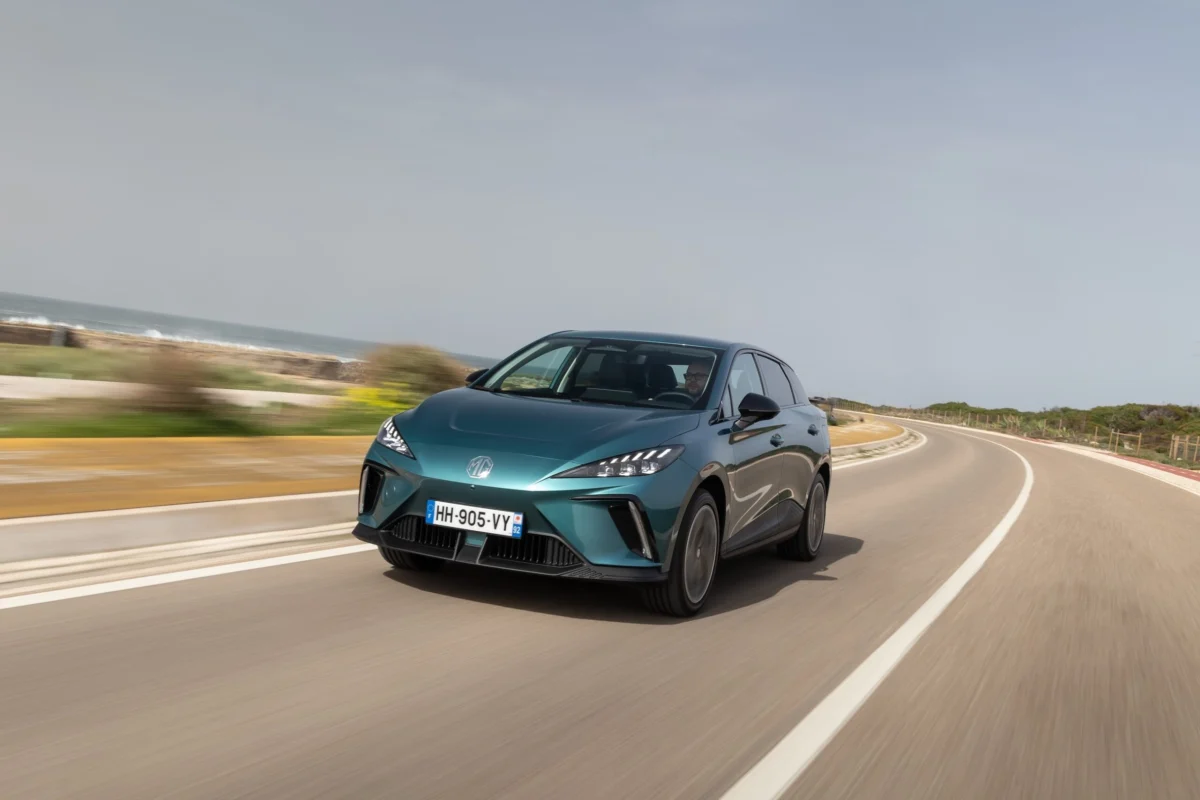
The electric vehicle landscape in Europe has been a tumultuous one for manufacturers, and the MG4, initially hailed for its disruptive pricing and impressive performance, has navigated its share of challenges since its 2022 launch. Known for undercutting rivals by thousands of euros, the MG4 quickly made a strong impression. However, its trajectory was complicated first by its ineligibility for the French ecological bonus, and subsequently by a substantial 45.3% European customs surcharge imposed on its parent company, SAIC. This led to a strategic pivot for the Sino-British brand, resulting in a significant repositioning of the MG4 lineup for 2026. MG is now doubling down on its electric offensive, introducing the entry-level MG4 Urban with a simplified platform and smaller batteries, expected to be priced under 20,000 euros. Simultaneously, the "normal" MG4 is undergoing an upscale transformation, focusing on enhanced presentation and larger battery options. The question remains: does this repositioning diminish the MG4’s allure, or does it solidify its status as a shrewd choice against established competitors like the Renault Megane E-Tech and Volkswagen ID.3? To answer this, a comprehensive review of the 2026 MG4 EV was conducted during a recent press event in Portugal.
Technical Specifications (MG4 2026)
| Feature | MG4 (2026) |
|---|---|
| Dimensions | 4.29 m x 1.84 m x 1.52 m |
| Power (horsepower) | 190 hp |
| 0 to 100 km/h | 7.5 s |
| Autonomy Level | Semi-autonomous driving (Level 2) |
| Max Speed | 180 km/h |
| Main Screen Size | 12.8 inches |
| Vehicle Charging Port | Type 2 Combo (CCS) |
| Entry-level Price | 33,490 euros |
(This review was conducted during a press trip organized by MG Motor.)

Exterior: A Calculated Continuity
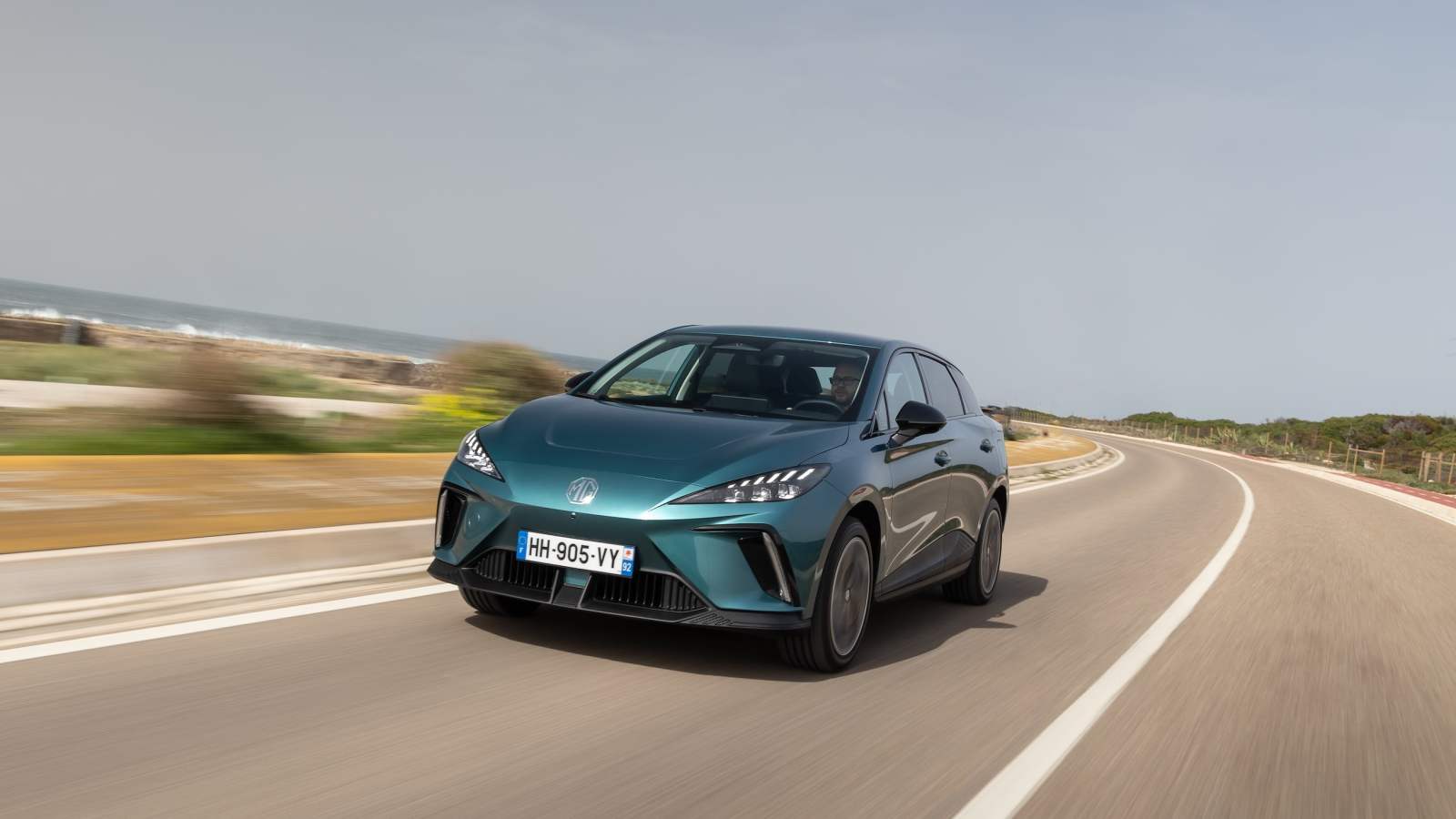
Starting with the most visually apparent aspect, the exterior design of the 2026 MG4 largely maintains its familiar silhouette. MG has opted for minimal cosmetic changes, focusing instead on subtle refinements. The modifications are limited to new 18-inch wheel covers, a redesigned monobloc rear spoiler, and the introduction of two fresh color options: Irises Cyan (as seen in accompanying photos) and Piccadilly Blue. This continuity in design reflects a calculated decision by MG.

The vehicle’s aerodynamic profile, a key strength of the original design, remains intact and noteworthy. Features such as the active grille shutters, which can close when battery cooling is not required, continue to be a sophisticated touch, a rarity in this compact segment. The physical dimensions of the MG4 are also unchanged, retaining its substantial road presence with a length of 4.29 meters, a generous 2.70-meter wheelbase, a width of 1.84 meters, and a height of 1.52 meters.
From a pragmatic perspective, the MG4’s distinctive and angular styling, characterized by its sharp front fascia, robust profile, and prominent rear light bar, has aged relatively well. It maintains a unique identity within a competitive market. However, for a model approaching its five-year mark since its initial concept unveiling, a more substantial refresh could have generated a stronger sense of novelty and more effectively differentiated this updated version from the numerous MG4s already on European roads. This decision highlights MG’s confidence in the enduring appeal of the original design while also potentially saving on retooling costs.

Interior: A Quantum Leap in Refinement
While the exterior sees only minor adjustments, the interior of the 2026 MG4 undergoes a dramatic transformation. Gone is the ultra-minimalist aesthetic with its basic materials. The new MG4 adopts the dashboard architecture first seen in the MGS5 EV, marking an immense leap forward in perceived quality and cabin ambiance.

This interior overhaul represents a significant progression. Although the overall styling and layout remain classically conservative, the improvements are undeniable. The cabin now boasts an abundance of soft-touch, padded materials, creating a decidedly more qualitative environment that enhances the overall occupant experience. Storage solutions have also been improved. The introduction of an induction charging pad, cleverly paired with a vertical slot for smartphones, adds practical convenience. Two cup holders and a spacious compartment beneath the arched central console provide ample space for daily essentials.
Despite the comprehensive restyling, the MG4’s interior habitability remains consistent with the previous model. The front seats offer good comfort and sufficient adjustability, though the passenger seat still lacks height adjustment – a minor oversight. Rear passengers benefit from ample space, particularly legroom, thanks to the completely flat floor. However, they will need to share a single USB-C port and forgo any dedicated night lighting, which could be a drawback on longer journeys or for families.

The generous passenger space, however, comes at the expense of cargo capacity. The 350-liter trunk volume remains relatively modest for the compact segment. For comparison, a Renault Megane E-Tech offers 389 liters, a Peugeot E-308 provides 412 liters, and even the Volkswagen ID.3, which shares the MG4’s rear-motor architecture, boasts 385 liters. Furthermore, the absence of a front trunk ("frunk") for storing charging cables or soft bags, despite the rear-mounted motor, is a missed opportunity for practical utility.
Infotainment: Progress, but Room for Perfection

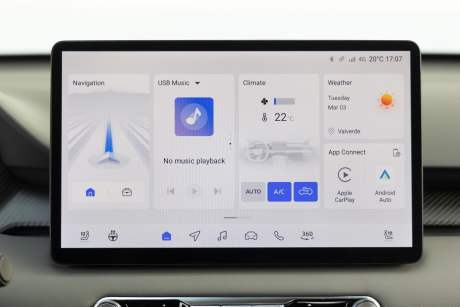
The infotainment system of the previous MG4 was not considered a strong suit, characterized by a glossy 10.25-inch mini-slab with limited functionality. The 2026 redesign brings a new paradigm to the MG4’s digital experience. The centerpiece is a larger 12.8-inch touchscreen display, featuring a modernized interface and the integration of connected services such as YouTube, Spotify, and TikTok. Crucially, the return of physical buttons and dials for media control and ventilation significantly enhances daily usability and reduces reliance on the touchscreen for basic functions.
The screen also features numerous shortcuts, including dedicated toggles for heated seats and a customizable swipe-down menu that allows users to activate or deactivate various functions with a single tap. The digital instrument cluster, while retaining its 7-inch size, is enhanced with two flanking gauges (for battery status and power meter), improving readability at a glance.

These improvements are a welcome enhancement to the MG4’s digital ecosystem. However, despite the progress, the system still trails rivals like the Renault Megane in terms of overall reactivity, fluidity, and the breadth of integrated services. The screen’s response time could be quicker, the animations smoother, and the graphics more refined. Nevertheless, the essential functionalities are present, making it a functional and generally satisfactory system for most users.
Driver-Assistance Systems: A Significant Leap Forward
Upon its initial European re-entry and the launch of the original MG4, it was evident that MG had not fully optimized its driver-assistance systems. The early iterations were, to put it mildly, "complicated" in their calibration and user experience. The 2026 model, however, brings very good news on this front. This updated version incorporates the new camera suite first introduced with the MGS5 EV, now supplied by Horizon Robotics, resulting in a far more refined and pleasant experience.
As standard, the MG4 now includes all driver-assistance systems mandated by the European GSR-2 regulation, ensuring a comprehensive safety package. Beyond the mandatory features, it also boasts a rather effective Level 2 semi-autonomous driving system, capably managing acceleration, braking, and steering assistance. This system performs well under most conditions, though, like many similar systems, its efficacy is reduced in very tight corners.
Addressing a common complaint among drivers regarding intrusive alerts, MG has introduced "MG Pilot Custom." This innovative feature mirrors Renault’s "My Safety Switch" concept, allowing users to create personalized profiles that include only their desired driver-assistance features. These profiles can then be quickly activated with a single tap from the central screen’s shortcut menu, offering a welcome level of customization and convenience for drivers who find certain alerts distracting.
Driving Dynamics: Still a Pleasure on the Road

The 2026 MG4 retains its robust MSP platform, which it shares with other MG models like the MGS5, MGS6, and the upcoming Cyberster. This major update, however, also extends to the technical specifications of its powertrain.
The most notable change is the introduction of a new entry-level version, now powered by a 190 hp (140 kW) motor delivering 350 Nm of torque. This motor, still mounted on the rear axle, propels the 1,765 kg compact from 0 to 100 km/h in a respectable 7.1 seconds. The other two existing versions remain unchanged: the long-range variant with a 77 kWh battery boosts the motor to 245 hp (180 kW) and achieves 0-100 km/h in 6.2 seconds, while the high-performance XPower adds a front motor for a combined output of 435 hp (320 kW), slashing the 0-100 km/h time to just 3.8 seconds.

During the test drive in Portugal, amidst challenging weather conditions of torrential rain and strong gusts, the new 190 hp "64 kWh" version proved to be particularly engaging. What immediately stands out is the compact’s vivacity, evident in both the responsive motor and the sure-footed road holding. The steering remains light yet precise, and the accelerator calibration instills confidence and enjoyment.
The suspension setup is generally well-tuned, offering a more refined experience than the MGS5, though it exhibits a degree of firmness at low speeds. This is not a significant drawback, however. A minor practical concern remains the oversized central rear headrest, which significantly obstructs the rear window, thereby compromising rearward visibility.

In urban environments, the MG4’s excellent turning radius allows for effortless maneuverability. The only regret is the unintuitive placement of the one-pedal driving mode, which allows for full stop regeneration. This feature, along with other regeneration intensity settings, is buried deep within a sub-menu on the touchscreen. Paddle shifters on the steering wheel would have provided a much more fluid and accessible user experience. Fortunately, the brake pedal offers a pleasant and consistent feel. Brief motorway sections during the test confirmed the car’s stable and predictable behavior at higher speeds, although wind noise could be slightly better suppressed – again, not a critical issue, but an area for potential refinement.
Range, Charging, and Consumption: Promising Prospects

Another key enhancement for this "entry-level" 2026 MG4 is the battery chemistry. Despite maintaining an unchanged gross capacity of 64 kWh (61.7 kWh net usable), the battery now utilizes Lithium Iron Phosphate (LFP) technology. LFP batteries are known for being more affordable and robust, offering a longer cycle life, though they are typically heavier and less energy-dense than other chemistries.
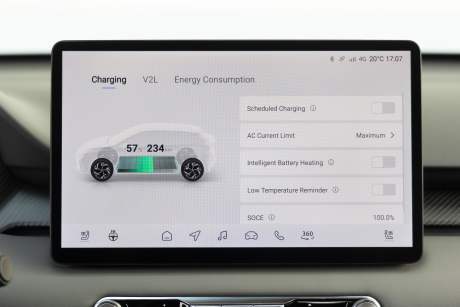
This LFP battery still enables a WLTP range of 452 km, with a claimed consumption of 17.6 kWh/100 km, including charging losses. Intriguingly, this version also boasts the fastest charging capability, with a peak power of 154 kW DC and a promised 10-80% charge time of just 25 minutes.

The other MG4 versions also receive software improvements to boost their autonomy. The "Long Range" variant, equipped with a 77 kWh Nickel Manganese Cobalt (NMC) battery, now achieves an impressive 545 km WLTP, an increase of 25 km over the previous version. However, its charging performance lags slightly, requiring 40 minutes for a 10-80% charge despite a maximum power of 144 kW. The XPower, on the other hand, retains the older 64 kWh NMC battery – which, according to brand spokespersons, is the most performance-oriented of the three – and is limited to a 405 km WLTP range, still an improvement of 20 km. Its charging time is stated at 30 minutes for 10-80% at a maximum power of 140 kW.
In practical testing, the chaotic weather conditions in Portugal, marked by heavy rain and strong winds, presented a challenging environment for the MG4 "64 kWh" version. Nevertheless, the vehicle performed admirably, recording an onboard computer consumption of 15.3 kWh/100 km over a diverse 280-kilometer route. In these adverse conditions, this translates to a theoretical range of approximately 403 km, a figure that is expected to improve significantly under more favorable circumstances. Unfortunately, the charging capabilities could not be fully evaluated during the test, as the 160 kW charging station used never delivered more than 65 kW. Therefore, the official charging specifications must be taken at face value for now.

Pricing, Competition, and Availability: Still a Smart Buy
The 2026 restyling of the MG4 has been a deliberate opportunity for the brand to reposition its electric compact, shifting focus towards higher-equipped versions. The range has been simplified, now featuring a single "Premium" trim level for both battery options, alongside the performance-oriented XPower. This strategy ensures that even the "entry-level" Premium variant comes generously equipped with a full suite of driver-assistance systems (including Level 2 semi-autonomous driving), a 360-degree camera, the new connected infotainment screen, an induction charger, heated front seats and steering wheel, and automatic climate control with a heat pump. The XPower trim, beyond its dual-motor setup, adds sporty bucket seats upfront and distinctive orange styling accents, with minimal other changes.

Priced at 33,490 euros (catalogue price) for the MG4 Premium 64 kWh, the vehicle maintains a highly competitive stance against its direct rivals. For instance, an equivalent Volkswagen ID.3 is priced at 39,990 euros, with the Renault Megane E-Tech commanding a similar price point. While these European competitors are eligible for France’s ecological bonus, potentially reducing their cost by over 5,000 euros depending on household income, MG has implemented its own aggressive counter-strategy. The brand is offering an unconditional 6,000-euro discount across all versions of the MG4.
This brings the effective price of the MG4 Premium 64 kWh down to a highly compelling 27,490 euros, a price point that directly competes with a mid-range Renault 5 E-Tech, a segment below the MG4. Even the formidable XPower variant is available for 32,990 euros, making it exceptionally difficult to beat in terms of performance-for-money.

Looking ahead, the competitive landscape will further evolve with the impending arrival of models like the Leapmotor B05 in Europe this summer, which could directly challenge the MG4’s market position. Additionally, the Tesla Model 3 Rear-Wheel Drive (formerly Standard Range), offering excellent performance and a substantial 534 km of range, remains a potent alternative at a well-placed price of 36,990 euros (before any current promotional discounts of 3,500 euros).
Despite initial market headwinds and increased competition, the 2026 MG4 EV’s strategic repositioning, coupled with significant interior and technological upgrades, and an aggressive pricing strategy, reaffirms its status as a compelling and smart purchase in the evolving European electric vehicle market. Its blend of improved quality, enhanced technology, and undeniable value proposition ensures its continued relevance and appeal to a broad range of consumers.