Sisilia Frederika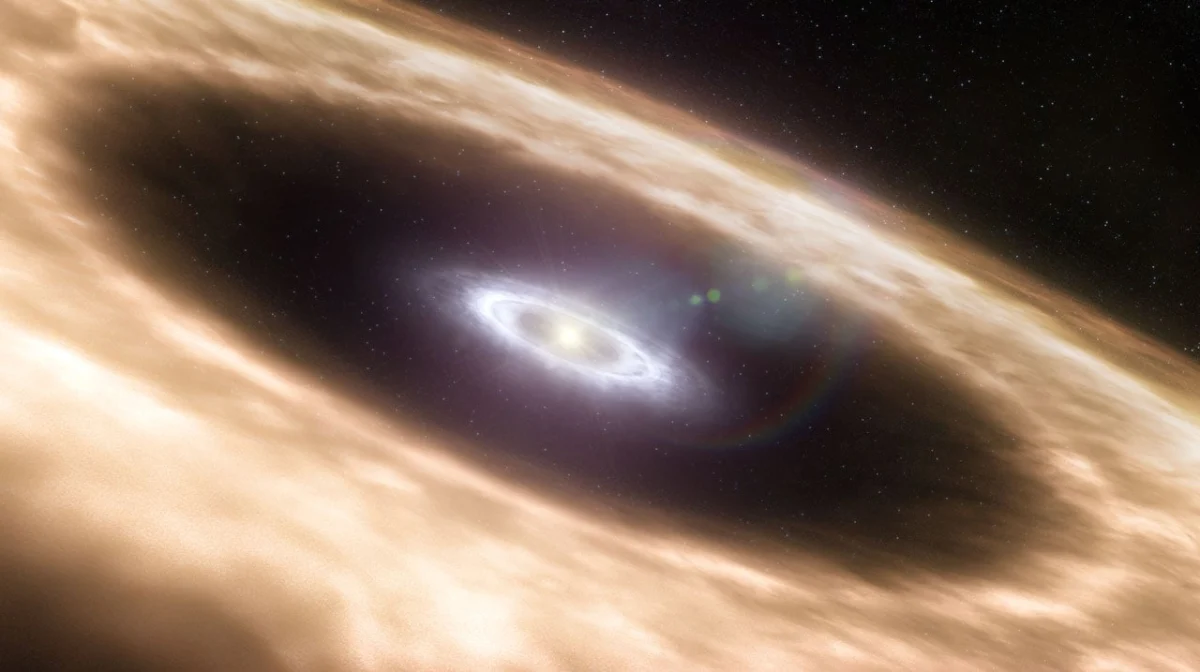
The transition from cosmic dust to the massive rocky bodies that constitute planetary systems remains one of the most compelling mysteries in modern astrophysics. While the broad strokes of the "Nebular Hypothesis" suggest that planets form from the gas and dust orbiting a young star, the specific physical mechanisms that allow microscopic grains to aggregate into kilometer-sized planetesimals have long eluded direct observation. Recently, a specialized research team from Switzerland, led by Dr. Holly L. Capelo of the University of Bern, has made a significant leap forward by conducting high-precision experiments in microgravity. By utilizing parabolic flights to simulate the weightless environment of a protoplanetary disk, the team has successfully demonstrated that shear-flow instabilities—a phenomenon where gas and dust behave like interacting fluids—play a critical role in the earliest stages of planetary evolution.
The Scientific Challenge: Bridging the Gap in Planetesimal Formation
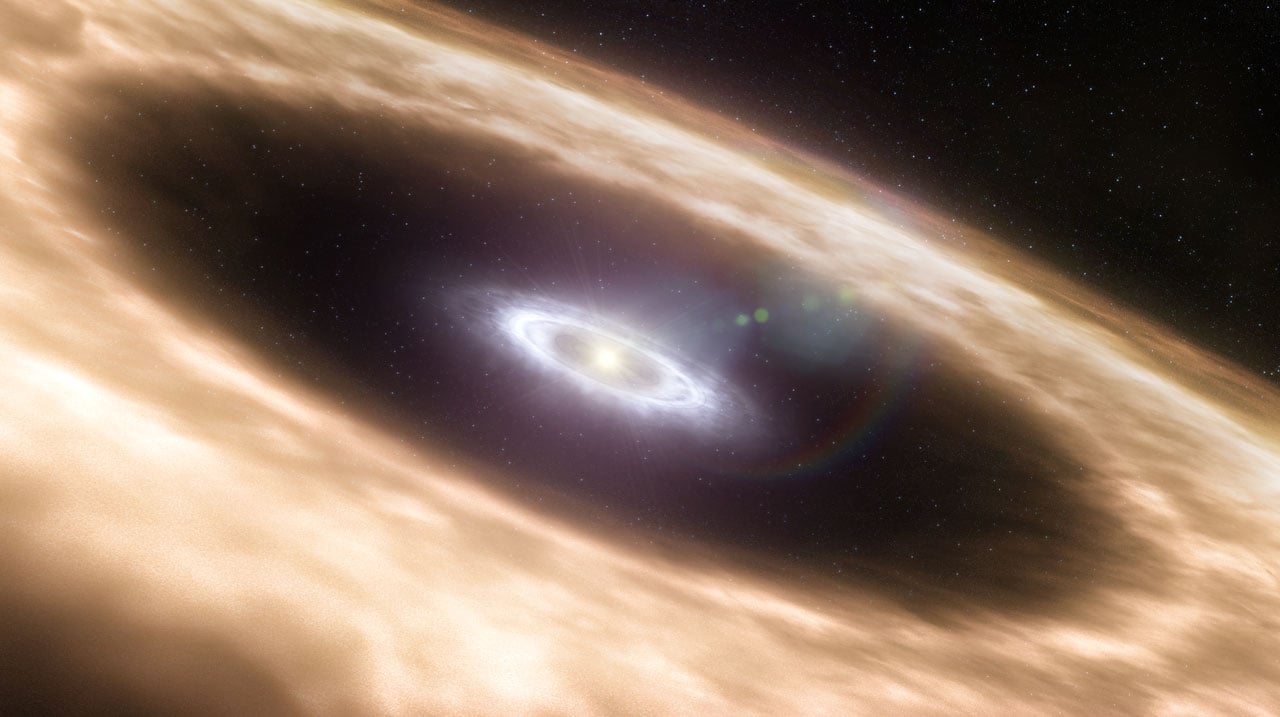
In the early stages of a star’s life, it is surrounded by a rotating disk of dense gas and dust known as a protoplanetary disk. Within this disk, solid material must somehow grow from sub-micron-sized dust grains into planetesimals, the building blocks of planets that are large enough to be held together by their own gravity. Traditionally, this process was viewed through the lens of simple collisions: rocks hitting other rocks to form larger rocks. However, this model faces a significant physical hurdle known as the "meter-size barrier." As objects grow to about a meter in size, the drag from the surrounding gas causes them to lose orbital velocity and spiral into the host star before they can grow any larger. Furthermore, high-velocity collisions at this scale often lead to fragmentation rather than accretion.
To solve this, astrophysicists have increasingly turned to hydrodynamics. Instead of viewing the disk as a collection of individual solid projectiles, they treat the mixture of gas and dust as a complex fluid system. In this regime, the interaction between the gas and the dust can create instabilities that naturally concentrate solid material into dense clumps. These clumps can then collapse under their own gravity to form planetesimals, bypassing the destructive collision phase. The Swiss team focused their research on a specific type of "shear-flow" instability, which occurs when two layers of fluid move past each other at different velocities or possess different densities.
Chronology of the TEMPusVoLa Experiment
The journey to validate these theoretical models began in 2020 with the development of a sophisticated experimental apparatus named TEMPusVoLa (an acronym reflecting its purpose to study dust and gas interactions in vacuum and low-gravity). Led by Dr. Capelo at the University of Bern, in collaboration with Lucio Mayer from the University of Zurich, the team designed the instrument to operate in the "Epstein regime"—a specific physical state where the gas is so tenuous that the mean free path of gas molecules is larger than the size of the dust particles. This condition is nearly impossible to replicate in a standard Earth laboratory because gravity causes dust to settle too quickly, and atmospheric pressure interferes with the delicate fluid interactions.
Following the construction of the TEMPusVoLa instrument, the team secured placement on a series of parabolic flight campaigns. These flights, often conducted on modified Airbus A310 aircraft, are a staple of microgravity research. Between 2021 and 2023, the team participated in multiple flight sequences to refine their data collection. Each flight involves a series of maneuvers where the aircraft climbs at a 45-degree angle and then enters a controlled dive. During the transition at the apex of the curve, the interior of the plane experiences approximately 20 to 30 seconds of weightlessness (microgravity). It is within these fleeting windows that the Swiss researchers were able to observe the behavior of dust in a vacuum-like gas flow without the interference of Earth’s gravitational pull.
Technical Analysis of Shear-Flow Instability in Microgravity
The core of the experiment involved injecting dust particles into a controlled gas stream within the TEMPusVoLa chamber. High-speed cameras tracked the movement of the particles with millimetric precision. The primary objective was to see if the "shear" created by the gas moving through the dust would trigger the formation of vortices or patterns indicative of hydrodynamical instability.
The data revealed that when the gas and dust interacted under the simulated conditions of a protoplanetary disk, the flow did not remain uniform. Instead, the team observed the emergence of characteristic patterns that confirmed the existence of shear-flow instabilities. This was a landmark moment for the researchers, as it provided the first experimental evidence that these instabilities are not merely mathematical constructs found in computer simulations but are physical realities that occur in the dilute, near-vacuum environments surrounding young stars.
"On Earth, gravity influences the behavior of the dust and gas," explained Lucio Mayer of the University of Zurich. "Only conditions that simulate the absence of gravity allow us to probe an extremely dilute flow regime, similar to the gas and dust disks orbiting around young stars." The ability to replicate the Epstein regime in a controlled setting allowed the team to measure the exact thresholds at which the gas begins to "tug" on the dust effectively enough to cause clumping.
Official Responses and Scientific Implications
The results of the study, recently published in Communications Physics, have been met with enthusiasm by the broader planetary science community. Dr. Holly Capelo emphasized that while the parabolic flights provided a breakthrough, they also highlighted the limitations of short-duration microgravity. "The parabolic flights only offered very short phases of weightlessness, which gives limited insight into the process," Capelo noted. "Once the instability starts, we noticed characteristic patterns developing in the flow of the material. Yet, the limited microgravity time prevents us from observing how these patterns evolve into fully developed turbulence."
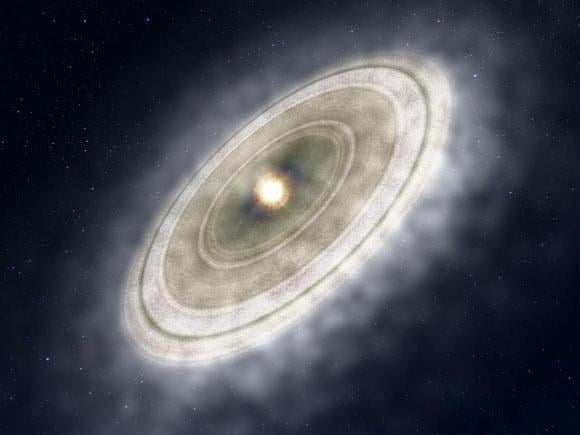
The confirmation of these instabilities has profound implications for how astronomers interpret data from high-powered observatories like the Atacama Large Millimeter/submillimeter Array (ALMA) and the James Webb Space Telescope (JWST). These telescopes observe the "dusty" signatures of distant star systems. By understanding the fluid dynamics of the dust, scientists can better interpret the gaps and rings seen in these distant disks, determining whether they are being carved by nascent planets or are the result of the very instabilities Capelo’s team is studying.
Furthermore, this research provides a vital link to the history of our own Solar System. By studying the "leftovers" of the formation process—comets and asteroids—scientists have long suspected that the early Solar System was a place of intense turbulence. The TEMPusVoLa results provide a physical mechanism for that turbulence, explaining how a simple cloud of gas and dust could eventually coalesce into the Earth, the Moon, and the other planets.
Broader Impact on Planetary Science and Future Horizons
The success of the Swiss team’s experiments underscores the growing importance of parabolic flights as a laboratory for planetary geology and astrophysics. While traditionally used for astronaut training, these "Vomit Comet" flights are increasingly hosting complex physics and material science experiments. Other recent studies in this field have utilized microgravity to study how impact craters form on low-gravity asteroids and how volcanic flows might behave on Jupiter’s moon, Io.
Looking forward, the University of Bern and University of Zurich teams are aiming for a more permanent laboratory. The next logical step for the TEMPusVoLa project is the International Space Station (ISS). On the ISS, researchers would have access to continuous microgravity for weeks or months, rather than seconds. This would allow the team to observe the full lifecycle of a shear-flow instability, from the initial formation of patterns to the development of mature turbulence and the eventual gravitational collapse of dust clumps into solid bodies.
"Only experiments can bridge this knowledge gap and reveal the crucial details of the dust and gas movement on spatial and time scales so small that they cannot be observed directly in the cosmos," Capelo stated. The transition to the ISS would provide the necessary data to refine global theoretical models of planet formation, potentially answering why some stars develop massive gas giants like Jupiter while others host small, rocky worlds like Earth.
Conclusion: A New Era of Experimental Astrophysics
The work conducted by Dr. Capelo and her colleagues represents a shift in the methodology of planetary science. For decades, the field relied heavily on theoretical mathematics and remote sensing. However, the complexity of fluid-dust interactions in the vacuum of space required a more "hands-on" approach. By taking their laboratory to the skies, the Swiss team has successfully bridged the gap between theoretical physics and the physical reality of the universe.
As the scientific community continues to analyze the data from the TEMPusVoLa flights, the focus remains on the ultimate goal: a comprehensive, verified model of how a simple cloud of interstellar gas transforms into a structured planetary system. With plans for ISS-based experiments on the horizon, the secrets of planetary birth are closer to being unraveled than ever before, promising a deeper understanding of our own origins in the silent, turbulent depths of the early Solar System.