Sisilia Frederika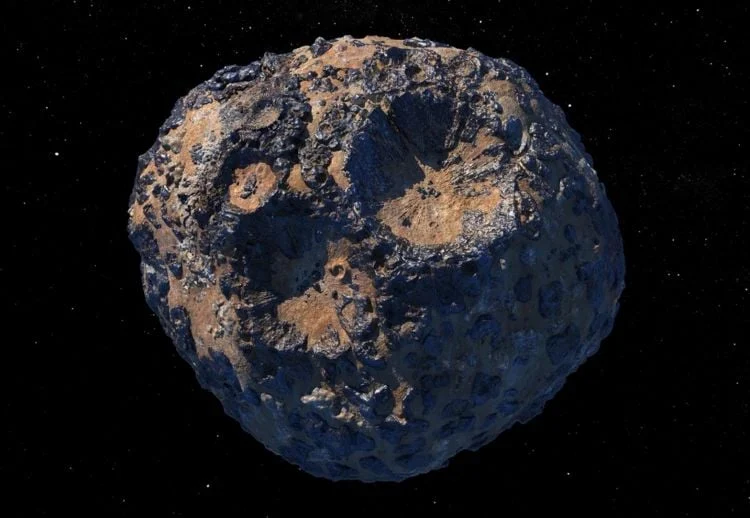
The enigmatic asteroid 16 Psyche, a massive metallic body orbiting within the Main Asteroid Belt between Mars and Jupiter, has long challenged the conventional understanding of solar system evolution. Unlike the majority of asteroids, which are composed primarily of silicate rock or ice, 16 Psyche is remarkably dense and predominantly metallic, leading planetary scientists to hypothesize that it may be the exposed nickel-iron core of a "protoplanet" that lost its rocky outer layers during the violent infancy of our solar system. A new international study led by researchers at the University of Arizona’s Lunar and Planetary Laboratory has utilized sophisticated 3-D impact simulations to investigate the asteroid’s north polar region, providing critical new clues about its interior structure and the role of porosity in crater formation.
The findings, recently published in the Journal of Geophysical Research: Planets, represent a significant step forward in preparing for NASA’s Psyche mission, which is currently en route to the asteroid. By modeling how large impacts shape the surface and interior of a metallic body, the research team, led by PhD candidate Namya Baijal, aims to provide a framework for interpreting the data that will be collected when the spacecraft arrives in 2029.
The Unique Composition of 16 Psyche
Located approximately 230 million miles from Earth, 16 Psyche is one of the most intriguing targets in the solar system. Measuring roughly 140 miles (226 kilometers) in diameter—comparable to the size of Massachusetts—it accounts for about one percent of the total mass of the entire asteroid belt. Since its discovery by Italian astronomer Annibale de Gasparis in 1852, the asteroid has been classified as an M-type (metallic) asteroid.
Current scientific consensus suggests that 16 Psyche is a remnant of a planetesimal—a building block of a planet—that underwent differentiation. In this process, the heavier metals sank to the center to form a core while lighter silicates formed a mantle and crust. A series of catastrophic "hit-and-run" collisions in the early solar system may have stripped away the rocky exterior, leaving the metallic core exposed. However, recent observations from ground-based telescopes and the James Webb Space Telescope have introduced complexities, suggesting the presence of hydrated minerals and perhaps a more varied surface composition than previously thought.
Advanced 3-D Modeling and the North Pole Basin
Because 16 Psyche is too distant for current telescopes to resolve fine surface details, the University of Arizona team turned to high-fidelity computer simulations. The researchers focused specifically on a large impact basin located near the asteroid’s north pole. This feature is of particular interest because its dimensions and shape offer a "window" into the mechanical properties of the asteroid’s interior.
The study employed 3-D models to simulate various impact scenarios, varying the composition, velocity, and angle of the impactors. A key focus of the research was determining how the interior structure of the asteroid—whether it is a solid, homogenous block of metal or a layered body with varying density—influences the final shape of the crater.
"One of our main findings was that the porosity—the amount of empty space inside the asteroid—plays a significant role in how these craters form," stated Namya Baijal, the study’s lead author. "Porosity is often ignored because it’s difficult to include in models, but our simulations show it can strongly affect the impact process and shape of craters left behind."
The Impact of Porosity on Crater Morphology
The concept of porosity is vital to understanding the history of 16 Psyche. If the asteroid is highly porous, it suggests it might not be a solid core but rather a "rubble pile" of metallic fragments held together by gravity. Conversely, low porosity would support the theory of a solid, differentiated core.
The simulations revealed that porosity significantly alters the "depth-diameter ratio" of craters. In a highly porous target, the energy of an impact is absorbed differently, often resulting in deeper, narrower craters compared to those formed on a solid, non-porous surface. The research suggests that the specific morphology of the north polar basin can only be explained by a particular combination of interior strength and empty space.
Furthermore, the team examined how the asteroid’s "potato-like" irregular shape affects the distribution of materials post-impact. In a low-gravity environment like that of 16 Psyche, debris from an impact can be distributed globally, potentially covering the metallic surface with a layer of "regolith" or fallback material that complicates spectral analysis from Earth.
A Timeline of Exploration: NASA’s Psyche Mission
The timing of this study is critical as NASA’s Psyche spacecraft is currently traversing the solar system. Launched on October 13, 2023, aboard a SpaceX Falcon Heavy rocket from Kennedy Space Center, the mission represents the first time humanity will explore a world made not of rock or ice, but of metal.
The mission timeline is as follows:
- October 2023: Successful launch and initial checkout of spacecraft systems.
- 2023–2026: The spacecraft utilizes solar-electric propulsion (Hall thrusters) to gradually increase its orbit.
- May 2026: A Mars gravity assist maneuver will provide the necessary velocity boost to reach the outer Main Asteroid Belt.
- August 2029: Arrival at 16 Psyche and the beginning of the primary science mission.
- 2029–2031: The spacecraft will spend 26 months orbiting the asteroid at various altitudes to map its surface and analyze its composition.
The spacecraft is equipped with a suite of sophisticated instruments designed to answer the questions raised by Baijal’s team. These include a multispectral imager to provide high-resolution images of the surface, a gamma-ray and neutron spectrometer to determine the elemental composition, a magnetometer to search for a remnant magnetic field (which would prove it was once a molten core), and an X-band radio telecommunications system to map the asteroid’s gravity field.
Implications for Planetary Science and Earth’s Core
The study of 16 Psyche is, in many ways, an investigation into the heart of our own planet. Earth’s core is composed of iron and nickel, but it is buried under nearly 1,800 miles of rock. The deepest humans have ever drilled—the Kola Superdeep Borehole in Russia—reached only 7.6 miles (12.26 kilometers), or roughly 0.2 percent of the distance to the center.
By visiting 16 Psyche, scientists are effectively visiting a planetary core without having to dig. The data regarding crater morphology and interior porosity will help researchers understand the "mechanical strength" of planetary cores. If 16 Psyche is indeed a remnant core, its current state provides a snapshot of the conditions that existed during the violent "accretion" phase of the solar system, roughly 4.5 billion years ago.
The research also has implications for the study of exoplanets. As astronomers discover more metallic-rich worlds in other star systems, the models developed for 16 Psyche will serve as the gold standard for interpreting the formation of metallic terrestrial planets across the galaxy.
Expert Analysis and Future Outlook
The international scientific community has reacted with optimism to the University of Arizona’s findings. The ability to simulate 3-D impacts with high precision allows mission planners to refine their "search patterns" once the spacecraft arrives. For instance, if the simulations suggest that certain crater types are indicative of subsurface volcanic rock (remnants of an ancient mantle), the spacecraft can be directed to prioritize those regions for chemical analysis.
The study also highlights the importance of "ground truth" in planetary science. While computer models provide the hypotheses, the physical arrival of the Psyche spacecraft will provide the definitive answers. The researchers noted that the strength of the interior at the impact site would determine how much of the "impactor" (the object that hit Psyche) is preserved. A stronger interior preserves more of the impactor’s material, whereas a weaker, more porous interior might swallow or redistribute it, changing the chemical signature of the crater.
As the Psyche spacecraft continues its six-year journey, studies like this one bridge the gap between speculation and discovery. The investigation into the north polar basin and the role of porosity ensures that when the first high-resolution images are beamed back to Earth in 2029, scientists will have the theoretical framework necessary to decode the history of this unique metallic world.
The exploration of 16 Psyche is more than just a mission to an asteroid; it is a journey back in time to the very beginning of our solar system. By understanding the violent impacts that shaped this metal giant, we gain a clearer picture of the processes that built the world beneath our feet. As the University of Arizona team concludes, the mystery of 16 Psyche is a puzzle that only "doing science" through a combination of advanced modeling and direct exploration can solve.