Vera Intan Clara
Apple CEO Tim Cook recently ignited a widespread discussion by publicly urging users to curtail their time spent on iPhones, emphasizing the importance of human connection over screen engagement. These remarks, delivered during a prominent interview, have been met with a mixture of irony, skepticism, and intense speculation, particularly given their origin from the helmsman of one of the world’s most influential and profitable smartphone manufacturers. The comments have not only raised questions about the tech giant’s evolving philosophy but also fueled conjecture regarding upcoming product innovations, notably the long-rumored Apple Glasses.
The unexpected admonition from Cook unfolded during an interview with Michael Strahan on Good Morning America last week. The discussion, initially centered on Apple’s profound global impact ahead of its upcoming 50th-year anniversary on April 1st, took a notable turn when Cook, quite unexpectedly, advocated for less engagement with one of his company’s flagship products. "I don’t want people using them too much," Cook stated, articulating a sentiment that diverged sharply from conventional corporate messaging. He elaborated, "I don’t want people looking at the smartphone more than they’re looking in someone’s eyes, as if they’re scrolling endlessly. This is not how you want to spend your day. Go out and spend it in nature."
This statement, while seemingly benign on the surface, carries significant weight due to its source. Apple’s immense success is intrinsically linked to the pervasive adoption and consistent use of its devices. For the chief executive of a company whose valuation is largely predicated on the sustained engagement of its user base to suggest moderation, if not outright reduction, in product usage, is an unprecedented move that immediately captured global attention. The timing, just weeks before the company’s half-century milestone, adds another layer of intrigue, prompting some to wonder if it was a pre-emptive April Fools’ jest or a calculated strategic maneuver.
The Context of Digital Overload and Public Health
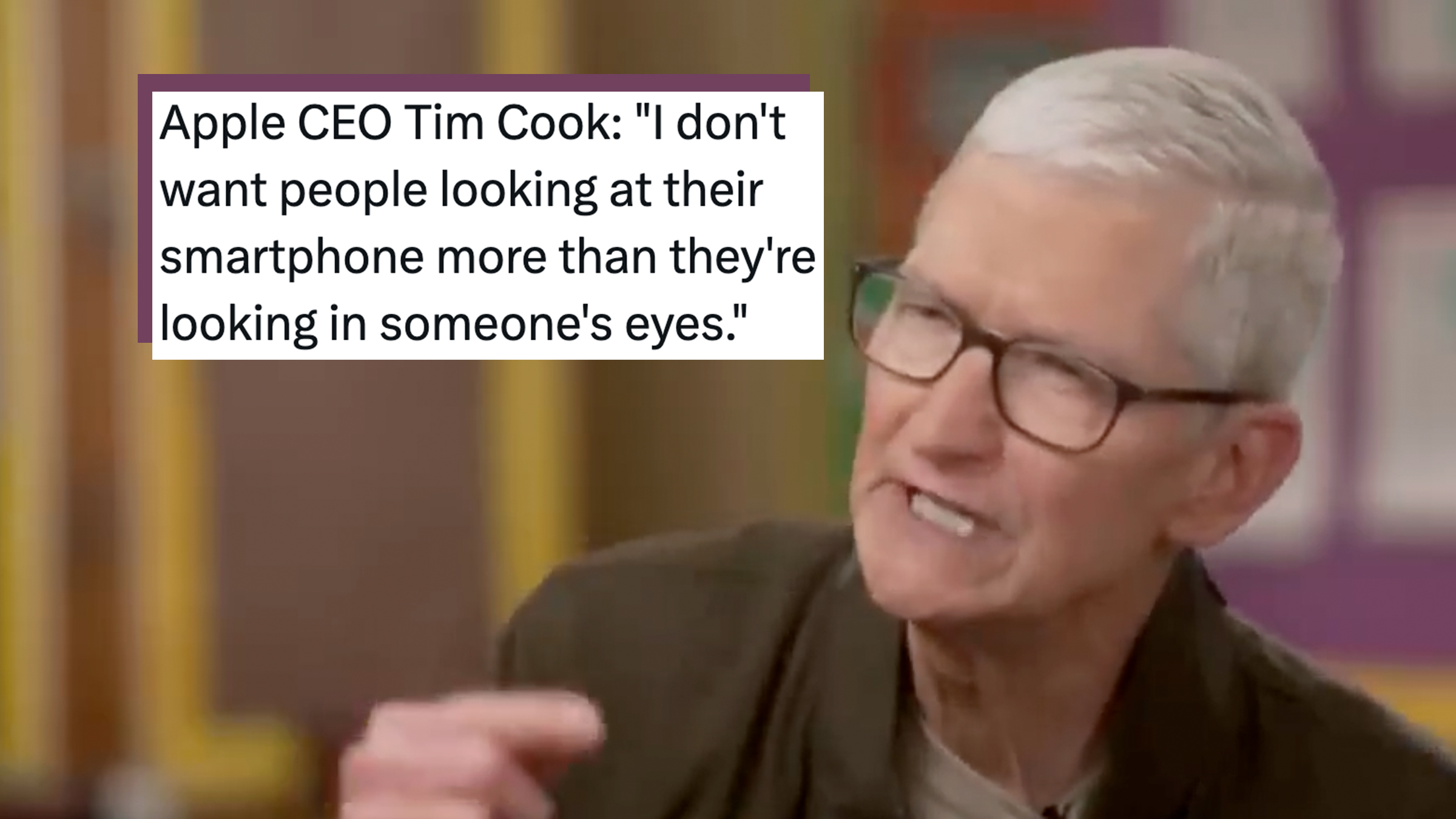
Cook’s remarks resonate deeply within a societal landscape increasingly grappling with the ramifications of excessive digital consumption. Over the past decade, smartphones have transitioned from mere communication tools to indispensable extensions of daily life, facilitating everything from work and education to social interaction and entertainment. This ubiquity, however, has not come without its costs. Numerous studies have consistently highlighted a correlation between high smartphone usage and a range of adverse health outcomes.
A comprehensive meta-analysis conducted in 2025, for instance, underscored the pervasive impacts of smartphones on mental health, linking elevated usage patterns to increased instances of depression, anxiety, and sleep disturbances. Alarmingly, the analysis noted that "close to one of five adolescents spends nearly all their waking hours on digital devices," painting a stark picture of a generation deeply immersed in digital realities. These findings are supported by data from various research institutions, which indicate that the average adult now spends upwards of 4-6 hours daily on their smartphone, a figure that often rises significantly among younger demographics. Such statistics underscore the timeliness, if not the irony, of Cook’s call for moderation. The problem he identifies is not a nascent one but a deeply entrenched societal challenge that has grown in parallel with the tech industry’s rapid expansion and profitability.
Public Reaction: Irony, Cynicism, and Speculation
The immediate public and media reaction to Cook’s comments was swift and varied, yet largely characterized by a sense of incredulity and irony. Social media platforms, the very spaces often blamed for fostering endless scrolling, erupted with commentary. Memes proliferated, with one particularly popular rendition juxtaposing Cook’s advice with the image of a "drug dealer thinking people should take less drugs," a sardonic commentary on the perceived hypocrisy. Another widely shared sentiment likened Apple’s position to "alcohol companies telling you to drink responsibly when they know that 80% of their revenue is from the top 10% of the market (addicts)," highlighting the economic reality that tech companies, like other industries, often benefit disproportionately from heavy users.
Journalist and author Jemele Hill tweeted, "This is like when Nino Brown handed out turkeys in the hood during the holidays," drawing a parallel to a fictional drug lord’s superficial act of charity. These reactions underscore a prevailing public cynicism towards corporate social responsibility statements, especially when they appear to contradict core business models. Many perceived Cook’s statement as a form of low-effort public relations, an attempt to deflect growing criticism about the addictive nature of digital devices by placing the onus of responsible usage squarely on the consumer.

Beyond the humor and cynicism, a significant portion of the public discourse gravitated towards speculation about Apple’s future product roadmap. The prevailing theory, amplified by social media users like @ferbfromfremont on X and r/BarryMcKokinor on Reddit, is that Cook’s comments are a subtle prelude to a new product designed to offer an alternative, less screen-dependent form of digital interaction. The most frequently cited possibility is the long-anticipated "Apple Glasses" or an augmented reality (AR) device that would allow users to "look at the world" through a digital overlay rather than constantly staring down at a handheld screen. This speculation is not unfounded; Apple has made significant investments in AR/VR technology, evidenced by the recent launch of the Vision Pro, and Cook himself has often spoken about the transformative potential of augmented reality. The idea is that an AR device could seamlessly integrate digital information into the real world, potentially fulfilling Cook’s vision of looking into someone’s eyes while still accessing digital content.
Apple’s History with Digital Well-being Initiatives
While Cook’s direct admonition to reduce iPhone usage is novel, Apple is not entirely new to the discourse surrounding digital well-being. Over the years, the company has introduced several features aimed at helping users manage their screen time and foster healthier digital habits. The "Screen Time" feature, launched in iOS 12, provides detailed reports on app usage, allowing users to set daily limits for specific applications or categories. "App Limits," "Downtime," and "Communication Limits" are designed to restrict access to apps during designated periods, particularly for children and adolescents. "Focus Modes," introduced more recently, allow users to customize notification settings to minimize distractions during work, sleep, or personal time. Furthermore, features like Night Shift and True Tone are intended to reduce eye strain and improve sleep quality by adjusting screen color temperatures.
However, as the original article points out, these initiatives have often been perceived as "Band-Aids" – reactive measures that attempt to mitigate symptoms rather than address the fundamental design principles that make smartphones inherently engaging, and at times, addictive. Critics argue that while these tools are available, they often require proactive user engagement to be effective, and the underlying algorithms and user interfaces are still optimized for maximizing engagement. The tension between Apple’s business model, which thrives on device usage and service subscriptions, and its stated commitment to user well-being remains a complex and often contradictory challenge.
Broader Implications and the Future of Tech

Cook’s statement, irrespective of its underlying motive, signals a growing awareness within the tech industry about its profound societal impact. It reflects a shift from a purely growth-oriented narrative to one that, at least publicly, acknowledges the ethical responsibilities associated with developing and deploying powerful technologies. This pivot could be driven by several factors:
- Legacy and Personal Reflection: At 65, Tim Cook might genuinely be contemplating his legacy beyond quarterly earnings. Leaders of major corporations often reach a point where they consider the broader societal footprint of their innovations.
- Corporate Social Responsibility (CSR): With increasing regulatory scrutiny, public pressure, and growing concern from parents and educators, tech companies are compelled to adopt more proactive CSR stances. Acknowledging the problem, even while profiting from it, can be a strategic move to manage public perception and pre-empt harsher regulations.
- Market Foresight: The most compelling theory, given Apple’s history, is that Cook’s comments are a strategic market signal. If Apple is indeed preparing to launch a new category of devices, such as AR glasses, that promise a more integrated, less distracting digital experience, framing current smartphone usage as a problem positions the new product as a solution. This would be a classic disruptive innovation strategy, where the company implicitly critiques its own dominant product category to pave the way for a successor. Such a move would aim to reshape consumer expectations and create demand for what Apple believes is the next frontier in personal computing.
The implications of Cook’s remarks extend beyond Apple. They contribute to a broader global conversation about the ethics of technology design, the balance between innovation and well-being, and the evolving relationship between humans and their digital tools. As artificial intelligence becomes more sophisticated and immersive technologies like augmented and virtual reality advance, the lines between the physical and digital worlds will blur further. Cook’s call to "spend it in nature" and "look in someone’s eyes" serves as a poignant reminder of the enduring human need for authentic connection and real-world engagement, even as technology continues to reshape our lives.
The challenge for Apple, and indeed for the entire tech industry, is to innovate in a way that enhances human experience without inadvertently diminishing it. Whether Cook’s statement is a genuine plea for moderation, a calculated marketing ploy for future products, or a combination of both, it has undeniably opened a new chapter in the ongoing dialogue about technology’s place in our lives. The world watches to see if Apple’s future innovations will truly offer a cure to the digital overload it helped create, or merely shift our gaze from one screen to another.