Sisilia Frederika
The fundamental understanding of how planetary systems evolve has reached a significant milestone following a groundbreaking study of the ultra-hot Jupiter exoplanet WASP-189b. Utilizing the Gemini South telescope in Chile, an international research team led by Arizona State University (ASU) has provided the first direct observational evidence that the chemical composition of a planet closely mirrors that of its host star. This discovery, centered on the simultaneous measurement of magnesium and silicon, validates long-held theoretical assumptions regarding the formation of worlds from primordial stellar disks. The findings, published in Nature Communications, offer a new "observational anchor" for astronomers seeking to decode the history of planetary systems across the galaxy.
The research was spearheaded by Jorge Antonio Sanchez, a graduate student at ASU, who employed the Immersion Grating Infrared Spectrograph (IGRINS). This high-resolution instrument, on loan to the Gemini South facility from the McDonald Observatory at the University of Texas at Austin, allowed the team to peer into the searing atmosphere of WASP-189b with unprecedented precision. By capturing the spectral signatures of vaporized metals, the team successfully calculated the ratio of magnesium to silicon in the planet’s atmosphere, finding it to be in near-perfect alignment with the chemical makeup of its parent star, HR 5599.
A Profile of an Extreme World: WASP-189b and HR 5599
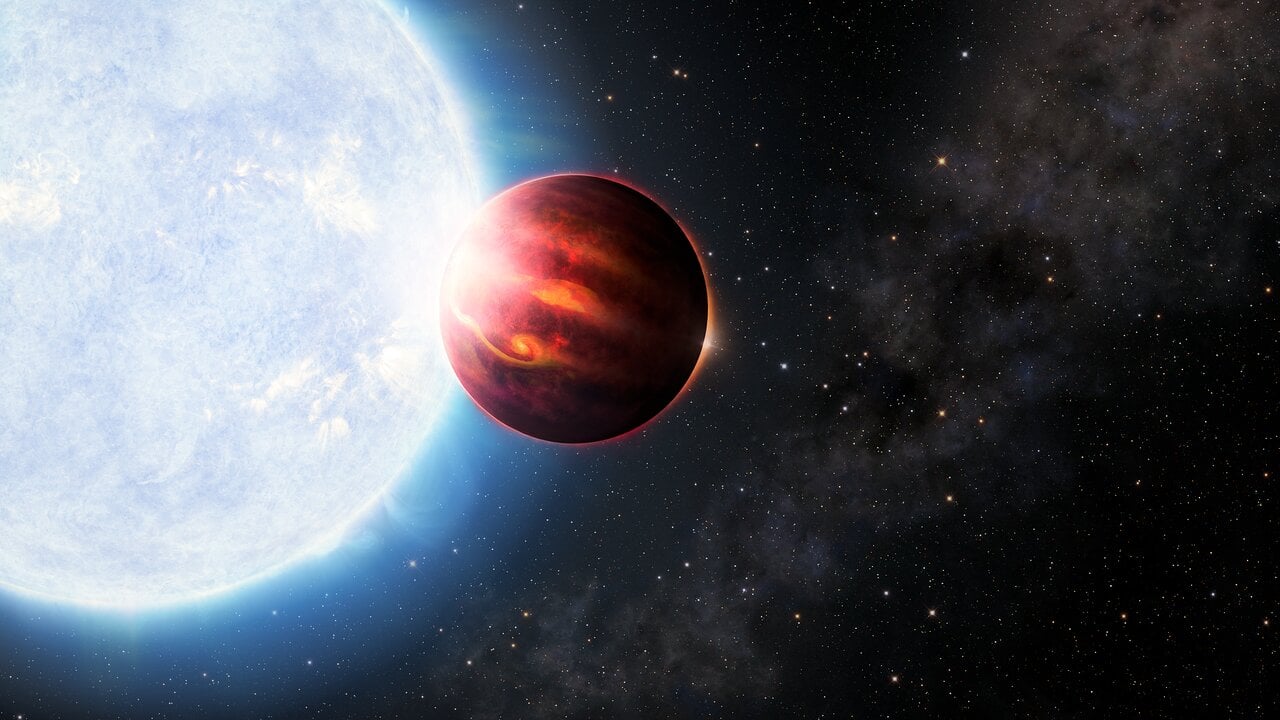
WASP-189b is not a typical planet. Classified as an "ultra-hot Jupiter," it represents one of the most extreme environments discovered to date. The planet was first identified in 2018 through the Wide Angle Search for Planets (WASP) consortium and was later the subject of intense scrutiny by the European Space Agency’s Characterizing Exoplanets Satellite (CHEOPS) in 2020. Located approximately 322 light-years from Earth, the planet is roughly 1.6 times the radius of Jupiter and possesses twice its mass.
The planet orbits its host star, HR 5599, at a blistering proximity. Its orbital period is a mere 2.7 days, placing it so close to the stellar surface that its dayside temperature soars to an estimated 3,354 Kelvin (3,080 degrees Celsius or 5,577 degrees Fahrenheit). This temperature is comparable to the surface of some small stars and is hot enough to vaporize most metals, including iron, magnesium, and chromium. Consequently, WASP-189b does not have a solid surface or traditional clouds; instead, its atmosphere is a swirling cauldron of gaseous metals and volatile elements.
The host star, HR 5599, is a young, bright A-type star. These stars are significantly hotter and more massive than our Sun, typically burning with a blue-white hue. Because A-type stars rotate rapidly and emit intense ultraviolet radiation, they create a harsh environment for any orbiting bodies. Interestingly, WASP-189b occupies a polar orbit, meaning it travels over the star’s poles rather than its equator. This unusual orbital alignment suggests a turbulent past, likely involving gravitational interactions with other undetected bodies in the system that "kicked" the planet out of the traditional equatorial plane.
The Chronology of Investigation and the Role of Gemini South
The journey to understanding WASP-189b has spanned several years and involved multiple generations of astronomical technology. Following its 2018 discovery, the planet became a priority target for atmospheric characterization. In 2020, the CHEOPS mission provided high-precision photometry, revealing the planet’s brightness and confirming its extreme temperature. However, photometry alone could not reveal the specific chemical constituents of the atmosphere.
To achieve a chemical breakdown, the ASU-led team turned to ground-based spectroscopy. The Gemini South telescope, part of the International Gemini Observatory operated by NSF’s NOIRLab, provided the necessary aperture and stability. The addition of the IGRINS instrument was pivotal. IGRINS operates in the near-infrared spectrum, a region of light where the signatures of many metallic oxides and hydride molecules are most prominent.
During the observation window, the team utilized the "cross-correlation" technique. As WASP-189b moved in its orbit, its spectral lines shifted due to the Doppler effect. By comparing these shifting lines against theoretical templates of magnesium and silicon, the researchers could isolate the planet’s signal from the overwhelming glare of the host star. This marked the first time that both magnesium and silicon—critical building blocks of rocky material—were measured simultaneously in an ultra-hot Jupiter with such high confidence.
Upholding the Foundations of Planet-Forming Theory
The significance of the ASU study lies in its confirmation of the "inheritance" model of planetary formation. According to the standard nebular hypothesis, stars and planets are born from the same rotating cloud of gas and dust, known as a protoplanetary disk. As the central protostar collapses and ignites nuclear fusion, the remaining material in the disk begins to clump together through a process called accretion.
Under this model, the "metallicity" (the abundance of elements heavier than hydrogen and helium) of the resulting planets should be fundamentally linked to the chemistry of the host star. While gas giants like Jupiter primarily collect hydrogen and helium, they also sweep up heavier elements present in the disk. In the case of WASP-189b, the high temperatures keep these heavier elements in a gaseous state in the upper atmosphere, making them visible to spectrographs.
"WASP-189b gives us a much-needed observational anchor in our understanding of terrestrial planet formation," stated Jorge Antonio Sanchez. He noted that the discovery validates the presumed resemblance of stellar composition to the proportion of rocky material available in a system. By proving that the magnesium-to-silicon ratio in a gas giant matches its star, scientists can more confidently assume that the same ratio applies to smaller, rocky planets within the same system—planets that are currently too small for us to analyze spectroscopically in such detail.
Technical Analysis: Why Magnesium and Silicon Matter
In the field of planetary science, magnesium and silicon are considered "refractory" elements. They have high melting and boiling points and are the primary constituents of silicate rocks, which make up the bulk of Earth’s crust and mantle. On Earth, the ratio of these elements influences everything from volcanic activity to the viscosity of the mantle, which in turn drives plate tectonics.
In the context of WASP-189b, finding these elements in the atmosphere in the same proportions as the star HR 5599 suggests that the planet formed from the same well-mixed reservoir of material. If the planet had shown a significantly different ratio, it might have suggested that the planet formed much further out in the disk and migrated inward, or that it had "polluted" its atmosphere by swallowing smaller planetesimals with different compositions. The alignment of the ratios reinforces the idea of a shared chemical heritage, simplifying the models astronomers use to predict the composition of distant solar systems.
Implications for Astrobiology and the Search for Life
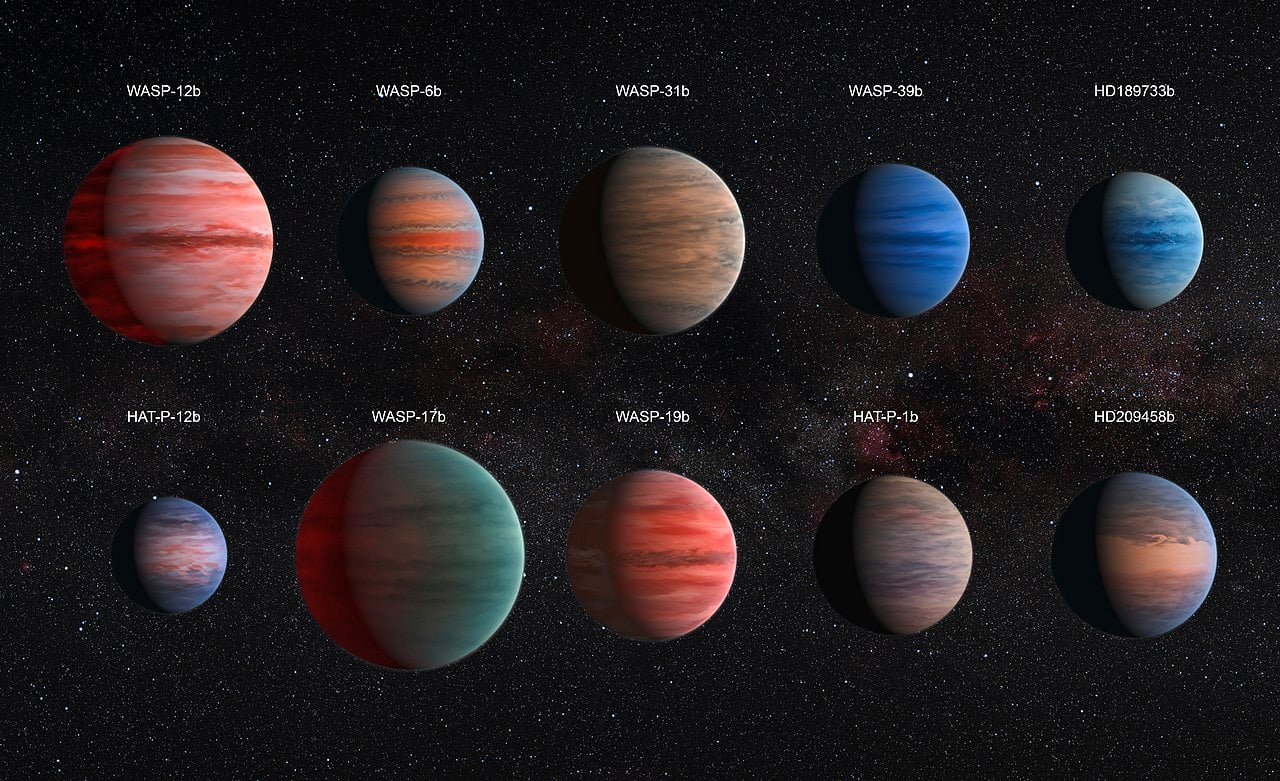
While WASP-189b itself is a hellish world entirely inhospitable to life as we know it, the study has profound implications for the field of astrobiology. The search for habitable worlds often begins with identifying stars that are "Sun-like" in their chemical makeup. If we can assume that a star’s chemical signature is a reliable proxy for the materials available to its planets, we can narrow the search for Earth-like worlds.
Astrobiologists look for "habitable zones"—regions where liquid water can exist. However, water is only one part of the equation. A planet also needs the right geochemistry to support a magnetic field (to protect its atmosphere) and plate tectonics (to regulate its climate via the carbon cycle). Both of these planetary features are heavily dependent on the abundance of iron, magnesium, and silicon. By analyzing the light of distant stars, astronomers can now use the "WASP-189b benchmark" to infer whether a system has the necessary raw materials to build a geologically active, habitable planet.
Furthermore, the study demonstrates that the persistence of these elements in the atmospheres of hot Jupiters can reveal how solids and gases are mixed during the violent early stages of a system’s life. This "mixing" history is crucial for understanding how water and organic molecules are delivered to the inner regions of a solar system.
Expert Reactions and the Future of Exoplanetary Science
The success of the Gemini South observations has been met with enthusiasm from the broader scientific community. Michael Line, an Associate Professor at ASU and co-author of the study, emphasized the technological leap represented by this research. "Our study demonstrates the capability of ground-based, high-resolution spectrographs to constrain critical species like magnesium and silicon," Line said. "This advancing capability opens an entirely new dimension in our study of exoplanet atmospheres."
The study also highlights the importance of international collaboration and the sharing of resources. The use of the IGRINS instrument, which moved from Texas to Chile to take advantage of Gemini South’s superior viewing conditions, illustrates the "on-loan" model of modern astronomy that maximizes the utility of specialized tools.
Looking forward, the research team intends to apply these techniques to a broader sample of exoplanets. As the James Webb Space Telescope (JWST) continues its mission in space, ground-based observatories like Gemini South remain essential for providing high-resolution data that complements JWST’s infrared sensitivity. Future multi-wavelength studies will likely aim to measure even more complex species, such as titanium oxide or vanadium oxide, which act as "sunscreen" in ultra-hot atmospheres, creating thermal inversions where the atmosphere gets hotter with altitude.
The era of simply discovering exoplanets has transitioned into an era of detailed characterization. With the chemical link between stars and planets now observationally confirmed, the next decade of space exploration will focus on the "diversity of worlds"—understanding why some systems produce scorched giants like WASP-189b while others produce temperate, rocky havens like Earth. Through the lens of telescopes like Gemini South, the distant lights in the night sky are beginning to reveal not just their presence, but their very substance.