admin
admin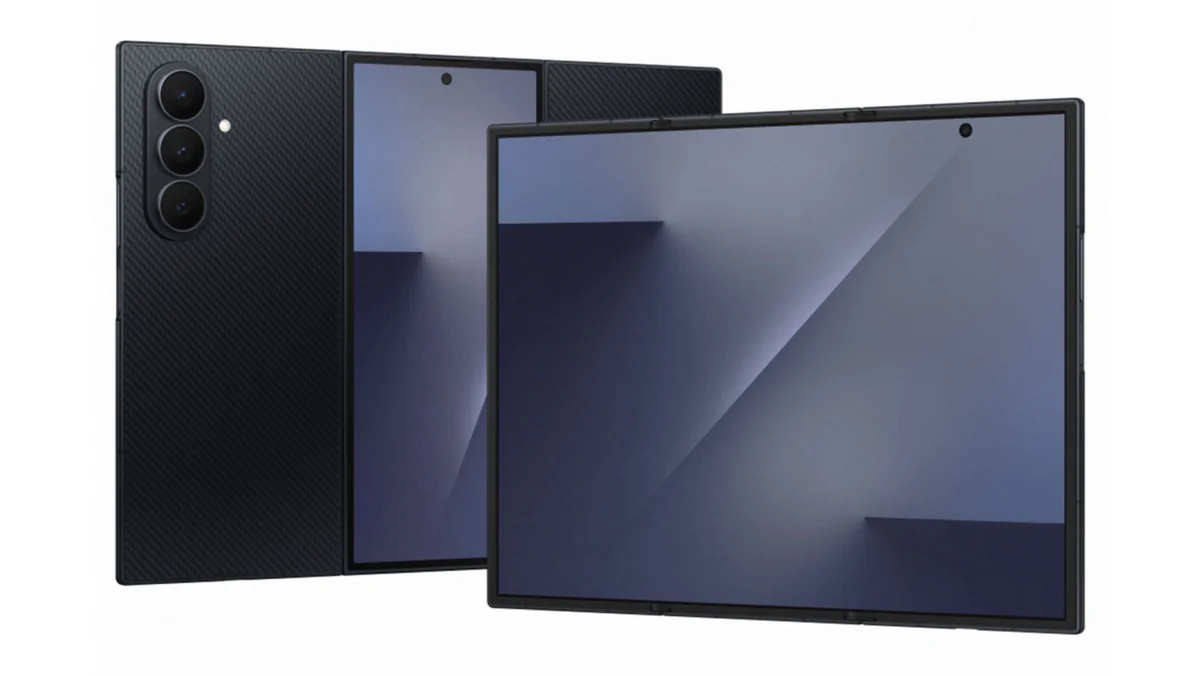
Samsung Electronics has signaled a significant strategic shift in its mobile hardware roadmap, moving away from its initial triple-folding concepts toward a more robust, wide-format design. While recent reports confirmed that the company had halted the production of its first-generation triple-folding Galaxy Z TriFold smartphone, newly surfaced patent filings suggest that the project has not been abandoned, but rather reimagined. This next-generation device, tentatively referred to as the Galaxy Z TriFold Wide, appears to embrace a "passport-style" form factor—a design philosophy increasingly associated with the industry’s anticipation of Apple’s rumored iPhone Ultra and iPhone Fold entries.
The transition comes at a critical juncture for Samsung’s mobile division. The company has faced mounting pressure from "memory chipflation" and rising component costs, which reportedly squeezed the operating margins of its mobile division to nearly one percent in recent quarters. This economic reality necessitated a pivot from "prestige" experimental products toward devices with more clear-cut market utility and refined engineering. The Galaxy Z TriFold Wide represents this new direction, prioritizing a user-friendly aspect ratio and a more durable chassis over the pursuit of thinness at any cost.
A New Architectural Approach: The Galaxy Z TriFold Wide
According to patent documentation and insights analyzed by industry observers, the Galaxy Z TriFold Wide departs from the elongated, narrow silhouettes of previous Samsung foldables. Instead, it adopts a squat, wide orientation that offers a more natural canvas for both productivity and media consumption. The patent sketches reveal a device with a substantial frame, designed to house the complex mechanical requirements of a dual-hinge system without compromising structural integrity.
Key features identified in the patent include a triple-camera array on the rear, side-mounted physical keys—likely integrating biometric sensors—and a multi-panel display that can be manipulated into several distinct configurations. One of the most notable configurations is a "tent-like" triangular mode. In this state, the device stands independently, allowing one panel to act as a primary media screen while the others provide stability. Furthermore, this mode is expected to support a "passive display" functionality, transforming the folded device into a smart hub that displays widgets, weather updates, and notifications when not in use as a primary smartphone.
The Influence of the "Passport" Form Factor and Market Trends
The industry-wide shift toward wider foldable screens is largely driven by user feedback regarding the "cover screen" experience. Early iterations of the Galaxy Z Fold series were criticized for having a narrow, "remote control" aspect ratio that made typing difficult. By adopting a wider form factor, Samsung aims to provide a front-display experience that mirrors a traditional flagship smartphone, while the unfolded interior offers a near-square tablet experience.

This design pivot is also viewed as a preemptive strike against Apple’s eventual entry into the foldable market. Rumors surrounding the "iPhone Ultra" or "iPhone Fold" suggest that Apple is favoring a wider, more ergonomic design rather than a tall, narrow one. By moving toward the Galaxy Z TriFold Wide and the concurrently rumored Galaxy Z Fold 8 Wide, Samsung is attempting to set the standard for this "passport" aesthetic before its primary rival enters the fray.
Chronology of Samsung’s Triple-Folding Development
The journey toward a commercial triple-folding device has been marked by several years of public prototypes and internal resets.
- 2021–2022: Initial Concepts. Samsung Display showcased the "S-Fold" and "G-Fold" prototypes at various tech expos, demonstrating the feasibility of triple-panel screens using both inward and outward folding hinges.
- 2023: Engineering Refinement. Reports surfaced that Samsung was working on the "Galaxy Z TriFold," aiming for a launch that would coincide with the maturity of its Ultra-Thin Glass (UTG) technology.
- Early 2024: Economic Headwinds. Faced with soaring DRAM and NAND flash prices, Samsung reportedly "axed" several prestige projects to focus on profitability, leading to the temporary cancellation of the first-gen TriFold.
- Late 2024: The "Wide" Pivot. New patents emerged, showing a shift from the original design to the "Wide" variant, alongside rumors of a Galaxy Z TriFold 2 featuring a refined, ultra-thin hinge mechanism.
- 2025–2027 Projections. Analysts expect the Galaxy Z Fold 8 Wide to serve as a bridge product in 2026, with the full TriFold Wide potentially debuting by mid-2027 as a halo product for the Galaxy ecosystem.
Technical Specifications and the Role of the Galaxy Z Fold 8 Wide
While the TriFold Wide remains in the patent and prototyping phase, it is expected to share a technological lineage with the upcoming Galaxy Z Fold 8 Wide. The latter is rumored to feature a 5.4-inch external display and a 7.6-inch internal display, though in a much wider aspect ratio than current models. Under the hood, these next-generation devices are expected to leverage the Snapdragon 8 Elite Gen 5 chipset, a processor designed to handle the intensive multitasking required by triple-panel interfaces.
Battery technology remains a significant hurdle for triple-folding devices. To power three screen segments, Samsung is reportedly targeting a minimum battery capacity of 5,000mAh. Achieving this while maintaining a manageable device thickness requires advancements in silicon-anode battery density, a field where Samsung SDI has been making steady progress. The "Wide" form factor provides more internal volume to distribute battery cells, potentially solving the endurance issues that plagued earlier triple-fold concepts.
Economic Implications and the "Chipflation" Challenge
The decision to redesign the TriFold into a wider, perhaps more "manufacturable" version is a direct response to the volatile semiconductor market. In 2024, the cost of high-bandwidth memory and advanced mobile processors rose significantly, leading to a "chipflation" cycle that hit high-end hardware manufacturers particularly hard.
For Samsung, whose Galaxy division struggled to maintain a 1% operating margin on certain premium lines, the TriFold must be more than a technological marvel; it must be a viable commercial product. By widening the device, Samsung can utilize more standardized internal components and potentially simplify the hinge assembly, which is often the most expensive and failure-prone part of a foldable phone.

Competitive Landscape: Huawei and the Race for Triple-Fold Supremacy
Samsung is no longer the undisputed leader in foldable innovation. In late 2024, Huawei launched the Mate XT, the world’s first commercially available triple-folding smartphone. While the Mate XT is currently limited to the Chinese market and carries a premium price tag exceeding $2,800, it proved that the form factor is viable.
Industry analysts suggest that Samsung’s delay in releasing its own TriFold is a calculated move to ensure superior durability. Unlike Huawei’s outward-folding design, which leaves the screen exposed, Samsung’s patents suggest a more complex inward-folding "G-shape" or "S-shape" that protects the primary display. The "Wide" patent indicates that Samsung is prioritizing a "refined" user experience over being the first to market, focusing on a device that can withstand the rigors of daily use better than the first-generation competitors.
Impact on the Future of Mobile Productivity
The broader implication of the Galaxy Z TriFold Wide lies in its potential to replace the traditional tablet and even the small laptop for mobile professionals. A wide-format triple-fold device provides enough screen real estate to run three full-sized mobile apps side-by-side, a feat that current dual-panel foldables struggle to achieve without significant UI scaling issues.
Furthermore, the "tent mode" and "smart hub" features described in the patents suggest that Samsung envisions the phone as a central device in the home and office. When folded and placed on a desk, the Wide TriFold could act as a dedicated video conferencing terminal or a secondary dashboard for smart home controls.
Conclusion
The emergence of the Galaxy Z TriFold Wide patents marks a new chapter in Samsung’s mobile strategy. By moving away from the narrow, experimental designs of the past and embracing a wider, more utilitarian form factor, the company is positioning itself to capture a market that demands both innovation and practicality. As the mobile industry moves toward 2026 and 2027, the success of the "Wide" series will likely determine whether Samsung can reclaim its status as the definitive leader in hardware engineering amidst rising costs and intensifying global competition. While the original TriFold may be defunct, its successor appears poised to offer a more mature and commercially viable vision of the future of the smartphone.