admin
admin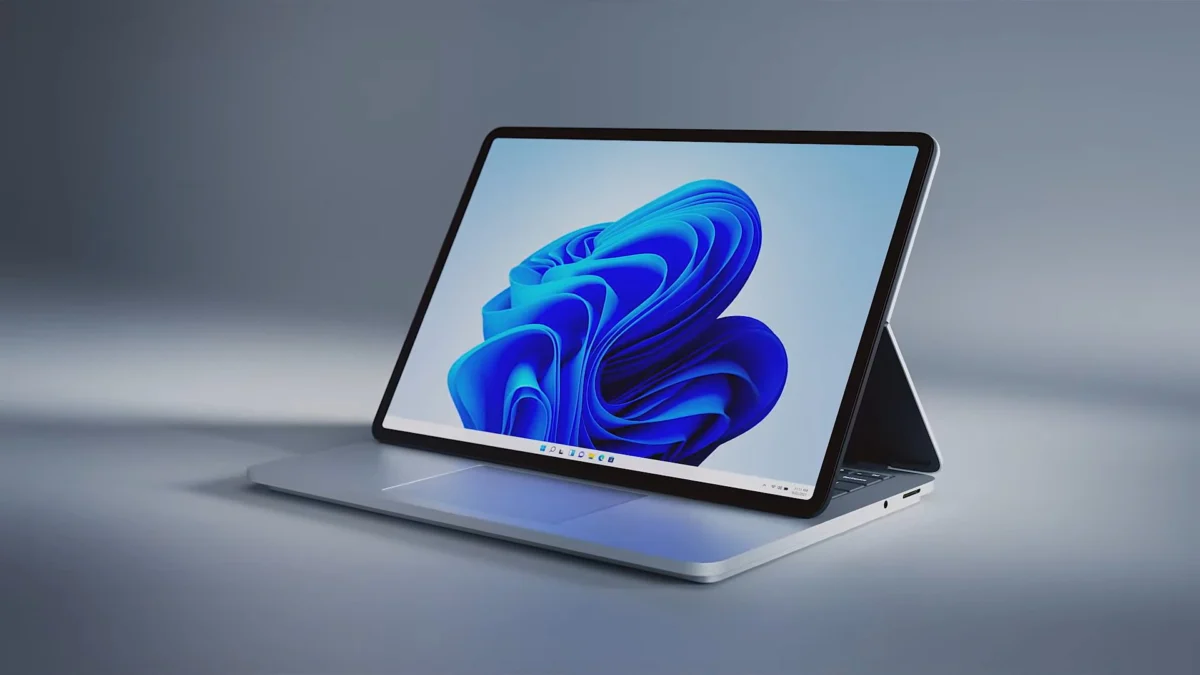
The price adjustments, which vary by model and configuration, reflect a broader industry trend where semiconductor supply chains remain under significant strain. Microsoft’s move follows similar announcements from other major original equipment manufacturers (OEMs), including ASUS and LG, both of whom have cited the rising costs of raw materials and specialized components as the primary drivers for their own 2026 price hikes. For Microsoft, the increases are not localized to a single product but span the entire current-generation hardware portfolio, including the flagship Surface Pro and the versatile Surface Laptop series.
The Economic Drivers: A Crisis in Memory and Storage
The primary catalyst for Microsoft’s pricing revision is the ongoing volatility in the memory and storage markets. Throughout the latter half of 2025 and the first quarter of 2026, the industry has witnessed a sharp increase in the spot and contract prices for DRAM and NAND flash memory. Industry analysts point to several factors contributing to this "RAM crisis." First, major semiconductor foundries have shifted significant portions of their production capacity toward High Bandwidth Memory (HBM) to satisfy the insatiable demand of the Artificial Intelligence (AI) server market. This shift has resulted in a reduced supply of the LPDDR5X and LPDDR6 memory modules typically utilized in premium ultraportable laptops like the Surface Pro.
Simultaneously, the cost of Solid State Drives (SSDs) has surged. Following a period of oversupply in 2023 and 2024, manufacturers implemented aggressive production cuts to stabilize margins. By early 2026, these cuts, combined with a resurgence in enterprise demand, created a supply-demand imbalance. For a company like Microsoft, which prides itself on integrating high-speed, reliable storage into its Surface devices, these component price hikes have reached a threshold where they can no longer be absorbed by the manufacturer’s profit margins.
In a statement provided to Windows Central, a Microsoft spokesperson clarified the company’s position: "Due to recent increases in memory and component costs, Surface is updating pricing on Microsoft.com for its current-generation hardware portfolio. We remain committed to delivering value to customers and partners while upholding our standards for quality and innovation." This statement underscores the reality that even a company with Microsoft’s vast resources is not immune to the macro-economic shifts affecting the global electronics supply chain.
Detailed Breakdown of Price Adjustments
The financial impact on the consumer is substantial, particularly for those looking at entry-level and mid-range configurations. Historically, the Surface Pro and Surface Laptop were available at starting prices that appealed to the education sector and budget-conscious professionals. As of this latest update, those entry points have shifted dramatically.
For instance, the Surface Pro 12-inch model, which was positioned as the most portable and affordable entry into the Pro ecosystem, previously retailed for $799 in 2025. Following a price hike of approximately $250, the new starting price is $1,049. Similarly, the 13-inch Surface Laptop has seen its price climb from $899 in 2025 to $1,199 in 2026—a $300 increase. This means that the "entry-level" Surface experience now requires a four-figure investment.
The mid-range and high-end models have not been spared. The 13-inch Surface Pro, equipped with the Snapdragon X Plus processor, 16 GB of RAM, and a 512 GB SSD, has seen one of the most aggressive price escalations. Initially launched at $999 for the 256 GB variant, the device saw an interim hike to $1,199 in 2025. The new 2026 pricing brings this configuration to $1,499. This represents a $500 increase over its original launch price, placing it firmly in the premium category alongside competitors like the MacBook Pro.
The larger 15-inch Surface Laptop, featuring the more powerful Snapdragon X Elite chip, has also seen a revision. While it occupied a higher price bracket from the start, its price has moved from $1,499 in 2025 to $1,599 in 2026. While a $100 increase may seem modest compared to the hikes seen in the Pro series, it adds to the cumulative "sticker shock" facing buyers this year.

| Device | Configuration | Launch Price | 2025 Price | 2026 New Price |
|---|---|---|---|---|
| Surface Pro 13-inch | Snapdragon X Plus, 16GB, 256/512GB | $999 (256GB) | $1,199 | $1,499 |
| Surface Pro 12-inch | Snapdragon X Plus, 16GB, 256GB | N/A | $799 | $1,049 |
| Surface Laptop 13-inch | Snapdragon X Plus, 16GB, 256GB | N/A | $899 | $1,199 |
| Surface Laptop 13.8-inch | Snapdragon X Plus, 16GB, 256/512GB | $999 (256GB) | $1,199 | $1,499 |
| Surface Laptop 15-inch | Snapdragon X Elite, 16GB, 256GB | $1,299 | $1,499 | $1,599 |
Chronology of the 2026 Hardware Price Surge
To understand Microsoft’s decision, it is necessary to view it within the timeline of the 2026 hardware market. The year began with a series of warnings from semiconductor analysts who predicted that the "AI PC" boom would lead to a shortage of high-performance components.
- January 2026: ASUS becomes the first major OEM to announce significant price hikes for its laptop and motherboard lineups. The company cites a 15% increase in the cost of copper and other raw materials used in PCB manufacturing.
- February 2026: LG introduces a massive price hike for its 2026 Gram series, with some models seeing increases of up to $400. LG executives explicitly point to the rising cost of high-density SSDs as the primary culprit.
- March 2026: Industry reports confirm that DRAM contract prices have risen by 20% in Q1 alone. Microsoft monitors the situation as its inventory of lower-cost components begins to deplete.
- Late March 2026: Microsoft officially updates the Surface pricing on its web store and notifies retail partners of the upcoming changes, citing the "RAM crisis" as the non-negotiable factor in the decision.
This timeline illustrates that Microsoft is not an outlier but rather part of a systemic shift in the consumer electronics industry. The cost of manufacturing a high-end portable computer has risen more in the last six months than it did in the preceding two years.
Implications for the "AI PC" Movement
The timing of these price hikes is particularly sensitive given Microsoft’s heavy investment in the "AI PC" category. The Surface Pro and Surface Laptop models released in late 2024 and 2025 were marketed as the premier vehicles for Windows 11’s AI features, such as Recall and local Copilot processing. These features require a minimum of 16 GB of RAM to function effectively—a specification that has now become much more expensive to produce.
There is a concern among market analysts that the rising cost of entry will slow the adoption of AI-capable hardware. If the "baseline" AI PC now costs $1,199 instead of $899, a significant portion of the consumer market may choose to delay their upgrades. For Microsoft, this creates a strategic challenge: the company needs a large install base of NPU-equipped (Neural Processing Unit) hardware to justify its software development in the AI space, but the hardware is becoming increasingly difficult for the average consumer to afford.
Market Reactions and Consumer Sentiment
The reaction from the tech community and consumer advocacy groups has been one of frustrated resignation. While many understand the supply chain logic behind the price increases, the cumulative effect of inflation across all sectors of the economy makes a $300 price jump on a laptop difficult to swallow.
Retailers are also expressing concern. Large-scale distributors who supply laptops to school districts and corporate fleets are now forced to renegotiate contracts that were based on 2025 pricing. In the education sector, where budgets are often fixed years in advance, a 25% increase in the cost of a Surface Pro could mean that a school district buys 200 fewer units than originally planned, potentially widening the digital divide.
Enterprise customers, who typically purchase Surface devices for their reliability and integration with the Microsoft 365 ecosystem, may also begin to look at more cost-effective alternatives. Dell, HP, and Lenovo have also faced cost pressures, but their broader portfolios—including more traditional, non-ARM-based laptops—may offer more pricing flexibility than Microsoft’s specialized Surface line.
Looking Ahead: Will Prices Stabilize?
The critical question for the remainder of 2026 is whether these prices represent a temporary spike or a permanent "new normal." Semiconductor market cycles suggest that as foundries eventually increase capacity and the initial surge in AI infrastructure demand levels off, component prices could soften. However, historical data shows that once OEMs raise MSRPs (Manufacturer’s Suggested Retail Prices), they are slow to lower them, often choosing instead to offer deeper discounts during holiday sales events rather than officially cutting the base price.
For now, Microsoft’s decision serves as a stark reminder of the fragility of the global electronics supply chain. The Surface brand, once a symbol of the "tablet that can replace your laptop" at a competitive price point, has now transitioned into a purely premium tier. As the "RAM crisis" continues to unfold, the industry will be watching closely to see if other manufacturers follow Microsoft’s lead or if some will find creative ways to keep their devices under the psychological $1,000 threshold. In the meantime, consumers looking to enter the Surface ecosystem will need to prepare for a significantly higher financial commitment.